
Comparison
SORLA Blocks Tau Tangles Through Three Protective Mechanisms
This article explains how the SORLA protein prevents tau from forming toxic tangles in the brain through three coordinated mechanisms — suppressing tau hyperphosphorylation, blocking misfolded tau seeding, and reducing harmful glial gene activity — based on a 2026 mouse-model study published in Science Advances.
Verdict panel
- Compared
- not specified
- Target exam
- not specified
- Best for
- not specified
- Pricing last reviewed
- pricing currency unconfirmed
In the July 2026 mouse study, boosting SORLA in PS19 tauopathy mice reduced tau hyperphosphorylation, limited tau seeding, and improved glial and synaptic outcomes, while loss of Sorl1 made tauopathy worse [1]. That is already enough to treat SORLA as a real brake on tau pathology in vivo. The more useful question is how that brake works, and where the story stops being clean.
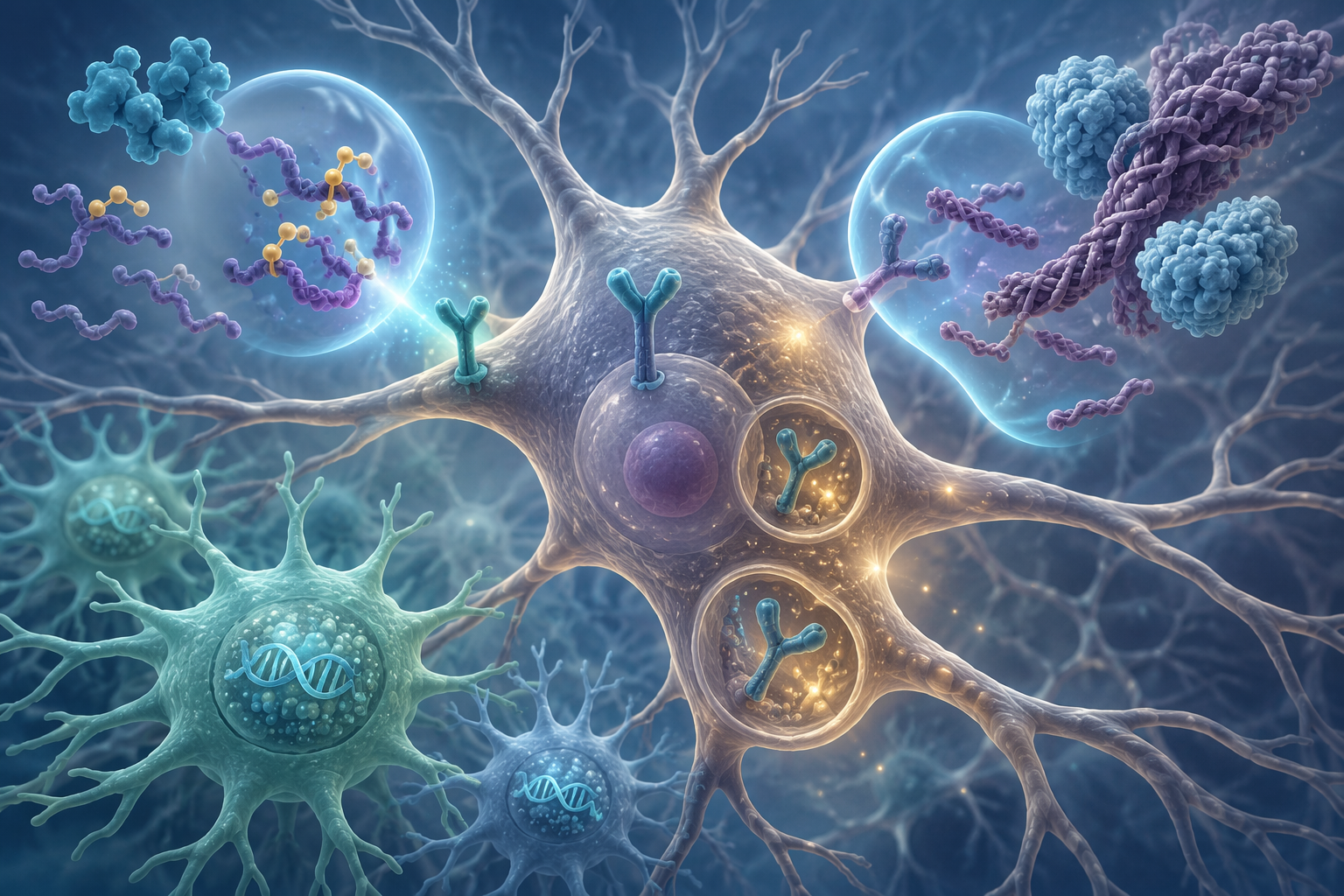
Three Protective Moves
SORLA, encoded by SORL1, is a large VPS10-domain sorting receptor that moves between the trans-Golgi network and endosomes, and it was first studied mainly for APP trafficking and amyloid-beta control [2]. That trafficking background matters here because tau pathology is not only about one bad protein; it is also about where the protein travels, gets sorted, and meets other molecules that can either trap it or let it spread.
The first protective move is the simplest to read: SORLA lowers tau hyperphosphorylation at multiple sites [1]. Hyperphosphorylated tau is more aggregation-prone, so fewer phospho-tau species means a smaller pool of substrate available to assemble into tangles. The study does not pin this effect to one kinase or phosphatase pathway, so it is safer to say that SORLA shifts the balance away from phospho-tau accumulation rather than pretending the upstream enzyme logic is already settled.
The second move is more direct: SORLA limits tau seeding, meaning misfolded tau is less able to recruit normal tau into new aggregates [1]. That is the propagation step, not just the starting step. If hyperphosphorylation loads the gun, seeding is the part that turns one bad conformer into many. The mouse data say SORLA slows that spread inside the brain, which is a stronger claim than simply saying it changes tau chemistry in a petri dish.
The third move broadens the frame beyond neurons. Higher SORLA suppressed disease-related inflammatory gene-expression patterns in glial cells, and the same animals showed less brain atrophy, healthier synapses, and preserved synaptic plasticity [1]. That matters because glia are not decorative bystanders in tauopathy; if their gene programs shift toward a damaging state, the tissue environment becomes easier to injure and harder to repair. In this study, SORLA seems to keep that environment more permissive to synaptic stability.
Where The Caveat Comes From
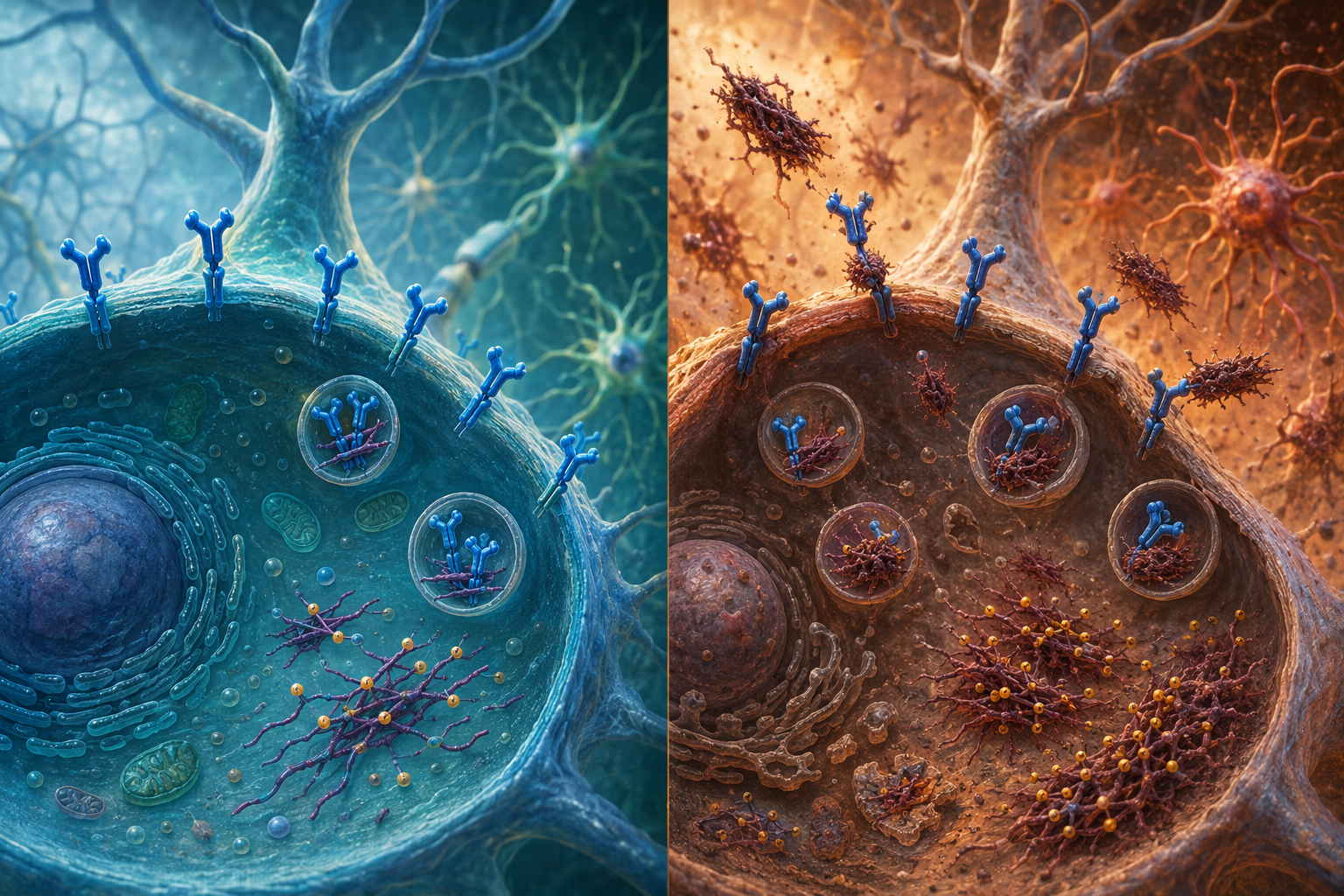
The catch is that SORL1 is not just a one-directional shield. A 2024 JBC study showed that SORL1 directly binds tau, with reported affinities around 59 nM for the full receptor and about 17 nM for the VPS10 domain alone, and the N1358S variant increased tau seeding in FRET biosensor cells without changing tau uptake [3]. That is not a trivial footnote. It means the same receptor family can participate in tau biology in a way that depends on variant status, not just on the broad label "protective" or "harmful."
The endosomal trafficking context helps explain why this is so context-sensitive. LRP1 binds tau at the cell surface with a reported KD of about 60 nM, but it loses tau binding at endosomal pH 5.5, whereas SORL1 can bind tau at both neutral and acidic pH [4]. One plausible interpretation is that SORL1 can receive tau from LRP1 inside endosomes and route it somewhere else. That still does not make every SORL1-tau interaction protective. It just means the compartment matters as much as the receptor name.
So the apparent paradox is real but manageable. Overexpressed SORLA in the 2026 tauopathy mice was protective [1]. Endogenous SORL1, especially in a variant such as N1358S, can also support tau seeding in cells [3]. Those results are not trying to say opposite things about the same biological situation. They are showing that expression level, cellular location, and genetic background all change what this receptor does with tau.
What This Actually Settles
The strongest claim the current evidence supports is narrow but important: in a tauopathy mouse model, raising SORLA was sufficient to reduce phospho-tau, blunt tau seeding, and improve downstream glial and synaptic readouts [1]. That gives the SORLA protein's tau-tangle protection mechanism a concrete, three-part model instead of a vague association. What it does not yet give is a final human-neuron answer. For now, the cleanest reading is that SORLA is a strong preclinical brake on tau pathology, but one whose effect depends on context enough that the receptor should be studied like a sorting factor, not treated like a simple hero protein.
References
- Scientists discover a protein that protects the brain from Alzheimer's damage — ScienceDaily, July 18, 2026
- SORLA (SORL1) — Alzforum Alzpedia
- SORL1 is a receptor for tau that promotes tau seeding — Journal of Biological Chemistry
- Regulation of tau internalization, degradation, and seeding by LRP1 reveals multiple pathways for tau catabolism — Journal of Biological Chemistry
Back to the exam this applies to
Target exam not specified — see all exam hubs.
Comments
Join the discussion with an anonymous comment.