Comparison
How to Research Public Sculpture and Its Donors
This step-by-step guide helps students trace the artwork and funding sources behind public sculptures using free, publicly available databases, municipal records, and IRS filings.
Verdict panel
- Compared
- not specified
- Target exam
- not specified
- Best for
- not specified
- Pricing last reviewed
- pricing currency unconfirmed
The frustrating thing about learning about public sculpture and donors is that the sculpture usually introduces itself before the money does. A quick search may give you the artist, title, material, date, and location. The donor, commission, grant, or capital project that paid for it may be somewhere else entirely: on a weathered plaque, in a city council agenda packet, in a public art program page, or in a nonprofit tax filing.
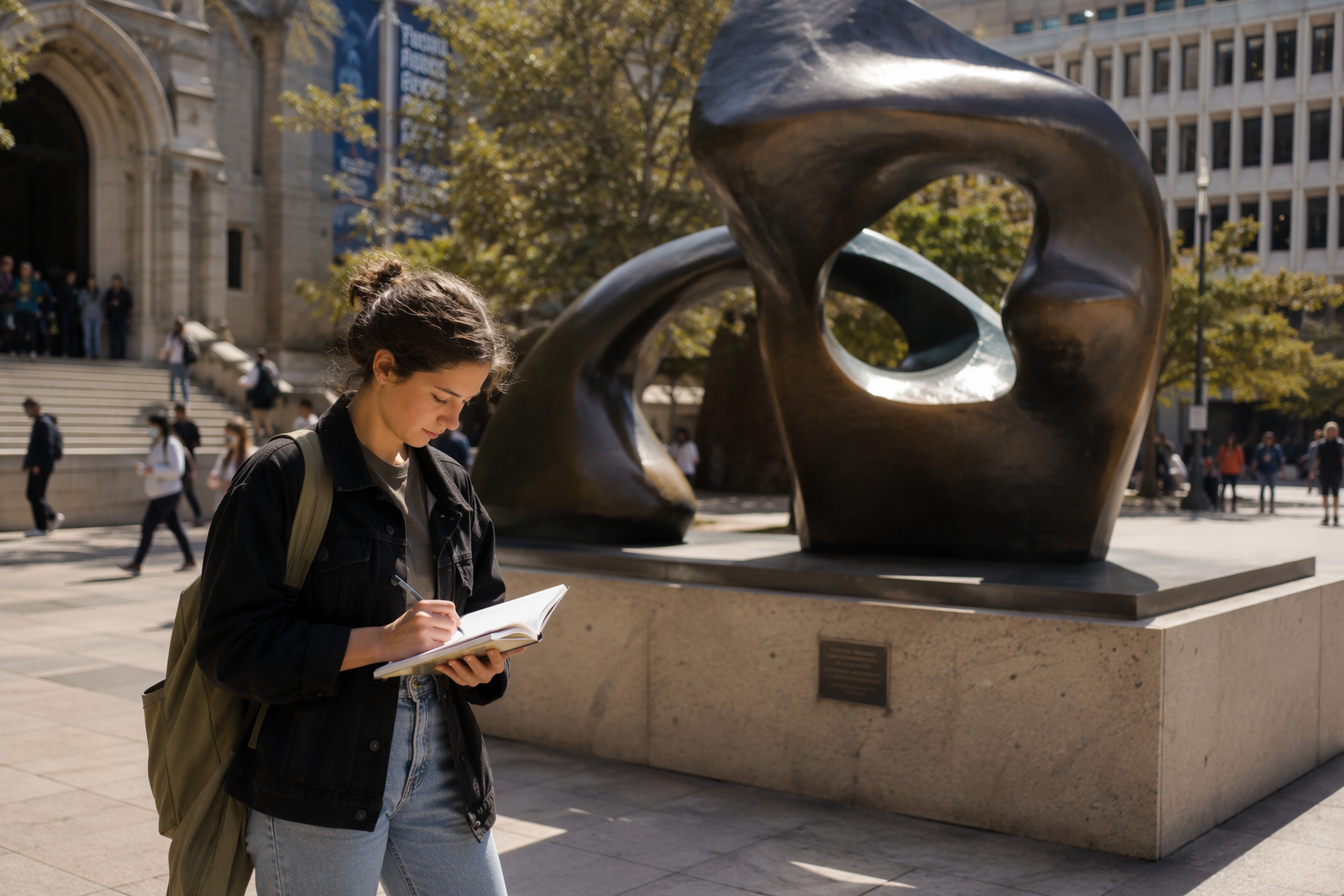
That separation matters. If a sculpture was commissioned through a municipal percent-for-art program, it belongs to a different public record trail than a memorial donated by a family foundation or a work purchased by a university capital campaign. The method is the same at the beginning, though: identify the object carefully, then trace the funding claim only as far as the evidence will let you.
Start With the Object in Front of You
Before opening ten browser tabs, collect the evidence that exists at the site. Photograph the whole sculpture, the base, any plaque, any donor wall nearby, and the surrounding building or plaza. Write down the exact location, not just “downtown” or “campus quad.” A sculpture outside a courthouse, hospital, library, transit station, or university building may be tied to that institution’s construction records.
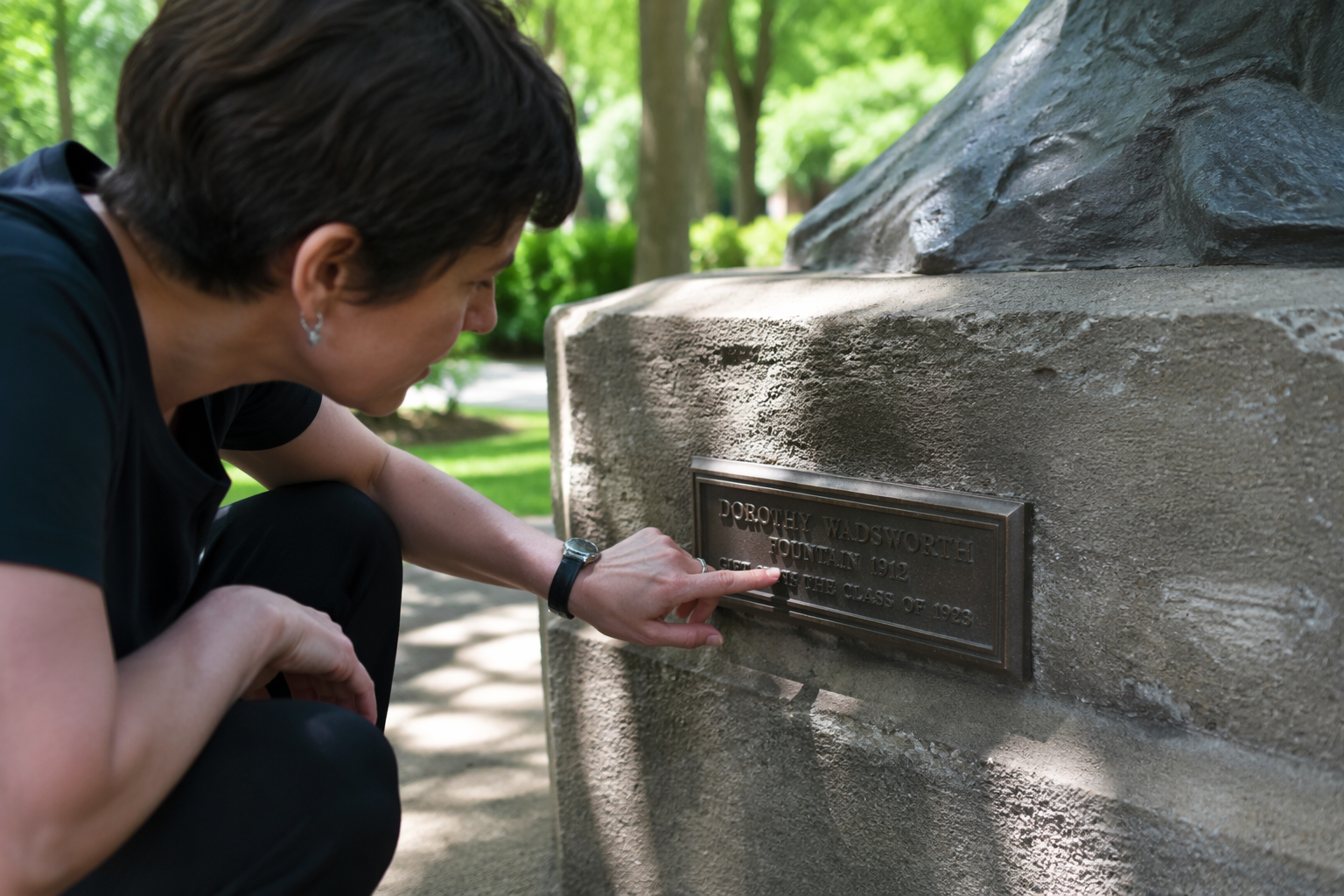
Look especially for four kinds of wording. “By” usually points to the artist. “Gift of” may point to a donor. “Commissioned by” may point to an agency, committee, or program. “In memory of” may point to a memorial sponsor, but it is not automatically the same thing as the funding source. Plaques are useful, but they are not neutral summaries; they compress complicated funding arrangements into a few polite lines.
| What you find at the site | What it probably tells you | What it does not prove by itself |
|---|---|---|
| Artist signature or carved name | Possible artist attribution | Who paid for the work |
| Title, date, and material | Basic artwork metadata | Whether the date is installation, fabrication, or dedication |
| “Gift of” inscription | Possible donor or sponsoring party | The full funding chain or exact amount |
| Agency or city department name | Possible owner, commissioner, or maintenance authority | Whether the agency used public funds, private gifts, or both |
| Nearby donor wall | Possible capital campaign context | That every listed donor funded the sculpture specifically |
For a class assignment, this first pass should produce a working description: “large abstract bronze sculpture outside the north entrance of the library, plaque names artist and dedication date, no donor listed.” That is already better than starting with a vague image search.
Confirm the Artwork Before Chasing the Donor
Once you have site notes, use public art databases to confirm the artwork. The Public Art Archive, operated by WESTAF, is a free starting point that has aggregated more than 100 collections since its 2009 launch.[1] Search by city, artist name, title words from the plaque, or the institution that owns the site.
A good database record can save you from basic mistakes. It may distinguish the title from the memorial name, give the installation date, identify the owning collection, or show that the work is part of a city public art program rather than a private sculpture placed in public view. But do not be surprised if the record stops before the funding question. Public art inventories are often excellent at locating objects and uneven at naming donors.
For older outdoor works, also check the Smithsonian’s Inventory of American Sculpture and Save Outdoor Sculpture! materials. That project documented about 32,000 outdoor sculptures through roughly 7,000 trained volunteers and 106 regional partners, which makes it especially useful when a sculpture predates newer digital registries.[2] Its limitation is important for donor research: many records help identify and describe the object but do not include donor attribution.
The National Endowment for the Arts also points researchers toward practical public art search habits, including using local public art maps, agency pages, and site-specific clues rather than relying on one search engine result.[3] Treat these tools as a way to stabilize the artwork record. Donor research begins after that record is stable.
Build a Clean Artwork Record
Create a short working record before you search for money. Include the title, artist, date, medium, exact location, owner or collection, database links, plaque transcription, and your own photographs. Keep uncertain fields marked as uncertain. If one source says 1987 and another says 1988, do not smooth them into one confident date. Note the conflict and move on.
- Use quotation marks around the exact title when searching.
- Search the artist name with the city name and the site name.
- Search the dedication date with “public art,” “commission,” “gift,” and “donor.”
- Save database records as citations, but do not treat missing donor fields as proof that there was no donor.
Separate Artwork Metadata From Funding Evidence
A common student mistake is to cite the artwork record as if it answers every question. It often does not. “Artist,” “owner,” “collection,” “commissioning agency,” and “donor” are different fields, even when one institution appears in more than one of them.
| Term | Research meaning |
|---|---|
| Artist | The person or studio credited with making the work |
| Owner | The institution or government entity responsible for the object |
| Commissioner | The agency, program, committee, or client that ordered the work |
| Donor | The person, family, foundation, corporation, or group credited with giving funds or the work itself |
| Funder | The source of money, which may include public funds, private gifts, grants, capital budgets, or combinations of these |
If your assignment asks who “donated” the sculpture, answer that question narrowly. A city may own a sculpture funded through a public construction budget. A foundation may have given money to a museum that then commissioned a work. A family may have donated the sculpture itself rather than the money to make it. Each version requires a different sentence and a different citation.
Choose the Most Likely Funding Trail
After you know what the sculpture is, decide which record trail is most likely. Do not search foundation databases first if the sculpture sits outside a new city recreation center and the plaque names the municipal public art program. Do not search only city council minutes if the plaque says “gift of the Henderson Family Foundation.” Let the evidence route the search.
| Clue | Likely trail to follow next |
|---|---|
| Plaque names a city arts commission, public art office, or capital project | Municipal public art records, city council minutes, capital improvement budgets |
| Work is attached to a new library, community center, transit station, or courthouse | Percent-for-art documentation and construction project records |
| Plaque names a family, foundation, corporation, or memorial fund | Foundation grants, nonprofit filings, dedication programs, local newspaper archives |
| Work is on a university, hospital, or museum campus | Institutional annual reports, donor recognition pages, board minutes if public, capital campaign materials |
| No plaque and no database donor field | Owner records, local archives, artist resume, public art staff contact, city clerk records |
If It Looks Municipal, Check Percent-for-Art Records
Percent-for-art programs reserve a small share of eligible public construction spending for artworks. As of January 2024, more than 27 states had active state percent-for-art ordinances, while programs in Iowa, Michigan, North Carolina, South Carolina, and Wisconsin had been rescinded, so you have to check the current jurisdiction rather than assume a program exists.[4]
The math is simple enough to use as a search clue. A 2026 Public Art Curious explainer gives the example of a $20 million community center producing $200,000 for art under a 1 percent set-aside.[5] In a real search, that means the sculpture may not have a private donor at all. The funding source may be embedded in the capital project for the building, park, transit line, or streetscape.
Search the city or county website for the project name plus “public art,” “percent for art,” “artist selection,” “commission,” “agenda,” and “capital improvement.” City council minutes and public art committee minutes are often more useful than glossy public art map pages because they may record approvals, budgets, artist contracts, and selection panel recommendations.
- Try the exact site name: “Riverside Community Center public art.”
- Try the capital project name if it differs from the building’s current name.
- Search PDF agendas for the artist’s name and the sculpture title.
- Look for words like “appropriation,” “contract,” “award,” “acceptance,” and “dedication.”
When you find a budget line, be careful with the wording. A $200,000 art allocation is not necessarily the artist’s fee, and it is not necessarily the final cost of one sculpture. It may include fabrication, installation, conservation planning, administration, or multiple artworks. Cite what the record actually says.
If It Looks Philanthropic, Stay Local First
Foundation-funded art does not always leave a neat public plaque, but it often leaves a tax or grant record. A large study of art philanthropy analyzed $36 billion in foundation grants to art from 46,643 foundations between 2010 and 2019. One of its most useful findings for student researchers is geographic: 60 percent of foundation grant dollars stayed in the donor’s state.[6]
That does not prove your sculpture was locally funded. It does tell you where to spend your first serious hour. If the sculpture is in Ohio, begin with Ohio and regional foundations before wandering into national donor lists. Search the named foundation, family surname, city, artist, institution, and sculpture title together. If the plaque names a memorial fund, search the memorial name as a phrase.
For U.S. foundations and nonprofits, ProPublica’s Nonprofit Explorer is often the most accessible free doorway into IRS Form 990 filings. Search the foundation name, then inspect grants paid during the years around the sculpture’s commission, installation, or dedication. You are looking for grantee names, grant purposes, and amounts that connect to the institution or project.
This is slow work because the grant purpose may not say the sculpture title. It may say “public art project,” “capital campaign,” “civic plaza,” “museum acquisition,” or simply name the recipient organization. If the recipient is the city’s public art nonprofit, arts council, university foundation, or museum friends group, follow that organization’s records next.
If Neither Trail Fits, Broaden the Funding Search
Public art can also be funded through business improvement districts, redevelopment agencies, transportation projects, private developers, conservancies, university foundations, hospital auxiliaries, neighborhood associations, and individual gifts. Project for Public Spaces summarizes public art funding as a mix of public, private, nonprofit, and partnership sources rather than a single standard model.[7]
At this stage, search less like someone looking for a caption and more like someone reconstructing a project. Pair the sculpture evidence with the surrounding site: plaza renovation, streetscape improvement, new building, park master plan, transit stop, memorial dedication, downtown revitalization, or campus expansion. The donor may be attached to the larger project rather than to the artwork record.
What Counts as a Good Answer
A strong answer does not have to be dramatic. It has to be traceable. For example: “The sculpture is listed in the city public art collection as Untitled by Maria Alvarez, installed in 2014. The plaque names the city arts commission but no private donor. City council minutes from May 2013 approved a public art contract for the library capital project. I found no foundation or private donor record connected to the work.” That is much better than writing, “It was donated by the city,” which blurs ownership, commissioning, and funding.
Use direct language for each level of certainty. “Funded by” should point to a budget, grant, contract, or donor record. “Gift of” should match an inscription or institutional record. “Commissioned by” should match a public art record, minutes, or contract notice. “No donor found” is acceptable if you explain where you looked.
| Evidence level | How to write it |
|---|---|
| Plaque only | “The plaque credits the work as a gift of…” |
| Public art database only | “The public art record identifies the owner/collection as…” |
| Municipal approval or budget | “City records approved funding through…” |
| Foundation filing | “The foundation reported a grant to…” |
| Conflicting records | “Records differ: one source lists…, while another lists…” |
| No donor located | “I found no donor attribution in the plaque, public art records, municipal minutes, or available nonprofit filings searched.” |
A Repeatable Search Sequence
- Inspect the sculpture in person if possible. Photograph the work, base, plaque, nearby donor walls, and surrounding site.
- Transcribe names and dates exactly. Keep artist, title, dedication, owner, and donor language separate.
- Search Public Art Archive for the location, artist, title, and collection.
- Search the Smithsonian outdoor sculpture inventory, especially for older works or objects missing from newer registries.
- Identify the likely funding path: municipal percent-for-art, foundation gift, institutional campaign, private development, or unknown.
- For municipal works, search public art program pages, council minutes, committee agendas, contracts, and capital improvement budgets.
- For philanthropic works, search local and state foundations first, then inspect IRS 990 filings and recipient organization records.
- Write the answer with evidence labels: plaque credit, database identification, municipal funding record, foundation grant, or not found.
The sequence is not glamorous, but it is sturdy. Public sculpture research usually begins with visible facts and ends in scattered records. If you keep the artwork identification separate from the donor claim, you can produce either a documented funding answer or a clearly bounded statement of what the public record did not show.
References
- Public Art Archive, WESTAF, 2009, https://publicartarchive.org
- Inventory of American Sculpture / Save Outdoor Sculpture!, Smithsonian American Art Museum, https://americanart.si.edu/research/inventories/outdoor-sculpture
- Searching For Public Art, National Endowment for the Arts, https://arts.gov
- State Percent for Art Programs, National Assembly of State Arts Agencies, January 2024, https://nasaa-arts.org
- Small Percentage, Big Impact, Public Art Curious, April 2026, https://publicartcurious.substack.com
- Philanthropy in art: locality, donor retention, and prestige, Nature, 2023, https://nature.com/articles/s41598-023-38815-1
- Funding Sources for Public Art, Project for Public Spaces, https://pps.org
Back to the exam this applies to
Target exam not specified — see all exam hubs.
Comments
Join the discussion with an anonymous comment.