
Perseid Meteor Shower Viewing for Astronomy Students
A complete guide to watching the 2026 Perseid meteor shower, which offers the best viewing conditions in over a decade thanks to a new moon on August 12. Learn when and where to look, what rates to expect, and how to make the most of this rare double sky event with a solar eclipse on the same day.
Updated:
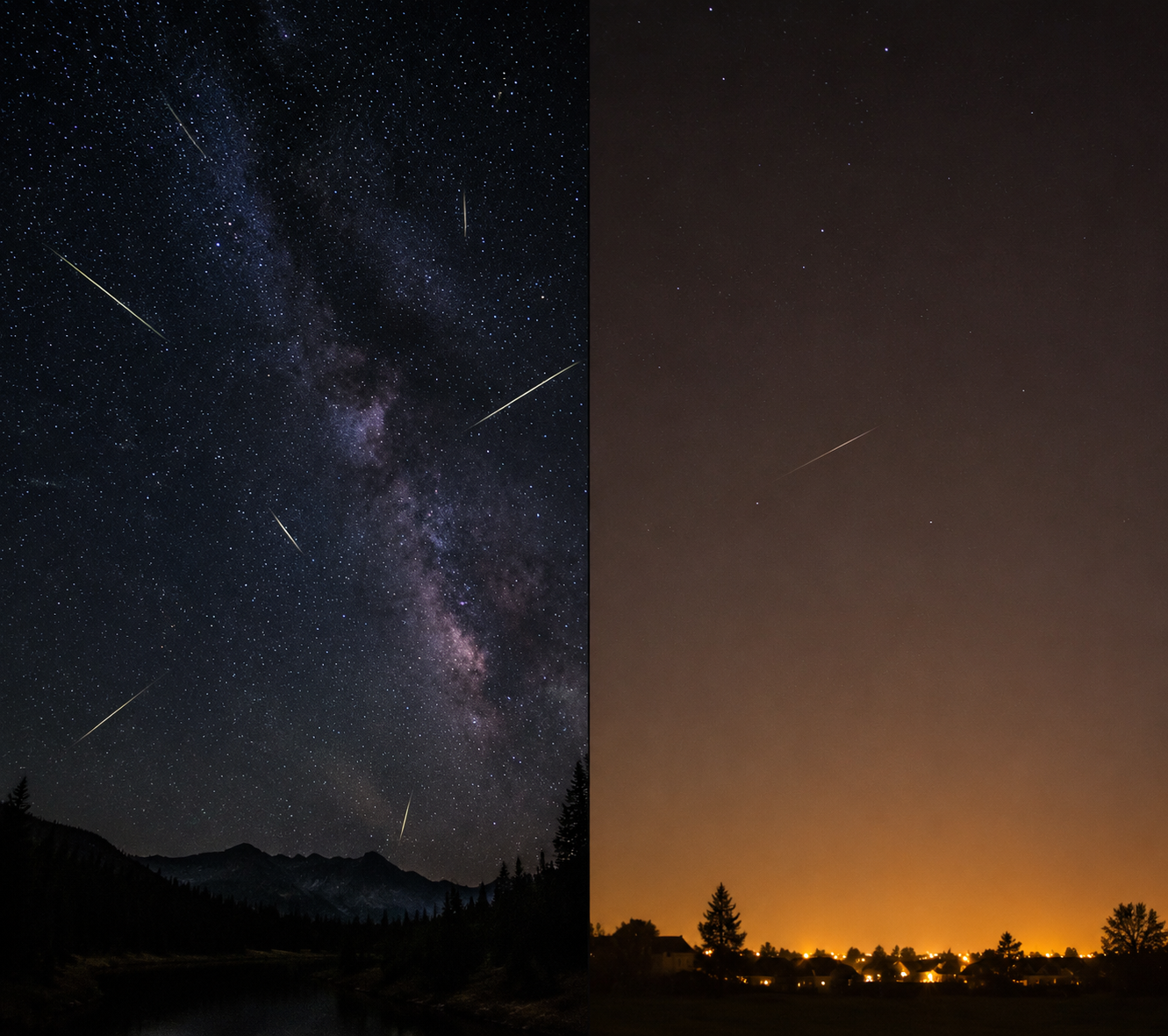
For astronomy students planning to view the 2026 Perseid meteor shower, the main thing to know is not that the Perseids are famous. It is that the peak lands on August 12 with a new moon, so moonlight does not wash out the sky. Under genuinely dark skies, the expected rate is roughly 60 to 100 meteors per hour; from suburban skies, a more realistic expectation is about 25 per hour.[1]
That same calendar day also brings a total solar eclipse, with totality limited to Greenland, Iceland, and Spain, and partial visibility across much of North America.[2] It is a rare pairing and worth noticing. It is not a reason to call the Perseids a meteor storm, and it does not help a student in a bright parking lot see faint meteors after dark. The eclipse is the companion event; the observing plan still lives or dies by darkness, timing, patience, and sky coverage.
What August 12 Actually Gives You
The Perseids are active for more than one night, but 2026 gives students a clean peak setup. The American Meteor Society lists the 2026 Perseid activity window in its 2026–2027 meteor shower calendar, with the shower building toward its August peak.[3] EarthSky’s 2026 overview places the main attention on August 12 and emphasizes the new moon as the reason the year is unusually favorable.[1]
The difference between those two hourly numbers matters. A zenithal hourly rate near 100 is a standardized ideal: the radiant high, the sky dark, the observer adapted, and the horizon not stealing half the view. It is useful for comparing showers, not for promising what a student will count from campus lawns, apartment courtyards, or the edge of a football field. The suburban estimate of about 25 per hour is less glamorous, but it is the number that saves a first observing night from feeling like a failure.[1]
| Viewing situation | Reasonable expectation for 2026 peak night |
|---|---|
| Dark rural site with broad sky access | Roughly 60–100 meteors per hour |
| Suburban location with visible light pollution | About 25 meteors per hour |
| Campus parking lot or brightly lit field | Lower than the suburban estimate; only brighter meteors are likely to stand out |
| Several nights before or after peak | Still worthwhile, but not the cleanest 2026 setup |
If you are organizing a club session, make that table part of the plan before anyone signs up. A student who expects 100 meteors and sees 20 may think the shower failed. A student who expects the site to cost them faint meteors will understand what the sky is doing.
When to Go Out
Plan around the night of August 12, 2026. If coursework, transportation, weather, or campus rules make that impossible, do not abandon the attempt. The Perseids remain active around the peak, and several nights before and after can still produce worthwhile viewing, especially under dark skies.[3]
The best practical session is not a five-minute check between messages. Meteor watching rewards time on task. Arrive early enough to settle in, let your eyes adapt, and stop treating every passing cloud or aircraft as the final verdict. For students keeping an observation log, record the start and end time, sky conditions, limiting visibility if you can estimate it, obvious light sources, and the number of meteors seen in each block of time.
A total solar eclipse on the same date may tempt groups to make August 12 an all-day astronomy event. That can work, but only if the events are treated separately. Eclipse observing requires proper solar safety and depends on geographic visibility. Perseid observing happens after dark, with no optical aid needed and no safe-solar-filter problem to solve.[2]
Where to Stand
The best site is not the one with the most convenient benches. It is the one with the darkest sky, the widest open view, and the fewest local lights shining into your eyes. BBC Sky at Night Magazine and Space.com both stress dark-sky selection as a central part of Perseid viewing, not an optional upgrade.[4][5]
For a student group, a good observing location has a low horizon in several directions, no floodlights, no headlights sweeping across the field, and enough space for people to lie back without crowding. A rural park, farm field with permission, astronomy club site, or dark campus outpost will beat a central quad even if the quad feels more social.
- Avoid direct lamps, lit buildings, athletic fields, and roads with frequent headlights.
- Choose a place where you can see a large portion of the sky without trees or buildings cutting off the view.
- Give your eyes time away from phone screens and white flashlights.
- Bring a reclining chair, mat, or blanket so you can watch comfortably without neck strain.
- Check access rules before midnight rather than discovering a locked gate after the group arrives.
Light pollution does not merely make the sky less pretty. It removes the fainter meteors from your count. That is why two students observing the same shower on the same night can return with very different numbers and both be telling the truth.
How to Watch Without Making Telescope Mistakes
Leave the telescope out of the Perseid plan unless it is being used for some other target before the meteor session begins. Binoculars are not the answer either. Meteor watching is a naked-eye activity because the meteors can appear across the sky and often cross too much angular distance for narrow-field instruments to be useful.[4][5]
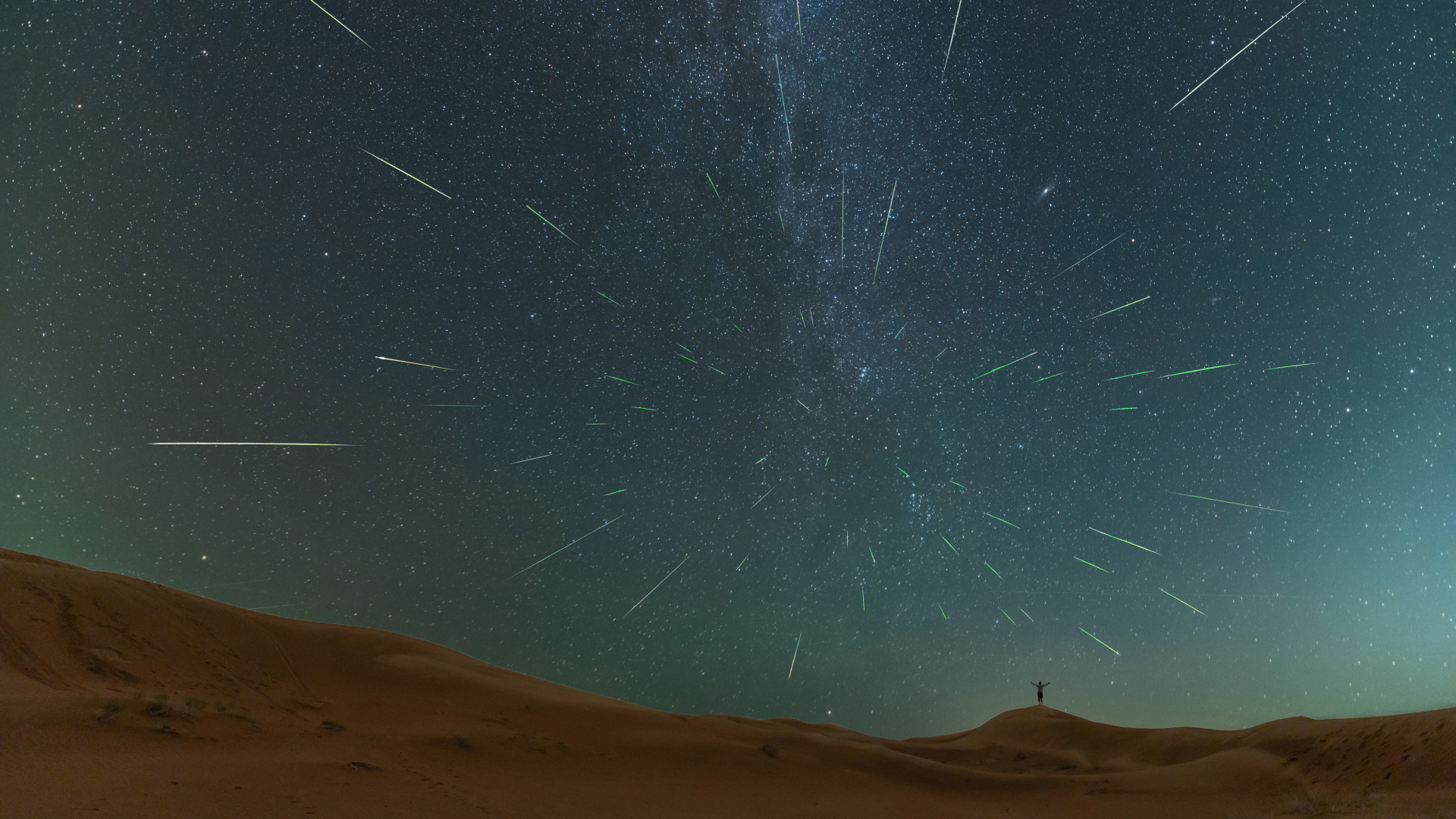
The radiant is in Perseus, which explains the shower’s name, but that does not mean you should stare only at Perseus. Perseid meteors can appear anywhere in the sky. A meteor traced backward may point toward the radiant, but the flash itself may happen well away from it. Students who glue their eyes to one constellation usually sacrifice the wide-field advantage that makes naked-eye observing work.[4]
A simple layout works better than a gear-heavy one: lie back, face a broad dark area of sky, keep your phone dimmed and away, and let the group settle into quiet enough watching that faint streaks are not missed. If people are logging meteors, agree in advance on what counts: Perseids, possible sporadics, aircraft, satellites, and uncertain flashes should not all go into the same column.
A Student Log That Is Useful Later
A clean field log does not need to turn the night into a lab practical, but it should preserve enough context that the count means something the next morning. Note the location type, obvious sources of light pollution, cloud interruptions, observing interval, number of meteors, and any unusually bright fireballs. If several people are watching, keep individual counts as well as a group total; otherwise the loudest observer becomes the data system.
| Log field | Why it matters |
|---|---|
| Start and end time | Turns casual watching into a rate that can be compared |
| Site description | Explains why a dark-site count and a suburban count differ |
| Cloud and haze notes | Prevents weather losses from being mistaken for shower weakness |
| Meteor count by observer | Shows how attention, field of view, and position affect results |
| Bright meteor notes | Preserves the events people will remember most clearly |
What You Are Seeing
The Perseids are associated with comet 109P/Swift-Tuttle, whose debris stream produces the annual shower when Earth passes through it.[6] That background is enough for the observing field. You do not need a long lecture in the dark before anyone starts looking up; save the deeper orbital mechanics for the classroom, the post-session meeting, or the next lab discussion.
What matters during the session is connecting the classroom idea to what the sky actually shows. A bright streak that lasts less than a second can still lead to useful notes: direction, brightness compared with nearby stars or planets, color if obvious, train if visible, and whether other observers saw it. The observation is brief; the habit of describing it carefully is the student skill.
Keeping the 2026 Hype in Proportion
August 12, 2026 deserves attention. A new moon on the Perseid peak is exactly the moon phase meteor observers want, and that is why 2026 is being treated as the best Perseid setup in more than a decade.[1] The total solar eclipse on the same date makes the calendar rarer still.[2]
Still, rare is not the same as guaranteed. A thin haze can cost you faint meteors. A nearby security light can do the same. A student who looks up during a quiet five-minute stretch may assume nothing is happening, while another student who stays out for an hour sees the pattern. Meteor showers are counted over time, not judged by a glance.
There is also future-looking discussion around a possible 2028 Perseid storm, but the available material treats that as debated rather than certain. It is interesting context for students following meteor forecasts, not a reason to undersell 2026 or promise something the sky has not agreed to provide.
A Practical Plan for a Campus Group
For a high school astronomy club, undergraduate lab group, or informal campus watch party, the plan can stay lean. Pick August 12 as the primary night, identify a darker backup site, set a weather decision time, and tell participants in advance that rates depend on sky darkness. If the site is suburban, say so plainly and use the lower expectation.
- Choose the observing site for darkness first and convenience second.
- Schedule the main session for the night of August 12, with nearby nights as backups.
- Tell participants that dark sites may produce 60–100 meteors per hour, while suburban skies are closer to about 25 per hour.
- Use naked-eye viewing only; skip telescopes and binoculars for the meteor count.
- Have observers face broad, dark sky rather than stare only at Perseus.
- Log time, sky conditions, site brightness, and meteor counts so the result can be discussed afterward.
The best version of the night is not the one with the biggest advertised number. It is the one where students understand why the new moon matters, why their site matters more than the poster, and why a meteor seen without a telescope can still be a serious observation. August 12, 2026 is unusually well set up for that lesson.
References
- Perseid meteor shower 2026: All you need to know — EarthSky
- We're getting a solar eclipse and shooting stars on the same day — BBC Sky at Night Magazine
- Meteor Shower Calendar 2026-2027 — American Meteor Society
- Astronomer's top tips for the 2026 Perseid meteor shower — BBC Sky at Night Magazine
- Perseid meteor shower 2026 — When, where and how to see it — Space.com
- Perseids — NASA Science
Comments
Join the discussion with an anonymous comment.