
Comparison
100+ Military History and Geopolitical Study Topics for Students
Overwhelmed by choosing a research topic? This guide catalogs over 100 military history and geopolitical study topics organized by era, theme, and region to help students find a focused, sourceable thesis.
Verdict panel
- Compared
- not specified
- Target exam
- not specified
- Best for
- not specified
- Pricing last reviewed
- pricing currency unconfirmed
The hard part is usually not caring about military history or geopolitics. The hard part is turning “World War II,” “China,” “the Middle East,” or “cyberwar” into a paper someone can actually grade. A usable topic has a boundary. It tells you which era, which place, which actors, and which kind of evidence you are going to use before the deadline starts making decisions for you.
For military history and geopolitical study topics, the safest starting map has three coordinates: era, theme, and region. Military history is often organized into Ancient, Medieval, Early Modern, Modern, and Contemporary periods, with subfields such as operational history, tactical history, naval history, air power, and war-and-society studies helping narrow the question further.[1] Geopolitics works best when the paper keeps every place name visible on a map rather than floating in abstract language.[2]
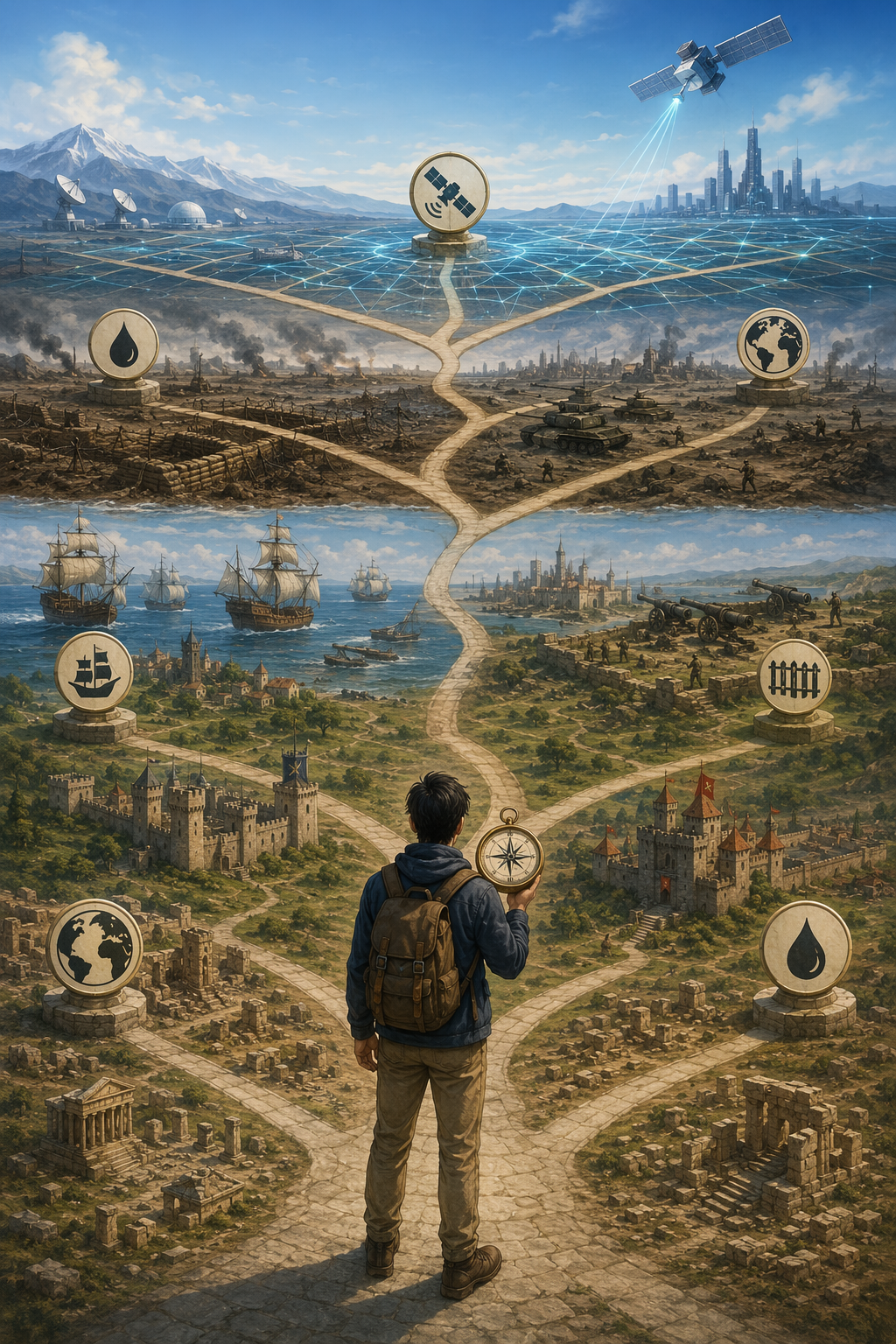
The catalog below is built for selection, not admiration. A topic is worth choosing if you can turn it into a question, find sources beyond one encyclopedia page, and explain why the answer matters. The U.S. Army Center of Military History makes a similar point about studying military history for themes, patterns, and context rather than memorizing events in isolation.[3]
How to Choose Before You Browse
Before picking a topic from a long list, decide what kind of assignment you are actually writing. A five-page essay cannot carry the same topic as a semester research paper. A document-based assignment needs accessible primary sources. A presentation may survive with a clearer map and fewer archival details, but it still needs a precise claim.
| If your assignment asks for | Choose this kind of topic | Avoid this kind of topic | A workable example |
|---|---|---|---|
| A short argumentative essay | One battle, policy, border, or decision | An entire war or civilization | How terrain shaped Spartan choices at Thermopylae |
| A comparative paper | Two cases with the same variable | Three or more cases with different evidence bases | British and Spanish naval logistics in the Atlantic |
| A source analysis | A topic with speeches, maps, orders, memoirs, treaties, or official reports | A recent crisis with mostly commentary | Civil War soldiers’ letters and the experience of campaign movement |
| A geopolitics paper | A place-based problem tied to resources, routes, borders, alliances, or institutions | A vague claim about global power | Pipeline routes and energy leverage in Eastern Europe |
| A military-geography project | A battlefield, corridor, island chain, river system, mountain pass, or port | A purely ideological explanation | Why control of ports mattered in the Pacific War |
| A historiography paper | A debate historians have actually named | A topic where disagreement is only political opinion | The Military Revolution debate in early modern Europe |
If a topic cannot fit into one row of that table, it is probably still an interest, not yet a research topic.
Military History Topics by Era
Era is not just chronology. It helps you predict the evidence. Ancient topics may lean on archaeology, literary sources, and later historical traditions. Modern topics may have newspapers, official records, photographs, and memoirs. Contemporary topics can look tempting because they feel urgent, but the source base may still be thin, partisan, or classified.
Ancient Warfare
- The logistics of Alexander the Great’s campaigns: frame the paper around supply, distance, and movement rather than simply retelling conquest.
- Greek hoplite warfare and citizen identity: examine how military service shaped political belonging in one polis or a comparison of two poleis.
- Roman road systems as military infrastructure: ask how roads changed deployment speed, provincial control, or imperial communication.
- Naval power in the Persian Wars: focus on how ships, straits, and coastal geography shaped Greek and Persian options.
- Siege warfare in the ancient Near East: compare the political purpose of siege narratives with the technical problem of fortifications.
- The Punic Wars as a contest over Mediterranean space: treat Rome and Carthage as rival systems of ports, allies, and sea routes.
- War elephants in Hellenistic armies: ask when they changed battlefield behavior and when they mainly served political display.
- The Roman army and frontier defense: narrow the question to one frontier, such as Britain, the Rhine, or the Danube.
- The Trojan War as a problem of evidence: compare literary tradition with archaeological interpretation without pretending the sources answer every question.
- Assyrian military administration: study how deportation, tribute, and garrisons supported imperial control.
- Sparta’s military reputation versus its actual strategy: ask how much the image of Spartan discipline explains specific decisions.
- Terrain and battle narratives in ancient historians: compare how one ancient author uses rivers, passes, plains, or walls to explain victory.
Medieval Military History
- Castle building and local power: study one region where fortifications changed taxation, settlement, or noble authority.
- The Norman Conquest as a military and administrative project: connect battlefield victory to landholding and castle construction.
- Cavalry and social status in medieval Europe: ask how mounted warfare shaped elite identity, not just battlefield tactics.
- The Crusader states and supply lines: focus on ports, roads, and fortresses rather than treating crusading only as ideology.
- Mongol mobility and imperial expansion: examine horses, intelligence, communications, and steppe geography as military systems.
- The Hundred Years’ War and the longbow: ask why one weapon mattered in some battles but did not decide the entire war alone.
- Byzantine frontier defense: study diplomacy, fortifications, and mobile forces on one border zone.
- Medieval naval warfare in the Mediterranean: compare commerce protection, piracy, and amphibious operations.
- The role of mercenaries in Italian city-state warfare: examine how paid military labor affected politics and trust.
- Women and wartime authority in medieval sieges: use one documented siege to study command, defense, or memory.
- Fortified towns and civilian vulnerability: ask how walls protected urban populations while also making towns military targets.
- Religious orders as military institutions: compare the Templars, Hospitallers, or Teutonic Knights through land, finance, and warfare.
Early Modern War
Early modern topics are useful because they sit at the hinge between older military systems and larger states, empires, gunpowder warfare, fiscal expansion, and oceanic competition. The “Military Revolution” debate is one of the named historiographical debates often associated with this period, which makes it especially suitable for papers that need scholarly disagreement rather than only narrative.[1]
- The Military Revolution debate in one country: test whether changes in fortification, armies, or state finance actually fit the theory.
- Gunpowder and siege warfare: study how artillery changed fort design and campaign planning.
- The Thirty Years’ War and civilian survival: focus on one region’s experience of requisition, disease, and displacement.
- Ottoman military organization in the Balkans: connect recruitment, frontier administration, and imperial strategy.
- The Spanish Armada as a logistics problem: examine weather, ports, ship design, and command coordination.
- Piracy and empire in the Atlantic: ask when piracy functioned as crime, commerce, or unofficial war.
- Fortified port cities and imperial rivalry: compare one Atlantic or Indian Ocean port as a military and commercial node.
- The rise of standing armies: study how taxation, bureaucracy, and discipline changed the relationship between rulers and soldiers.
- Indigenous military alliances in early colonial wars: avoid treating Indigenous groups as background and ask what strategic choices they made.
- Naval convoy systems and trade protection: frame maritime warfare through insurance, cargo, and state power.
- Cartography and campaign planning: examine how maps shaped what commanders thought was possible.
- War finance in early modern Europe: ask how loans, taxes, and debt affected military endurance.
Modern Military History
Modern military history gives students the widest source shelf, but that can be its own trap. “The Civil War,” “World War I,” or “World War II” is too large. A paper becomes researchable when it picks a front, a weapon system, a policy, a group of civilians, a supply route, or a command decision.
- Railroads and mobilization in the American Civil War: ask how rail capacity affected strategy in one theater.
- Sherman’s March and the meaning of hard war: examine military necessity, civilian property, and political messaging.
- Trench warfare on the Western Front: focus on adaptation, engineering, and artillery rather than assuming stalemate meant no change.
- Colonial troops in World War I: study recruitment, battlefield labor, and postwar political expectations.
- The Gallipoli campaign as amphibious failure: connect geography, planning, intelligence, and coalition command.
- Air power theory between the world wars: ask how expectations about bombing compared with wartime results.
- The Battle of Britain and civil defense: combine air strategy with radar, shelters, morale, and state communication.
- The Eastern Front as a war of logistics: study rail gauge, weather, distance, or fuel as constraints on operations.
- The Pacific War and island geography: examine why bases, harbors, airfields, and distance structured strategy.
- Codebreaking and operational decisions in World War II: ask how intelligence changed specific choices without claiming it explains everything.
- Strategic bombing and civilian vulnerability: compare stated objectives with measurable wartime effects in one campaign.
- Decolonization wars and counterinsurgency: focus on one conflict where military operations and political legitimacy moved together.
- The Korean War and coalition warfare: examine command structure, geography, and limited-war strategy.
- The Vietnam War and helicopter mobility: ask how air mobility changed tactics, exposure, and expectations.
Contemporary Military History
Contemporary military topics need extra discipline because many sources are advocacy, journalism, or official messaging. That does not make them unusable. It means the paper should ask a bounded question and identify what kind of evidence is available. The “Revolution in Military Affairs” and “total war” are among the broader concepts students may encounter, but each still has to be tested through a specific case.[1]
- Drone warfare and command distance: study how remotely piloted systems changed targeting, risk, or accountability in one theater.
- Urban warfare after the Cold War: compare how dense cities altered intelligence, movement, and civilian protection.
- Private military contractors: ask how outsourcing affected accountability, logistics, or state control.
- Counterinsurgency doctrine in Iraq or Afghanistan: focus on a doctrine, province, or period rather than the whole war.
- Military medicine and casualty evacuation: examine how technology and evacuation chains changed survival expectations.
- The role of satellites in modern command: study communications, navigation, or surveillance as battlefield infrastructure.
- Cyber operations and military planning: ask how cyber tools support or complicate conventional operations in a documented case.
- Information operations and public opinion: analyze one campaign where messaging became part of military strategy.
- Women in combat roles: study policy change, institutional resistance, or operational integration in one military.
- Veterans, memory, and postwar politics: connect military service to commemoration, protest, or policy debates.
- The Russia-Ukraine war as artillery and logistics study: keep the focus on a specific operational problem rather than trying to explain the entire war.
- Civilian infrastructure as a military target: examine law, strategy, and humanitarian consequences in one recent conflict.
Geopolitical Study Topics by Theme
Geopolitics is often taught through pieces of geography, political science, history, economics, and international relations rather than through a single dedicated major, so the topic has to do some organizing work on its own.[2] That is why themes matter. They keep a paper from becoming a news digest.
Current flashpoints can still be useful. CSIS tracks contemporary policy issues such as Ukraine, the Taiwan Strait, Iran, and the Arctic, but these are better treated as cases inside larger structures: alliances, sea lanes, sanctions, energy, borders, or institutions.[4]
Great Power Competition
- U.S.-China rivalry in the Indo-Pacific: focus on bases, alliances, trade routes, or technology controls rather than the whole relationship.
- The Taiwan Strait as a geography problem: examine distance, amphibious constraints, ports, airfields, and deterrence.
- NATO enlargement and Russian threat perception: study one enlargement round or one border region.
- The Arctic as a great-power arena: compare shipping routes, military access, resource claims, and environmental constraints.
- India’s role in balancing China: focus on the Indian Ocean, border infrastructure, or regional partnerships.
- Middle powers in great-power competition: ask how a state such as Turkey, Poland, South Korea, or Indonesia uses geography to bargain.
- Military bases as geopolitical signals: compare two overseas basing arrangements and what they allow states to do.
- Sanctions as instruments of geopolitical pressure: study one sanctions regime and the routes actors use to resist it.
Resource Geopolitics
- Oil chokepoints and state vulnerability: compare the Strait of Hormuz, Suez Canal, or Malacca Strait as strategic routes.
- Natural gas pipelines and European security: ask how infrastructure creates leverage, dependency, or diversification.
- Critical minerals and supply-chain politics: focus on one mineral and one stage of production.
- Water politics in a shared river basin: study how upstream and downstream states negotiate dams, irrigation, or scarcity.
- Food security and conflict risk: examine how grain routes, blockades, or price shocks affect one region.
- Energy transition and geopolitical influence: ask which old dependencies decline and which new dependencies appear.
- The politics of seabed resources: study exclusive economic zones, undersea cables, or mineral claims.
- Resource nationalism in one country: examine how control over oil, gas, lithium, copper, or rare earths shapes foreign policy.
Maritime Disputes and Sea Power
- The South China Sea and artificial islands: study how construction changes surveillance, claims, or naval access.
- Freedom of navigation operations: ask what legal and strategic messages these operations send.
- The Indian Ocean as a trade and security corridor: compare ports, naval visits, and shipping routes.
- The Mediterranean and migration security: examine how naval patrols, borders, and humanitarian obligations intersect.
- Submarine cables as geopolitical infrastructure: study why undersea networks matter for both commerce and security.
- Port investments and influence: compare how one external power uses port financing or access agreements.
- Piracy and state capacity: focus on one maritime region and ask why some anti-piracy efforts succeed.
- Island chains and defense planning: examine how geography shapes deterrence in the western Pacific.
Borders, Frontiers, and Territorial Conflict
- The India-China border dispute: study infrastructure, patrol routes, and altitude as much as diplomacy.
- The Korean Demilitarized Zone as a militarized border: examine deterrence, symbolism, and daily security practices.
- The Israel-Palestine conflict and border regimes: narrow the topic to walls, checkpoints, settlements, or recognition.
- The Russia-Ukraine border before and after 2014: study how borders change meaning when military force enters the question.
- Postcolonial borders in Africa: focus on one boundary and ask how colonial mapping affected later politics.
- Mountain borders and state control: compare how terrain complicates policing, trade, and military movement.
- Refugees and border security: study one border where humanitarian movement and state security collide.
- Buffer zones in international politics: examine why states create them and why they fail.
Critical Geopolitics and Political Narratives
- Maps as political arguments: compare two maps of the same region and ask what each makes visible or invisible.
- National memory and territorial claims: study how history textbooks, monuments, or speeches support a border claim.
- The language of “buffer states”: examine how policymakers describe smaller states between larger powers.
- Media framing of a geopolitical crisis: compare headlines, maps, and labels across two countries’ coverage.
- Diaspora communities and foreign policy: ask how populations outside a homeland influence state behavior.
- Geopolitical imagination in school atlases: study how map projection, color, and labels teach political assumptions.
- Spheres of influence as a contested idea: compare how two states justify or reject the concept.
- Strategic narratives about the Arctic, Indo-Pacific, or Middle East: ask how naming a region changes policy priorities.
Cyber, Space, and Technology
- Cyberattacks on critical infrastructure: study one case through vulnerability, attribution, and response.
- Satellites and military dependence: ask what modern forces lose when positioning, timing, or communications are disrupted.
- Space debris and security: examine why an environmental problem can become a military and diplomatic problem.
- Export controls on advanced chips: study technology restriction as a tool of geopolitical competition.
- Artificial intelligence in military decision-making: focus on accountability, speed, or target selection in a bounded policy debate.
- Digital surveillance and border control: examine how states use data systems to manage migration or security.
- Cyber deterrence compared with nuclear deterrence: ask where the analogy works and where it breaks.
- Commercial technology firms in national security: study how private infrastructure becomes strategically important.
Global Governance and Institutions
- The United Nations Security Council and great-power vetoes: study how institutional design shapes crisis response.
- Peacekeeping and geography: ask how terrain, roads, and borders affect a mission’s limits.
- International law and maritime claims: examine how legal rulings interact with naval behavior.
- Regional organizations and conflict management: compare the African Union, European Union, ASEAN, or OAS in one case.
- Humanitarian corridors in war: study who negotiates them, who enforces them, and why they fail.
- Arms control after the Cold War: focus on one treaty, one weapon category, or one verification problem.
- Sanctions enforcement through international banking: ask how financial systems extend state power.
- Climate governance and security policy: study how rising risk is translated into military planning or international negotiation.
Regional Angles That Keep the Topic Grounded
Region is where vague topics become defensible. “Energy geopolitics” is a shelf label. “Natural gas routes between Russia, Ukraine, and Europe” is closer to a paper. The region does not have to be small, but the mechanism should be visible.
| Region | Good topic direction | Why it works |
|---|---|---|
| Eastern Europe | Borders, pipelines, NATO, buffer zones, artillery logistics | The geography of plains, corridors, and infrastructure gives the topic clear material anchors. |
| Indo-Pacific | Island chains, sea lanes, Taiwan, naval basing, chip supply chains | Maritime distance and alliance geography prevent the paper from becoming only a U.S.-China essay. |
| Middle East | Oil chokepoints, water basins, proxy conflicts, border regimes | Resource routes and territorial boundaries give broad conflicts narrower research handles. |
| Arctic | Shipping routes, military access, resource claims, environmental change | The region connects physical geography to strategic competition without needing daily headlines. |
| Sub-Saharan Africa | Postcolonial borders, peacekeeping, resource politics, insurgency logistics | Many topics can be framed through borders, state capacity, and external involvement. |
| Latin America and the Caribbean | Canals, ports, sanctions, migration routes, U.S. influence | Regional history allows military, economic, and geopolitical evidence to meet. |
| Mediterranean | Naval power, migration, island bases, imperial competition | The sea connects ancient, medieval, early modern, and contemporary topics. |
Cross-Over Topics: Military Geography and Geostrategy
This is the section students often miss, which is unfortunate because it produces some of the cleanest papers. Military geography asks what terrain, distance, climate, infrastructure, and spatial relationships allow or prevent. A U.S. Army War College article argues that military geography has been neglected in favor of “human terrain” studies over the past two decades, which leaves room for research that takes physical geography seriously again.[5]
- Mountain passes and invasion routes: compare how one mountain system shaped military planning in two conflicts.
- Rivers as defensive lines: study when rivers protect armies and when bridges, logistics, or weather make them liabilities.
- Ports as strategic prizes: examine one port city where commercial and military value overlapped.
- Desert warfare and supply: ask how water, fuel, vehicle maintenance, and distance shaped operations.
- Airfields and island campaigns: study why some islands mattered more as platforms than as territory.
- Rail gauges and operational reach: examine how infrastructure compatibility affected military movement.
- Urban terrain and military decision-making: compare planning assumptions with the reality of fighting through a city.
- Climate and campaign timing: study mud, monsoon, winter, or heat as operational constraints.
- Chokepoints and naval strategy: compare how states try to secure or threaten narrow maritime passages.
- Border infrastructure and deterrence: study roads, fences, sensors, and patrol routes as political-military systems.
- Undersea cables as strategic geography: connect the physical seabed to cyber, finance, and security.
- Military maps as historical evidence: analyze what a campaign map includes, excludes, exaggerates, or assumes.
Historiographical Debate Topics
A historiography topic is not just “what happened.” It asks how scholars have argued about what happened. Use this route only if the assignment expects secondary-source debate; otherwise, it can become abstract very quickly.
- The Military Revolution debate: did changes in gunpowder warfare drive state formation, or does the argument overstate military causes?
- The total war concept: when does a war actually mobilize society broadly enough to deserve the label?
- The Revolution in Military Affairs: did late twentieth-century technology transform warfare, or did older constraints persist?
- The causes of battlefield victory: compare historians who emphasize leadership, logistics, morale, technology, or terrain.
- War and society approaches: ask how historians moved beyond battles to study civilians, labor, gender, memory, and state power.
- Military effectiveness and culture: examine whether culture explains performance or risks becoming too broad to prove.
Source Checks Before You Commit
A topic list can get you started, but it cannot do the judging for you. Topic catalogs from student-facing sites can be useful for breadth, including military and U.S. history lists, but they should be checked against academic books, journal articles, official records, archives, or reputable policy research before they become the backbone of a paper.[6][7]
- Currency: For contemporary geopolitics, check whether the source is current enough for the claim; for ancient or medieval history, newer scholarship may matter more than the latest webpage.
- Relevance: A source about the whole war may not help if your paper is about one port, border, or campaign decision.
- Authority: Prefer academic presses, peer-reviewed work, official document collections, archives, and established research institutions.
- Accuracy: Be suspicious of precise numbers that appear without a traceable source.
- Purpose: Separate scholarship, policy analysis, advocacy, journalism, and government messaging before using them as evidence.
The quickest test is simple: can you find three serious sources that answer the same question from different angles? If not, narrow the place, change the time window, or switch from a current-event frame to a durable theme.
Good Topic Formulas
When a topic still feels too large, use a formula. The point is not to sound mechanical in the final paper. The point is to stop “important” from swallowing “researchable.”
| Formula | Use it when | Example |
|---|---|---|
| Place + military problem + consequence | You have a battle, campaign, or border | How the Gallipoli terrain shaped amphibious planning failure |
| Technology + case + limitation | You want to write about weapons or systems | Why radar mattered in the Battle of Britain but did not remove the need for pilots and command decisions |
| Resource + route + political leverage | You are working in geopolitics | How natural gas pipelines shaped bargaining between Russia and Europe |
| Institution + crisis + constraint | You need governance or international relations | How Security Council veto power limits crisis response |
| Memory + conflict + political use | You are writing about narratives | How national memory supports territorial claims in one border dispute |
| Map feature + actor + strategy | You want a military-geography paper | How island chains shape U.S. and allied defense planning in the western Pacific |
A strong topic is not the one that sounds largest on the first day. It is the one that matches the assignment, belongs somewhere in the catalog, and can be defended with sources you can actually gather. Once you have that, the next step is ordinary work: turn the topic into a question, collect evidence, and write the draft before the topic has time to grow back into a continent.
References
- Military history, Wikipedia
- So, You Want to Study Geopolitics, Mackinder Forum
- Guide to the Study and Use of Military History, U.S. Army Center of Military History
- Geopolitics and Foreign Policy, CSIS
- Military Geography and Military Strategy, U.S. Army War College War Room
- Military Research Topics & Essay Structure Guide 2026, MyAssignmentHelp
- 160 US History Research Topics, PapersOwl
Back to the exam this applies to
Target exam not specified — see all exam hubs.
Comments
Join the discussion with an anonymous comment.