
The Science-Backed Weekly Study Schedule Template: How to Build a Template Around How Memory Actually Works
The Forgetting Curve Problem: Why Most Weekly Schedules Fail at Retention
Most study schedules are built around one question: "When do I have time to study?" They treat the week as a container to be filled with hours, assuming that as long as the time is logged, the learning will follow. That assumption is wrong — and the data is stark.
The Ebbinghaus forgetting curve describes a brutal reality: without any review, memory retention drops from 100% to roughly 20% within seven days. A 2006 meta-analysis covering 317 experiments on the spacing effect, published in PubMed (PMC5126970), confirmed that distributed practice produces dramatically better retention than massed practice. In plain terms, the material you study on Monday is mostly gone by the following Monday unless your schedule deliberately interrupts that decay.
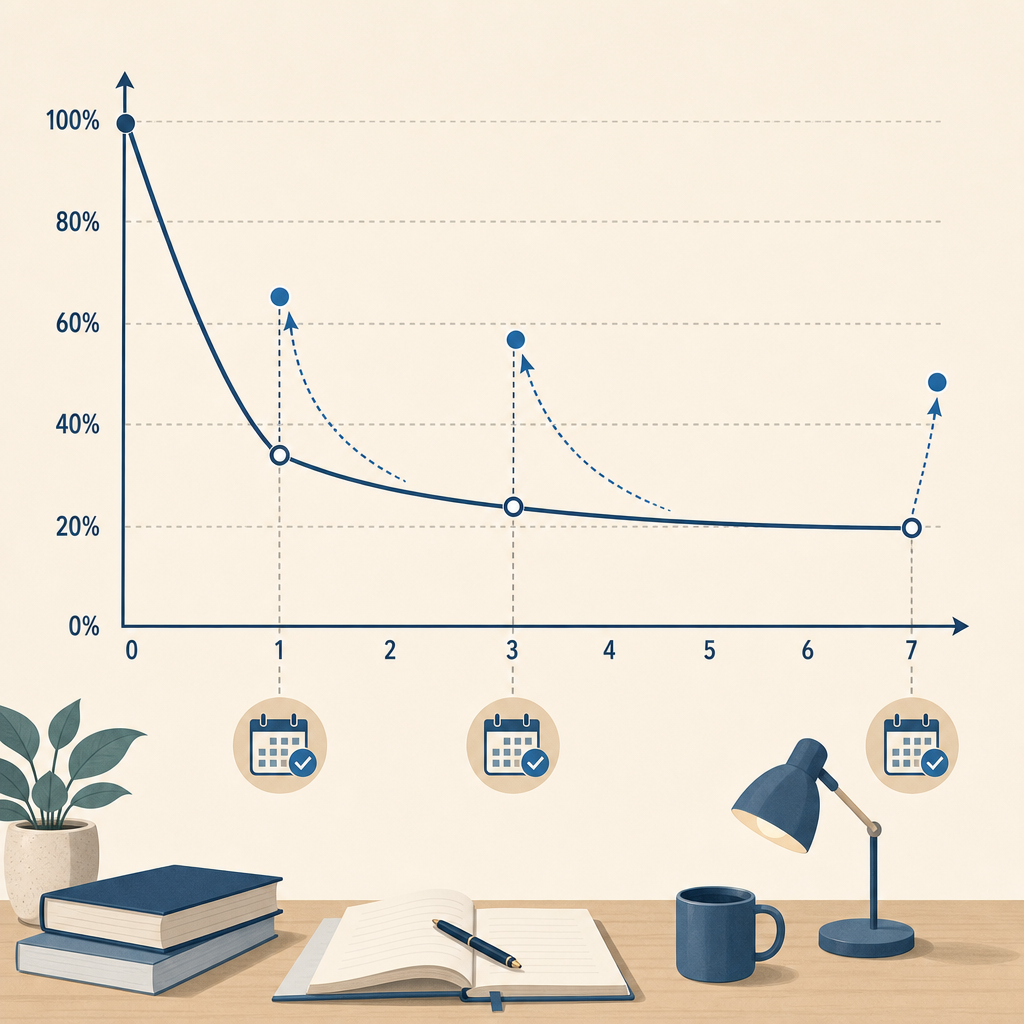
Fill in this timeline
This is a skeleton schedule, not a performance claim — for section-by-section strategy to fill in each slot, read the exam hub. For evidence that a similar timeline worked, compare against real outcome logs.