
48-Hour Exam Cram Schedule: A Four-Phase Plan for Last-Minute Studying (With Printable Template)
This article breaks down a precise hour-by-hour 48-hour exam cram schedule across four phases — triage, conversion, iterative drilling, and final polish — and provides a downloadable printable template to help you execute under pressure.
Available Formats
Access links are provided in the guide below.
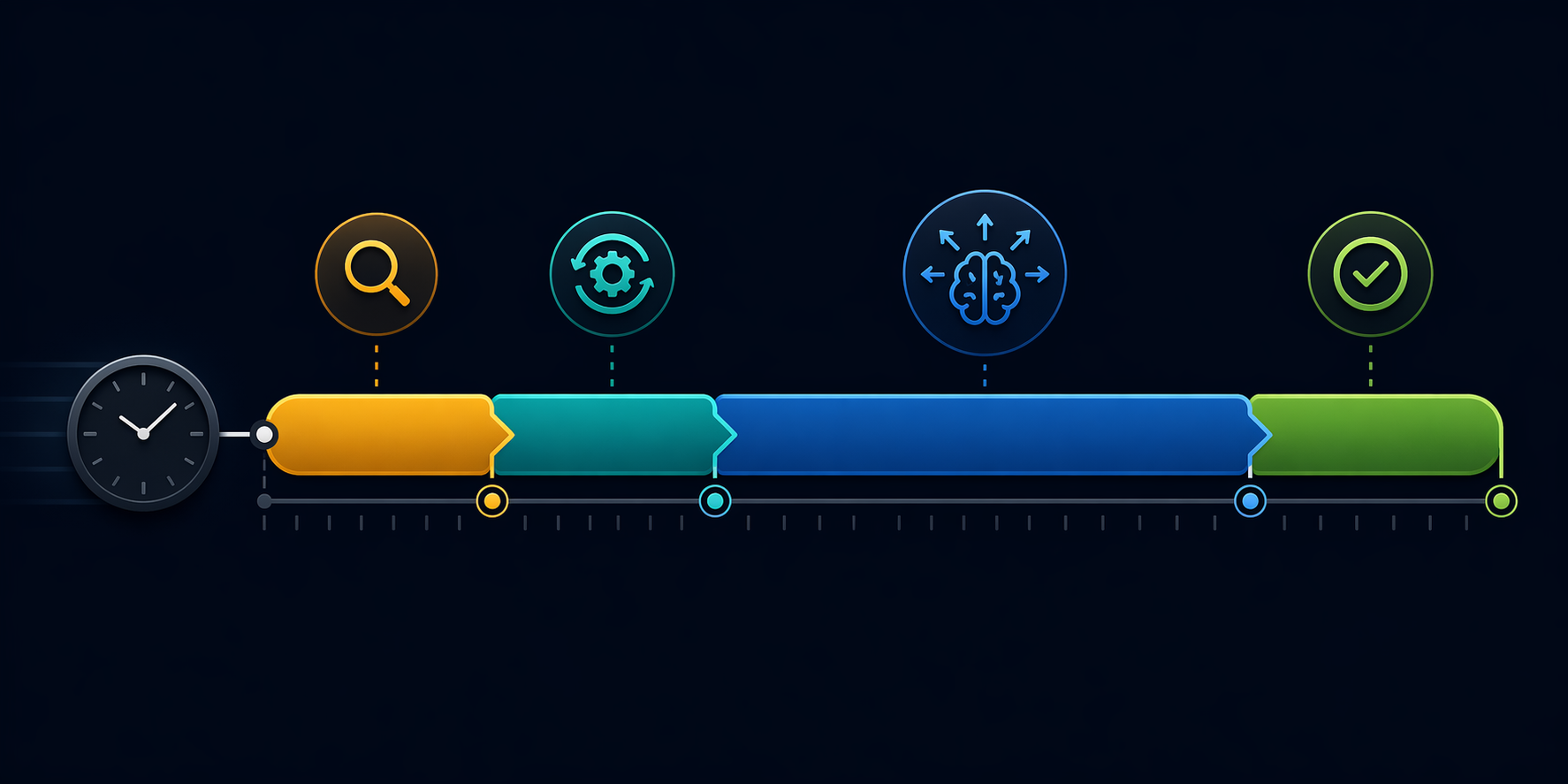
You have 48 hours, you are not ready, and you need a schedule you can follow now. Start here: print the template, write your exam time at the end, and work backward. Do not spend the first hour redesigning the plan. That is how panic gets a desk job.
The 48-Hour Exam Cram Schedule
| Time | Phase | What to do | What to avoid |
|---|---|---|---|
| Hours 0-1 | Triage | Gather exam guide, syllabus, lecture slides, past papers, graded work, formula sheets, and professor hints. | Opening every file and reading from the beginning. |
| Hours 1-2 | Triage | Rank topics by exam weighting, professor emphasis, recurrence, and your current weakness. | Treating every chapter as equally urgent. |
| Hours 2-3 | Triage | Choose the high-yield set: the material most likely to produce marks if learned today. | Feeling guilty about cutting low-yield material. |
| Hours 3-4 | Triage | Build your attack list: Must Know, Should Know, Quick Wins, and Drop Unless Time Remains. | Making a beautiful study plan instead of a usable one. |
| Hours 4-8 | Conversion | Turn notes, slides, PDFs, and summaries into flashcards, self-quiz prompts, blank diagrams, formula drills, and short answer questions. | Highlighting and rereading as your main activity. |
| Hours 8-12 | Conversion | Finish the testable study pack for the high-yield set. Make an error log before you start drilling. | Expanding into new resources unless a core explanation is missing. |
| Hours 12-14 | Drilling | Active recall block: flashcards, practice questions, closed-book brain dump. | Checking answers after every single question. |
| Hours 14-14.25 | Break | Take a 15-minute break: water, bathroom, food, short walk. | Scrolling into a 45-minute hole. |
| Hours 14.25-16 | Drilling | Review errors, then retest the same material without notes. | Mistaking recognition for recall. |
| Hours 16-17 | Reset | Meal, movement, quick plan adjustment. | Starting a new giant topic because you feel behind. |
| Hours 17-20 | Drilling | Two more active recall cycles on Must Know topics. | Recopying notes. |
| Hours 20-21 | Final check before sleep | Light recall only: formulas, definitions, one-page brain dump. | Beginning difficult new material. |
| Hours 21-29 | Sleep | Sleep. Protect this block. | Pulling an all-nighter. |
| Hours 29-32 | Drilling | Morning retrieval: brain dump first, then check gaps. Work the error log. | Opening notes before testing yourself. |
| Hours 32-35 | Drilling | Practice questions or past-paper style prompts under timed conditions. | Studying only what feels comfortable. |
| Hours 35-36 | Buffer | Meal, short walk, reorganize the final list. | Adding new study systems. |
| Hours 36-40 | Final polish | Definitions, formulas, mnemonics, easy wins, recurring mistakes. | Trying to master an untouched unit. |
| Hours 40-43 | Final polish | Timed mixed recall: the most exam-like questions you can do. | Passive review marathons. |
| Hours 43-45 | Wind down | Pack materials, confirm exam logistics, do light recall. | Late-night content expansion. |
| Hours 45-47 | Sleep or rest | Get more sleep if the exam time allows. If not, use calm low-effort review. | Sacrificing alertness for one more frantic chapter. |
| Hours 47-48 | Pre-exam | Review the cheat sheet you built, not the whole course. Stop before you scramble your confidence. | Debating every decision you made. |
If your exam is not exactly 48 hours away, compress the low-value parts first: reduce conversion time, trim polish time, and protect sleep. Do not steal from the first triage hour unless the exam is very soon. A bad priority list makes every later hour weaker.
One honest caveat before the work starts: cramming is not better than spaced practice. Students often cram, and many overestimate how effective it is compared with spacing, but controlled learning research has consistently favored spacing over massed study.[4] If finals are next week rather than tomorrow, use a spaced plan. If the exam is in two days, this schedule is for damage control, not moral judgment.
Phase 1: Triage the Exam Before You Study It
The first four hours are not for learning. They are for deciding what deserves learning. That distinction matters because the most common last-minute failure is not laziness; it is spending three hours on Chapter 2 because it was first in the folder.
A useful cram session starts from the rough 80/20 idea: a large share of exam marks often comes from a smaller share of the material. The University of Arkansas frames this as using the Pareto Principle to identify the material most likely to matter, while also asking what the professor emphasized and what carries the most weight.[1] Treat that ratio as a triage heuristic, not a law. Some exams are broad and evenly distributed. Some are built around three recurring problem types. Your job is to find out which one you are facing before you donate your last good hours to the wrong material.
| Priority signal | What to look for | How to use it |
|---|---|---|
| Exam weighting | Units, chapters, outcomes, or question types assigned more marks | Put these in Must Know unless you already have them cold. |
| Professor emphasis | Repeated warnings, review-session comments, slides marked important, topics returned to in class | Move emphasized topics above material that only appears once. |
| Recurring structure | Problems, essay prompts, lab methods, cases, formulas, or theories that appear across lectures | Study the pattern, not just one example. |
| Past assessment style | Old quizzes, homework, past papers, practice exams, grading rubrics | Convert these into practice prompts immediately. |
| Your weakness | Topics you cannot explain or solve without notes | Prioritize only if they are also likely to be tested. |
| Easy marks | Definitions, formulas, diagrams, key terms, standard steps | Save for final polish unless they unlock bigger questions. |
Make four columns on paper or in a document: Must Know, Should Know, Quick Wins, and Drop Unless Time Remains. The last column is not a shame column. It is a safety rail. Low-priority content still exists, but it no longer gets to interrupt material that can actually change your score.
- Must Know: high-weight, repeatedly emphasized, likely to appear, currently shaky.
- Should Know: likely but lower-weight material, or material you can improve quickly after the Must Know list.
- Quick Wins: definitions, formulas, mnemonics, diagrams, vocabulary, standard steps.
- Drop Unless Time Remains: obscure examples, decorative readings, low-weight details, material you would need a week to understand properly.
If you have an exam guide, it wins over your feelings. If the professor said “know this for the exam,” write it down. If a topic appears in three homework sets and the review sheet, it moves up. If a slide deck contains 90 pages and 15 of them are worked examples of the same method, the method is the thing to learn.
For essay-based exams, triage by likely prompts and evidence banks. For quantitative exams, triage by problem type and formula use. For memorization-heavy exams, triage by terms that unlock many questions: definitions, distinctions, mechanisms, diagrams, classifications, and common exceptions. Do not use the same triage lens for every subject.
The 60-Second Topic Test
When you cannot decide whether a topic belongs in Must Know, run this quick test:
- Can I name what kind of question this topic would create?
- Has the instructor emphasized it, assigned it repeatedly, or weighted it heavily?
- Would learning this help me answer several questions rather than one tiny fact?
- Can I improve it in the time available?
Three yeses is usually enough to study it. One yes is usually enough to drop it for now. Two yeses goes into Should Know unless the exam weighting says otherwise.
Phase 2: Convert Materials Into Things That Can Test You
From hours 4 to 12, you are not “making notes.” You are turning passive material into prompts that can expose whether you know anything. Rereading feels calming because the words become familiar. Familiar is not the same as retrievable.
Jonathan Firth, writing in The Conversation, notes that rereading and highlighting are among the least effective study techniques, especially when they replace more effortful methods.[2] That does not mean you can never look at your notes. It means the notes should be raw material, not the activity.
| Source material | Convert it into | Fast rule |
|---|---|---|
| Lecture slides | Question prompts from slide headings, blank diagrams, explain-this-process cards | Every heading becomes a question. |
| Textbook or PDF | Short-answer prompts, comparison tables, key term cards | Do not summarize paragraphs; extract testable claims. |
| Worked examples | Blank problem templates and step-order drills | Cover the solution and reproduce the method. |
| Study guide | A checklist of prompts sorted by Must Know, Should Know, Quick Wins | Use the guide as the exam's spine. |
| Past quizzes or homework | Redo questions, error categories, variation prompts | Change the numbers or wording and solve again. |
| Class notes | Brain-dump headings and one-page recall sheets | Compress only after testing what you remember. |
A good conversion artifact is ugly and useful. A flashcard that asks “What are the three assumptions behind this model?” is useful. A pastel summary page that took 40 minutes and never asks you to retrieve anything is decoration. If an AI tool can help you turn a PDF into draft quiz questions or flashcards, use it carefully, then check the output against your actual course materials. Speed is helpful; fake confidence is not.
Build an error log before drilling starts. It only needs four columns: prompt, your wrong answer, correct answer, and why you missed it. The “why” column is where the score improves. Was it a forgotten definition? A formula mix-up? A careless sign error? A concept you recognized but could not explain? Those are different problems, and they need different fixes.
Phase 3: Drill in 90-Minute Recall Blocks
Hours 12 to 36 are the center of the plan. This is where you stop arranging materials and start proving what you can retrieve under pressure. The basic loop is simple: 90 minutes of active recall, 15 minutes off, then another block with errors folded back in.
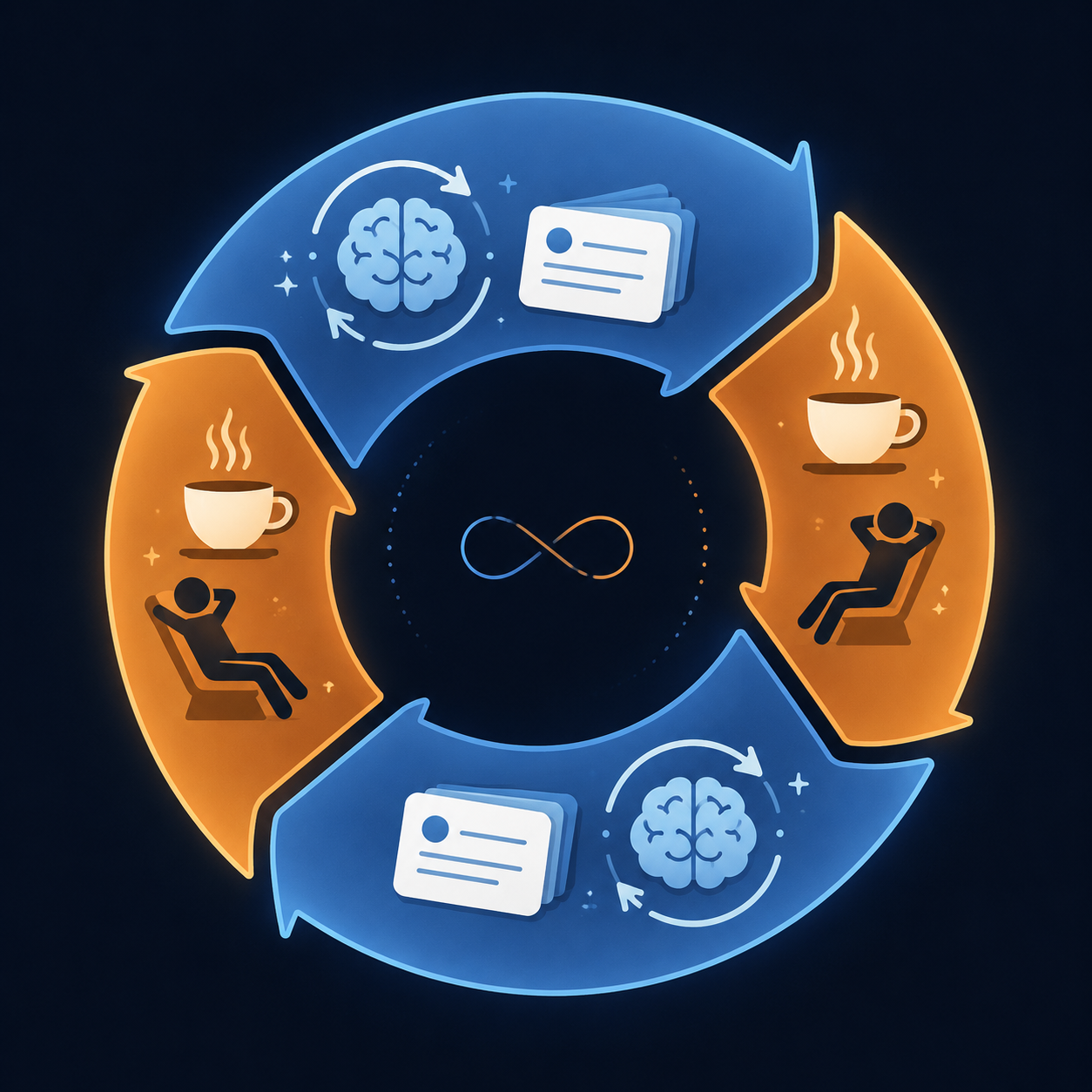
Kansas State University Counseling Services recommends self-testing with tools such as flashcards, practice questions, and brain dumps, with short breaks every 60 to 90 minutes to reduce overload.[3] That is why the schedule uses 90-minute blocks rather than one heroic, blurry six-hour stretch.
The evidence points in the same direction: retrieval practice beats passive review. A BBC Future article discussing Karpicke and Roediger’s 2006 work reports that testing produced about 80% more retention than rereading in that research context.[4] Do not turn that number into a universal promise for every student and every exam. Use the safer conclusion: forcing recall is a better use of scarce time than looking at the same page again and hoping familiarity holds under exam conditions.
| Minute | Action | What it should feel like |
|---|---|---|
| 0-10 | Closed-book brain dump of the topic | Uncomfortable. Good. |
| 10-45 | Flashcards, short-answer prompts, formula drills, definitions, diagrams, or problem steps | You are answering before checking. |
| 45-70 | Practice questions or past-paper style prompts | You are applying, not admiring. |
| 70-80 | Check answers and mark errors | No arguing with the key. Log the miss. |
| 80-90 | Retest the errors immediately | One more clean attempt before the break. |
| 90-105 | Break | Away from the desk if possible. |
A brain dump is not a diary entry. Pick one topic, close everything, and write what you can produce: definitions, steps, diagrams, formulas, exceptions, examples, likely essay arguments, or problem-solving procedures. Then compare against the source and mark gaps. If you cannot produce it without looking, it is not ready.
For flashcards, keep the prompt small enough to answer and large enough to matter. “Photosynthesis” is too broad. “What happens in the light-dependent reactions, and what products feed the Calvin cycle?” is a test. “Define opportunity cost” is fine if definitions are tested. “When would opportunity cost change the decision in this scenario?” is better if application is tested.
Practice questions deserve priority whenever the exam will ask you to solve, interpret, write, or apply. Do them before you feel ready. Waiting until you feel ready is often just rereading in a nicer jacket. If you have past papers, homework, quizzes, lab questions, review problems, or sample prompts, put them into the 45-70 minute section of the drill block.
How to Use the Error Log Without Spiraling
The error log is not a confession booth. It is a routing system. After each block, tag each miss with one reason:
- Memory gap: you had not stored the fact, formula, definition, or term.
- Concept gap: you recognized the topic but could not explain or apply it.
- Process gap: you knew the pieces but used the wrong steps or order.
- Careless error: you rushed, misread, skipped a unit, copied wrong, or answered a different question.
- Exam-language gap: you knew the content but did not understand what the prompt wanted.
Then fix the category, not just the item. Memory gap gets a flashcard and a quick retest. Concept gap gets a brief explanation, then a new example. Process gap gets a blank step template. Careless error gets slower marking and underlining command words. Exam-language gap gets practice identifying what the question is actually asking before answering.
The second day starts with a closed-book morning brain dump. This is not optional if you slept. You need to know what survived the night. Check the dump, update the error log, and spend the first drill block on the gaps that remain in Must Know topics.
What Counts as a Real Break
A break is not a second screen. Use the 15 minutes for water, food, bathroom, a short walk, stretching, or lying down with your eyes closed. If you use your phone, set a timer before touching it. The point is to return with enough attention to test yourself again, not to reward one hard block with a dopamine sink.
Sleep Is Part of the Schedule, Not a Prize
Do not turn this into an all-nighter. Med School Insiders summarizes sleep loss research by noting that all-nighters can produce cognitive impairment comparable to a blood alcohol concentration of about 0.05%, while sleep also supports memory consolidation.[5] That is the opposite of what you need walking into an exam.
The schedule protects a major sleep block after the first day because tired recall gets sloppy. If your exam time makes the exact block impossible, move it, but do not delete it. A few extra facts learned at 3 a.m. are not worth losing your ability to read carefully, calculate cleanly, or retrieve what you already studied.
Phase 4: Final Polish, Not New Learning
At hour 36, the job changes. You are no longer trying to become a different student. You are tightening what you can realistically carry into the exam room. This is where definitions, formulas, mnemonics, diagrams, recurring mistakes, and easy marks belong.
| Use final polish for | Do not use final polish for |
|---|---|
| Definitions likely to appear directly | A brand-new chapter you never understood |
| Formula sheet rehearsal | Watching a full lecture series |
| Mnemonic repair | Rewriting notes neatly |
| One-page recall sheet | Opening unrelated resources |
| Common error review | Debating whether your whole plan was wrong |
| Exam logistics and packing | Studying until the minute you walk in |
Your final sheet should be short enough to review without dread. Put formulas, command words, definitions, diagrams, steps, and your top recurring errors on it. If it becomes a packet, it stops doing its job.
In the last hour, review only the sheet you built and the errors you already identified. Pack your calculator, ID, pens, allowed materials, charger, water, and any approved formula sheet. Confirm the exam room and time. Stop early enough that your last act before the exam is not frantic page flipping.
Use This Printable Version While You Work
Copy this into a document or print it as a one-page working sheet. Fill it in by hand if you can. The point is not aesthetics; it is removing decisions when your brain is already loud.
| Block | Clock time | Task | Done |
|---|---|---|---|
| 0-1 | Gather exam materials and identify exam format | ||
| 1-2 | Rank topics by weighting, emphasis, recurrence, and weakness | ||
| 2-3 | Choose Must Know, Should Know, Quick Wins, Drop Unless Time Remains | ||
| 3-4 | Build attack list and first study pack outline | ||
| 4-8 | Convert Must Know material into recall prompts | ||
| 8-12 | Finish flashcards, practice prompts, brain-dump headings, error log | ||
| 12-14 | Recall block 1 | ||
| 14-14.25 | Break | ||
| 14.25-16 | Recall block 2 with error retest | ||
| 16-17 | Meal and reset | ||
| 17-20 | Recall blocks 3-4 | ||
| 20-21 | Light recall before sleep | ||
| 21-29 | Sleep | ||
| 29-32 | Morning brain dump and error-log repair | ||
| 32-35 | Timed practice questions | ||
| 35-36 | Meal, movement, final list adjustment | ||
| 36-40 | Definitions, formulas, mnemonics, easy wins | ||
| 40-43 | Mixed timed recall | ||
| 43-45 | Pack, confirm logistics, light review | ||
| 45-47 | Sleep, rest, or calm low-effort review depending on exam time | ||
| 47-48 | Final sheet only; stop before panic review |
If anxiety spikes, do not negotiate with the whole 48 hours. Look at the current row only. Do that row. Check it off. Move to the next one.
Forty-eight hours cannot replace a semester. It can still produce a better exam attempt than panicked rereading, especially if you triage hard, convert passive notes into recall prompts, drill the errors that actually show up, and sleep enough to use what you studied.
References
- Have an Effective Cram Session, University of Arkansas
- Cramming for an exam isn’t the best way to learn – but if you have to do it, here’s how, The Conversation, 2024
- How to Cram Effectively, Kansas State University Counseling Services
- The worst way to learn, BBC Future, 2014
- How to Cram for Exams, Med School Insiders
Related Guides & Templates
- How to Build Your Perfect Online Homework Agenda: Templates, Apps & Systems Compared →
Stop searching for the 'best' homework planner. This guide helps high school and college students diagnose their real bottleneck—forgetting deadlines, getting stuck on content, or lacking structure—and match it to the right solution: app-based agendas, ready-made templates, or AI-integrated planners.
- myHomework Student Planner Review 2026: Is It Still Worth Using? →
A balanced review of myHomework Student Planner for high school and college students deciding whether it's still a viable choice in 2026. It covers features, pricing, what works, what doesn't, and who it's best for.
- How to Build a Study Planner That Actually Works for ADHD College Students →
A practical guide to designing a study planner template — printable or digital — that addresses time blindness, decision fatigue, and task initiation challenges so college students with ADHD can stick with it long-term.
Comments
Join the discussion with an anonymous comment.