Planner
Best Places to Watch the 2026 Perseid Meteor Shower in the US
Plan your 2026 Perseid meteor shower viewing with the best US dark-sky parks, exact peak timing under a new moon, and realistic meteor rates of 50–75 per hour. Includes camping booking tips and dark-adaptation techniques for a memorable night under the stars.
Scope panel
- Target exam
- not specified
- Timeline length
- not specified
- Format
- not specified
- Last reviewed
The 2026 Perseids are worth planning around now, not because meteor showers are rare, but because the calendar finally behaves. The shower peaks on the night of August 12–13, with the American Meteor Society listing peak activity at 14:53 UTC on August 13, and the moon is new, so moonlight will not wash out the sky during the best overnight hours.[1][2] For US viewers, that puts the useful plan in very plain terms: get somewhere dark on Wednesday night, stay out after midnight, and protect the 1–4 AM local-time window when the sky usually gives you the best return.[2][3]
This is the part where a lot of meteor-shower guides get annoying. Yes, the Perseids are often described with a zenithal hourly rate, or ZHR, of 100.[1] That is a theoretical rate under idealized conditions, not a promise that a tired person in a camp chair will count 100 meteors between 2 and 3 AM. At excellent dark sites, a more useful expectation is around 50–75 meteors per hour, with some dark-site forecasts allowing higher ranges when conditions cooperate.[4][5] In ordinary rural darkness, 30–50 per hour can still be a good night.[2]
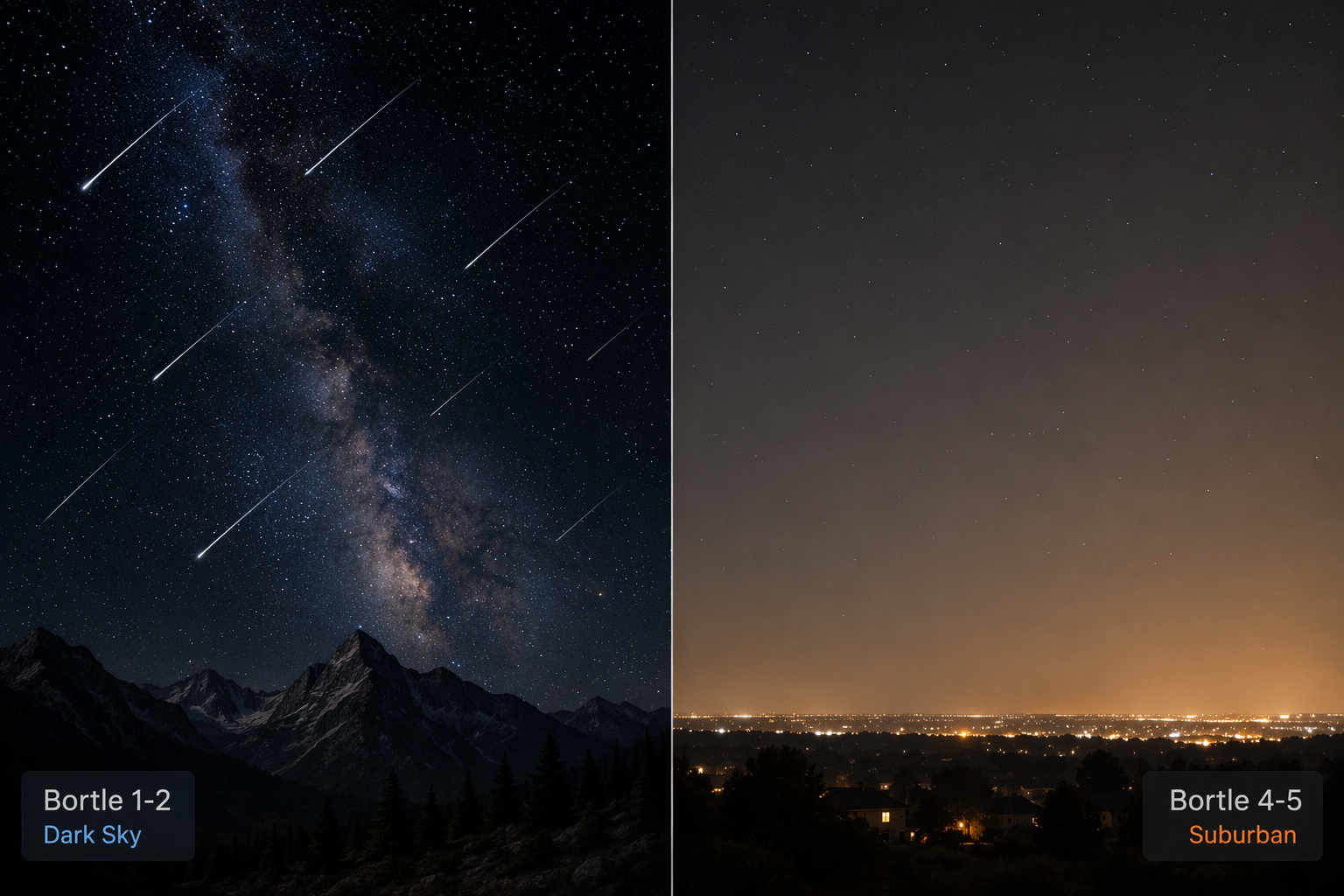
The difference between those outcomes is usually not a telescope. You do not need one for meteors. The difference is sky quality, timing, and whether your group can stay comfortable outside long enough for the shower to build.
The best US places to watch the 2026 Perseid meteor shower
For this particular year, the best places to watch the Perseid meteor shower in the US are not simply the parks with the prettiest photos. The strongest choices combine Bortle 1–2 darkness, a workable overnight plan, and enough visitor infrastructure that a first-time group can actually make it through the night without turning the trip into a survival exercise.
| Destination | Why it belongs on the 2026 shortlist | Best fit |
|---|---|---|
| Death Valley National Park, California/Nevada | Bortle 1 skies and the top Outforia 2026 stargazing score cited by Forbes | West Coast and Southwest travelers who can handle heat logistics and want the strongest sky-quality case |
| Great Basin National Park, Nevada | Bortle 1 darkness plus astronomy programming through the park | Groups that want ranger-supported stargazing and a quieter national-park feel |
| Cherry Springs State Park, Pennsylvania | One of the serious dark-sky options for the eastern US, with 60–85 ideal viewing nights per year | East Coast viewers who cannot justify a western road trip |
| Big Bend National Park, Texas | A premier low-light-pollution Lower 48 national park | Texas and southern US travelers who can plan around distance and summer conditions |
| Natural Bridges National Monument, Utah | The world’s first International Dark Sky Park, designated in 2007 | Four Corners travelers who care about dark-sky heritage and compact park logistics |
| Great Sand Dunes National Park, Colorado | A western dark-sky destination with strong night-sky appeal | Colorado and Mountain West groups looking for a memorable overnight setting |
Death Valley National Park: the strongest data-backed pick
If the only question were sky potential, Death Valley would be hard to beat. Outforia’s 2026 stargazing study, cited by Forbes, gave Death Valley a Bortle 1 rating, 72% clear nights, and a 90.2 stargazing score.[6] That combination matters because meteors punish compromise: a little light pollution can erase the faint streaks that turn a decent shower into a memorable one.
The catch is that August in Death Valley is not casual. A late-night meteor plan avoids the worst of the sun, but it does not remove the need to think about heat, water, driving distances, and where your group will safely rest before and after the 1–4 AM viewing window. Death Valley is the pick for people who can plan the logistics as seriously as the sky.
Great Basin National Park: dark skies with help for first-timers
Great Basin is the kind of place I would trust for a group that wants real darkness but also benefits from structure. It has Bortle 1 skies in the research set, and the park is known for astronomy programming.[7][8] That matters for mixed-experience groups: one person may care about radiant geometry, while someone else just needs to know when to put the phone away and where the ranger says the sky is darkest.
It is especially useful for travelers who want a western dark-sky trip without defaulting to the most famous desert parks. The tradeoff is access. Great Basin is remote enough that you should not treat it as a spontaneous after-class drive unless you already live within a realistic range.
Cherry Springs State Park: the East Coast answer
For East Coast readers, Cherry Springs State Park in Pennsylvania is the practical solution. It is widely treated as one of the darkest serious observing sites in the region, and Visit PA describes it as having 60–85 ideal viewing nights per year.[9] That does not guarantee perfect weather on August 12–13, but it does mean you are choosing a site built around the thing you came to do.
Cherry Springs also keeps the trip budget more realistic for students and early-career groups in the Northeast or Mid-Atlantic. Flying west for a meteor shower can be amazing; it can also turn a free sky event into a very expensive logistics puzzle. If you can drive to Cherry Springs and reserve legally, that may beat a more famous park that your group cannot actually reach.
Big Bend National Park: big darkness, big distances
Big Bend is one of the most compelling Lower 48 options because of its low light pollution. Outside Online and Forbes have both identified it as standing out among national parks for darkness in the contiguous US.[6][7] For Texas travelers, that can make it the closest version of a truly dark Perseid plan.
The planning issue is distance. Big Bend is not the park where you casually realize at dinner that the Perseids peak tonight. Build in the drive, the sleep, the fuel stops, and the fact that everyone still needs to function safely after being awake in the early morning hours.
Natural Bridges National Monument: the dark-sky preservation pick
Natural Bridges National Monument belongs here for a different reason. It became the world’s first International Dark Sky Park in 2007, which makes it more than just another scenic Utah stop.[10] If your group wants the Perseids plus a place with a clear role in dark-sky preservation, this is the cleanest match.
Its strength is also its limitation: this is a remote Four Corners plan. Check camping, nearby lodging, road time, and food before you commit. A beautiful dark site is not helpful if your group arrives exhausted, hungry, and unsure where it is allowed to set up.
Great Sand Dunes National Park: a strong Mountain West option
Great Sand Dunes rounds out the western shortlist because it gives Colorado and Mountain West travelers a dark-sky destination without forcing every plan toward California, Nevada, Utah, or Texas.[6] The park’s open landscape can be excellent for meteor watching because you want a broad view of the sky, not a narrow telescope target.
For groups, the main question is not whether the setting is dramatic. It is whether you can secure a place to stay, manage cool overnight temperatures, and keep people off bright screens long enough to let their eyes adjust.
How to choose between them
Start with driving distance, then darkness. That sounds backwards until you have planned one of these with five people, one borrowed car, and a reservation page that keeps showing no availability. A Bortle 1 park is excellent, but a Bortle 2 site you can reach safely and legally use is usually better than a legendary park your group reaches at midnight with no campsite.
- If you are west of the Rockies and can plan around heat: Death Valley has the strongest sky-quality data point in this set.
- If you want ranger programming or a more guided first-time experience: Great Basin is the cleanest fit.
- If you are in the Northeast or Mid-Atlantic: Cherry Springs is the realistic dark-sky target before you start pricing flights.
- If you are in Texas or the southern Plains: Big Bend is worth the distance if you can build a real overnight plan.
- If you are already building a Four Corners trip: Natural Bridges gives you both dark skies and dark-sky history.
- If you are in Colorado or nearby Mountain West states: Great Sand Dunes is a strong practical candidate.
If none of these parks are realistic, do not abandon the shower. A rural site away from city light can still be worthwhile, especially under a new moon. Just set expectations accordingly: a darker official site improves your odds, but a legal, safe rural viewing spot can still deliver a good Perseid night.
Book the sleep plan before you obsess over gear
For the 2026 Perseids, campsite and lodging logistics are not a side note. TravelPirates and OARS both point to booking popular outdoor trips months ahead, and the useful planning window here is roughly 3–6 months before the shower.[5][11] For an August 12 peak night, that means spring and early summer are not too early. They are the window.
Check reservation systems first, especially for national parks and state parks with controlled overnight access. If the on-site campground is full, look for nearby legal camping, public-land options where permitted, or simple lodging within a safe drive. What you should not do is assume you can roll into a dark-sky park after sunset and figure it out in the parking lot.
For student groups, the unglamorous questions matter early: who is allowed to drive the borrowed car, who is awake enough to drive back, who has a sleeping bag, and whether the group can afford the reservation deposit. If your plan is campus-based, the companion guide on where students can watch the Perseid meteor shower in 2026 is the better place to compare closer, lower-friction options.
The night-of plan: what to do from arrival to 4 AM
Meteor watching is simple, but it is not instant. The most common first-timer mistake is arriving late, opening a bright phone screen, looking up for five minutes, and deciding nothing is happening. Your eyes need time, and the shower needs patience.
| Time | What to do |
|---|---|
| Before sunset | Arrive, find your legal viewing area, set up chairs or blankets, and solve food, water, and bathroom logistics while you can still see. |
| After sunset | Switch to red light only. Avoid white flashlights, headlights, and bright phone screens. |
| At least 30 minutes before serious viewing | Let your eyes dark-adapt. Keep phones dimmed and pointed down if they must be used. |
| Around midnight | Settle in. Meteors should become more productive after the radiant rises higher, but do not treat midnight as the finish line. |
| 1–4 AM local time | Watch the open, darkest sky you have. This is the key viewing window for US observers. |
Dark adaptation takes about 30 minutes, and bright white light can reset the process.[7][8][12] This is why one person’s phone flashlight can wreck the first half hour for everyone nearby. Use a red flashlight, or cover a light with a red filter before the trip. Red light is not magic, and it can still be too bright, but it is much less destructive than a white beam.
Do not stare only at the Perseid radiant. The meteors appear to radiate from Perseus, but the longer, more satisfying streaks often show up away from the radiant across darker open sky. Lie back, keep as much sky in view as possible, and let your peripheral vision work. A reclining chair or sleeping pad is not luxury gear here; it keeps your neck from giving up before the shower gets good.
If you are trying to photograph the shower, separate that plan from the casual viewing plan. Cameras, tripods, intervalometers, and screen discipline add complexity. Use the dedicated guide on how to photograph the 2026 Perseid meteor shower rather than turning the whole group into unpaid tripod assistants at 2 AM.
What to pack for a low-cost Perseid night
Keep the packing list focused on the three things that actually decide whether people stay outside: comfort, darkness, and safety.
- Reclining camp chair, sleeping pad, or blanket so you can look up without neck pain.
- Warm layers, even in August, because clear dark-sky sites can feel much colder after midnight.
- Red flashlight or headlamp with a red mode, tested before the trip.
- Water and simple snacks that do not require bright lights or complicated cooking at 2 AM.
- Battery pack, with phone brightness turned down and night settings prepared in advance.
- Bug protection where relevant, especially at eastern or wetter sites.
- A real sleep and driving plan for the morning after.
A telescope is not on that list because it is not needed. Meteors move too fast and cover too much sky. Binoculars are also optional at best; they can be fun for star fields while you wait, but the main event is naked-eye viewing.
A quick note on the August 12 eclipse
There is a total solar eclipse on August 12, 2026, the same date as the Perseid peak night, but it is not a US viewing-location storyline for this guide. The eclipse path is associated with places including Greenland, Iceland, and Spain.[13] For US Perseid planning, treat it as an interesting calendar coincidence, then get back to the practical question: where will you be under dark, moonless sky after midnight?
What a good 2026 Perseid plan looks like
A strong plan is boring on paper and excellent at 2 AM. Pick a Bortle 1–2 destination if you can, reserve the overnight piece 3–6 months ahead, arrive before dark, stop using white light, give your eyes 30 minutes, and watch the darkest open sky from roughly 1–4 AM. Expect a spectacular night at the best sites, but expect it honestly: around 50–75 meteors per hour is a better planning number than the theoretical ZHR of 100.
Students who want the trip framed around classes, clubs, and transportation should use A Student’s Guide to the 2026 Perseid Meteor Shower. If you want to turn the night into more than sightseeing, use Turn the 2026 Perseid Meteor Shower Into an Astronomy Study Session. The sky will do its part in 2026. The rest is booking early enough, staying dark enough, and not leaving before the best hours begin.
References
- 2026 Meteor Shower Calendar, American Meteor Society
- Perseid meteor shower 2026: All you need to know, EarthSky
- Perseid Meteor Shower 2026, Space.com
- Meteor showers 2026: When and where to see them, The Planetary Society
- Perseid Meteor Shower 2026: When, where and how to see it, TravelPirates
- The Best U.S. National Parks For Stargazing, According To A New Study, Forbes, June 2026
- The Best National Parks for Stargazing, Outside Online
- Astronomy, National Park Service
- Cherry Springs State Park, Visit PA
- Natural Bridges National Monument, DarkSky International, 2007
- How Far in Advance Should You Book a National Park Trip?, OARS
- Stargazing Tips, National Park Service
- Total Solar Eclipse of 2026 Aug 12, NASA
Referenced in this schedule
- 2026 Perseid Meteor Shower Peak Date and Viewing Tips
- How to Build a Weekly Assignment Planner in Google Sheets (Free Template)
- The Complete Guide to Building a Weekly Homework Planner System That Actually Works
Check this against the exam hub
Target exam not specified — see all exam hubs.
Comments
Join the discussion with an anonymous comment.