
Method
Which Pompeii Documentary Should a History Student Trust?
Not all Pompeii documentaries are equally reliable. This evidence-graded guide helps history students pick the most credible documentary for their learning goal, whether they need eruption details, daily life, archaeological method, or survivor narratives.
Evidence panel
- Evidence level
- High
- Primary citation
- Tuck (2024) Pompeii evacuees research
If you need one Pompeii documentary for history students, start by asking what the assignment actually needs. For current excavation method, Pompeii: The New Dig is the safest first choice because it is built around active archaeological work at a site where roughly one-third of Pompeii’s 66 hectares remains unexcavated.[1] For daily life, interpretation, and how historians handle uncertainty, Mary Beard’s Pompeii: Life and Death in a Roman Town remains the strongest scholarly viewing choice, even though it predates the most recent discoveries.[2]
That distinction matters. A documentary can be vivid, well narrated, and still be weak evidence for an essay if it hides where reconstruction begins. A student can watch a reenactment usefully, but not if the film’s confidence makes every scene look equally excavated, equally documented, and equally safe to cite.
| Best use | Strongest choice | Evidence grade | How to use it |
|---|---|---|---|
| Current archaeology and excavation method | Pompeii: The New Dig | High | Use as a core learning source for how excavation changes what historians can say.[1] |
| Daily life and historical interpretation | Pompeii: Life and Death in a Roman Town | High for interpretation; Moderate for date of evidence | Use for method, caution, and social history; supplement with newer finds.[2] |
| Survivor narratives and historiographical revision | Pompeii: Out of Time | Moderate-to-High, pending fuller review | Use cautiously because it has just premiered and dramatized scenes remain hypothetical. |
| Eruption sequence and Pliny-based narrative | Pompeii: The Last Day | Moderate | Useful as an older docudrama, but do not treat unlabeled CGI as direct evidence. |
| Atmosphere, memory, or film analysis | Pompei: Below the Clouds | Limited as a history-learning source | Use only if the assignment is about modern reception, not as a primary Pompeii explainer. |
| Free clips and uploaded documentaries | Official Archaeological Park footage, then carefully checked uploads | High to Limited | Check provenance before relying on a YouTube version. |
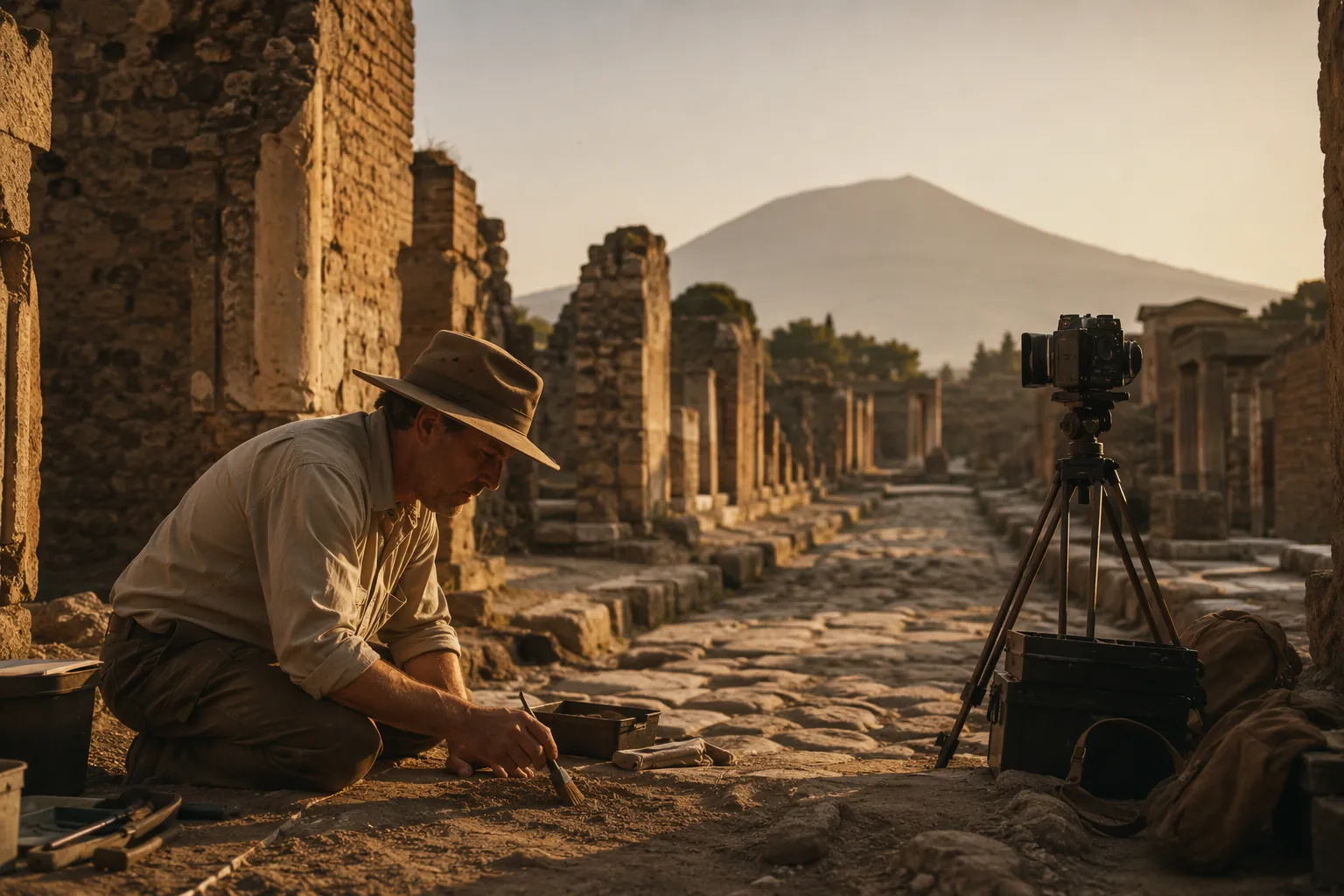
The Evidence Label Is Not a Taste Label
The labels here judge academic usefulness, not entertainment value. High means a student can reasonably use the documentary as a core learning source for a defined task. Moderate means the program is useful, but only with caveats about age, dramatization, or scope. Limited means it may help with atmosphere, media analysis, or historiography, but should not anchor a factual account of Pompeii.
The same method works beyond Pompeii: grade the source before you borrow its confidence. StudyMethod uses that kind of evidence-graded approach in other methods pieces, including this safety-briefing method article. For a history assignment, the practical question is simpler: can you tell what came from excavation, what came from an ancient text, what came from modern interpretation, and what the filmmakers invented to make the scene move?
Why The New Dig Is the Strongest Current Pick
The strongest reason to watch Pompeii: The New Dig is not that it is newer in a shallow release-date sense. It is stronger because its subject is discovery in progress. PBS presents the series around archaeologists excavating a city that is still only partly uncovered: Pompeii covers 66 hectares, and roughly one-third remains buried.[1] That single fact is worth more for students than another perfectly rendered street scene.
It teaches the right discomfort. Pompeii is often assigned as if it were a frozen, fully legible classroom model of Roman life. The buried third interrupts that habit. It reminds students that a confident textbook paragraph may rest on an uneven archive: preserved houses, lost upper floors, excavated neighborhoods, unexcavated ones, organic materials that survived by accident, and bodies whose positions became evidence only because catastrophe stopped ordinary movement.
The 2024 Regio IX work also gives students something concrete to do with that discomfort. BBC News reported on the discovery of the largest private bath complex found at Pompeii, including a plunge pool large enough for 20 to 30 people and a boiler room where the physical labor of enslaved workers becomes visible in the architecture of comfort.[3] That is exactly the sort of find that changes how a student reads luxury. A bath is not just leisure. It is heat, water, fuel, maintenance, status, and coerced labor arranged into rooms.
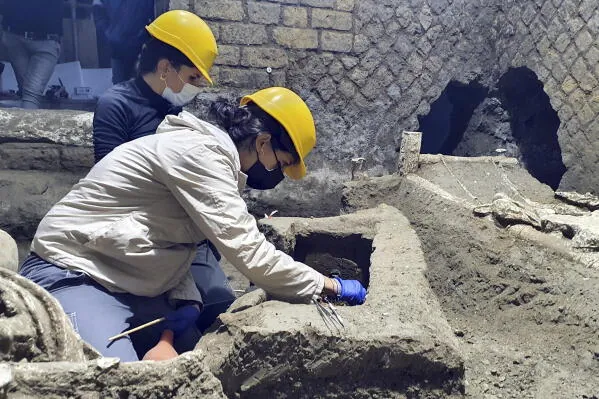
For essay work, The New Dig is most useful when the prompt asks about archaeological method, changing interpretations, domestic space, social hierarchy, or the limits of evidence. It is less ideal as the only source for a broad survey of Roman religion, politics, or imperial history because its strength is site-specific excavation rather than a complete course in ancient Rome.
What to Write Down While Watching
- Mark every moment when an archaeologist distinguishes a find from an interpretation.
- Note which rooms, tools, wall paintings, drains, ovens, boilers, or bodies are treated as evidence.
- Separate what the excavation shows from what the narration reconstructs.
- Use the unexcavated-third fact to avoid writing as if Pompeii is a completed archive.
Why Mary Beard Still Belongs Near the Top
Mary Beard’s Pompeii: Life and Death in a Roman Town is not the newest documentary in this list, and that matters. It aired in 2010, before the 2024 Regio IX excavations and before the recently reported private bath complex discovery entered the classroom conversation.[2][3] If your assignment requires the latest excavation evidence, do not stop with Beard.
But age is not the same as weakness. Beard’s value is her treatment of uncertainty as part of the evidence, not as an embarrassment to be edited out. When a presenter walks through an ancient room and is willing to say, in effect, that we do not know exactly what this was for, students get a model of historical honesty that many glossier documentaries avoid. That restraint is not less educational than CGI. It is the education.
For students writing on daily life, Beard remains especially useful because she keeps asking what ordinary evidence can and cannot support: houses, food, graffiti, bodies, streets, social display, and the messy closeness of public and private life. The result is not a Pompeii of clean museum labels. It is a town where evidence has to be handled, argued over, and sometimes left unresolved.
That makes the best use of Beard slightly different from the best use of The New Dig. Use Beard when you need to show how historians reason from material remains. Use The New Dig when you need the most current window into excavation and newly exposed structures. If an essay allows more than one documentary, they pair well: one teaches interpretive discipline, the other updates the evidence base.
Out of Time Is Promising, But Do Not Overcite It Yet
National Geographic’s Pompeii: Out of Time, narrated by Tom Hiddleston, deserves attention because it appears to be trying to solve one of the worst documentary habits: letting invented scenes pass as recovered fact. Pre-release coverage describes a series that explicitly signals what is fact and what is fiction, and Science News notes consultation with archaeologist Caitie Barrett of Cornell University.[4]
Its most interesting academic angle is survival. Steven L. Tuck’s 2024 research identified more than 200 Pompeii evacuees across 12 cities by using Roman-name database analysis, complicating the familiar total-annihilation story.[5] If a documentary helps students move from “everyone died” toward “some died, some fled, and some rebuilt lives elsewhere,” it is doing useful historical work.
The caveat is timing. The series premiered July 22–23, 2026, so a full episode-by-episode academic judgment is still premature as of July 23, 2026. National Geographic’s own program page and preview coverage establish the premise and presentation, but they do not replace careful viewing of the completed episodes.[6][7] For now, treat Out of Time as Moderate-to-High: promising for survivor narratives and source-labeling, not yet the safest single anchor for a paper.
Older Docudrama Can Help, If You Keep It in Its Lane
BBC’s Pompeii: The Last Day is still useful for students who need a clear eruption narrative built around Pliny’s account, but it is a 2003 docudrama.[8] That means the viewing problem is not simply whether it is “accurate” in a general way. The problem is that dramatization and CGI can make uncertain sequences feel settled.
A student can use it to understand the broad story of eruption, panic, ash, and death. A student should not use it as the main authority for the fine details of movement, dialogue, household behavior, or precise visual reconstruction. If you cite it, identify it as a docudrama and pair it with a more transparent source.
YouTube Is a Location, Not a Source
A YouTube result can be a reliable primary viewing option, a legal repost, a clipped broadcast, a mislabeled upload, or a channel compilation with weak sourcing. The platform itself does not tell you which one you have. Official Archaeological Park of Pompeii footage deserves a much higher starting level of trust than an upload with no production date, no institution, no expert credits, and no way to tell whether captions were added later.
- Check the original broadcaster or institution before using a YouTube documentary in coursework.
- Look for named archaeologists, historians, or museums, not just a polished narration voice.
- Find the original release date so you know whether it predates major recent finds.
- Avoid citing a repost when a broadcaster, museum, or official site page is available.
Below the Clouds Is Not the Documentary Most Students Mean
Gianfranco Rosi’s Pompei: Below the Clouds should not be mistaken for a standard educational Pompeii documentary. Reviews describe it as an art-house meditation connected to modern Naples, memory, and landscape rather than a didactic historical guide to the ancient city.[9][10] That does not make it unserious. It makes it the wrong answer for most students asking which Pompeii documentary can support a history assignment.
Use it only if the assignment is about modern reception, documentary form, memory, or the afterlife of ruins. Do not use it as your main source for eruption chronology, daily Roman life, or excavation method.
Match the Documentary to the Assignment
| If your prompt asks about... | Watch first | Add if needed | Avoid as your anchor |
|---|---|---|---|
| How archaeology changes historical knowledge | Pompeii: The New Dig | Official excavation footage or newer excavation reporting | Unlabeled YouTube reposts |
| Daily life in a Roman town | Pompeii: Life and Death in a Roman Town | Pompeii: The New Dig for newer evidence | Pure eruption docudramas |
| The eruption sequence | Pompeii: The Last Day, with caveats | A newer excavation-based source | Dramatized scenes treated as eyewitness fact |
| Survivors and what happened after 79 CE | Pompeii: Out of Time, cautiously | Steven L. Tuck’s survivor research coverage | Total-annihilation summaries with no caveat |
| Film style, memory, or modern Naples | Pompei: Below the Clouds | Reviews and film criticism | Using it as a factual Pompeii explainer |
For AP students, the same source-evaluation habits apply even when Pompeii is not the whole unit. If you are connecting visual evidence, monuments, or material culture to exam-style analysis, pair documentaries with course materials and object-specific guides rather than letting one film carry the whole argument. An AP Art History student, for example, can practice that object-centered habit with StudyMethod’s White House statues study guide and then bring the same caution back to Pompeii: what is the object, what is the context, and what claim does the evidence actually support?
Final Recommendation
Choose Pompeii: The New Dig if you need current archaeology, excavation method, or a reminder that Pompeii is still being interpreted rather than merely illustrated. Choose Mary Beard’s Life and Death in a Roman Town if you need daily life and disciplined historical reasoning. Use Out of Time cautiously for survivor narratives once fuller episode-level reviews are available. Treat older docudramas, unverified uploads, and art-house films as supplementary material unless your assignment specifically asks for them.
References
- Pompeii: The New Dig, PBS.
- Pompeii: Life and Death in a Roman Town, IMDb.
- Pompeii: Largest private bathhouse found in ancient city, BBC News.
- A new Pompeii documentary asks: What happened after Vesuvius erupted?, Science News.
- Archaeologists find records of Pompeii survivors that reveal how they rebuilt their lives, PBS News.
- Pompeii: Out of Time with Tom Hiddleston, National Geographic.
- Tom Hiddleston Previews National Geographic’s Pompeii: Out of Time, Nerds of Color, July 17, 2026.
- Pompeii: The Last Day, Wikipedia.
- Pompei: Below the Clouds, RogerEbert.com.
- Pompei: Below the Clouds, The New Yorker.
Applies to
Exam applicability isn't specified for this technique yet. See all exam hubs.
Comments
Join the discussion with an anonymous comment.