
Method
The Complete Spaced Repetition Study Method Guide: How It Works, Schedules, and Getting Started
This guide explains what spaced repetition is, why it's the most effective evidence-based study technique, and gives you a step-by-step plan to start using it today with either paper flashcards or free apps. Perfect for high school and college students new to the method.
Evidence panel
- Evidence level
- pending review
- Primary citation
- citation pending review
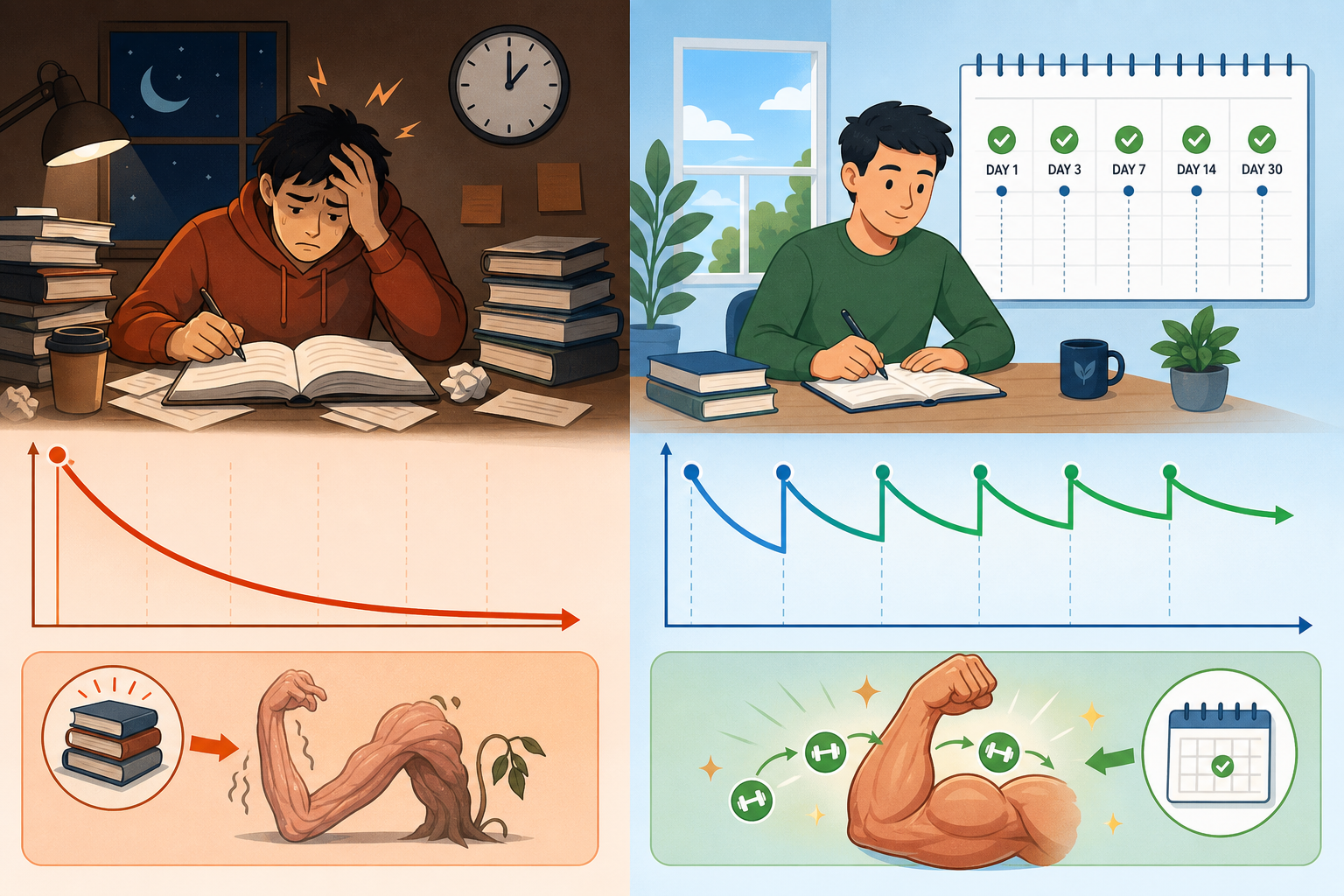
Spaced repetition is a memory technique where you review information at gradually increasing intervals over time. Instead of studying the same material in a single marathon session (cramming), you return to it just as you’re about to forget it. Each successful recall strengthens the memory, so you can wait longer before the next review. The method flips the traditional study pattern: short, frequent initial sessions build a foundation, then progressively longer gaps lock that knowledge into long-term storage.
Think of it like watering a plant. A new sapling needs water every day. Once rooted, it can go days, then weeks without care. Your brain works the same way: fresh information needs frequent reinforcement; once consolidated, it thrives on occasional check-ins. The core insight is that timing matters as much as effort — studying the same amount spread across intervals produces far better retention than lumping it together.
The Science Behind Spaced Repetition
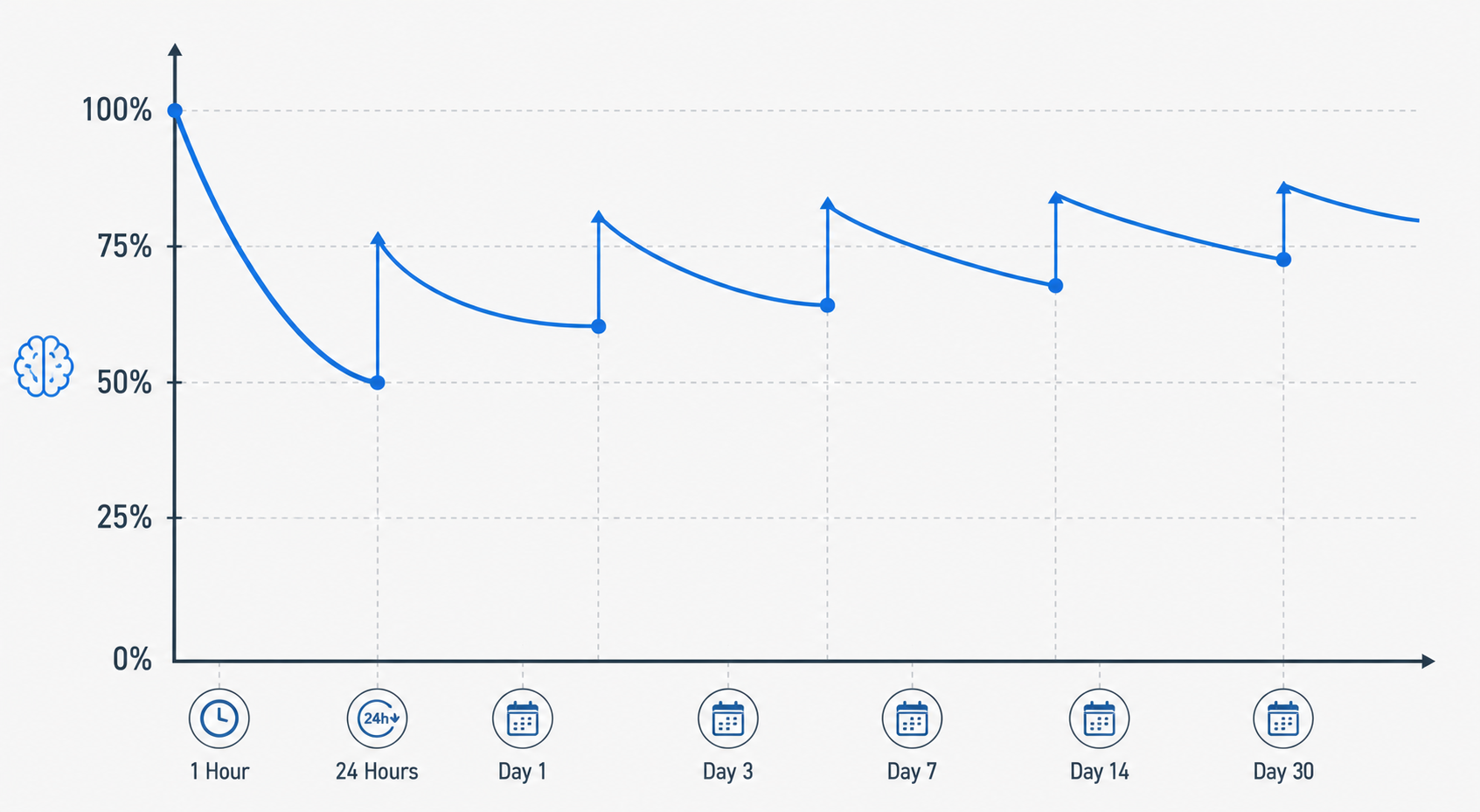
In the 1880s, psychologist Hermann Ebbinghaus mapped how quickly the brain discards unused information. His forgetting curve shows that without any review, people forget roughly 50% of new material within an hour, 70% within 24 hours, and about 90% within a week. That steep drop-off is why a single pass through notes — no matter how focused — rarely survives until exam day.
Applies to
Exam applicability isn't specified for this technique yet. See all exam hubs.
Comments
Join the discussion with an anonymous comment.