
Method
How the Clipper Endeavor Crash Created the Safety Briefing Method
The 1952 Clipper Endeavor crash directly led to the mandatory pre-flight safety briefing. This article examines how failure analysis produced a replicable protocol and what that process teaches about designing evidence-graded study methods.
Evidence panel
- Evidence level
- Moderate
- Primary citation
- Dunlosky et al. (2013)
The newly found wreckage of Pan Am Flight 526A is a powerful image for 2026: a Douglas DC-4 resting about 2,000 feet below the surface off Puerto Rico, located by Deep Sea Vision on June 2, with the Pan Am logo still legible after 74 years underwater. The discovery was announced on July 21 by the Air/Sea Heritage Foundation and Discovery Channel’s Expedition Unknown. It is tempting to treat the find as a solved mystery, a missing aircraft finally returned to history. But the more durable object recovered from the Clipper Endeavor crash is not the metal. It is the method that followed it: the standardized pre-flight safety briefing now performed so routinely that many passengers barely look up. [1]
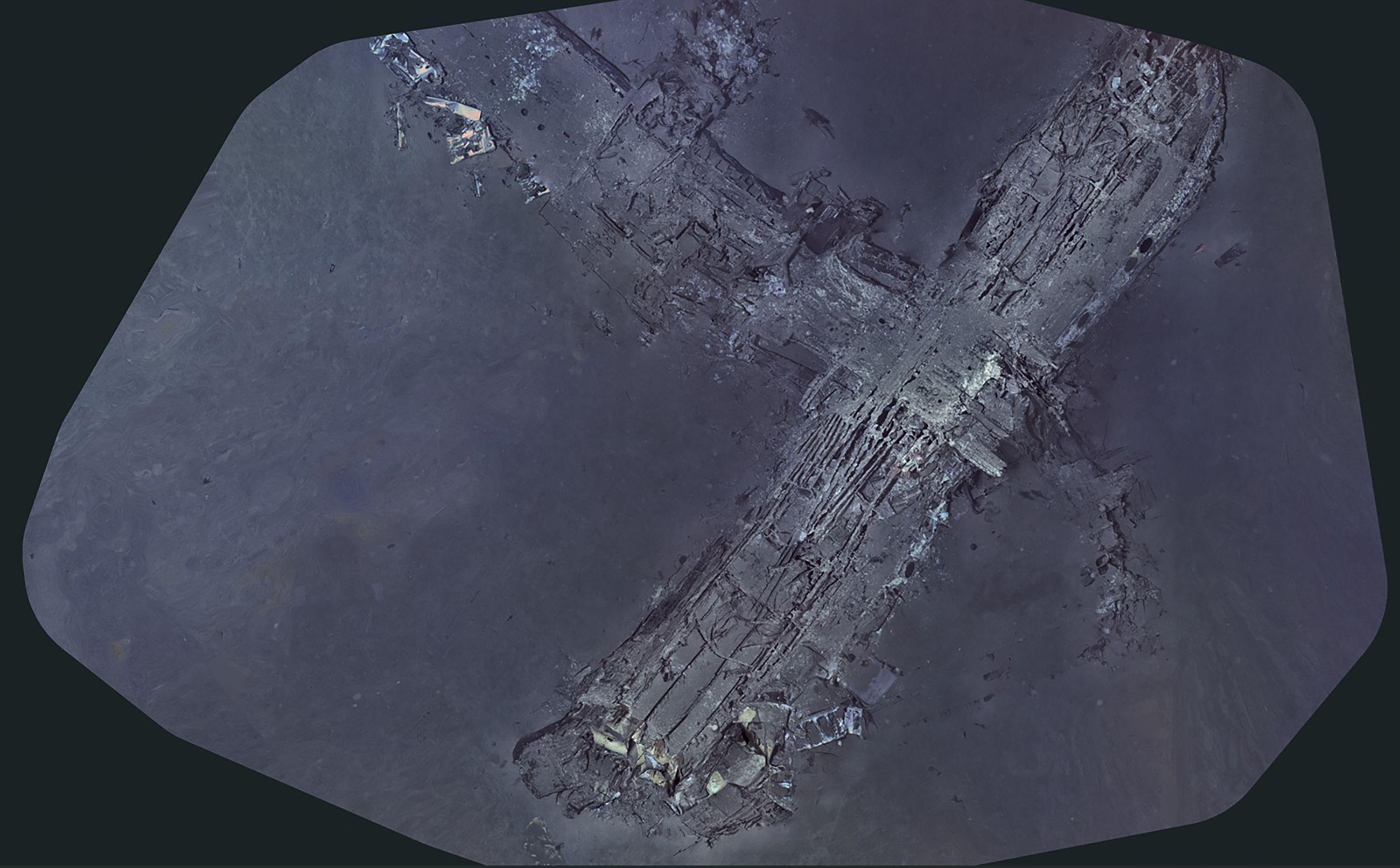
That matters because the aviation safety changes after the Clipper Endeavor crash were not vague cultural lessons about being more careful. The crash exposed a specific procedural failure: emergency equipment existed, but passengers had not been given a timed, standardized briefing on where it was, how to use it, and what to do before the aircraft was already sinking. The Civil Aeronautics Board response turned that finding into a required behavior.
The human stories still cut through the procedural language. News accounts in 2026 relayed Josh Gates’ statement that two survivors were still alive: a 102-year-old woman described as the nurse who opened the aircraft door, and a person who had been a baby found floating and resuscitated after the crash. Those details are moving, but because available reporting is secondhand, they carry limited evidentiary weight. [1][2]
Nine minutes was enough time to expose the real failure
Pan Am Flight 526A departed San Juan on April 11, 1952. The timeline is brief enough to read almost like a drill script gone wrong: takeoff at 12:11, the number 3 engine failing at about 350 feet, the number 4 engine failing at about 550 feet, ditching at 12:20, and the fuselage sinking in less than three minutes. [3]
| Moment | What happened | Why it mattered procedurally |
|---|---|---|
| 12:11 | The aircraft took off from San Juan. | Passengers entered the emergency without a standardized over-water briefing. |
| About 350 feet | The number 3 engine failed. | The crew’s margin for explanation and correction began to collapse. |
| About 550 feet | The number 4 engine failed. | The aircraft was now in an emergency where improvised passenger instruction would be difficult. |
| 12:20 | The aircraft ditched in the water. | Impact survival was not the same as evacuation survival. |
| Less than three minutes later | The fuselage sank. | Passengers had almost no time to learn equipment location, life-vest use, exits, and raft procedures. |
The detail that changes the moral shape of the disaster is that all 69 people aboard reportedly survived the initial impact. Fifty-two died after the ditching, primarily by drowning as the aircraft sank. [4] That is a different kind of failure from a crash in which the impact itself leaves no operational lesson for passengers. Here, the sequence says something more uncomfortable: people lived through the thing they could not control, then died in the interval where a better-prepared procedure might have mattered.
The available accounts identify several connected gaps. No pre-flight safety briefing had been given. Life vests and life rafts were available, but passengers did not know enough about their location or use. Language barriers made emergency instructions harder to convey during the evacuation itself. [4][5] None of those facts means every death was individually preventable; an aircraft sinking in under three minutes creates brutal constraints. But the constraints are exactly why the missing briefing mattered. The learning had to happen before takeoff, not after the cabin became a timed test.
That is the distinction easy safety language often blurs. Having equipment is not the same as having usable knowledge. A life vest under a seat is only a resource if the passenger knows it is there, can retrieve it quickly, can put it on correctly, and understands when inflation helps rather than harms. A life raft is only part of a system if passengers and crew have a shared expectation about where it is and how evacuation will flow toward it. Under pressure, knowledge that exists somewhere in the airline’s manuals but not in the passenger’s working memory is not a method. It is inventory.
The CAB did not stop at “communicate better”
The Civil Aeronautics Board accident report, dated September 26, 1952 in the cited accounts, is the hinge between tragedy and protocol. The key response was not simply to tell airlines to be more safety-minded. The CAB proposed amendments to civil air regulations requiring oral briefings before over-water flights, with specified content: the location of life vests, how to don them, the location of life rafts, and the location of emergency exits. [2]
The exact amendment number and effective date require confirmation against the primary CAB file; the accessible secondary reporting is stronger on the substance than on those publication mechanics. But the substance is the important design lesson. The CAB identified the failure mode, named the missing behavior, and tied the required behavior to a flight context where it mattered most: over-water operations.
| Failure analysis | Protocol response |
|---|---|
| Passengers did not know where life vests were. | Brief passengers orally on life-vest location before over-water flights. |
| Passengers did not know how to put life vests on. | Brief passengers on donning procedures before the emergency. |
| Passengers did not know where life rafts were. | Brief passengers on raft location while time and attention still exist. |
| Passengers had to evacuate quickly as the fuselage sank. | Brief passengers on emergency exit location before takeoff. |
| Real-time instructions could be disrupted by stress, time pressure, and language barriers. | Move essential knowledge into a standardized pre-flight routine. |
A weak intervention would have said, “Make sure passengers understand safety equipment.” That sounds humane, but it leaves the actual behavior undefined. Who says it? When? To which passengers? On which flights? About which equipment? The CAB recommendation had the shape of a method because it answered those operational questions. It converted an after-action finding into a repeatable pre-action routine.
This distinction also keeps the Clipper Endeavor claim honest. The crash was not the first time anyone thought passengers might need safety information. An earlier 1928 KLM Fokker F.III crash had already prompted discussion of exit briefings. [6] The stronger and better-supported claim is narrower: the Clipper Endeavor crash directly led to the first regulatory mandate for a standardized pre-flight briefing method, especially for over-water safety information. The difference between “someone discussed this before” and “the system now requires this behavior in this form” is not pedantry. It is the whole story of how a method becomes durable.
A method is what survives the emergency
The Clipper Endeavor case is useful outside aviation because it gives a clean test for method design. A real method is not a helpful intention. It is a standardized response to an observed failure, narrow enough to practice and mandatory enough to appear before the moment of need.
That is also the difference between serious study methods and study folklore. A student who rereads notes for hours may be working hard, but the procedure may not address the actual failure: being unable to retrieve the answer under test conditions. A stronger method begins by naming that gap. If recall fails when the book is closed, the intervention has to create closed-book retrieval before the exam, not more visual familiarity with highlighted pages.
Dunlosky and colleagues’ 2013 review evaluated 10 learning techniques by looking at evidence for their utility across learning conditions, student characteristics, materials, and criterion tasks. Practice testing and distributed practice received high-utility ratings; several popular techniques, including highlighting and rereading, received lower ratings. [7] The point is not that studying is aviation, or that every exam mistake is an emergency. The point is that evidence-graded methods follow the same disciplined sequence: identify the performance gap, specify the procedure, test whether it transfers, and standardize the parts that earn trust.
This is why retrieval practice earns more respect than a vague instruction to “review more.” It says what the learner must do: attempt to produce the answer from memory, check it, correct it, and return to it later. Active recall is not stronger because the phrase sounds modern; it is stronger when it changes the learner’s behavior before the test exposes the gap. The same standard applies to structured reasoning tools like the IRAC method: the method matters only if it reliably changes what the student does when pressure rises.
The Clipper Endeavor briefing template is almost austere in this respect. It did not try to make passengers experts in ditching. It selected the few pieces of knowledge most likely to matter in the narrow time window: vest location, vest use, raft location, exits. A good study method has the same restraint. It does not promise confidence, mastery, speed, calm, and perfect memory all at once. It names the bottleneck and forces the behavior that addresses it.
The ordinary briefing is the descendant of a specific failure
Today’s federal rule is much broader than the original over-water life-vest and raft problem. Under 14 CFR 121.571, certificate holders must ensure passengers receive an oral briefing before each takeoff on required subjects such as smoking, emergency exits, seat belts, flotation equipment where applicable, oxygen use for flights involving high altitude, and other instructions tied to the aircraft and operation. [8]
Over time, the safety demonstration also expanded in format and content: seat belts, exits, oxygen masks, smoking rules, electronic-device restrictions, and equipment-specific instructions became part of the ordinary passenger experience. Internationally, pre-flight safety demonstration requirements are also reflected in ICAO Annex 6, according to summaries of the practice’s regulatory background. [6]
Ordinary does not mean perfectly absorbed. Research summarized in the safety-demonstration literature reports that passengers retain only about 35% to 50% of key safety messages, with roughly 4% decay over two hours; studies cited there also report higher scores for celebrity-presented and humor-enhanced formats than for standard deliveries. [6] That evidence should be read carefully. It speaks to message retention under studied conditions, not a guarantee that any given briefing will produce correct behavior in a real evacuation. Still, it shows the protocol did not stop evolving once the rule existed. Delivery quality became part of the method problem.
That is the quiet lineage from the Clipper Endeavor to the present cabin. A crash investigation found that passengers could survive impact and still die because essential knowledge had not been made usable in time. Regulators answered by specifying a behavior before the emergency. Later rules broadened the behavior until the briefing became part of the expected texture of air travel.
For a student, the standard is the same even when the stakes are different. If a study technique cannot name the gap it solves, the procedure it requires, and the evidence behind it, it is not yet a method in the serious sense. The Clipper Endeavor crash forces respect for that distinction: durable methods are born when investigators refuse to stop at blame and turn failure into behavior that happens before the next test begins.
References
- Clipper Endeavor: Wreckage of Pan Am plane found 74 years after it crashed off Puerto Rico, CNN, July 21, 2026.
- Wreckage Found of Pan Am Plane Crash That Helped Lead to Today's Safety Briefings, U.S. News & World Report, July 21, 2026.
- Accident Douglas DC-4 N88899, Aviation Safety Network.
- Pan Am Flight 526A, Wikipedia.
- Clipper Endeavor, Pan Am Historical Foundation.
- Pre-flight safety demonstration, Wikipedia.
- Improving Students’ Learning With Effective Learning Techniques: Promising Directions From Cognitive and Educational Psychology, Psychological Science in the Public Interest, 2013.
- 14 CFR 121.571, eCFR.
Applies to
Exam applicability isn't specified for this technique yet. See all exam hubs.
Comments
Join the discussion with an anonymous comment.