
GRE Exam Hub
Yu Deng's Random Data Theory and Better Study Techniques
This article connects Yu Deng's Fields Medal-winning work on random data theory to the learning science of interleaved practice, explaining why randomized study schedules almost-surely produce higher test scores than blocked practice. It presents evidence from randomized controlled trials and practical steps for applying progressive randomization to exam prep.
- gre
- mcat
- asvab
- sat
- act
- digital-adaptive
- official-material
- section-strategy
- test-date-timeline
On July 23, 2026, Yu Deng was awarded a Fields Medal for work on the random data problem: a probabilistic theory of partial differential equations in which random initial conditions can still lead to predictable long-term mathematical behavior, often described through the language of “almost-sure well-posedness.”[1] That is a beautiful idea. It is also not a study-skills result.
Deng did not run homework experiments, compare GRE study plans, or claim that shuffled flashcards behave like nonlinear waves. The useful connection is more modest and more interesting: random data theory gives test-takers a disciplined metaphor for a familiar learning problem. Perfectly ordered inputs can look efficient while producing brittle performance. Controlled randomness can feel worse in practice while producing more stable behavior when the labels disappear.

That distinction matters for anyone searching for yu deng random data theory study techniques. The mathematical theory is not evidence for a prep method. The evidence comes from learning science. But the analogy is a useful way to see why the neatest study calendar is often the least exam-like one.
The Study Plan That Feels Right Can Train the Wrong Skill
Blocked practice is the default because it feels honest. Monday: algebra. Tuesday: geometry. Wednesday: reading passages. Thursday: science. Friday: vocabulary or formulas. The student finishes a stack, checks off the box, and sees visible progress. During the session, accuracy usually rises because the next problem resembles the last one.
The trouble is that standardized tests rarely announce the move. GRE quant does not say, “The next four questions are all rate problems.” SAT math does not keep linear equations, circle geometry, and data analysis in separate piles. MCAT CARS does not give a warm-up label saying whether the next passage requires tone, structure, inference, or author-purpose work. ACT timing pressure punishes students who need a few seconds to remember which chapter they are in. ASVAB AFQT domains require rapid switching across arithmetic reasoning, word knowledge, paragraph comprehension, and mathematics knowledge.
A blocked set trains execution after classification has already been done for the student. A mixed set forces classification before execution. That is the part many study plans quietly skip.
The 61% Versus 38% Result Is the Spine of the Argument
The cleanest evidence here is not a motivational anecdote. It is a randomized controlled trial by Rohrer and colleagues in which seventh-grade students received either interleaved or blocked math homework. On an unannounced test one month later, the interleaved group scored 61%, while the blocked group scored 38%; the reported effect size was d = 0.83.[2]
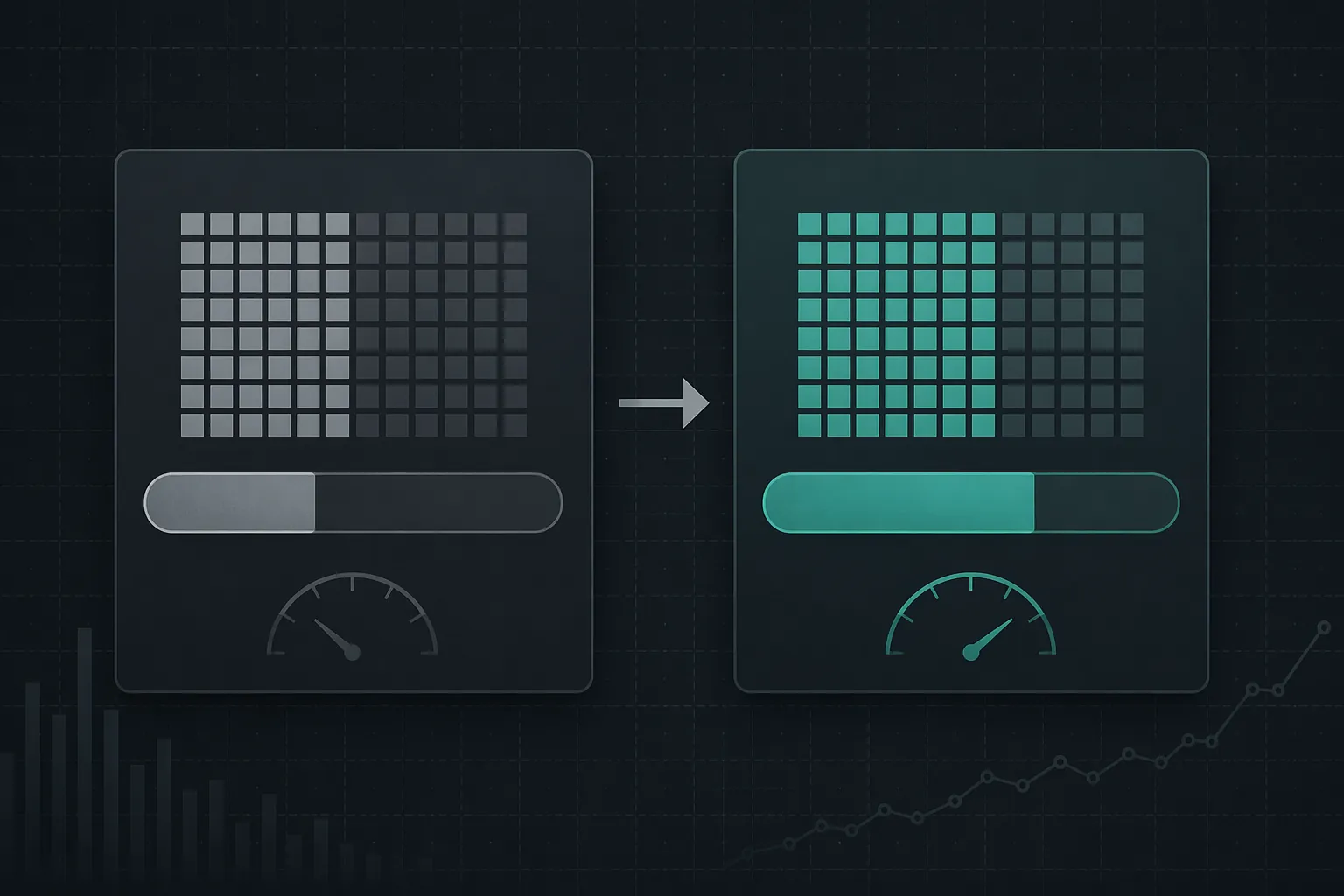
The one-month delay is not a decorative detail. It is the reason the result matters for exams. A same-day practice score often measures recent familiarity: the student has just seen the rule, the examples, and the problem type. A delayed test asks whether the student can retrieve the right approach after the surface cues have cooled off. That is much closer to what happens when a student opens a GRE quant section or sits down for the SAT after weeks of mixed preparation.
The study was conducted with seventh-grade math homework, so it should not be inflated into a universal claim about every adult exam, every learner, or every subject. The safer conclusion is still strong: in at least one randomized classroom experiment, interleaving produced a large advantage on a delayed, unannounced math test.[2] For standardized-test prep, that is the kind of evidence worth respecting because the target behavior is similar in one crucial way: students must decide what kind of problem they are facing before they solve it.
| Practice format | What it rewards | What it can hide |
|---|---|---|
| Blocked set | Repeating a known procedure after the topic is identified | Weakness in choosing the procedure without a label |
| Interleaved set | Selecting among competing procedures before solving | Short-term discomfort that can look like regression |
| Randomized mock section | Exam-like switching under time pressure | Whether pacing and recognition survive without study-room cues |
Why Mixed Practice Feels Worse Before It Works
The performance dip is not a sign that the method is broken. It is one of the most predictable reasons students abandon the method too early.
Shea and Morgan’s 1979 study on contextual interference found the pattern that still explains a great deal of exam-prep frustration: blocked practice can produce better performance during acquisition, while random practice can produce better retention and transfer later.[3] In plain test-prep language, the student doing a single-topic drill may look better on Tuesday. The student doing mixed work may be better prepared when Friday’s quiz, next month’s mock, or the actual exam refuses to identify the chapter.
Robert Bjork’s “desirable difficulties” framing gives the same pattern a useful name: some learning conditions slow visible performance during practice while strengthening later retrieval.[4] “Desirable” does not mean pleasant. It means the difficulty is doing cognitive work that the exam will later demand. If mixed SAT math drops a student from 85% accuracy to 70% accuracy during the first week, that may be a real weakness being exposed rather than a failure being created.
That distinction is where many neat study calendars become misleading. They protect confidence by keeping the decision boundary simple. Today is functions, so every strange-looking expression must probably be a function problem. Today is punctuation, so every sentence correction must probably turn on commas, clauses, or modifiers. Today is MCAT CARS author tone, so every passage question gets interpreted through that lens. The practice feels cleaner because the hardest step has been pre-solved.
Transfer Is the Point, Not the Aesthetic of Randomness
The case for interleaving is not limited to school math. Hatala and colleagues studied medical students learning ECG interpretation and found that students trained with mixed ECG cases made significantly more accurate diagnoses than those trained with blocked cases.[5] That matters because diagnosis, like exam problem solving, depends on discrimination. The learner must notice which features matter, reject tempting look-alikes, and choose an action without being handed the category first.
This is the useful part of the Deng analogy. Random data theory is compelling because it does not treat randomness as mere noise; under the right mathematical conditions, randomness can be part of the route to predictable behavior.[1] Interleaved practice works in a much humbler domain. It does not make study chaotic. It introduces controlled variation so that the student must build classification, retrieval, and switching into the act of practice.
The bridge should stop there. PDE theory does not prove that a student should shuffle MCAT passages. A randomized controlled trial in seventh-grade math does not prove a guaranteed score increase on the GRE. But the mathematical idea helps name the intuition: perfectly smooth inputs can produce fragile learners, while carefully randomized inputs can train behavior that survives messier conditions.
Progressive Randomization, Not Instant Chaos
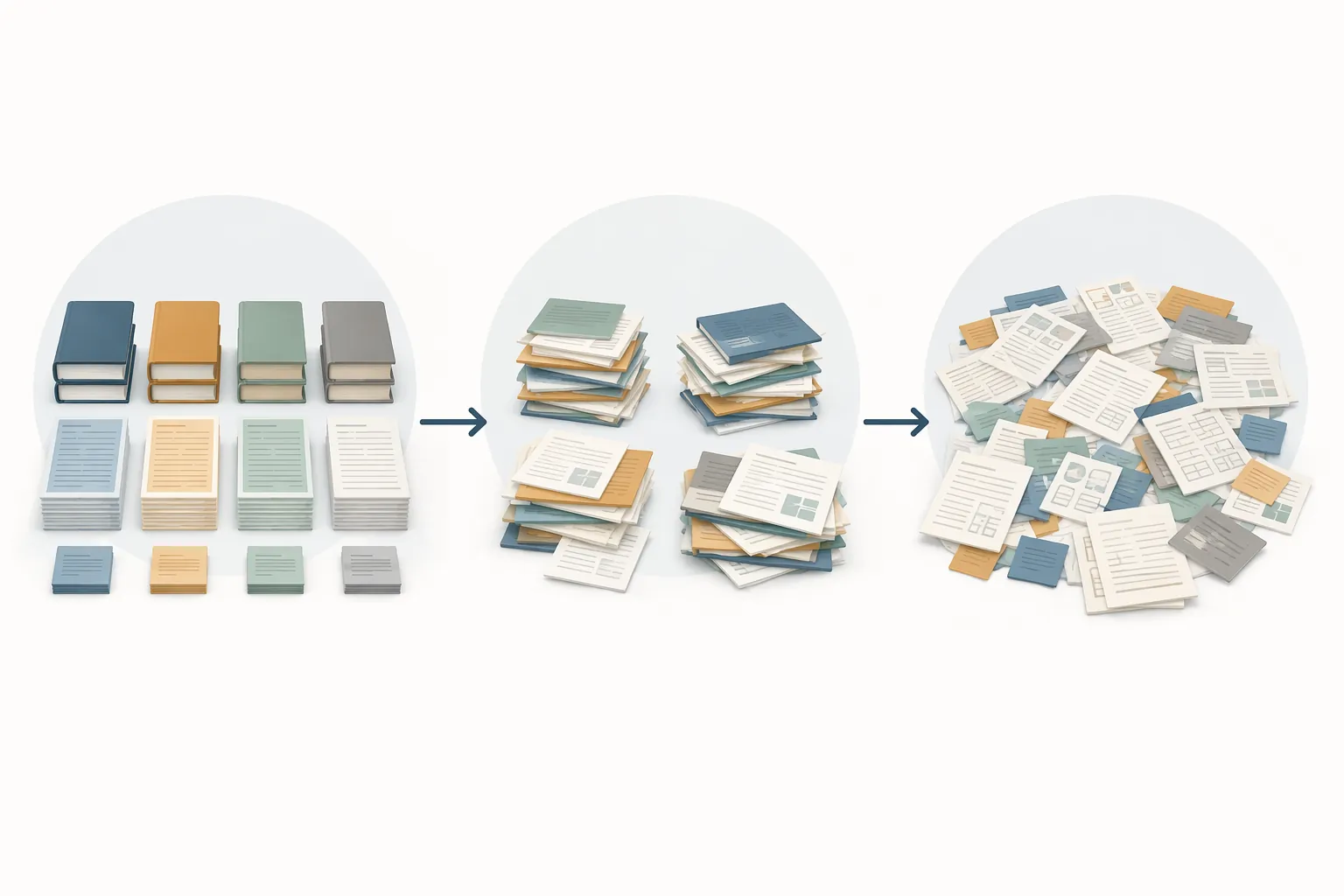
The practical move is not to throw a beginner into fully shuffled practice on day one. Blocking has a job. It helps a student learn a procedure when the procedure is still unfamiliar. The mistake is letting that phase become the whole plan.
| Stage | Use it when | What changes next |
|---|---|---|
| Blocked practice | The student cannot yet execute the basic procedure | Stop once the steps are recognizable without heavy prompting |
| Interleaved practice | The student can solve examples but hesitates when topics are mixed | Mix nearby problem types and review errors by decision, not only by topic |
| Fully randomized mock sections | The student needs exam-like switching, timing, and endurance | Remove labels and score delayed performance, not just same-day comfort |
A reasonable stopping rule for blocking is simple: if the student can explain the basic move before looking at the solution, the next practice set should start mixing. In GRE quant, that might mean moving from a pure ratios set into a set that includes ratios, percent change, linear equations, and rate questions. The errors will become more informative. Some will be computation errors. Others will reveal the real problem: the student chose the wrong tool.
For SAT math, the same progression might start with a short blocked lesson on systems of equations, then shift into mixed algebra, geometry, and data-analysis questions. For ACT prep, the randomization has to include pacing because section pressure changes the decision. A student who can solve every problem type slowly has not yet practiced the ACT version of the skill.
MCAT CARS needs a different kind of mixing. The unit is not a formula type but a passage and question demand. Rotating passage styles and question types prevents the student from treating one day as “main idea day” and another as “inference day.” In actual CARS work, the student has to infer the demand from the wording, the passage structure, and the answer choices under fatigue.
ASVAB AFQT preparation benefits from the same restraint. A student still learning fraction operations may need a blocked set. But once the operation is recognizable, practice should begin mixing arithmetic reasoning, mathematics knowledge, word knowledge, and paragraph comprehension so the test-taker rehearses switching domains rather than only finishing tidy piles.
What to Track When Scores Temporarily Drop
The first mixed sets often feel unfair. They take longer. Accuracy falls. The student who looked fluent during blocked practice suddenly seems uncertain. That uncertainty is not automatically bad; it is the cost of measuring a more exam-relevant skill.
- Separate recognition errors from execution errors: did the student choose the wrong method, or choose correctly and carry it out poorly?
- Keep delayed checks: a short quiz several days later is more informative than another same-day set.
- Mix within a reasonable range first: combine related GRE quant topics before jumping to a full mock section.
- Review wrong answers by decision point: what cue made the tempting wrong strategy look plausible?
- Do not treat early discomfort as proof of lower ability: mixed practice is designed to remove the labels that were supporting performance.
For anxious students, progressive randomization is not a kindness extra; it is part of the method. A fully shuffled mock exam too early can create noise rather than learning. The better sequence is to protect the first encounter with a new procedure, then deliberately remove support. The student should know in advance that the first mixed scores may be uglier than the blocked scores. Otherwise, a useful difficulty will be misread as evidence that the plan is failing.
A Careful Claim About Randomness and Better Test Prep
Yu Deng’s random data work does not prove interleaving. It gives a memorable mathematical language for a pattern that learning science has tested directly: orderliness during input is not the same as stability during performance. Rohrer and colleagues provide the strongest classroom evidence here, with interleaved seventh-grade math homework producing 61% versus 38% on an unannounced one-month-delayed test.[2] Shea and Morgan explain why acquisition can mislead.[3] Bjork’s desirable-difficulties framework explains why the harder practice condition may be the more useful one.[4] Hatala and colleagues show the same discrimination logic in medical diagnosis training.[5]
For exam prep, the practical conclusion is careful but useful: use blocked practice to learn the move, interleaved practice to learn when to use it, and randomized mock sections to test whether the skill survives without labels. Controlled randomness is not magic. It is a way to make practice look less like a color-coded notebook and more like the exam that will actually be scored.
References
- Quanta Magazine profile on Yu Deng’s random data problem, Quanta Magazine, July 23, 2026
- Efficacy of Interleaved Mathematics Practice, Institute of Education Sciences
- Contextual interference effects on the acquisition, retention, and transfer of a motor skill, Gwern.net PDF, 1979
- Memory and metamemory considerations in the training of human beings, 1994
- Practice makes perfect: the critical role of mixed practice in the acquisition of ECG interpretation skills, PubMed, 2003
Related exhibits & inventory
Verified outcomes
Planners
No planner filed for this exam yet
A downloadable timeline template for this exam hasn't been published yet.
Tool verdicts
AI-tool cautions
No AI tools tested for this exam yet
No hands-on AI-accuracy logs have been filed for this exam.
Questions about this plan
Ask a question about a specific section, timeline, or citation in this plan — or flag something that needs correcting.
Comments
Join the discussion with an anonymous comment.