SAT Exam Hub
What the Chick-fil-A Data Breach Teaches About Password Reuse
The Chick-fil-A data breach exposed how password reuse can compromise more than just a fast-food account. This article shows why the same credential-stuffing attack that hit over 71,000 Chick-fil-A users could also expose your SAT, ACT, GRE, MCAT, and financial aid accounts — and how to lock them down.
- SAT
- ACT
- GRE
- MCAT
- ASVAB
- digital-sat
- adaptive-testing
- registration-fee
- content-outline
- score-target
The practical cybersecurity lesson from the Chick-fil-A data breach is not that students should panic about chicken sandwiches. It is that a password that works on a fast-food app can be tried, automatically and at scale, on the accounts that control SAT registration, AP scores, college applications, FAFSA access, MCAT scheduling, GRE records, Praxis testing, and military-related exam paths.
That is the part worth taking seriously. Chick-fil-A said the June 2026 incident involved unauthorized access to some customer accounts after login credentials from other sources were used against Chick-fil-A One accounts; the company’s notice described the exposure of information such as names, email addresses, Chick-fil-A One membership numbers, mobile pay numbers, and the last four digits of payment cards, with some accounts also involving addresses, phone numbers, or birthdays.[1] State filing summaries available as of July 23, 2026, identified affected residents in Massachusetts, Texas, and Vermont, but they did not disclose a full national total for the June 2026 incident.[2]
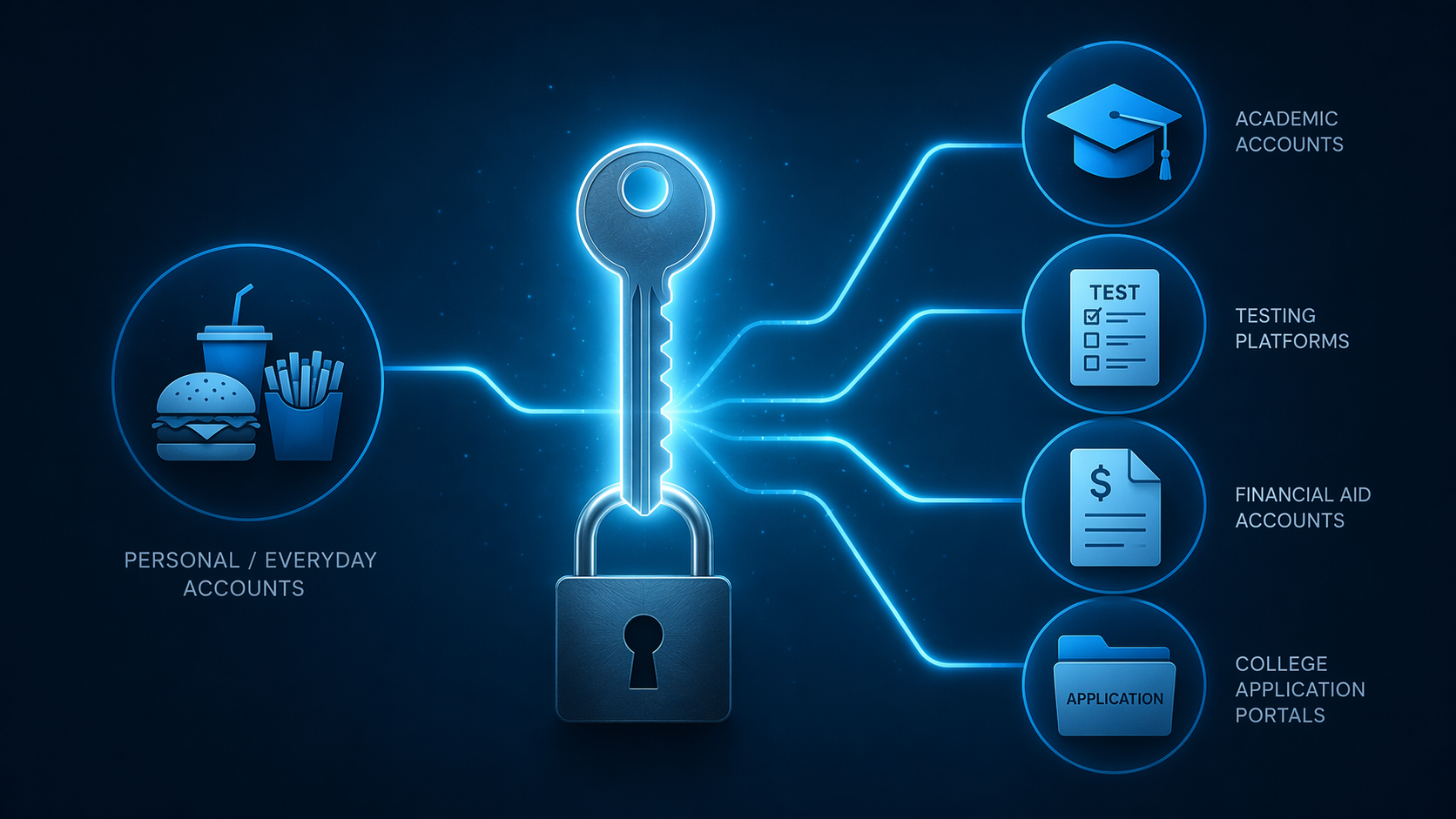
The older Chick-fil-A incident makes the pattern clearer. In 2023, the company disclosed that credential-stuffing attacks affected more than 71,000 customer accounts between December 18, 2022, and February 12, 2023.[3] Reporting at the time described account takeovers in which attackers used credentials obtained elsewhere to access Chick-fil-A accounts, rather than a breach of Chick-fil-A’s own internal systems.[4]
That distinction matters. If a company’s own database is breached, the failure is one thing. If attackers arrive with usernames and passwords stolen from other sites, then the immediate mechanism is different: they are betting that people reused the same login somewhere else. The student version of the problem is obvious and uncomfortable. A password used for a rewards app in January may still be sitting on a College Board, ACT, Common App, FAFSA, AAMC, ETS, or prep-tool account in March.
What Actually Happened at Chick-fil-A
Credential stuffing is not a dramatic hacker scene. It is closer to someone taking a stolen key ring and trying the same key in every door on the block. Attackers obtain username-and-password pairs from one place, then use automated tools to try them against other sites. If a customer reused the same password, the attacker may get in even though the second company was not the source of the original leak.
Chick-fil-A’s 2022-2023 and 2026 incidents belong in that same bucket. The 2022-2023 attack affected at least 71,473 accounts and was tied to login credentials taken from other sources.[3] The June 2026 incident, disclosed through notices and state filings in July 2026, again involved third-party credentials used to access Chick-fil-A customer accounts; the exact full scope was still not public in the available filings.[1][2]
The exposed information was not the same as a full credit-card dump, but it was not harmless either. The 2026 notice described names, email addresses, Chick-fil-A One membership numbers, mobile pay numbers, and the last four digits of payment cards, with some affected accounts also including addresses, phone numbers, and birthdays.[1] The earlier incident also involved customer profile information and rewards-related account access.[3][4]
Chick-fil-A’s cleanup steps were not nothing. Public reporting on the 2022-2023 incident described forced password resets, removal of stored payment methods, restoration of account balances, added rewards, and customer support for affected users.[3][4] Those are the kinds of actions a company should take after account takeovers. They do not solve the student’s problem, though, because a forced reset on one app does not change the same reused password on an exam portal.
The Same Password Can Travel Into Your Exam Life
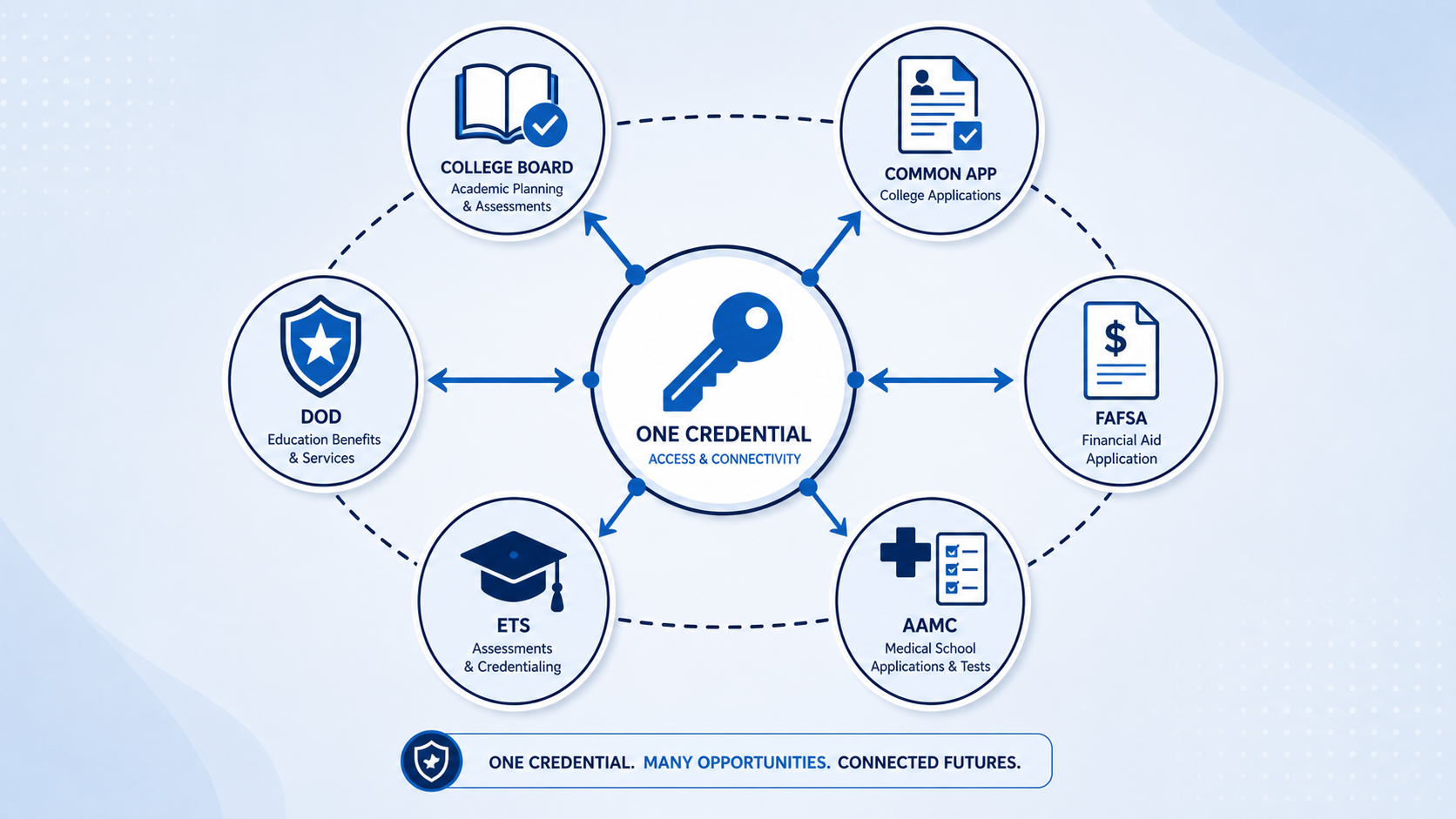
Most students do not think of their academic accounts as one connected system. They feel like errands: register for the SAT, check an AP score, finish Common App, update FAFSA, schedule the MCAT, open an ETS account, download a prep tool, answer a parent’s text asking whether the deadline is tonight. But from a password-reuse point of view, those accounts are connected if the same email and password appear across them.
| Account | Why losing access hurts | Password priority |
|---|---|---|
| College Board | SAT registration, AP records, score access, and test-day information | Change first if it shares a password with any consumer app |
| ACT Inc. | ACT registration, admission ticket access, score reports, and college reporting | Use a unique password before the next registration or score-release date |
| Common App | Applications, recommender workflows, essays, college lists, and submissions | Do not share this password with email, shopping, food, or social accounts |
| FAFSA / StudentAid.gov | Federal aid forms, identity-linked financial information, and family contribution workflows | Treat as financial infrastructure, not just another school login |
| AAMC | MCAT registration, score access, application-related services, and medical-school timelines | Separate from every prep, school, and personal account |
| ETS | GRE, Praxis, TOEFL-related access where applicable, score reporting, and testing records | Use a password that appears nowhere else |
| DoD or military-related accounts | ASVAB-related pathways and military education or recruiting workflows where applicable | Keep separate from ordinary personal accounts |
This is where the Chick-fil-A story stops being a brand incident and becomes an exam-prep problem. A student using the same password on Chick-fil-A and College Board has not made College Board easier to breach. They have made their own College Board account easier to test. For SAT planning, that means account access belongs next to registration dates and score-release planning, not in a vague “be safer online someday” pile. Students using the SAT Exam Prep Guide should treat the College Board login as part of the prep workflow.
The same logic applies to longer professional-test timelines. A premed student may have an AAMC account, a prep platform account, an email account used for verification, and a scheduling calendar that all touch the same MCAT plan. If the AAMC password is reused elsewhere, losing access can become a deadline problem instead of a technical annoyance. That is why account hygiene belongs in an MCAT study workflow, right next to content review and practice testing.
Password Reuse Is Common Because the Login Load Is Absurd
It is easy to scold people for reusing passwords. It is also lazy. The average person manages roughly 168 personal passwords, according to password-statistics reporting compiled by Huntress.[5] A student applying to college or preparing for graduate exams may add school portals, testing companies, scholarship sites, email accounts, parent-access accounts, prep platforms, flashcard tools, and payment profiles on top of that.
The behavior is widespread. Huntress reports that 80% to 85% of people reuse passwords across multiple sites, while 62% of Americans say they often or always reuse passwords.[5] The same report says 23% reuse the same password across three to four accounts, and nearly 30% of password-theft victims say their password was stolen specifically because they reused it.[5]
Those numbers do not excuse password reuse, but they explain why generic advice fails. “Use a different password everywhere” is not a plan if the student is expected to memorize all of them. Without a system, the realistic outcome is a handful of recycled passwords with small variations: a school mascot, a graduation year, an exclamation point, maybe a test name added at the end. Attackers do not need that to work everywhere. They only need it to work once on an account that matters.
Lock Down the Accounts That Can Block a Deadline
Start with the accounts that can stop a student from registering, paying, applying, retrieving scores, or proving eligibility. A reused password on a low-stakes account is still bad. A reused password on FAFSA, Common App, College Board, AAMC, ACT, ETS, or a military-related account is the kind of bad that shows up at the worst possible time.
- Make every exam, application, financial-aid, and testing-company account use a password that appears nowhere else.
- Use a password manager instead of trying to memorize dozens or hundreds of unique passwords.
- Turn on multi-factor authentication wherever the platform offers it; do not assume every exam or application system has the same options.
- Check the recovery email and phone number on each account, because account recovery often decides who gets back in.
- Remove old stored payment methods from accounts that no longer need them.
- Change reused passwords first on accounts tied to upcoming registration dates, score releases, submissions, or aid deadlines.
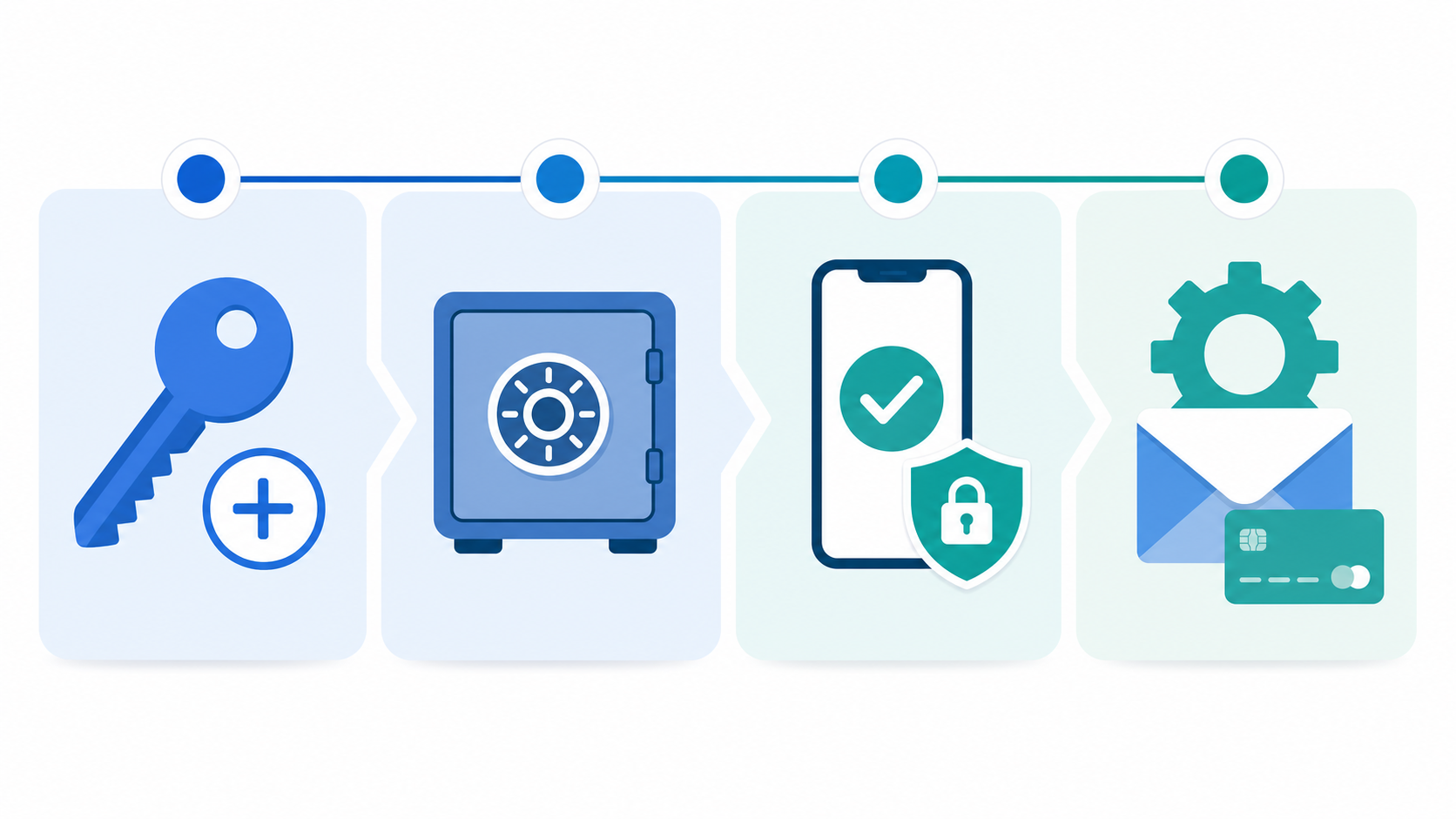
A password manager is not a luxury add-on here. It is the tool that makes the advice possible. The student does not need to remember the College Board password, the ACT password, the Common App password, the FAFSA password, the AAMC password, the ETS password, and every prep-tool password. The student needs to remember one strong master password, protect the password manager account carefully, and let the manager generate and store unique passwords for the rest.
Multi-factor authentication is the second layer, but it has to be stated carefully. Some academic and testing platforms offer stronger sign-in protections than others, and students may not control every setting. When MFA is available, turn it on. When it is not available, the unique password becomes even more important because there is no second prompt standing between an attacker and the account.
Recovery settings deserve more attention than they usually get. If the College Board account goes to an old school email the student no longer checks, or an AAMC account depends on a phone number that changed last year, the password may not be the only weak point. Before a major deadline, students should confirm that recovery email, recovery phone, and parent or family access details still point to people who can actually respond.
A Practical Order for Students Who Reused One Password Everywhere
If the same password is already scattered across half a student’s life, do not start by alphabetizing every account ever created. Start where the consequences are largest and the deadlines are nearest.
- Change the password on the email account used for school, testing, applications, and financial aid.
- Change FAFSA or StudentAid.gov credentials and verify recovery options.
- Change College Board, ACT, AAMC, ETS, Common App, and any other test or application accounts in active use.
- Change passwords for prep tools, flashcard apps, tutoring platforms, and study dashboards.
- Change consumer accounts that reused the same password, including food, shopping, streaming, and social accounts.
- Turn on MFA where available and remove stored cards where they are not needed.
Email comes first because it is often the reset door for everything else. If someone controls the email account, they may be able to request password resets for testing, application, and financial-aid accounts. FAFSA and other aid-related accounts come early because they involve identity and financial information. Test and application accounts come next because losing access can interrupt registration, score sending, recommendations, submissions, or fee workflows.
Prep tools still matter. Students using flashcards, question banks, calendars, or saved progress should not reuse the same password they use for official exam accounts. A tool such as an MCAT Anki workflow may feel separate from the AAMC account, but it can still be tied to email, cloud sync, or paid access. If a student is using Anki for the MCAT, the same password rule applies: official account, prep account, and email account should not share credentials.
The same cleanup belongs in broader tool stacks too. Students comparing apps, planners, score trackers, and practice resources in a SAT study tools guide should add one boring selection criterion: can the account be protected with a unique password, clean recovery settings, and MFA if the platform supports it?
Do Not Wait for the Platform to Save You
It is fair to expect companies to design better account protections. Public reporting on Chick-fil-A’s earlier response shows meaningful cleanup after the incident: password resets, payment-method removal, restored balances, added rewards, and support.[3][4] Publicly available notices do not, however, turn that cleanup into a guarantee that every ordinary user account will be protected from reused credentials before the next automated login attempt.
Students cannot control a company’s bot detection, rate limiting, breach-password screening, or authentication roadmap. They can control whether the same password sits on Chick-fil-A, Gmail, College Board, Common App, FAFSA, and AAMC at the same time. That is the piece to fix before the next registration window, not after the account is locked and a deadline clock is running.
ASVAB users and students exploring military paths should treat related accounts the same way. The ASVAB Exam Prep Guide can help with the test plan, but account access is part of that plan if a login is needed for scheduling, communication, records, or next-step paperwork.
The Chick-fil-A data breach cybersecurity lesson is narrow enough to be useful: do not let one reused password become a master key that can be tried against every account that matters. Before the next SAT date, MCAT registration window, FAFSA task, application deadline, GRE score send, Praxis requirement, or ASVAB-related step, students should make the official accounts unique, protect the email account behind them, turn on MFA where available, and remove payment details they no longer need.
Exam prep security is not separate from exam prep if losing access can block registration, score retrieval, applications, or financial aid.
References
- Chick-fil-A says some customers’ information exposed in data breach, WILX, July 22, 2026.
- Chick-fil-A 2026 Data Breach, ClaimDepot.
- Over 71K Impacted by Credential Stuffing Attacks on Chick-fil-A Accounts, SecurityWeek.
- Chick-fil-A Customers Have a Bone to Pick Over Data Breach, Dark Reading.
- Password Statistics 2026, Huntress.
Related exhibits & inventory
Verified outcomes
No verified outcomes on file for this exam yet
See Methodology for how outcome evidence is disclosed once logged.
Planners
No planner filed for this exam yet
A downloadable timeline template for this exam hasn't been published yet.
Tool verdicts
AI-tool cautions
No AI tools tested for this exam yet
No hands-on AI-accuracy logs have been filed for this exam.
Questions about this plan
Ask a question about a specific section, timeline, or citation in this plan — or flag something that needs correcting.
Comments
Join the discussion with an anonymous comment.