
SAT Exam Hub
A Four-Layer Safety Framework to Prevent Toddler Pool Drowning
Drowning is the leading cause of death for children ages 1–4, and no single safety measure is enough. This article presents a four-layer, evidence-based system—barriers, supervision, water competency, and emergency preparedness—that can substantially reduce risk for residential pool owners.
- SAT
- ACT
- GRE
- MCAT
- ASVAB
- digital-sat
- adaptive-testing
- registration-fee
- content-outline
- score-target
Drowning is still the leading cause of death for U.S. children ages 1 to 4 [1]. CPSC said an average of 376 children under 15 died each year in pool and spa incidents from 2021 through 2023, and nearly 80% were under 5 [2]. Reporting in July 2026 said the trend is rising again, not settling down [3].
What makes residential pool drowning so hard to catch is how ordinary the setup looks right before it goes wrong. Many cases happen when no one thinks the child is in the water; drowning is silent, and it can happen in as little as 1 to 2 inches of water [1][6].
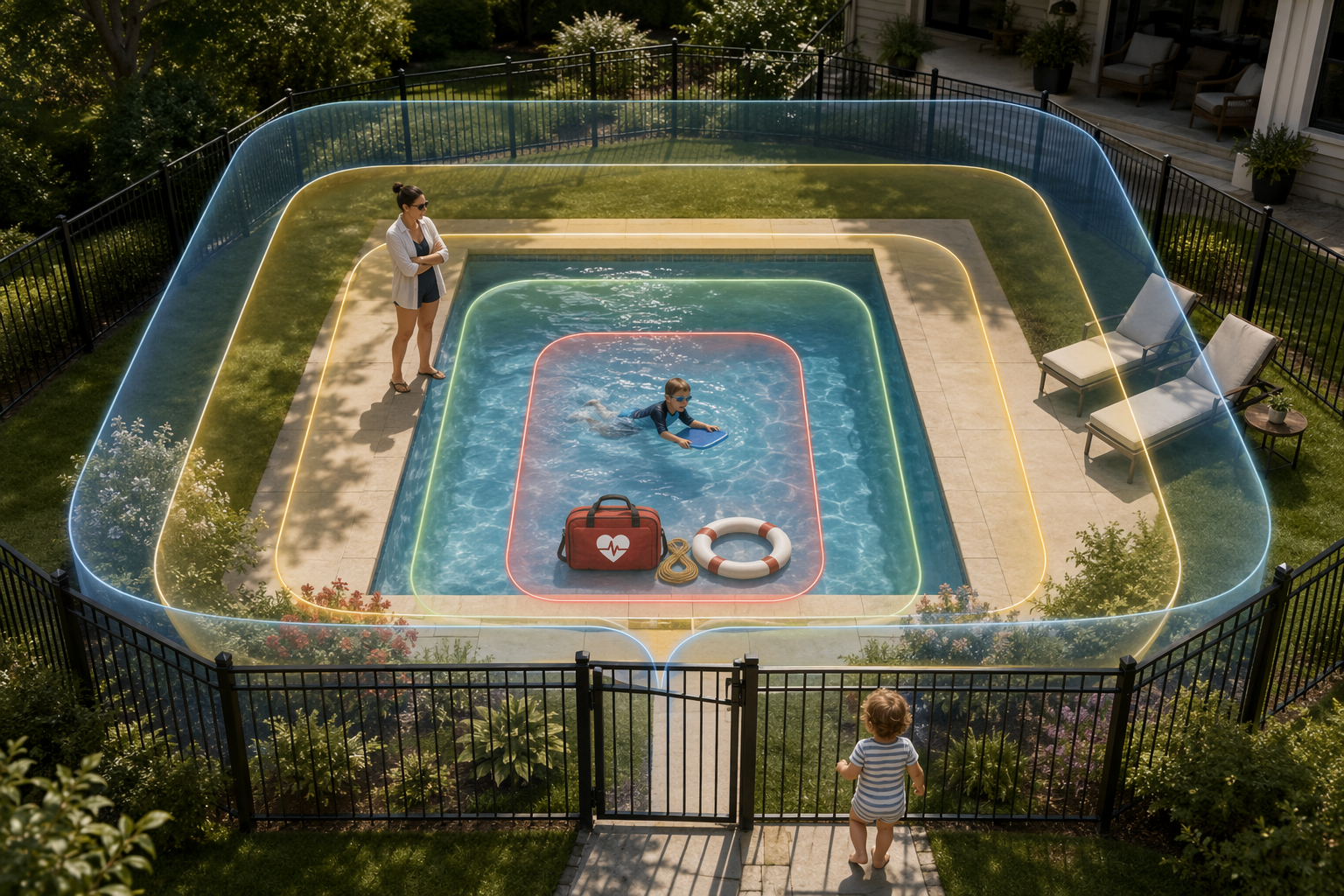
Start With the Barrier
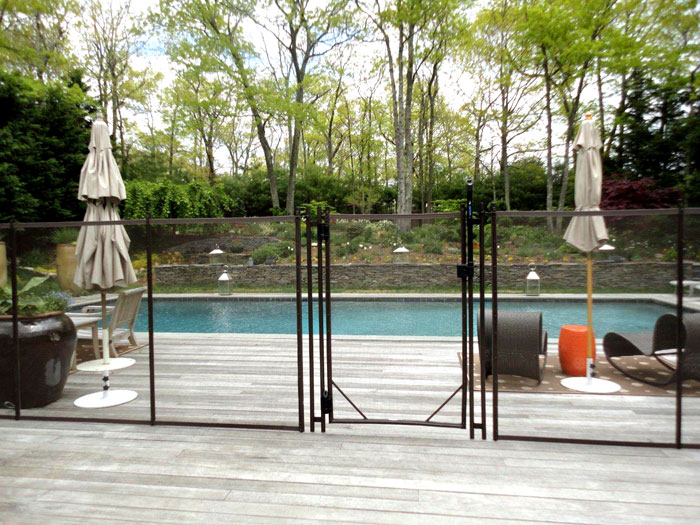
The first layer is physical separation, because a fence or gate can keep a wandering toddler out when attention slips. The Red Cross says four-sided isolation fencing reduces drowning risk by 83% compared with three-sided property-line fencing [4].
- Use a fence at least 4 feet high [5].
- Keep slats or pickets no more than 4 inches apart [5].
- Install a self-closing, self-latching gate with the latch 54 inches high [5].
- Make the gate open outward, away from the pool, and keep the design climb-proof [5].
Above-ground pools are not automatically the safer version. In July 2025, CPSC recalled about 5 million above-ground pools from Bestway, Intex, and Polygroup after 9 toddlers ages 22 months to 3 years drowned when external compression straps acted like climbing footholds [7]. If the pool has a ladder, treat it as a removable access point, not a permanent convenience. Take it down or lock it whenever the pool is not in use.
Watch the Water, Not the Assumption
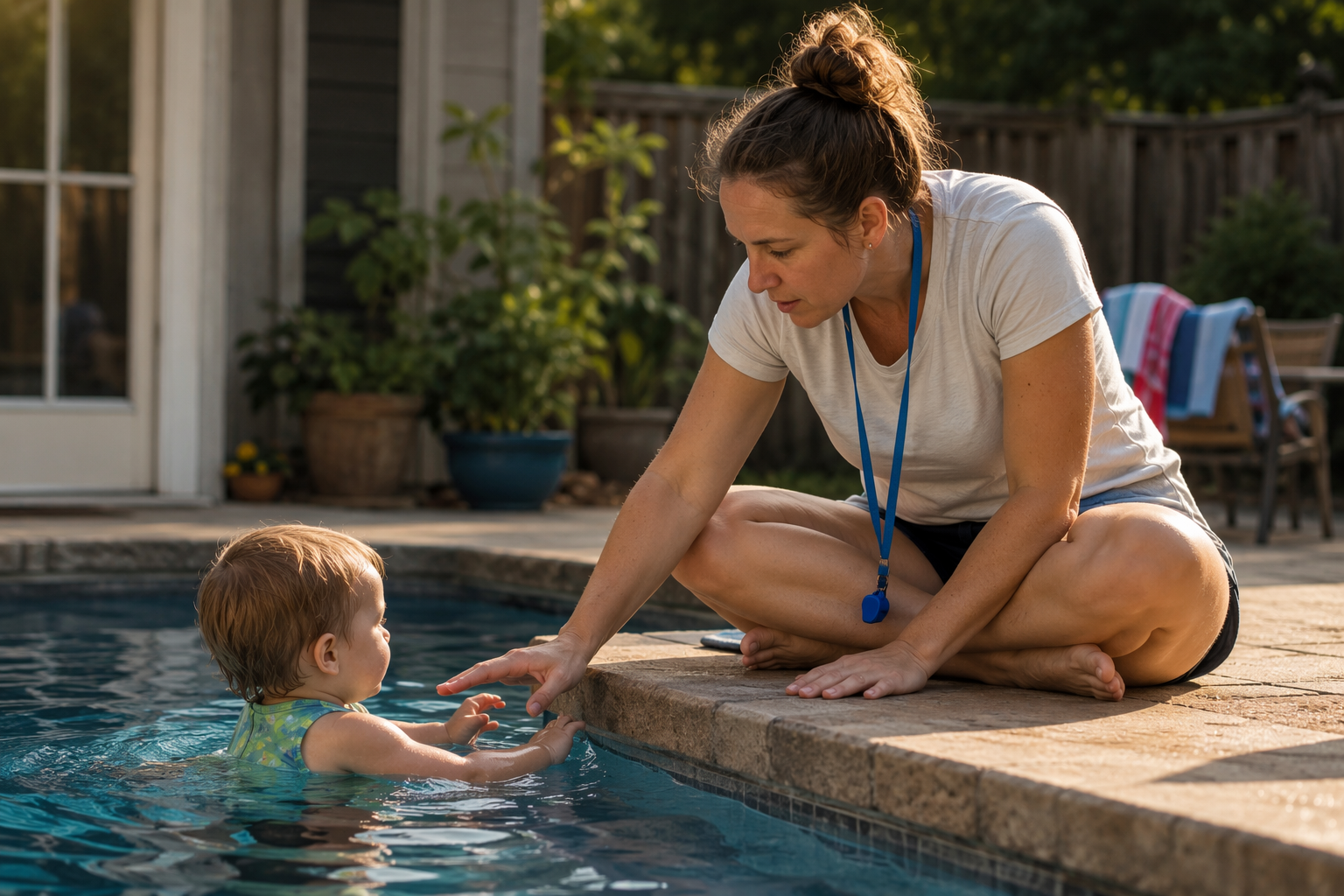
Supervision has to be active enough to survive distraction. For toddlers, that means touch supervision during swim time, with a child within arm's reach, and a designated water watcher who rotates every 15 minutes before fatigue or distraction take over [5][8].
- Leave the phone, book, and conversation for later.
- Pass the water-watcher tag or lanyard on time.
- Treat the watcher as active duty, not background presence.
The reason this layer matters so much is that a large share of toddler drownings happen when adults are not expecting pool access at all. HealthyChildren.org says 69% occur during non-swim time, and 46% of children age 4 and under were last seen inside the home before wandering out to the pool [6]. That is why doors, gates, and handoffs matter as much as poolside vigilance.
Lessons Help, But They Do Not Close the Loop
A formal swim lesson can be worthwhile as early as age 1, depending on the child's readiness [5]. Reporting this summer also pointed to evidence that formal lessons reduce drowning risk [3]. That still leaves the gap that matters in a backyard: lessons do not keep a child out of the pool, and they do not keep an exhausted adult from missing a quick exit.
Floaties, arm bands, water wings, and pool noodles are not safety devices. They can make a child look supported while offering no reliable drowning prevention [1][5]. Pool alarms can buy time in some setups, but wave-sensing models may miss a small child if there is not enough wave movement to trigger them; door and window alarms are a better way to catch unsupervised access. A floating solar cover is not a safety cover and can make the water look more solid than it is [5].
Keep Rescue Ready
Every parent and caregiver around a pool should know CPR, and rescue gear should be reachable without digging for it [4][5]. If a child is missing, check the water first and call 911 immediately. Seconds matter, and searching the house first wastes them.
No single measure covers toddler pool drowning on its own. The strongest home setup blocks unsupervised access first, keeps a real watcher on duty during use, treats lessons as a skill layer rather than a shield, and makes CPR and a water-first response immediate when something goes wrong.
References
- Preventing Drowning - CDC, Sep. 29, 2025
- CPSC Report Highlights Persistent Risk of Childhood Drowning - CPSC, June 24, 2026
- Why more young children are drowning - what you can do - CNN, July 18, 2026
- Home Pool & Hot Tub Safety - American Red Cross
- Drowning Prevention for Curious Toddlers - HealthyChildren.org / American Academy of Pediatrics, May 18, 2026
- Pool Dangers - When It's Not Swimming Time - HealthyChildren.org / American Academy of Pediatrics, May 18, 2026
- Bestway/Intex/Polygroup Recall Certain Above-Ground Pools 48 Inches and Taller Due to Drowning Hazard; Nine Deaths Reported, Five Million Pools Sold Since 2002 - CPSC, July 21, 2025
- Pool Safely - CPSC
Related exhibits & inventory
Verified outcomes
No verified outcomes on file for this exam yet
See Methodology for how outcome evidence is disclosed once logged.
Planners
No planner filed for this exam yet
A downloadable timeline template for this exam hasn't been published yet.
Tool verdicts
AI-tool cautions
No AI tools tested for this exam yet
No hands-on AI-accuracy logs have been filed for this exam.
Questions about this plan
Ask a question about a specific section, timeline, or citation in this plan — or flag something that needs correcting.
Comments
Join the discussion with an anonymous comment.