
GRE Exam Hub
Student Loan Defaults in 2026: Why Your GRE Score Matters More
With ~9 million borrowers in default and new federal borrowing caps taking effect in July 2026, graduate school funding has fundamentally changed. This article explains how a competitive GRE score has become a direct financial tool to secure funded admissions and merit aid under the new rules.
- SAT
- ACT
- GRE
- MCAT
- ASVAB
- digital-sat
- adaptive-testing
- registration-fee
- content-outline
- score-target
Can federal loans still cover grad school in 2026?
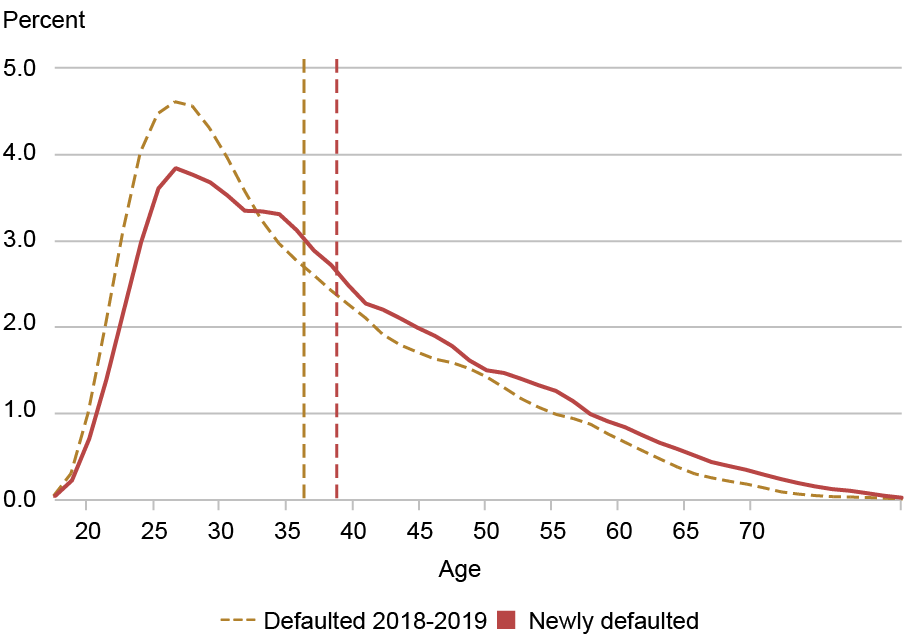
The student loan default 2026 story is no longer a background worry. On July 1, 2026, Grad PLUS ended for new borrowers, and new federal caps took over: $20,500 a year for general graduate study, $50,000 a year for professional students in 11 designated fields, with lifetime ceilings of $100,000, $200,000, and a $257,500 aggregate limit.[2] At the same time, roughly 9 million borrowers were in default, including 2.6 million who fell into default in Q1 2026 alone and about $220 billion in unpaid balances.[1]
| Program bucket | 2026 federal cap | Why it still leaves room for a gap |
|---|---|---|
| General graduate study [2] | $20,500 a year; $100,000 lifetime [2] | Many master's and PhD budgets can still outrun the ceiling once tuition and living costs are both counted. |
| Professional graduate study [2] | $50,000 a year; $200,000 lifetime [2] | The cap is higher, but it still stops short of unlimited borrowing. |
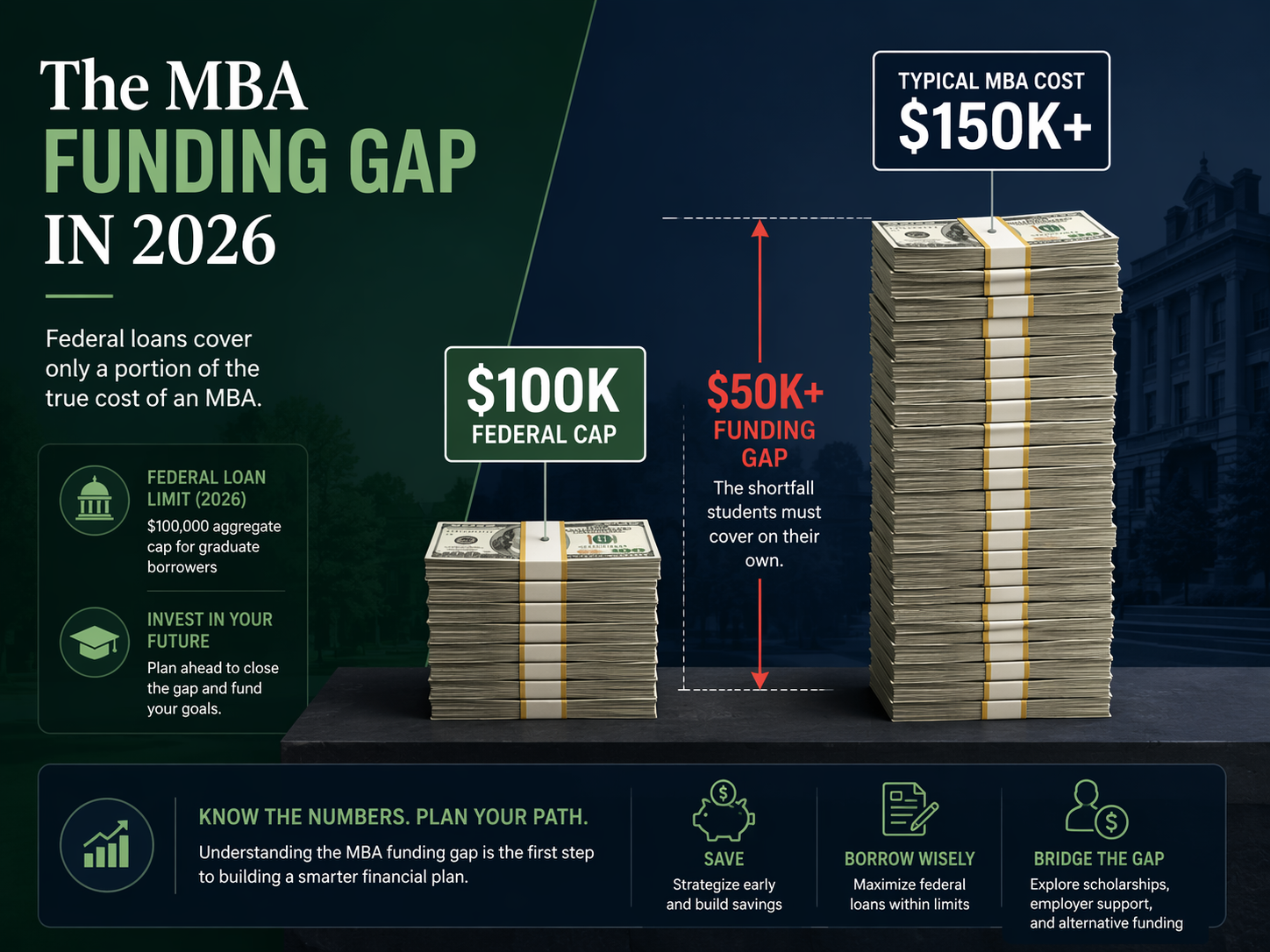
| MBA [3][4] | Usually the general graduate cap, not the professional cap [3][4] | A high-cost business degree can still run into the lower ceiling. |
The funding gap is plain: for some programs, federal borrowing still gets you most of the way; for many others, it does not. Harvard SFS and PHEAA both note that MBA students are not classified as professional-degree borrowers under the new law, which leaves many business applicants under the $100,000 general cap even when total program cost pushes well past that.[3][4]
Why a GRE score now affects affordability
At that point, the GRE stops being only an admissions signal. ETS now says a strong GRE score can open doors to funded seats and merit-based aid that reduce borrowing need under the new caps.[5] In practice, the score is part of the affordability plan: it can help separate an unfunded offer from a funded one, or a full-price seat from one with tuition relief.

- funded seats
- assistantships and stipends
- merit scholarships and tuition discounts
A higher score does not guarantee money. It does make it easier to reach the pool where funding exists, which is a different and much more practical standard once federal borrowing is bounded.
What default changes for borrowers
The downside of missing that gap is harsher than a bigger monthly bill. Default can block future federal aid eligibility, damage credit, and trigger collection actions such as wage garnishment.[6] The repayment environment is also unsettled: the new Repayment Assistance Plan has replaced SAVE, and about 7 million SAVE borrowers are being moved over with 90-day notification windows.[2]
Last reviewed July 22, 2026. Some details are still moving, especially whether older Grad PLUS debt counts toward the $257,500 aggregate cap, which health-profession programs qualify as professional, and how RAP will be calculated; litigation or new guidance could still shift the edges.[2]
If you are planning this cycle with those constraints in mind, start with the GRE exam hub and treat score gains as part of the financing plan.
References
- Federal Student Loan Defaults Return After Pandemic Pause — Liberty Street Economics, New York Fed, 2026-05-12
- One Big Beautiful Bill Act Updates — Federal Student Aid
- Key Changes to Federal Student Loans Made in the One Big Beautiful Bill Act — Harvard SFS
- PHEAA: One Big Beautiful Bill Act — Graduate & Professional Students — PHEAA
- New Federal Student Loan Rules Took Effect — ETS Graduate Journey Resource Center
- January 2026 Default Crisis Fact Sheet — Protect Borrowers
Related exhibits & inventory
Verified outcomes
Planners
No planner filed for this exam yet
A downloadable timeline template for this exam hasn't been published yet.
Tool verdicts
AI-tool cautions
No AI tools tested for this exam yet
No hands-on AI-accuracy logs have been filed for this exam.
Questions about this plan
Ask a question about a specific section, timeline, or citation in this plan — or flag something that needs correcting.
Comments
Join the discussion with an anonymous comment.