
Stay Safe in Bear Country by Separating Myth from Data
This guide calibrates actual bear attack risk against sensationalized media coverage, debunks common myths, and provides a four-pillar prevention-and-response protocol backed by the best available research.
- SAT
- ACT
- GRE
- MCAT
- ASVAB
- digital-sat
- adaptive-testing
- registration-fee
- content-outline
- score-target
A bear story travels faster than a safety lesson. One close-range mauling, one shaky video from a roadside crowd, one headline about a campsite fatality, and a hiker who had been calmly packing socks is suddenly rehearsing worst-case scenes instead of checking food storage or practicing bear-spray access.
That fear is understandable. It is also a poor risk calculator. The National Park Service puts the chance of being injured by a bear at about 1 in 2.1 million visits, a number that does not make bears harmless but does put the danger back into proportion.[1] The North American Bear Center makes the mismatch even sharper for black bears: men ages 18 to 24 are 167 times more likely to kill someone than a black bear is.[2] BearVault’s compiled North American fatality record lists 180 fatal bear attacks since 1784, with its most recent update in November 2024; that is a serious history, not a daily forecast.[3]
The useful question is not whether bears can hurt people. They can. The useful question is how to stay safe in bear country when your brain is being fed rare outcomes at high volume. The answer is less dramatic than most attack stories: travel in a group when you can, make yourself known before you surprise a bear, remove food rewards, carry bear spray where your hand can reach it, and change your response based on species and motivation.
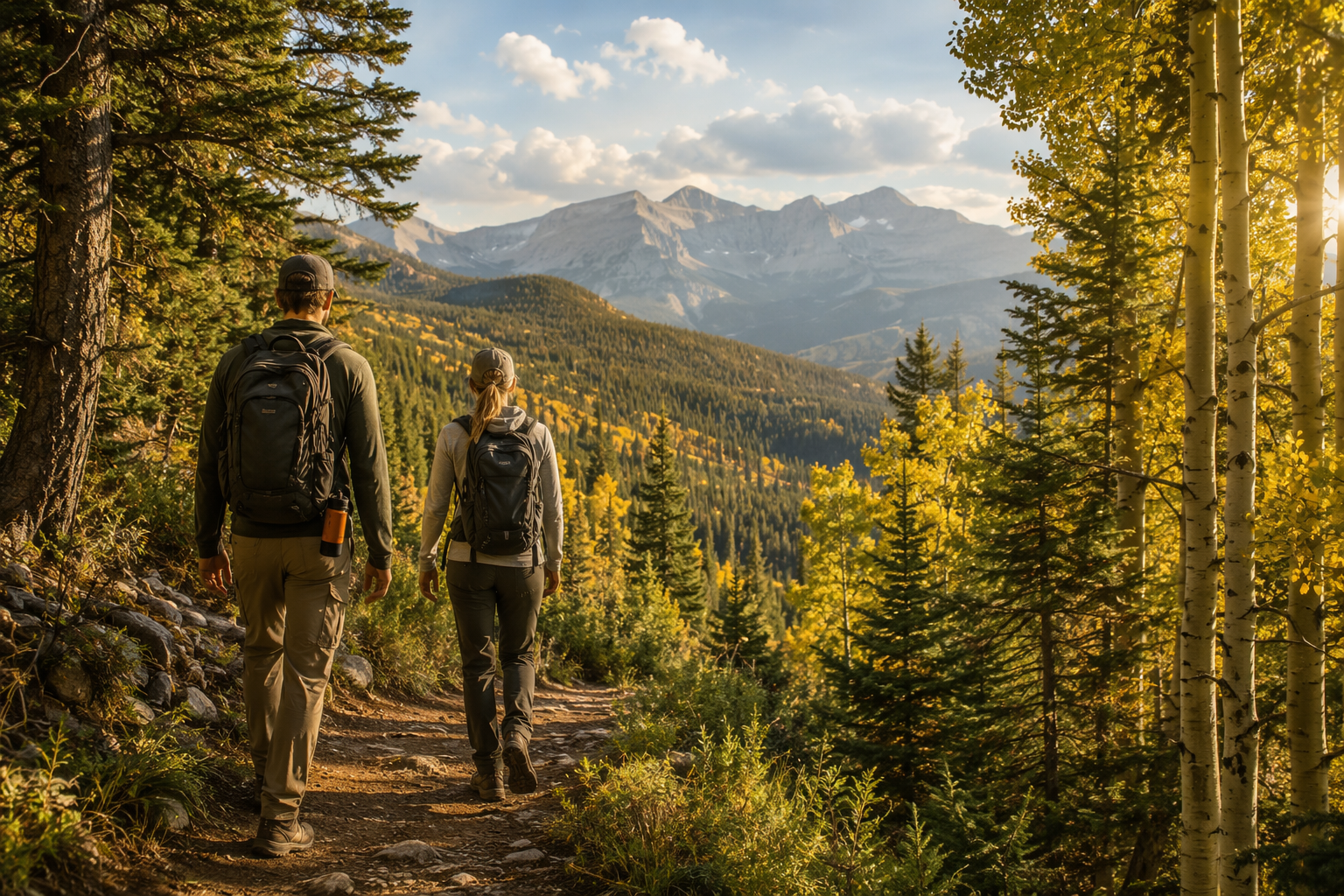
Start With The Evidence, Not The Folklore
Bear safety advice often sounds confident because it has been repeated for years. Some of it is good. Some of it is incomplete enough to be dangerous. “Play dead” is not a universal rule. Bells are not a complete noise strategy. A bear canister is not useful if wrappers, toothpaste, or bacon grease stay in the tent. Bear spray is not useful if it is buried in a pack lid.
The better way to sort advice is to ask what kind of evidence supports it. A worldwide study of 664 brown bear attacks through 2015 found that 47% involved defensive females with cubs, 63% of victims were alone, and 88% of victims were male.[4] Those figures do not describe every bear encounter. They do show why surprise, isolation, and behavior around a defensive bear matter more than the lurid details people remember from one incident.
| Claim | Best-supported reading | Confidence |
|---|---|---|
| Bear injuries are common enough to expect on a normal trip. | No. NPS places the injury risk at about 1 in 2.1 million visits, so the baseline risk is very low. | High for risk calibration; it does not remove the need for prevention. |
| Being in a group changes the odds. | Yes. Brown bear attack data show many victims were alone, and park agencies advise traveling in groups in bear country. | High as prevention advice; exact thresholds vary by agency and situation. |
| Noise helps because bears usually want to avoid people. | Yes, especially where visibility is poor, sound is masked by water or wind, or trails bend sharply. | Strong as practical guidance; noise is not a shield at close range. |
| Food discipline is optional if you sleep away from the cooking area. | No. Food, garbage, scented items, and cookware all matter because rewarded bears become more dangerous to people and more likely to be killed. | Strong as agency guidance and conflict pattern. |
| Bear spray settles the whole problem. | No. It is a core emergency tool, but it has to be reachable, practiced, and paired with prevention. | Strong for many close encounters; narrower for full-charge cases. |
The Four Behaviors That Do Most Of The Work
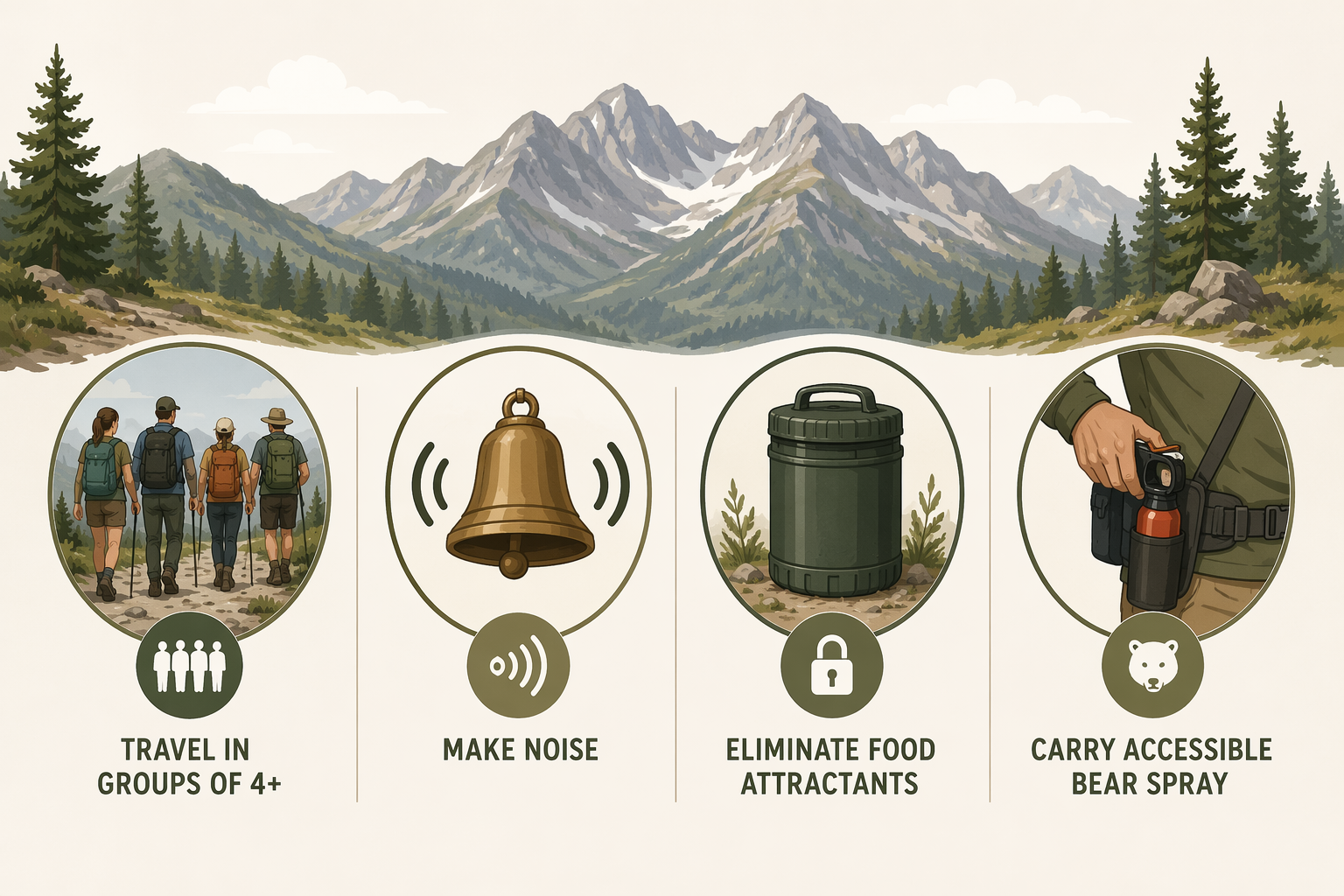
Most good bear safety is boring on purpose. It happens before the bear appears, before adrenaline starts editing your memory, and before anyone has to decide whether a bear is defensive or predatory. The four anchors are simple, but they are not decorations for a packing list.
Travel In A Group When The Route Allows It
Group travel does two things at once. It makes people easier for a bear to detect, and it gives the hikers a wider margin when something goes wrong. Parks Canada advises traveling in a tight group of four or more in bear country, especially on trails with limited sightlines.[5] That is not because four people are magically safe. It is because a group that stays together is noisier, more visible, less likely to surprise a bear at conversational distance, and less likely to have one person freeze alone while everyone else is out of sight.
The brown bear attack study gives this advice weight without pretending it is absolute: 63% of victims in the global dataset were alone.[4] A separate Alaska conflict analysis discussed in later reporting found no physical contact when two or more people stayed grouped, though that finding should not be stretched into a guarantee for every landscape or encounter type.[6]
The practical failure point is not usually the trailhead plan. It is the half-mile of separation that opens when one person stops for a layer, one person pushes ahead to find camp, and one person takes a side path to photograph berries. If you are relying on group travel as a safety layer, the group has to remain a group.
For student groups, new backpackers, or anyone trying to make safe choices without buying their way out of anxiety, this is where the basic advice in What Every Student Hiker Should Know About Bear Safety is useful: the cheapest bear-safety decision is often staying organized enough that nobody drifts into solo travel by accident.
Make Noise Before The Trail Makes You Invisible
Noise is not theater. It is notice. The goal is to keep a bear from learning you exist only when you are already close enough to trigger a defensive reaction. Parks Canada advises making noise, especially near streams, dense vegetation, berry patches, windy ridges, and blind corners.[5] Alaska wildlife guidance gives the same basic instruction: avoid surprising bears and make your presence known.[6]
This is where bear bells get oversold. A faint, steady jingle may be better than silence, but it is not a substitute for human voices in the places where sound is swallowed by water or brush. Call out before blind turns. Talk in normal voices as you move through berry country. If a trail is loud enough that you cannot hear your partner clearly, assume a bear may not hear you clearly either.
Treat Food And Scent As A Safety System
Food discipline is not about keeping your snacks. It is about preventing bears from being rewarded for approaching people. BearVault’s fatality and conflict overview says more than half of over 700 bear-human conflicts it reviewed involved human carelessness, including food, garbage, and other attractants.[3] That does not mean every careless camp becomes an attack scene. It means food mistakes are one of the preventable ways humans make future encounters worse.
- Store food, trash, cookware, and scented items in an approved bear-resistant container, vehicle, or bear hang where required and appropriate.
- Keep toothpaste, sunscreen, lip balm, wrappers, drink mixes, and pet food out of the tent.
- Cook and eat away from the sleeping area when camping in bear country.
- Pack out garbage even when it seems odorless; bears do not need your definition of “empty.”
- Follow the local rule first: some parks require specific canisters, lockers, or storage distances.
The common mistake is treating food storage as a nighttime chore. It starts at lunch, continues at every rest stop, and includes the moment someone says, “It’s just a wrapper.” In bear country, “just a wrapper” is still a scent object handled by a tired human.
Carry Bear Spray Where Your Hand Can Reach It
Bear spray is not a charm. It is an emergency tool with a narrow time window. A study of 175 bear-spray incidents in Alaska found that spray stopped undesirable bear behavior in 92% of brown bear incidents, 90% of black bear incidents, and 100% of polar bear incidents; overall, people using spray escaped injury in most cases.[7] That is strong enough to make spray a core practice, not strong enough to excuse sloppy travel.
The important word is “accessible.” Spray in a pack is luggage. Spray in a side pocket under a rain cover is a hope. Carry it in a chest or hip holster, know how the safety clip works, and practice drawing it with cold hands before you are scared. If the canister is shared by a group, the group does not all have spray; one person has spray.
This is also where comparisons between bear spray and firearms get too neat. Later discussion of the Smith studies has warned that spray and firearm datasets used different inclusion criteria, which makes direct effectiveness comparisons unreliable; reporting also notes that full-charge spray cases were limited to a small subset.[8] The careful conclusion is enough: bear spray has good evidence as a close-range deterrent, it should be carried ready, and it does not replace avoidance.
If You See A Bear, Narrow The Problem
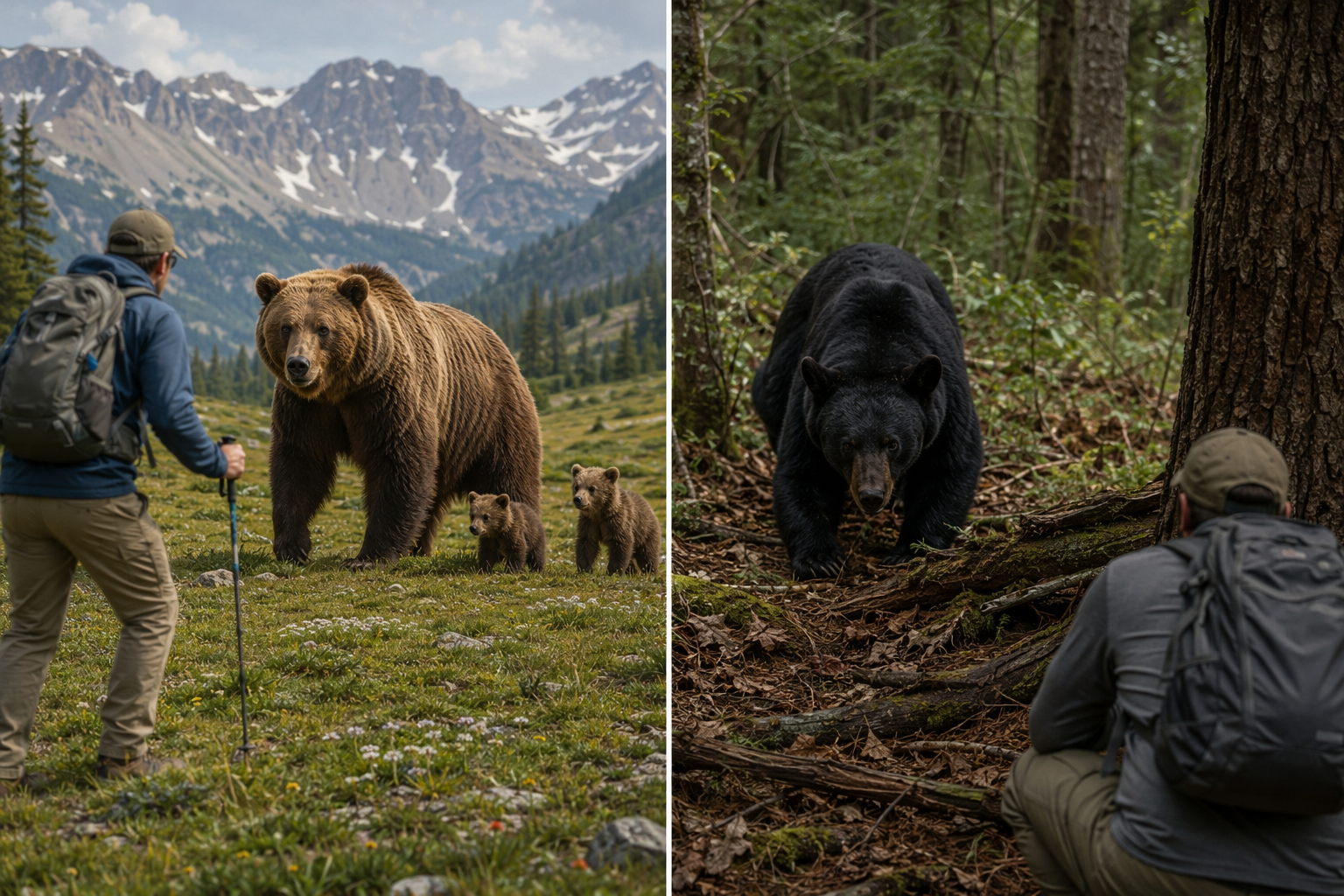
“What do I do if I see a bear?” is too broad to answer well. The first move is to narrow the problem: distance, species, behavior, and motivation. A bear feeding across a valley is not the same problem as a sow with cubs surprised at close range. A black bear following you after you leave is not the same problem as a grizzly that bluff-charges because you appeared suddenly in its space.
For a fast field companion, use The Bear Safety Decision Tree Every Hiker Should Know. The longer version is this: do not memorize one reaction and apply it to every bear. Species and motivation change the safest response.
Distant Bear: Stay Calm, Make Space, Leave The Bear Its Route
If the bear has not noticed you, keep it that way if possible. Back out, detour, or wait from a safe distance. Do not approach for a photo. Do not cut between a bear and cubs, a carcass, cover, or an escape route. If the bear has noticed you but is not approaching, speak calmly, gather the group together, ready your spray, and move away without running.
Running is a bad bargain. It can trigger pursuit, it separates groups, and it ruins the one thing you need most: enough control to observe what the bear is doing.
Brown Or Grizzly Bear At Close Range: Defensive Is Common
Brown and grizzly bear attacks are often defensive, especially when cubs are involved. In Bombieri et al.’s global brown bear attack study, 47% of attacks involved females with cubs.[4] That finding explains why a close surprise encounter is different from being hunted. The bear may be trying to remove a perceived threat, not acquire food.
In that situation, your priorities are space and de-escalation. Speak calmly. Avoid direct staring. Back away slowly if the bear is not charging. Keep the group together. Get bear spray ready. If the bear charges into spray range, use the spray according to the canister directions and local training guidance.
If a brown or grizzly bear makes contact in what appears to be a defensive attack, agencies commonly advise playing dead: lie face down, protect your neck and head, keep your pack on if it helps shield your back, and remain still until the bear leaves. That advice belongs here, not as a universal bear rule. If the attack continues or shifts into feeding behavior, the problem has changed and you may need to fight back.
Black Bear: Do Not Treat Predatory Behavior Like A Defensive Grizzly Encounter
Black bears are often less aggressive around people than many hikers imagine, but the rare fatal pattern matters. Herrero’s black bear work, summarized by the North American Bear Center, found that fatal black bear attacks are predominantly predatory, with 88% identified that way.[2] That is the opposite of the simple “play dead” rule many people carry around.
If a black bear approaches, follows, or tests you in a way that looks predatory, make yourself look larger, stay with your group, speak firmly, prepare spray, and do not play dead. If it attacks, fight back aggressively with whatever is available. The point is not to act tough; it is to avoid giving a predatory bear the response that belongs to a different species and a different motivation.
A Short Gear Checklist, Kept In Its Place
Gear matters most when it supports behavior. A canister supports food discipline. A holster supports fast spray access. A map supports route choices that avoid surprise encounters. None of it helps much if the group spreads out, cooks beside the tent, or treats spray as a last-minute purchase still wrapped in plastic.
- Bear spray approved for the region, carried on the body and not expired.
- Holster positioned where either hand can draw it while wearing your pack.
- Bear-resistant food container or park-required storage method.
- Odor-proof bags as organization aids, not as a substitute for approved storage.
- Headlamp for handling food storage correctly after dark instead of cutting corners.
- Local park guidance checked before the trip, because storage rules and bear activity change by area.
What The Data Changes About Your Job
The numbers should lower your panic, not your standards. A 1-in-2.1-million injury risk is a reason to stop treating attack stories as probability forecasts.[1] It is not a reason to stroll through berry brush silently, sleep with scented items, or assume a bear will interpret your intentions kindly.
The practical method is layered: stay grouped, make noise where surprise is likely, remove food rewards, and carry accessible bear spray. If contact happens anyway, slow the question down before you act: which bear, what distance, what behavior, and what motivation? A defensive brown bear with cubs and a black bear showing predatory interest are not the same emergency.
Bear country does not ask for bravado. It asks for humility before an animal that is stronger than you, and enough discipline to handle the preventable failure points before fear takes over.
References
- Staying Safe Around Bears — U.S. National Park Service
- How Dangerous Are Black Bears? — North American Bear Center
- Bear Attack Statistics by Species — BearVault
- Brown bear attacks on humans: a worldwide perspective — Scientific Reports, 2019
- Safe travel in bear country — Parks Canada
- The Essentials for Traveling in Alaska's Bear Country — Alaska Department of Fish and Game
- How Effective Is Bear Spray? — Backpacker
- Does Bear Spray Work? — Outside Online, 2019
Related exhibits & inventory
Verified outcomes
No verified outcomes on file for this exam yet
See Methodology for how outcome evidence is disclosed once logged.
Planners
No planner filed for this exam yet
A downloadable timeline template for this exam hasn't been published yet.
Tool verdicts
AI-tool cautions
No AI tools tested for this exam yet
No hands-on AI-accuracy logs have been filed for this exam.
Questions about this plan
Ask a question about a specific section, timeline, or citation in this plan — or flag something that needs correcting.
Comments
Join the discussion with an anonymous comment.