
SAT Exam Hub
What a Special Marine Warning Means and How Long It Lasts
Learn what triggers a Special Marine Warning—including 34-knot winds, penny-size hail, or any waterspout—and why it lasts a maximum of two hours. This plain-language guide helps boaters and coastal residents understand when to act.
- SAT
- ACT
- GRE
- MCAT
- ASVAB
- digital-sat
- adaptive-testing
- registration-fee
- content-outline
- score-target
If you hear “Special Marine Warning” on the radio while you are on or near the water, treat it as a short-window danger alert, not as a routine forecast update. NOAA’s National Weather Service uses a Special Marine Warning for sudden hazardous weather over marine waters when any one of these conditions is occurring or expected: sustained winds or gusts of 34 knots, which is about 39 mph, or greater; hail 3/4 inch or larger; or any waterspout. The warning covers a maximum of two hours unless the threat continues and the Weather Service issues another warning or follow-up marine statement. [1][2]
In plain English, it is NOAA saying that a sudden marine hazard is happening or imminent in a tight time frame. The important word is not “marine.” It is “warning.” Someone still deciding whether to finish a drift, cross an exposed bay, idle back to the ramp, or call people off a pier should read it as an action signal.
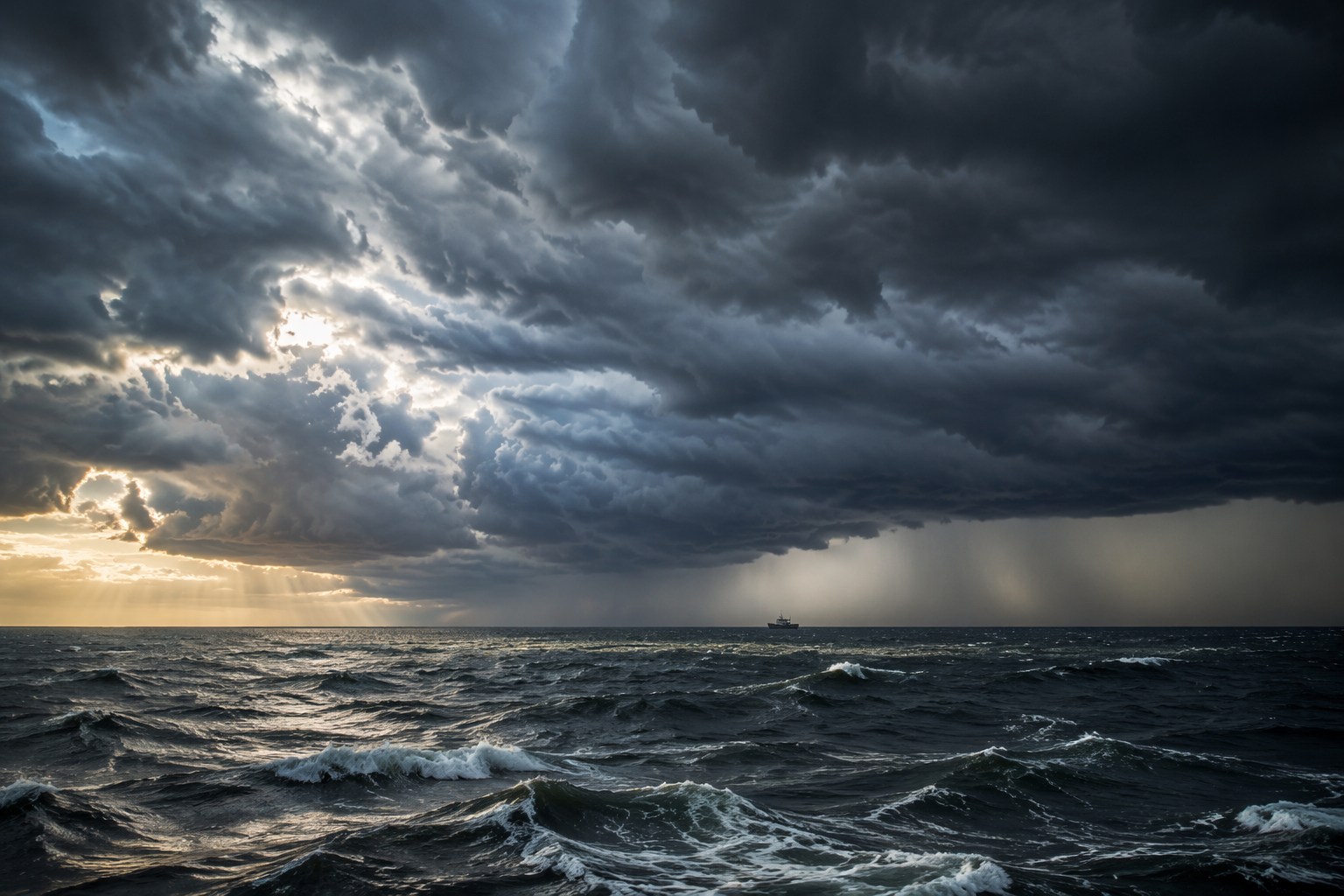
The three triggers are concrete
A Special Marine Warning is not issued because the sky looks unpleasant or because boating may become generally uncomfortable. The criteria are specific enough to make the warning useful in the moment.
- Wind: sustained winds or gusts of 34 knots or greater. That converts to about 39 mph, which is why this is not just “breezy” marine weather.
- Hail: hail 3/4 inch or larger. NWS definitions commonly describe that size as penny-size hail.
- Waterspout: any waterspout over marine waters, including one that is not tied to a classic severe thunderstorm setup.
The wind threshold matters because 34 knots is also the lower edge of gale-force wind, but in a Special Marine Warning the concern is the sudden arrival of dangerous convective wind over water. A thunderstorm outflow, squall, or compact storm cell can change the working deck, steering, visibility, and wave conditions before a casual boater has time to reason through a longer forecast discussion. [1]
The hail threshold gives the warning a physical scale. Three-quarter-inch hail is roughly penny-size, and the same size threshold appears in NWS severe thunderstorm definitions used for land warnings. On water, hail is not only a damage issue. It can reduce visibility, startle passengers, make decks slick, and arrive with the wind shift and lightning that often make a small craft’s options shrink quickly. [3]
The waterspout rule is the one many people miss. NWS criteria do not require a waterspout to be paired with large hail or severe thunderstorm winds before it deserves a Special Marine Warning. Any observed or expected waterspout over marine waters is enough. [2]
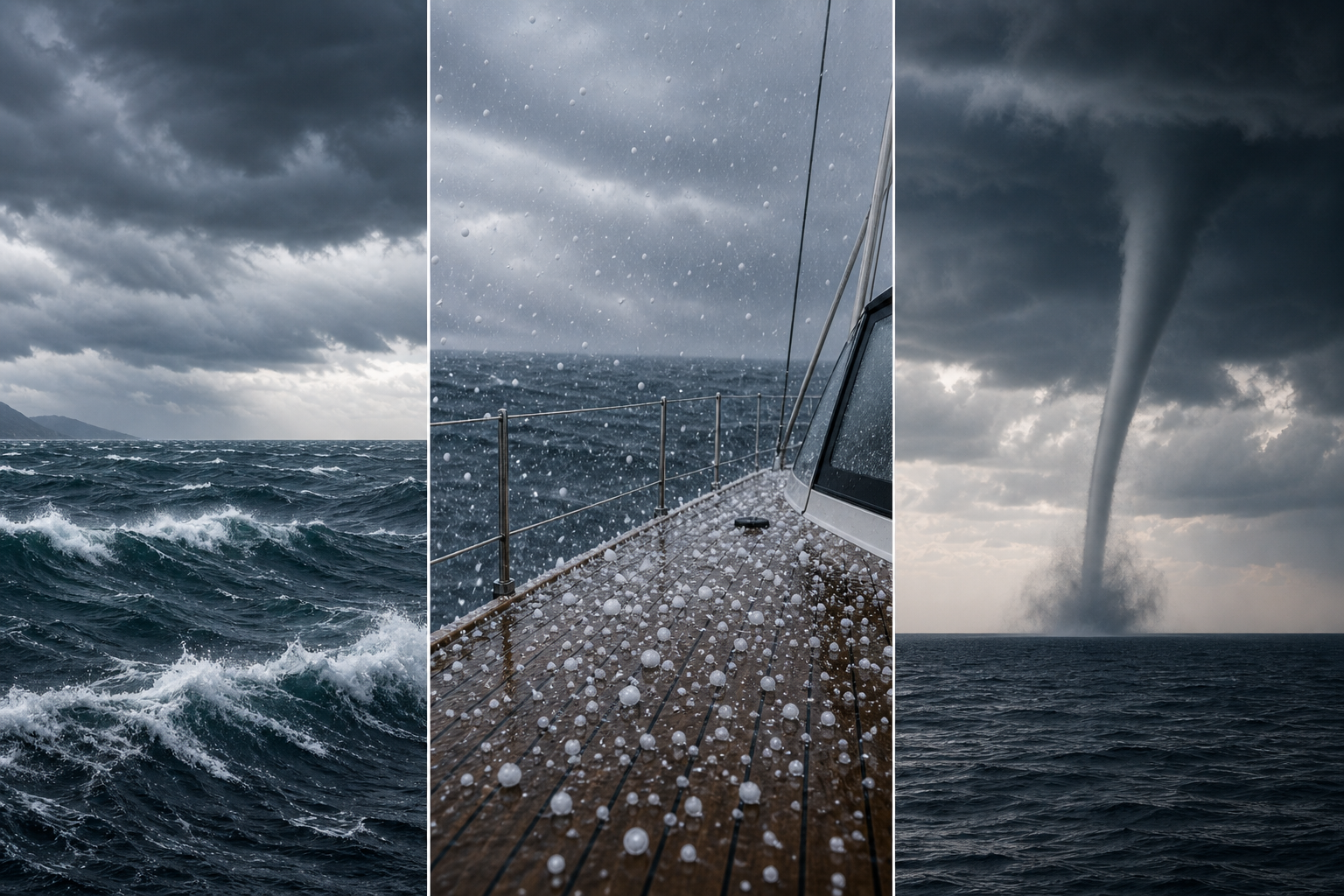
How long a Special Marine Warning lasts
A Special Marine Warning is built for a short-fuse event. The maximum duration is two hours. If the threat continues beyond that window, the Weather Service can issue a new Special Marine Warning or use a Marine Weather Statement as the situation changes. [2]
That two-hour ceiling is part of the message. It tells you the threat is close enough in time that waiting for a longer-duration advisory can be the wrong move. A Gale Warning or Storm Warning may give a boater more time to plan around a broader wind event. A Special Marine Warning is about the storm that has already become a near-term problem for a defined marine area.
| Trigger | Official threshold | Plain-language meaning |
|---|---|---|
| Wind | 34 knots, about 39 mph, or greater | Dangerous thunderstorm-related wind or gusts over water |
| Hail | 3/4 inch or larger | Penny-size hail or larger |
| Waterspout | Any waterspout | A funnel reaching the water is enough to trigger the warning |
| Duration | Maximum of 2 hours | A short-window warning, not an all-day marine forecast |
Why it is not the same as a Gale Warning
The overlap at 34 knots causes confusion. Both a Special Marine Warning and a Gale Warning can involve winds beginning at 34 knots, but they are not interchangeable products. The difference is the weather pattern and the time scale. [1]
A Gale Warning is used for broader sustained wind conditions, typically something forecasters can see coming with more lead time. A Special Marine Warning is used for fast convective hazards: thunderstorms, squalls, waterspouts, or other short-lived severe conditions that can reach a boat in minutes rather than gradually building across a long forecast period. [1][2]
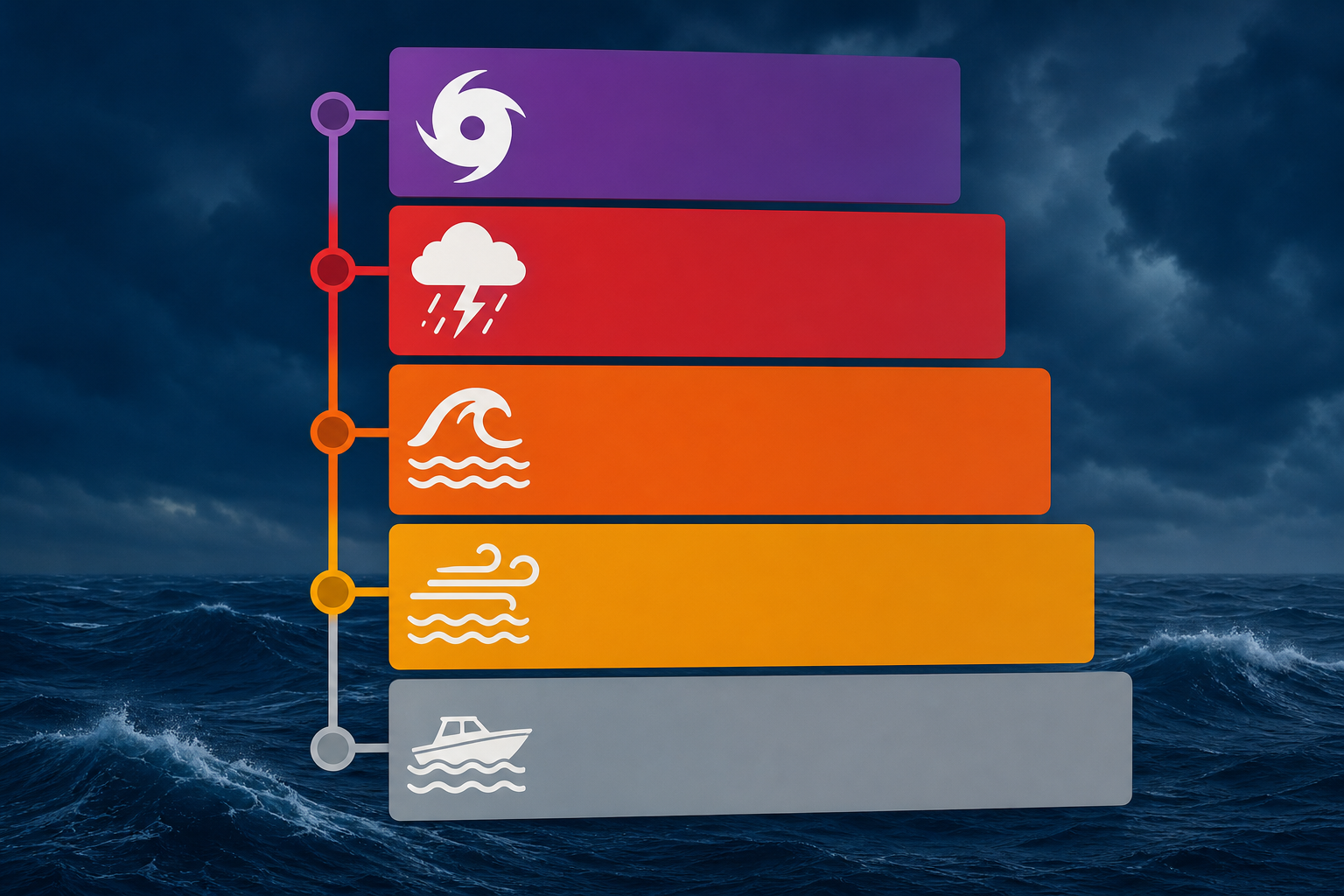
| Marine alert | Typical wind threshold or purpose | What to notice |
|---|---|---|
| Small Craft Advisory | Often 20–33 knots in some Southern Region waters and 25–33 knots in some Eastern Region waters | Thresholds vary by NWS region, so local criteria matter |
| Special Marine Warning | 34+ knots from convective storms, 3/4-inch hail, or any waterspout; maximum 2 hours | Short-fuse warning for sudden severe marine weather |
| Gale Warning | 34–47 knots sustained | Broader sustained wind event, usually forecast farther ahead |
| Storm Warning | 48–63 knots | Stronger sustained wind warning |
| Hurricane Force Wind Warning | 64+ knots | Hurricane-force winds not necessarily tied to a tropical cyclone warning |
The Small Craft Advisory line deserves a careful footnote in any comparison because it is not a single national number in the same simple way. NWS marine definitions list different Small Craft Advisory wind ranges by region, including 20–33 knots in Southern Region examples and 25–33 knots in Eastern Region examples. [1]
When land and water warnings are combined
Near the coast, one storm can threaten people on land and boats on the water at the same time. In that situation, the NWS can issue a combined “Severe Thunderstorm Warning and Special Marine Warning” product. That combined format connects the land warning logic with the marine warning logic when the same severe thunderstorm affects both areas. [4]
For a person standing on a dock or running along a shoreline, this can sound like two alerts braided together. The practical reading is simpler: the storm is not stopping neatly at the beach. If the warning includes marine waters, the water side of the event has its own hazards and timing.
If you are trying to sort out other National Weather Service wording, the same watch-versus-warning distinction matters in tropical alerts too. This hurricane watch vs. warning checklist covers that related alert-language problem.
Where the warning may reach you
A Special Marine Warning can reach boaters and coastal users through several channels, including VHF marine radio, NOAA Weather Radio, Wireless Emergency Alerts, and National Weather Service or app-based notifications. [5]
On a boat, the reliable habit is to monitor marine weather before departure and keep listening while conditions are changing. NOAA marine navigation guidance points boaters to VHF radio and NOAA Weather Radio as warning sources, and VHF channel 16 remains the distress, safety, and calling channel. [5]
- If you are already underway, reduce exposure first: move toward harbor, protected water, or the safest available route.
- If you are at the ramp or marina, delay departure instead of treating the warning like a normal advisory.
- If people are on a pier, jetty, beach, or small craft near shore, get them off exposed water-facing structures and out of the warning area when possible.
- If you receive only part of the alert, verify the affected waters and expiration time through NOAA Weather Radio, VHF traffic, or the latest NWS product.
NWS boating guidance for thunderstorm gusts is direct about the response: seek safe harbor immediately when a marine warning is issued or threatening weather approaches. Boat-Ed gives similar boater-focused advice: monitor marine weather, know the warning type, and act early rather than waiting for conditions to become obvious from the helm. [6][7]
What not to infer from the warning
A Special Marine Warning does not mean a hurricane is coming. It does not mean the whole coast is under a long-duration wind event. It also does not prove, by itself, that every nearby harbor or inland location faces the same hazard. The warning is tied to a specific marine threat, a defined area, and a short valid time.
It also should not be stretched into a broader claim than the warning supports. Official boating accident statistics can show the scale of recreational boating risk, but they do not prove that missed Special Marine Warnings are a major cause of accidents. The stronger point is narrower and more useful: when this warning is issued, NOAA has identified a sudden marine hazard meeting defined criteria, and that is enough reason to act.
So the phrase should land plainly. A Special Marine Warning is not forecast mood music and not a routine caution. It means NOAA has a short-fuse marine threat on the board: 34-knot winds or gusts, penny-size hail or larger, or any waterspout, with a warning window that cannot run longer than two hours without another product.
References
- NWS Key West Marine Definitions, National Weather Service.
- NWS Caribou Warning Criteria, National Weather Service.
- NWS LWX Watch/Warning/Advisory Definitions, National Weather Service.
- NWS Binghamton Severe Definitions, National Weather Service.
- NOAA Marine Navigation Weather Warnings, NOAA.
- NWS Melbourne Marine Thunderstorm Gust Rules, National Weather Service.
- What’s a Marine Warning?, Boat-Ed.
Related exhibits & inventory
Verified outcomes
No verified outcomes on file for this exam yet
See Methodology for how outcome evidence is disclosed once logged.
Planners
No planner filed for this exam yet
A downloadable timeline template for this exam hasn't been published yet.
Tool verdicts
AI-tool cautions
No AI tools tested for this exam yet
No hands-on AI-accuracy logs have been filed for this exam.
Questions about this plan
Ask a question about a specific section, timeline, or citation in this plan — or flag something that needs correcting.
Comments
Join the discussion with an anonymous comment.