
SAT Exam Hub
Nancy Grace Roman Telescope Learning Resources for Exam Prep
Learn how the Roman Space Telescope's three science goals—dark energy mapping, exoplanet detection, and infrared surveys—map directly to SAT, ACT, MCAT, and GRE concepts, and discover official NASA tools that build science vocabulary and reasoning skills.
- SAT
- ACT
- GRE
- MCAT
- ASVAB
- digital-sat
- adaptive-testing
- registration-fee
- content-outline
- score-target
The Nancy Grace Roman Space Telescope is useful for exam prep because NASA has built three science goals into one mission that map cleanly to test questions: dark-energy mapping, exoplanet discovery by microlensing, and wide infrared surveys. As of July 22, 2026, NASA lists a planned August 30, 2026 launch, but that should be treated as live schedule information, not a promise, because mission dates can still slip. [1]
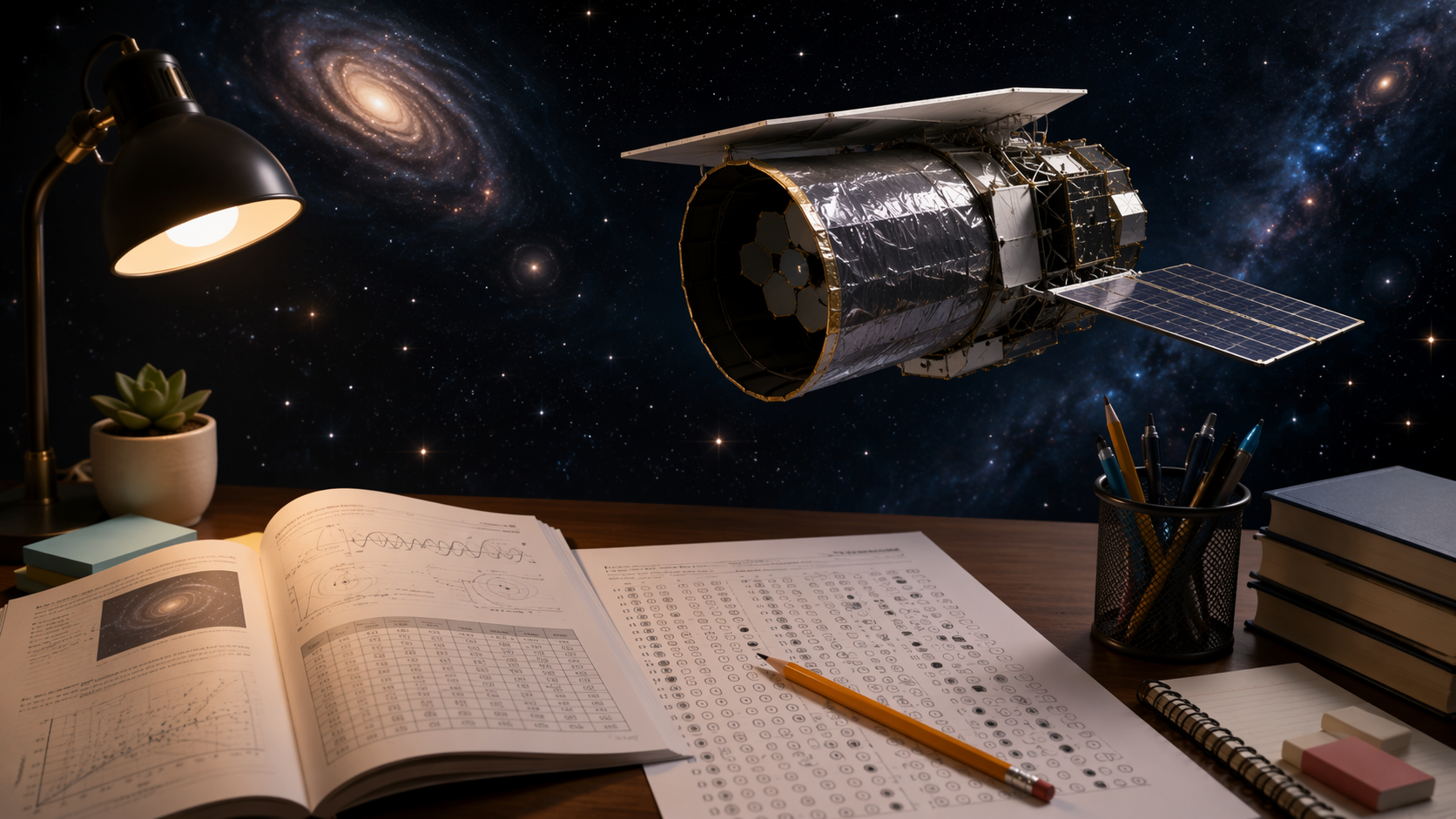
Three Goals, One Exam Case
Start with the dark-energy set, because it behaves like an ACT Science conflicting-viewpoints passage in telescope form. Roman is designed to use baryon acoustic oscillations, supernovae, and weak lensing as independent probes, so a student has to ask whether the evidence is converging, whether the methods share a hidden assumption, and whether one measurement is enough to support the claim. [1]
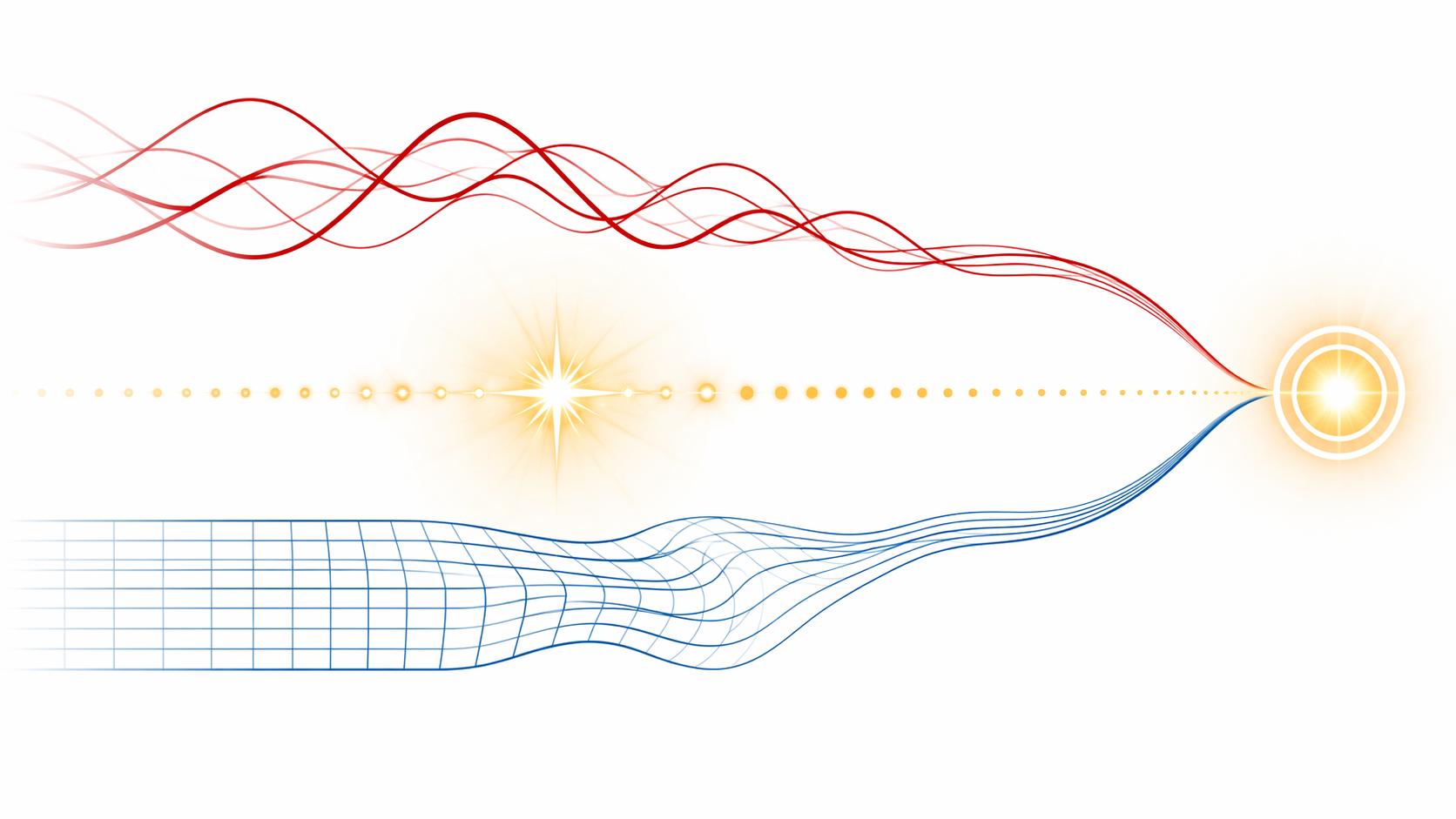
That is the same reasoning GRE Argument rewards. A conclusion can sound impressive and still be weak if it rests on one line of evidence when the problem asks for multiple checks. Roman makes that trap visible: three methods, one question, and no reason to trust the easiest answer first.
Exoplanets: Transit vs. Microlensing
Roman's exoplanet work is the clearest table-comparison drill in the mission. NASA frames the search around microlensing, and The Planetary Society says Roman could discover up to 200,000 exoplanets, but the useful study move is to compare that method with transit rather than memorize the headline number. [1][2]
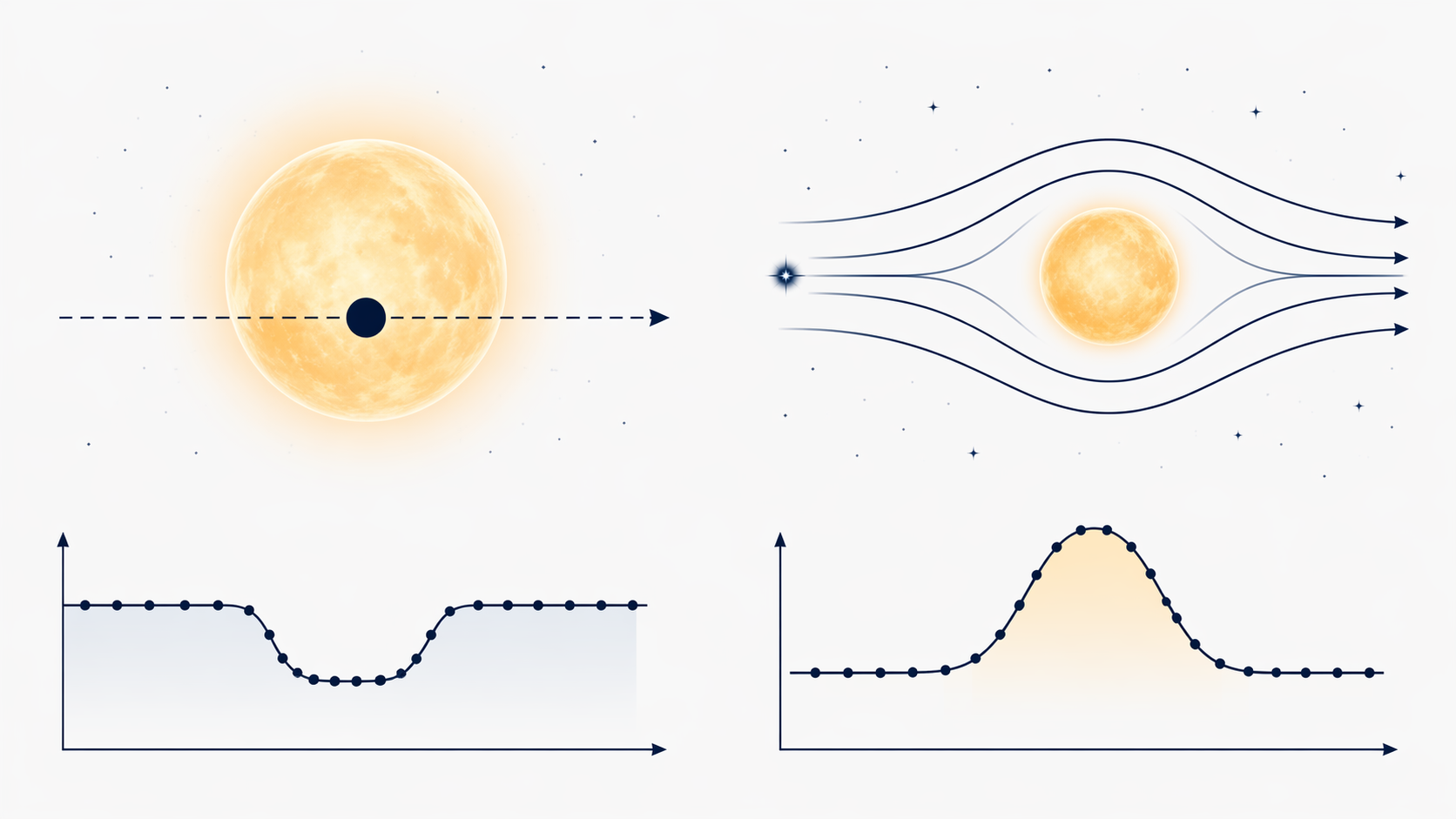
| Method | What the graph shows | What it tends to favor | Timed-test takeaway |
|---|---|---|---|
| Transit | A repeated dip in brightness | Planets that cross the star from our line of sight | Match the periodic dip to the method. |
| Microlensing | A brief brightness rise from gravitational lensing | Systems that are otherwise hard to catch with transit | Match the spike to the lensing setup. |
That contrast becomes the kind of ACT Science item where the wrong answer is often the one that swaps graph shape for method name. If you are rushing, look for the direction of change first: dip versus spike, repeated versus one-time, familiar orbit versus rare alignment.
Coronagraph, Infrared, and L2
Roman's coronagraph is the mission detail that most directly becomes MCAT Physics. NASA says the instrument uses dual deformable mirrors to block starlight at part-per-billion levels, which is a wave-optics problem dressed as astronomy. [1] If a passage asks why a mirror surface has to move, the answer is about controlling interference and diffraction, not about telescope branding.
The mission page also gives another pair of numbers worth noticing because they encode concepts: 0.48 to 2.30 micrometers spans visible to near-infrared light, and a Sun-Earth L2 orbit sits about 1.5 million km from Earth. Those details can turn into an EM-spectrum question, a thermal-stability question, or an orbital-motion prompt depending on how the stem is written. [1]
NASA's Roman and Webb comparison page is the cleanest official shortcut when a question asks which telescope fits which wavelength band. It is easier to study that side-by-side framing than to pull the same contrast out of a news story. [3]
Official Materials Worth Using
Use NASA's education hub and the launch-resource materials when you want the mission language in a cleaner, classroom-shaped form. The Fun Activities page adds a paper model, a coloring page, and the Roman Space Observer game, which takes about one minute per round and keeps recycling words like galaxies, supernovae, exoplanets, rogue planets, dark matter, and black holes. [4]
That game is not a curriculum, but it is a quick vocabulary drill that can pay off on SAT and ACT reading passages, where the test rarely asks you to know everything and more often asks you to keep the terms straight under time pressure. The same is true of the launch-resource deck: it is most useful when you turn the slides into flashcards, passage prompts, or a short comparison chart rather than read them once and move on.
Studied this way, Roman is worth the time because it forces the habits standardized tests reward: compare methods, weigh evidence, read graphs against the mechanism, and translate instrument details into physics. The telescope is not the lesson by itself; the lesson is turning each mission claim into the passage or reasoning task your exam actually uses.
References
- Nancy Grace Roman Space Telescope — NASA
- Roman Space Telescope — The Planetary Society
- Roman and Webb — NASA
- Fun Activities — NASA Roman Space Telescope
Related exhibits & inventory
Verified outcomes
No verified outcomes on file for this exam yet
See Methodology for how outcome evidence is disclosed once logged.
Planners
No planner filed for this exam yet
A downloadable timeline template for this exam hasn't been published yet.
Tool verdicts
AI-tool cautions
No AI tools tested for this exam yet
No hands-on AI-accuracy logs have been filed for this exam.
Questions about this plan
Ask a question about a specific section, timeline, or citation in this plan — or flag something that needs correcting.
Comments
Join the discussion with an anonymous comment.