
ALL Exam Hub
What Malazgirt Zaferi's Significance Means for the Exam
Malazgirt Zaferi's significance, distilled into source-flagged, recall-ready exam notes. This one-sheet organizes the verifiable facts, the contested figures, and both the Turkish and world-history framings of the battle, so you can answer whichever interpretation your exam expects.
- gre
- mcat
- asvab
- sat
- act
- digital-adaptive
- official-material
- section-strategy
- test-date-timeline
For an exam, the significance of Malazgirt Zaferi can be recalled in one line: on 26 August 1071, Alp Arslan’s Seljuk army defeated the Byzantine army, captured Emperor Romanos IV Diogenes, and accelerated the political and territorial opening of Anatolia to Turkish settlement. It was the only occasion on which a Byzantine emperor was taken prisoner by a Muslim commander.[1] In a broader world-history answer, the battle belongs to the decline of Byzantine military power and the chain of events leading to the First Crusade.[2]
Numerical warning: Medieval accounts give sharply conflicting army totals, casualty estimates, and ransom terms. A defensible answer attributes those figures instead of presenting one polished number as certain.
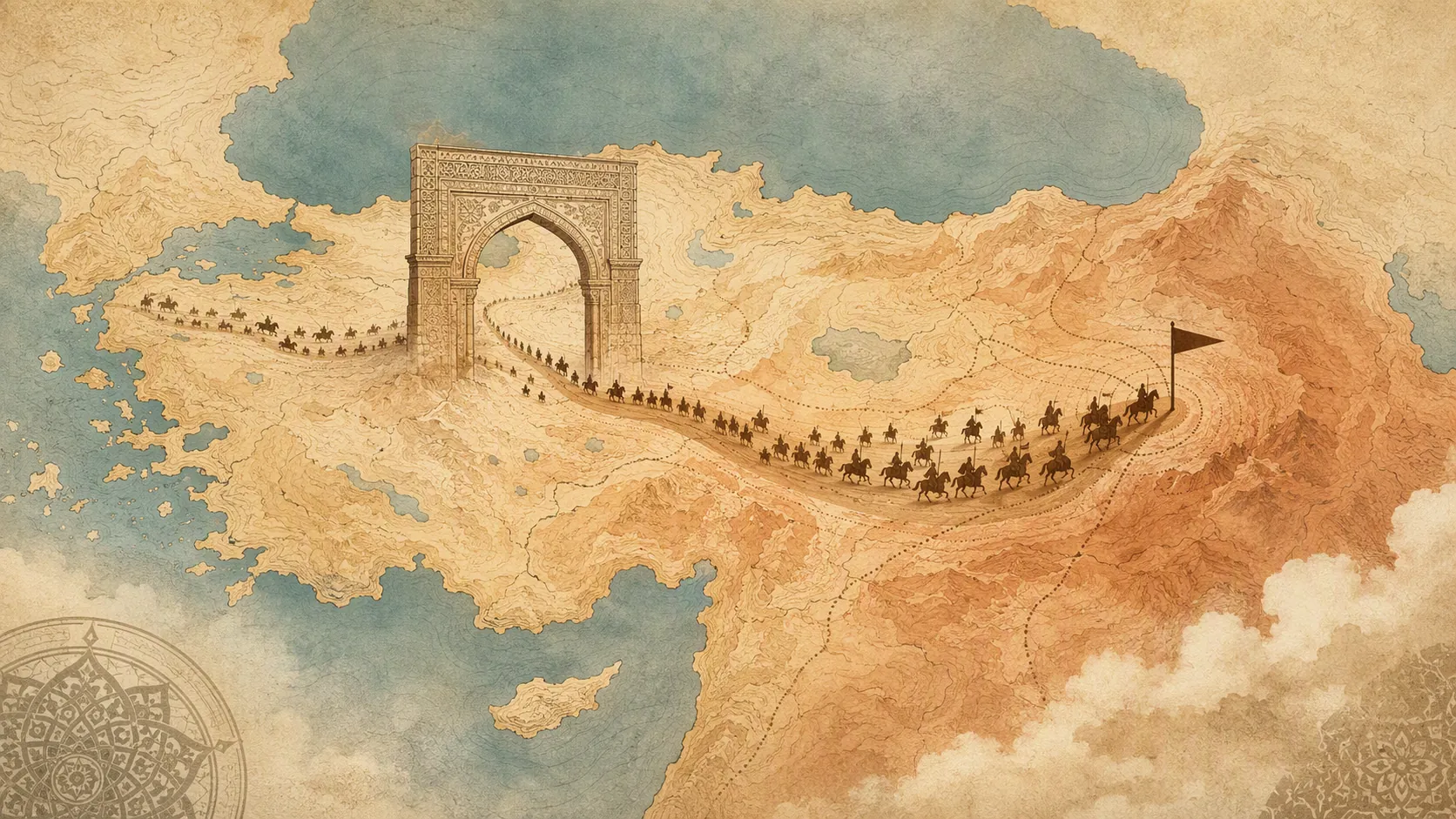
Malazgirt one-sheet: the facts to recall first
| Exam cue | Recall-ready note |
|---|---|
| Date | 26 August 1071; TDV also gives 27 Zilkade 463 AH.[1] |
| Place | Malazgirt, known in English as Manzikert, in eastern Anatolia. |
| Participants | The Great Seljuk forces commanded by Sultan Alp Arslan against the Byzantine forces commanded by Emperor Romanos IV Diogenes.[1] |
| Outcome | Decisive Seljuk victory and the capture of the Byzantine emperor.[1] |
| Immediate result | Romanos negotiated a ransom and territorial concessions, but he was then overthrown by his Byzantine rivals.[1] |
| Turkish-history significance | The victory opened Anatolia to sustained Turkish settlement and political formation.[1] |
| World-history significance | The defeat weakened Byzantium, contributed to the loss of Anatolian territory, and formed part of the background to the First Crusade.[2] |
| Main qualification | The battle’s political consequences were much greater than its comparatively limited battlefield losses. |
A short response can stop after the date, commanders, Seljuk victory, capture of Romanos, and opening of Anatolia. A longer response should explain why the capture became so destructive: the emperor’s enemies took power, civil conflict followed, and Byzantine authority in Anatolia eroded while Turkish groups expanded.
The figures belong in an attribution table, not a single total
Force totals are among the easiest Malazgirt exam notes to memorize badly. Modern estimates are generally much more restrained than medieval narratives, while even modern reconstructions may count different things: the full expedition, effective troops, or only the soldiers who actually fought.
| Disputed item | Source-flagged figures | Safe exam wording |
|---|---|---|
| Byzantine strength | John Haldon’s effective-force estimate is about 40,000. Muslim sources and Matthew of Edessa give claims above 200,000, with some accounts reaching about 600,000.[3][1] | “Modern estimates are far below the enormous totals reported by some medieval sources.” |
| Seljuk strength | A commonly reported range is approximately 35,000–50,000; TDV gives about 50,000.[3][1] | Use an attributed range rather than claiming an exact total. |
| Force actually fighting | Paul Markham estimates that only about 10,000–15,000 Byzantine troops took part in the decisive fighting.[4] | Label this specifically as Markham’s reconstruction. |
| Byzantine casualties | Figures attributed to Haldon are approximately 2,000–8,000 killed and about 4,000 captured.[3] | “Losses were serious but smaller than the subsequent political consequences.” |
| Proportion lost | Markham estimates losses at approximately 20 percent of Byzantine strength.[4] | Do not combine this automatically with another scholar’s starting total. |
| Ransom | TDV reports 1.5 million gold pieces plus an annual payment of 360,000; Markham gives a variant of 1 million solidi.[1][4] | If a figure is required, name the source and acknowledge the variant. |
These estimates cannot be made consistent merely by averaging them. A medieval chronicler’s total of several hundred thousand and a modern estimate of effective strength are different kinds of claims. The useful contrast is therefore not “correct number versus wrong number,” but cautious reconstruction versus much larger narrative tradition.
Why Byzantine numbers did not guarantee battlefield control
The Byzantine expedition was not one compact force under stable control. The withdrawals and defections below explain why headline troop totals did not translate into battlefield control.[3][4]
- Romanos marched east with a large but divided Byzantine expedition.
- Tarchaneiotes’ detachment withdrew without joining the decisive fighting.[3]
- Seljuk pressure continued as the Byzantine army attempted to reorganize and withdraw.
- Andronikos Doukas departed with the reserve at the critical moment.[3][4]
- The Byzantine formation collapsed, Romanos was wounded and captured, and Alp Arslan won the battle.[1]
The numbered results that carry the exam answer
- The Byzantine emperor was captured. Romanos IV Diogenes became Alp Arslan’s prisoner, giving the defeat extraordinary political weight beyond its casualty total.[1]
- A treaty and ransom were negotiated. TDV’s account lists Antioch, Edessa, Hierapolis/Menbic, and Manzikert among the places to be ceded, alongside the ransom and annual payment.[1]
- Romanos lost the throne. His rivals deposed and blinded him; he died within the following year.[3]
- The defeat became a Byzantine political crisis. The Doukas coup was followed by roughly a decade of civil conflict, competing claims to authority, and military defections.[3][4]
- Turkish territorial expansion accelerated. By 1080, Seljuk Turks had gained approximately 78,000 square kilometers in Anatolia, and the first Anatolian beyliks emerged.[3]
- Byzantine control contracted. The empire lost much of its Anatolian military and territorial base and was pushed increasingly toward the Constantinople region.[2][3]
- The crisis contributed to the First Crusade context. Byzantine appeals for western assistance formed part of the background to the First Crusade launched in 1095.[2]
The sequence matters. Malazgirt did not need to annihilate the Byzantine army in one afternoon to become a historical turning point. The capture discredited the reigning emperor; the resulting struggle weakened command and frontier defense; Turkish groups then advanced through a region whose political defenses were failing. Battlefield loss and long-term territorial loss should not be treated as the same event.
Two legitimate ways to explain Malazgirt’s significance
Turkish-history framing: Anadolu’nun kapıları Türklere açıldı
In the Turkish national-history framing, Malazgirt is the victory that “opened the gates of Anatolia” to the Turks. TDV places the battle alongside major early Islamic victories in its historical importance, while Turkish-language summaries treat 1071 as the beginning of a new and lasting Turkish phase in Anatolian history.[1][5]
The phrase is best understood as a compression cue, not as a claim that Anatolia became Turkish everywhere on 26 August. What changed was the strategic and political environment: Turkish settlement and movement westward became easier, Seljuk influence expanded, and Turkish principalities began forming in Anatolia over the following years.
- Recall cue: “Malazgirt opened Anatolia to sustained Turkish settlement.”
- Political result: Seljuk and later beylik authority expanded in Anatolia.
- Long-term meaning: Anatolia increasingly became a center of Turkish political and cultural history.[1][5]
World-history framing: Byzantine decline and the First Crusade
A world-history response normally shifts the subject from Turkish expansion to Byzantine capacity. Britannica treats Manzikert as a major stage in Byzantine decline: the empire’s ability to defend its Anatolian heartland deteriorated, and its search for help from western Christians contributed to the circumstances surrounding the First Crusade.[2]
This framing should not turn “contributed to” into “single-handedly caused.” The First Crusade began in 1095, more than two decades after the battle. Malazgirt matters because it helped produce the Byzantine weakness and appeals for assistance that entered the crusading context, not because one battle mechanically generated every later decision.
Markham’s counterpoint: military disaster or political failure?
Paul Markham offers a deliberately revisionist interpretation: with losses estimated at about one-fifth of Byzantine strength, Manzikert was not necessarily an annihilating military disaster. In his reading, it became catastrophic because of the political failure that followed—the coup, civil war, and inability to preserve imperial control.[4]
That is an individual interpretation, not a replacement formula that resolves the historiographical debate. It is most useful when a prompt asks whether Malazgirt’s reputation matches the immediate battlefield damage. The strongest response distinguishes the relatively limited losses from the much larger political and territorial consequences.
Exam traps: where qualification protects the answer
| Trap | Weak formulation | Defensible formulation |
|---|---|---|
| One exact army total | “The Byzantine army had exactly 200,000 soldiers.” | “Modern estimates can be around 40,000 effective troops, while medieval sources claim totals above 200,000.”[3][1] |
| Mixing categories | Combining a full expedition estimate with a figure for troops actually engaged. | State whether the number describes the expedition, effective strength, or the force that fought. |
| One unquestioned ransom | “The ransom was definitely 1.5 million.” | “TDV reports 1.5 million gold pieces plus 360,000 annually; Markham gives 1 million solidi.”[1][4] |
| Equating importance with casualties | “The battle mattered because nearly the whole army was killed.” | “The casualties were comparatively limited, but the emperor’s capture and the ensuing civil conflict magnified the defeat.”[3][4] |
| Instant conquest of Anatolia | “The Seljuks took all Anatolia on the day of the battle.” | “The victory opened the way for continuing settlement, expansion, and the formation of Anatolian beyliks.”[1][3] |
| Overstating Crusade causation | “Malazgirt directly caused the First Crusade by itself.” | “Byzantine weakness and appeals to the West after the loss of Anatolian power contributed to the First Crusade context.”[2] |
| Confusing the shared date | Mixing 26 August 1071 with 26 August 1922. | Malazgirt: 1071 and Alp Arslan. Büyük Taarruz: 1922 and the Turkish War of Independence. |
For the other battle associated with 26 August, use the Büyük Taarruz exam notes. The simplest separation cue is “1071—Anatolia opens; 1922—Anatolia is recovered.” It is a memory device, not a substitute for explaining either event.
How the victory is commemorated
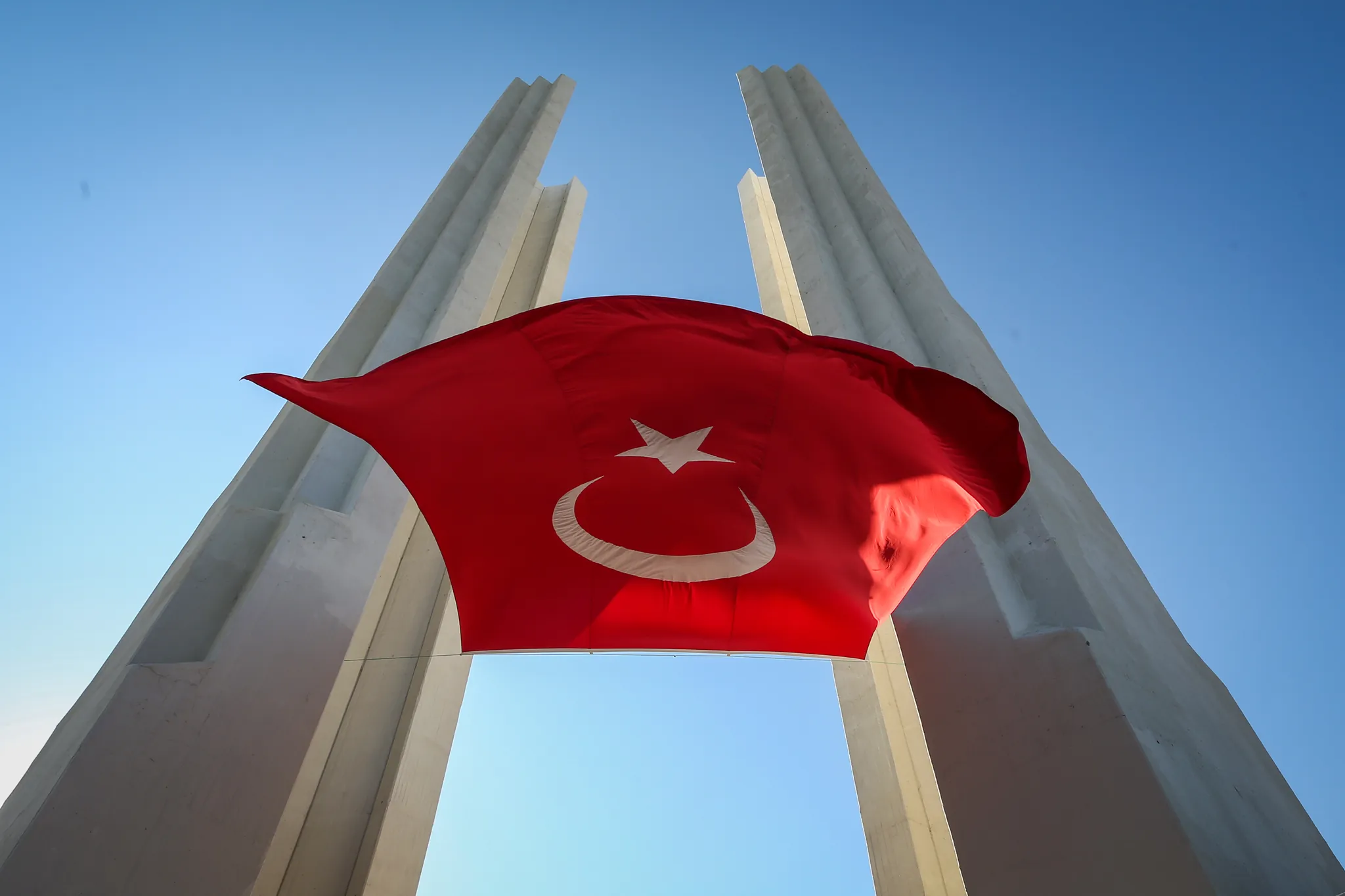
Annual ceremonies are held on 26 August at the 42-meter Malazgirt Zafer Anıtı in Muş Province. The Victory Monument was built in 1989.[6] Other architectural and political references keep 1071 visible in public memory: four minarets of Istanbul’s Çamlıca Mosque use the 107.1-meter dimension, and the state anniversary agenda linking 2023, 2053, and 2071 identifies 2071 as the thousandth anniversary of Malazgirt.[3]
Two adaptable exam answers
Short Turkish-history answer
The Battle of Malazgirt was fought between Alp Arslan’s Seljuk forces and the Byzantine army of Romanos IV Diogenes on 26 August 1071. The Seljuks won and captured the Byzantine emperor. The victory weakened Byzantine authority and opened Anatolia to continuing Turkish settlement and political organization, including the emergence of the first Anatolian beyliks. It is therefore treated as a foundational turning point in Turkish history in Anatolia.[1][3][5]
Broader world-history answer
The Seljuk victory at Manzikert in 1071 was significant less for the number killed than for its political aftermath. Emperor Romanos IV was captured and then overthrown, while civil conflict weakened Byzantine control of Anatolia. Turkish expansion accelerated, Byzantium lost much of its Anatolian military base, and later Byzantine appeals for western help contributed to the background of the First Crusade. Because medieval accounts disagree sharply about troop totals and ransom terms, detailed figures should be attributed rather than presented as certain.[1][2][3][4]
References
- MALAZGİRT MUHAREBESİ — TDV İslâm Ansiklopedisi, 2003
- Battle of Manzikert (1071) — Britannica
- Battle of Manzikert — Wikipedia
- The Battle of Manzikert: Military Disaster or Political Failure? — De Re Militari
- Malazgirt Meydan Muharebesi — Vikipedi
- Malazgirt (town) — Vikipedi
Related exhibits & inventory
Verified outcomes
No verified outcomes on file for this exam yet
See Methodology for how outcome evidence is disclosed once logged.
Planners
No planner filed for this exam yet
A downloadable timeline template for this exam hasn't been published yet.
Tool verdicts
AI-tool cautions
No AI tools tested for this exam yet
No hands-on AI-accuracy logs have been filed for this exam.
Questions about this plan
Ask a question about a specific section, timeline, or citation in this plan — or flag something that needs correcting.
Comments
Join the discussion with an anonymous comment.