
GRE Exam Hub
Study Tips for Environmental Management Master's Students
A phased, evidence-based study system for Environmental Management master's students — from deciding whether you need the GRE to applying proven techniques for quantitative, policy, and capstone work.
- SAT
- ACT
- GRE
- MCAT
- ASVAB
- digital-sat
- adaptive-testing
- registration-fee
- content-outline
- score-target
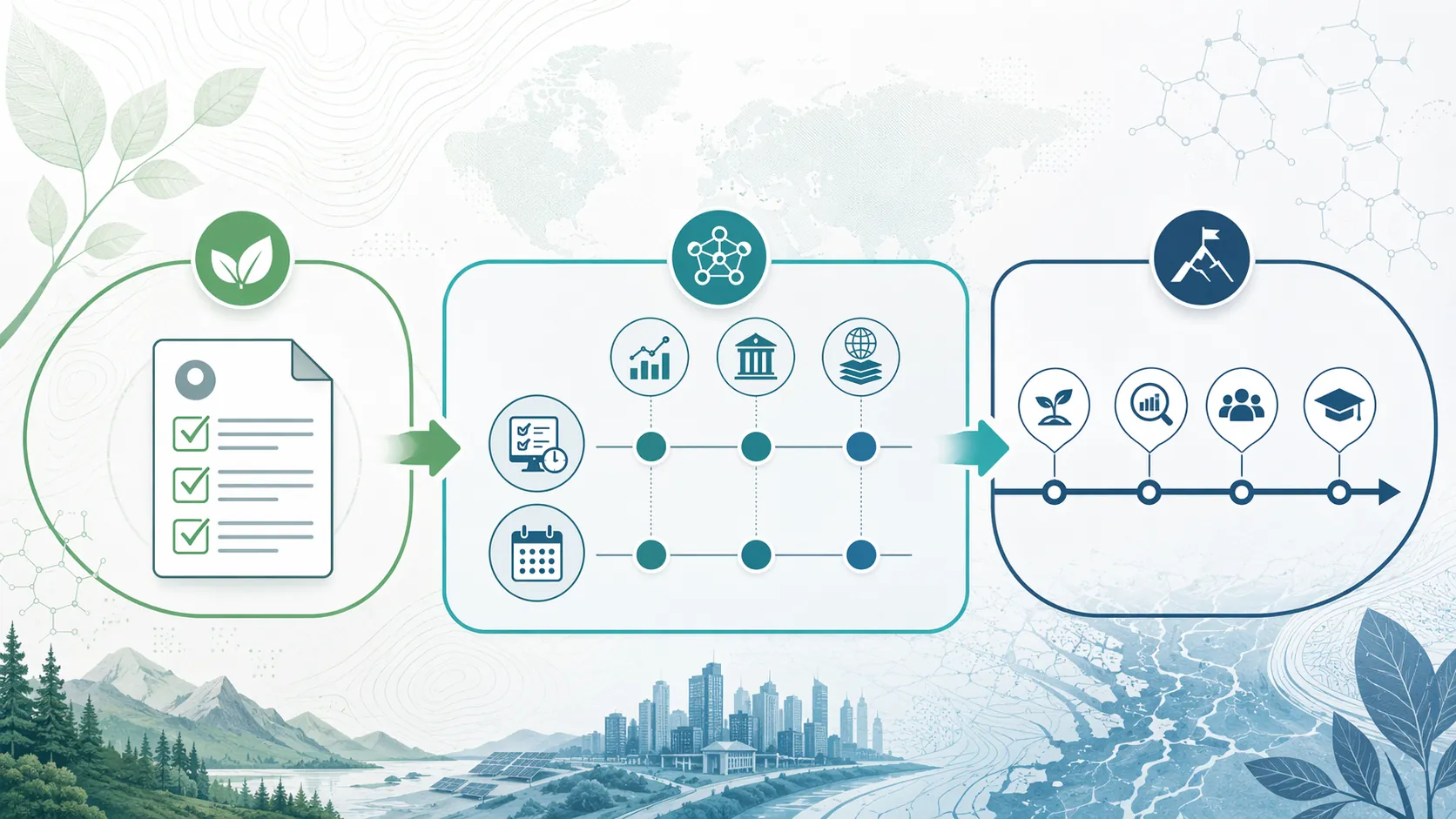
Before you buy a GRE book, open the admissions page for each Environmental Management master’s program on your list. As of Q3 2026, the GRE is no longer a safe assumption in this field: Research.com reports that over 38% of environmental master’s programs do not require the GRE or GMAT, while CJB Network notes that nearly 60% of U.S. environmental science programs have dropped the GRE requirement.[1][2] That does not mean your target program has dropped it. It means the first study tip is verification.
Study tips for an environmental management master’s degree have to protect your calendar from the wrong kind of diligence. MEM students may face statistics, environmental chemistry, GIS labs, policy memos, legal reasoning, group reports, and a capstone. Spending six weeks on an exam your programs do not require is not discipline. It is avoidable drift.
Start With the GRE Gate
Treat the GRE as a program-specific requirement, not as a rite of passage. Yale School of the Environment, for example, publishes current MEM admissions and program details on its own site, including degree structure and capstone expectations.[3] Other programs may use different policies, deadlines, waivers, or language around optional scores. Your job is not to infer. Your job is to check.
| What the program page says | What to do next |
|---|---|
| GRE required | Build a short GRE plan around the deadline, then stop expanding prep once it has a defined score target and test date. |
| GRE optional | Look for wording that explains whether strong scores can help. If the page is vague, ask admissions before assigning weeks to prep. |
| GRE not required or not accepted | Move that time into quantitative readiness, writing samples, prerequisite review, GIS basics, or application materials. |
| GRE waived under certain conditions | Confirm whether you qualify and save the written policy or email response with your application notes. |
If the GRE is required, prepare for it cleanly: diagnose, schedule, practice under time, review errors, retest. This is not the place to turn into a full standardized-test article. Once the requirement is satisfied, the center of gravity shifts to the degree itself.
If the GRE is not required, do not leave the recovered hours empty. Reallocate them. A student who has avoided unnecessary test prep can use the same weeks to refresh algebra, basic statistics, academic writing, spreadsheet work, or introductory GIS vocabulary. Those are not glamorous substitutions, but they are closer to the work MEM courses actually ask you to do.
Use the Best-Supported Study Methods, Then Adapt Them
The strongest general study-method evidence here does not come from environmental management classrooms specifically. It comes from Dunlosky and colleagues’ 2013 review of learning techniques, which rated practice testing and distributed practice as the only two high-utility techniques among the 10 studied.[4] That boundary matters. The review does not prove that one exact MEM schedule works for everyone. It does give you a better default than rereading, highlighting, and hoping recognition turns into performance.
The same article notes that 84% of students in one elite-university sample reported rereading as a study strategy.[4] That figure is useful because it names the trap. Rereading feels active enough to reduce anxiety, but it often fails to reveal whether you can solve a problem, explain a regulation, interpret a map layer, or defend a recommendation without the page in front of you.
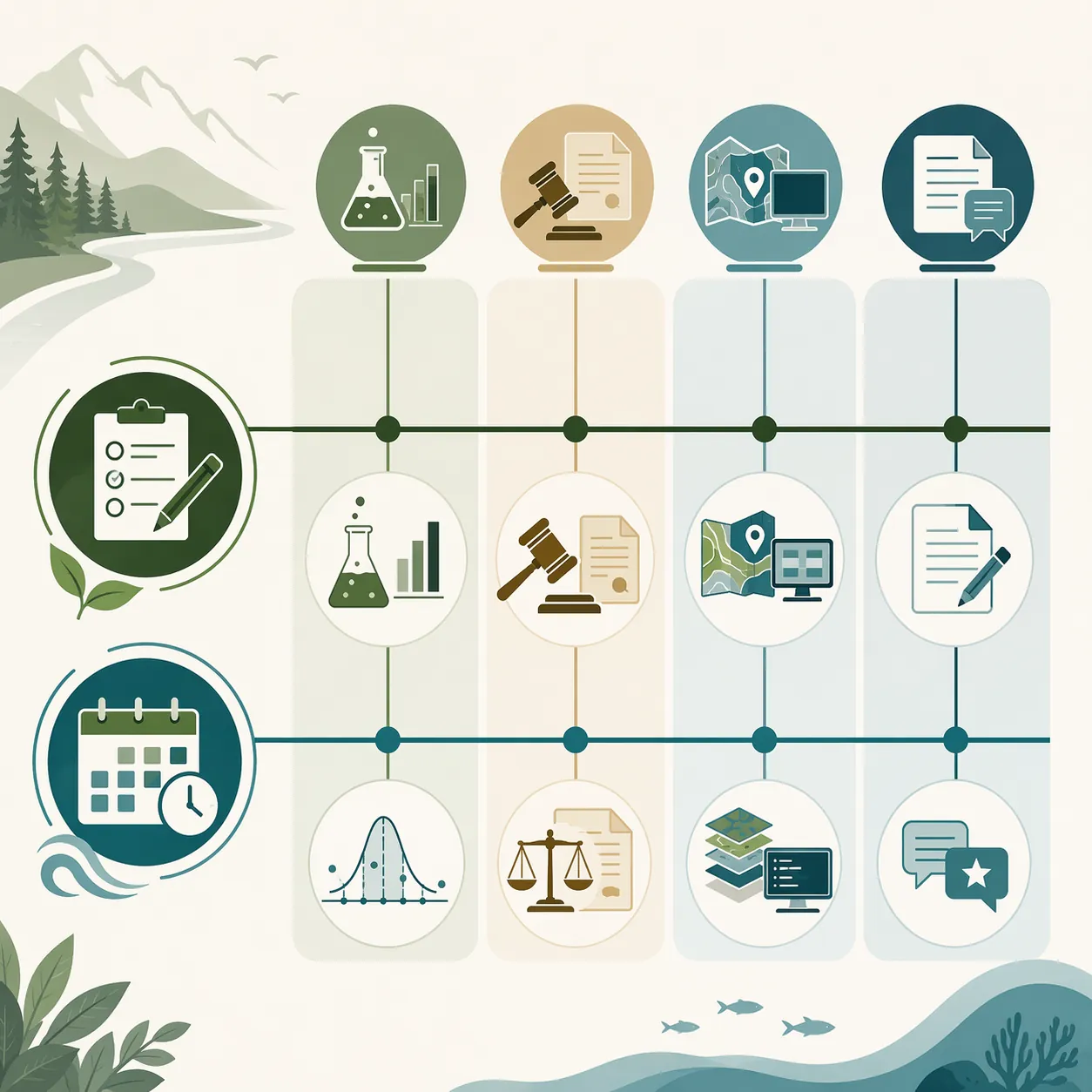
Research.com’s 2026 course-difficulty article reports that Environmental Chemistry, GIS and Spatial Analysis, and Ecological Risk Assessment are consistently perceived as among the hardest environmental management courses because of their quantitative and technical demands. It also reports that upper-level environmental management courses have average GPAs about 0.4 points lower than introductory courses, and that MEM students spend about 15 hours per week on coursework.[5] Those are perception and workload data, not controlled proof that one course will be hard for you. Still, they are good enough to tell you where your planning margin should go.
For Environmental Chemistry, Test Before You Feel Ready
Environmental Chemistry punishes passive familiarity. A chapter may look manageable while you are reading about equilibrium, contaminants, pH, or reaction pathways. The useful question is whether you can retrieve the concept, choose the right equation or relationship, and apply it when the problem is worded differently.
- After lecture: write five to ten questions from memory before reopening notes.
- Before problem sets: attempt a mixed set cold, then mark exactly where retrieval failed.
- After grading: turn missed problems into short prompts, not copied solutions.
- Before exams: practice under conditions that remove the textbook, solution manual, and friendly pause button.
Flashcards can help, but only if they ask for decisions, explanations, and problem setup. A card that says “Define bioaccumulation” is weaker than one that asks, “Given a contaminant moving through a food web, what evidence would make bioaccumulation a plausible concern?” The second version is closer to graduate work.
For GIS and Spatial Analysis, Space the Repetitions or Lose the Skill
GIS is where students often confuse completing a lab with learning a workflow. Following instructions once is not the same as remembering which tool to use, what projection issue matters, how to clean a layer, or how to explain the map’s limitations a week later.
Distributed practice is the better default here. Instead of one long GIS block right before the lab is due, use shorter returns: one session to preview the workflow, one to complete the lab, one to recreate part of it without the instructions, and one to explain the output in plain language. Software skills decay when they are only performed by imitation.
| GIS task | Practice version that actually tests learning |
|---|---|
| Clip, join, buffer, or reclassify layers | Recreate the operation on a new sample dataset without step-by-step notes. |
| Choose a projection | Explain what would go wrong if the projection choice were inappropriate. |
| Make a map layout | Ask whether the map supports the decision being discussed, not merely whether it looks finished. |
| Interpret spatial results | Write a short caveat paragraph about data quality, scale, or uncertainty. |
For Ecological Risk Assessment, Practice the Chain of Reasoning
Ecological Risk Assessment is difficult because it asks for linked judgment. You are not just memorizing terms. You are moving from hazard identification to exposure, effects, uncertainty, and management implications. A weak study plan reviews each component separately and then gets surprised when the exam or report asks for the whole chain.
Practice testing should therefore look like scenario reconstruction. Use hypothetical cases for practice: a wetland near an industrial discharge, a species with uncertain exposure pathways, or a proposed remediation plan with limited monitoring data. Then answer the same recurring prompts: What is the stressor? Who or what is exposed? What evidence is missing? What conclusion is justified, and what conclusion would overreach?
For Policy and Legal Courses, Memorized Summaries Are Too Thin
Research.com describes Environmental Policy and Environmental Ethics as more manageable than the most technical courses in its perceived-difficulty data.[5] More manageable does not mean effortless. These courses can hide their difficulty because the reading feels comprehensible while the graded work asks for interpretation, tradeoff analysis, and defensible recommendations.
For policy and legal material, use explanation practice. After reading a statute, case excerpt, agency document, or policy memo, close the text and answer three questions in writing: What rule or principle matters here? Who gains or loses under this interpretation? What would a reasonable opponent argue? That last question is not extra. It is what keeps a memo from becoming a decorated summary.
Discussion preparation should also be active. Bring one claim, one piece of evidence, and one uncertainty to class. If your notes contain only copied passages, you have postponed the actual work until the professor or your group forces it.
For Writing-Intensive Work, Make Drafts Recurring Events
MEM writing is often applied writing: policy briefs, environmental impact analysis, technical reports, reflective memos, literature reviews, and group deliverables. Research.com’s curriculum overview describes environmental management programs as combining environmental science, policy, economics, management, and applied skills, which is exactly why one writing habit cannot serve every assignment.[6]
The useful rhythm is draft, test, revise. Test a draft by asking whether the decision-maker can identify the recommendation, the evidence behind it, the uncertainty, and the consequence of acting. If those pieces are buried, the problem is not style yet. It is structure.
- For a policy memo: draft the recommendation before polishing the background.
- For a technical report: build figures and methods notes early enough to catch missing data.
- For a group report: set an integration deadline before the final deadline.
- For a literature review: group sources by argument, method, or evidence type rather than by the order you read them.
Build a Weekly System Around the 15-Hour Reality
A reported average of about 15 hours per week on MEM coursework is not a magic number; your program, job, assistantship, commute, and course mix will change it.[5] But it is a useful planning anchor because it prevents the fantasy schedule: five courses, all readings done perfectly, all labs finished early, all drafts revised twice, somehow inside whatever time is left after life.
Start by assigning different kinds of hours, not just total hours. Technical courses need problem-solving and retrieval. GIS needs spaced software repetition. Policy courses need explanation and argument. Writing needs draft cycles. A calendar that labels everything “study” gives you very little information when the week gets crowded.
| Weekly block | Main purpose | What counts as done |
|---|---|---|
| Technical retrieval block | Environmental Chemistry, statistics, risk assessment concepts | You answer questions or solve problems without notes, then log misses. |
| GIS or software block | Workflow repetition and troubleshooting | You recreate a key step without following the lab guide line by line. |
| Reading-to-argument block | Policy, law, ethics, management readings | You produce claims, objections, and implications, not just highlights. |
| Writing block | Memos, reports, essays, group deliverables | A section becomes reviewable by another person or by future you. |
| Checkpoint block | Weekly course audit | You identify what is late, what is fragile, and what must move first next week. |
The checkpoint block is the one students skip because it does not feel like studying. Skip it often enough and the course with the loudest deadline will keep stealing time from the course with the hardest learning curve.
Do Not Treat the Capstone Like a Final Exam
Yale’s MEM includes a capstone, and other environmental management programs may assess students through combinations of exams, essays, reports, seminar presentations, and group work.[3] The exact format varies. The mistake is stable: students manage the capstone as if intensity near the end can replace distributed progress.
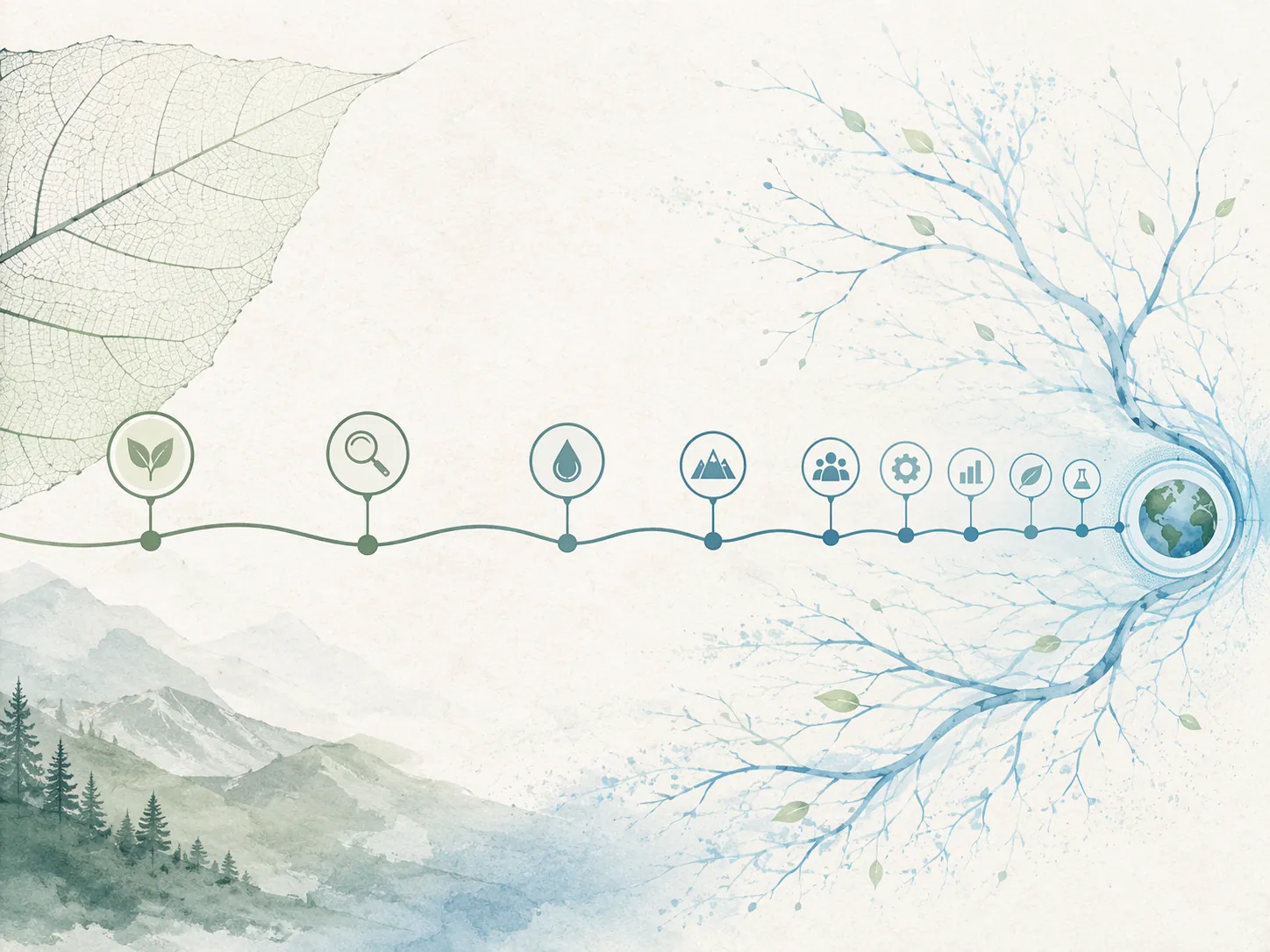
A capstone has too many dependencies for cramming: question definition, stakeholder or client expectations, literature, methods, data access, analysis, writing, revision, presentation, and faculty feedback. Waiting until the end compresses the very steps most likely to reveal that the project needs adjustment.
| Capstone milestone | Checkpoint question |
|---|---|
| Topic selected | Can you state the problem in one sentence without using vague words like “sustainability” as a substitute for a decision? |
| Research question drafted | Would a faculty adviser know what evidence could answer it? |
| Methods chosen | Can you explain why this method fits the question and what it cannot show? |
| Data or source plan made | Do you already have access, or are you assuming access will appear later? |
| First analysis completed | What result, gap, or contradiction changes the next step? |
| Partial draft reviewed | Can someone respond to the argument before you have polished the prose? |
| Final presentation rehearsed | Can you defend the recommendation, uncertainty, and tradeoffs under questions? |
Those checkpoints are practice tests in project form. They force retrieval and judgment before the final submission. They also create earlier moments for an adviser, client, or teammate to catch a weak question, missing data source, or unsupported recommendation.
Group capstones need one additional rule: integration is its own milestone. Combining sections the night before a deadline is not collaboration; it is document assembly under stress. Set a midpoint where every contributor explains how their piece affects the shared recommendation.
Keep the System Honest
A tidy system becomes dangerous when it stops checking reality. GRE policies vary by program. Course difficulty data reflects reported perception, not destiny. Dunlosky’s study-method ratings are general learning evidence, not an MEM-specific trial. Your schedule should use these materials as defaults, then update against your actual syllabi, grades, feedback, software demands, and project constraints.
The operating principle is simple enough to keep and strict enough to matter: verify before preparing, test yourself before you feel ready, space the work before it becomes urgent, and turn long projects into checkpoints while there is still time to change course.
References
- 2026 Environmental Science Degree Programs With No GRE or GMAT Requirements, Research.com, 2026.
- How to Apply to Environmental Graduate Programs, CJB Network.
- Master of Environmental Management, Yale School of the Environment.
- Strengthening the Student Toolbox: Study Strategies to Boost Learning, American Educator, Fall 2013.
- 2026 Hardest and Easiest Courses in an Environmental Management Degree Program, Research.com, 2026.
- 2026 What Do You Learn in an Environmental Management Degree: Curriculum, Skills & Core Competencies, Research.com, 2026.
Related exhibits & inventory
Verified outcomes
Planners
No planner filed for this exam yet
A downloadable timeline template for this exam hasn't been published yet.
Tool verdicts
AI-tool cautions
No AI tools tested for this exam yet
No hands-on AI-accuracy logs have been filed for this exam.
Questions about this plan
Ask a question about a specific section, timeline, or citation in this plan — or flag something that needs correcting.
Comments
Join the discussion with an anonymous comment.