
MCAT Exam Hub
How an engineered probiotic fights pancreatic cancer
This article explains how a genetically modified probiotic bacterium selectively targets pancreatic tumors by colonizing hypoxic regions, secreting a redesigned IL-2 variant that activates cancer-killing T cells, and triggering STING-dependent innate immunity — all through the lens of high-yield MCAT biology topics.
- gre
- mcat
- asvab
- sat
- act
- digital-adaptive
- official-material
- section-strategy
- test-date-timeline
A headline about an “engineered probiotic” pancreatic cancer breakthrough sounds, at first, like a story about swallowing a supplement and letting friendly gut bacteria fight a tumor. That is not what the July 2026 study showed. The actual finding is more interesting, and also much narrower: researchers engineered Bifidobacterium longum to act as a living delivery system that homes to hypoxic pancreatic tumors in mice and secretes a redesigned IL-2 cytokine called SumIL-2.[1]
The reason pancreatic cancer is an attractive target for this kind of engineering is grim but biologically specific. Pancreatic cancer has an approximately 13% five-year survival rate, and pancreatic ductal adenocarcinoma is difficult to treat partly because its tumor microenvironment is dense, immunosuppressive, and often described as immunologically “cold.”[1] That phrase should not be memorized as a mood. It means immune cells that could attack the tumor are poorly recruited, poorly activated, excluded, or actively suppressed.
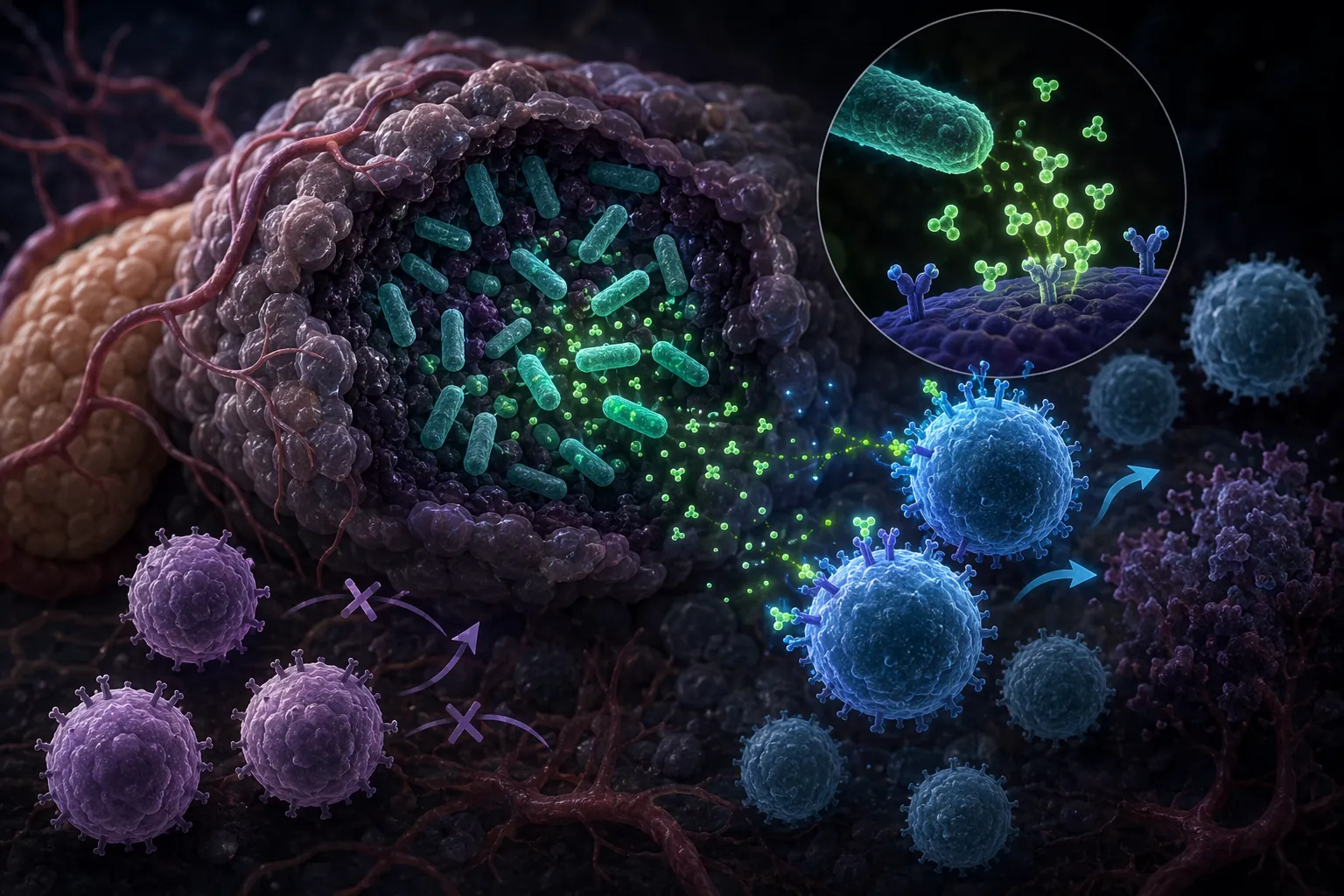
The key move in BifidoSumIL-2 is to connect that hostile tumor environment to a bacterial trait. B. longum is an obligate anaerobe. Oxygen-rich healthy tissues are not its preferred home; low-oxygen tumor regions are. In the mouse biodistribution experiments, bacteria were detected only in tumors, not in blood, liver, spleen, kidney, heart, or lung, from day 1 through day 7 after intravenous injection, and they cleared by day 13.[1]
The “probiotic” part is really tumor physiology
For MCAT purposes, the first useful concept is not probiotics. It is oxygen tension. Solid tumors often contain hypoxic regions because rapid growth and abnormal vasculature can outpace oxygen delivery. An obligate anaerobe can exploit that difference between tumor tissue and well-oxygenated normal tissue.
That matters because cytokines are powerful and messy. If a drug broadly stimulates immune cells throughout the body, the tumor may not be the only tissue that pays the price. The bacterial delivery platform is trying to make location do part of the safety work: get the therapeutic payload made where the tumor is, rather than flooding the whole organism with it.
The study tested this in orthotopic pancreatic ductal adenocarcinoma mouse models, meaning tumors were established in the pancreas rather than merely implanted under the skin.[1] That is still a mouse model, not a patient. But it is a more anatomically relevant test than asking whether something shrinks an easily accessible flank tumor.
What the bacterium was engineered to make
BifidoSumIL-2 is not just B. longum plus ordinary IL-2. The cytokine payload is SumIL-2, a redesigned IL-2 variant carrying six amino-acid mutations: F42A, L80F, R81D, L85V, I86V, and I92F.[1] Those substitutions are the molecular biology version of changing which door key fits best.
Wild-type IL-2 is a classic T-cell growth and activation cytokine. That makes it therapeutically tempting. It also creates a problem: IL-2 can activate effector T cells that attack tumors, but it can also expand regulatory T cells, or Tregs, that suppress immune responses. In tumors, more Treg activity can be the opposite of what you want.
The receptor detail is the high-yield part. Tregs commonly express high levels of IL-2Rα, also called CD25. Effector CD8+ T cells rely more on IL-2Rβ, also called CD122. SumIL-2 was designed to shift binding preference away from IL-2Rα/CD25 and toward IL-2Rβ/CD122, changing which T-cell population receives the stronger proliferative and activation signal.[1]
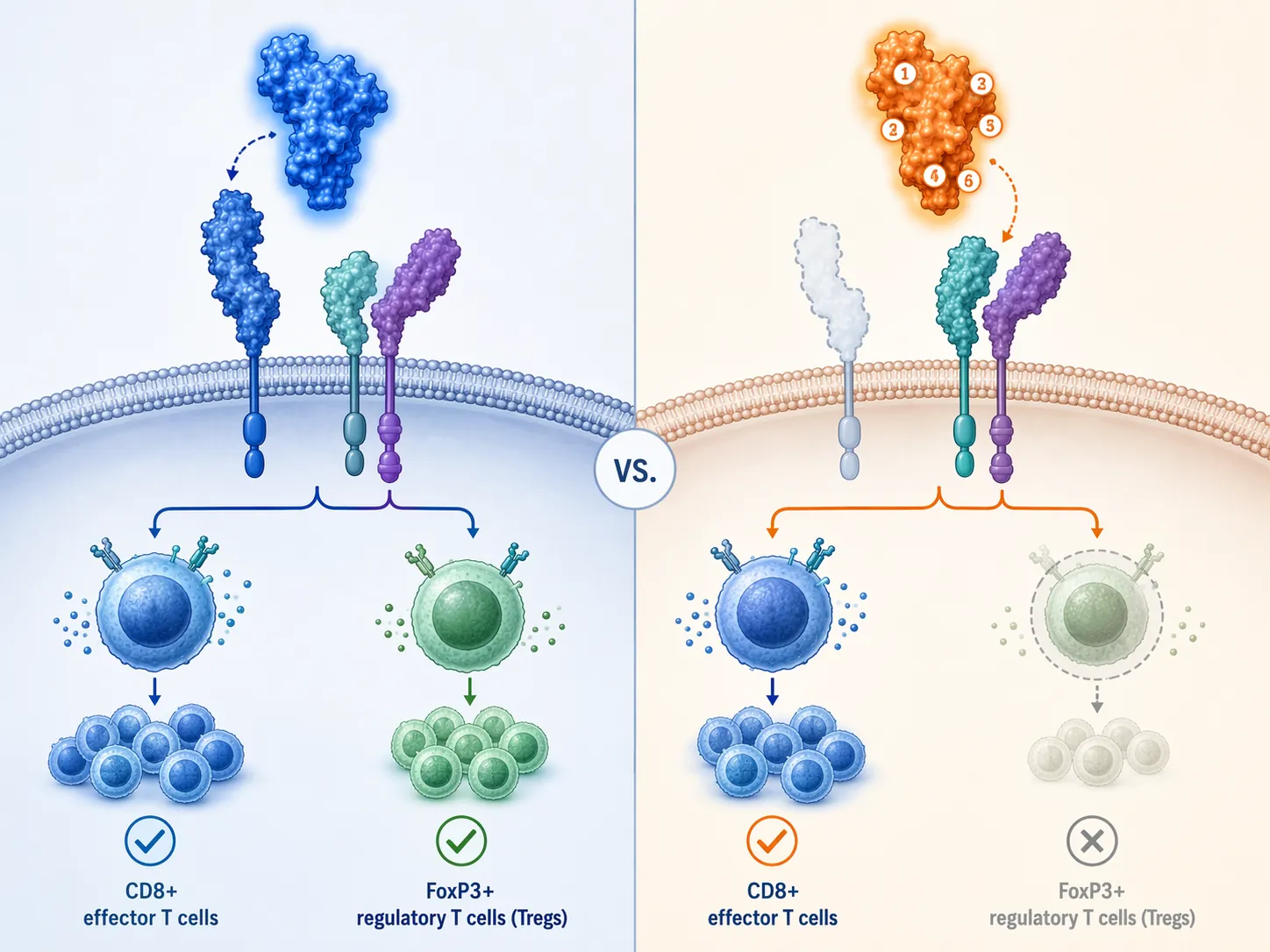
That does not mean Tregs disappear or that CD8+ T cells become magically tumor-specific. It means the cytokine signal is biased. In the treated mouse tumors, BifidoSumIL-2 suppressed tumor growth, improved the effector T-cell to Treg ratio, and enriched stem-like TCF1+ CD8+ T cells.[1] For a student, “ratio” is the word to notice. The immune outcome depends not just on whether immune cells are present, but on which subsets are being expanded relative to suppressive cells.
A compact synthetic-biology sidebar
The engineering details are worth seeing once, because they turn “modified probiotic” into an actual molecular construct. The researchers used a Ptuf constitutive promoter from B. bifidum in a pJL21 plasmid, added the BLON_RS02330 secretion signal peptide so SumIL-2 could be exported, transformed bacteria by electroporation at 25 μF, 200 Ω, and 2000 V, selected with chloramphenicol, and reported plasmid retention for more than 70 generations without antibiotics.[1]
| Engineering feature | Why it matters biologically |
|---|---|
| Ptuf constitutive promoter | Keeps the inserted gene transcriptionally active rather than waiting for a special inducer. |
| pJL21 plasmid | Carries the genetic instructions for the engineered therapeutic payload. |
| BLON_RS02330 secretion signal peptide | Directs SumIL-2 outside the bacterium; without it, extracellular SumIL-2 was not detected. |
| Chloramphenicol selection | Allows transformed bacteria carrying the construct to be selected during engineering. |
| Plasmid stability over more than 70 generations | Suggests the construct can be retained by the bacteria across many divisions in the tested conditions. |
This is also a good place to separate construction from effectiveness. A bacterium carrying a plasmid and secreting a cytokine is an engineered delivery platform. Its biological effectiveness still has to be tested in animals, then eventually through formal human studies before anyone can talk about patient benefit.
The immune attack has two arms, not one vague “boost”
The cleanest way to understand the mechanism is to split it into adaptive and innate immunity.
- Adaptive arm: SumIL-2 preferentially stimulates CD122-associated IL-2 signaling, favoring CD8+ effector T-cell activation over CD25-high Treg expansion.
- Innate arm: bacterial components activate STING-dependent innate immune signaling inside the tumor environment.
- Tumor-localization arm: B. longum survives and becomes active in hypoxic tumor regions while clearing from oxygen-rich healthy tissues in the mouse biodistribution study.
The adaptive arm is familiar MCAT immunology: CD8+ T cells can kill infected or malignant cells after proper activation, while regulatory T cells restrain immune responses and help prevent autoimmunity. In cancer, that restraint can become a shelter for tumor cells. So a treatment that increases CD8+ effector function while avoiding strong Treg expansion changes the local immune balance.
The innate arm is a little more subtle. STING, short for stimulator of interferon genes, is part of an innate immune sensing pathway. In this study, BifidoSumIL-2’s antitumor effect was lost in STING-deficient mice.[1] That is stronger than merely saying STING markers increased. It means that when the host lacks that pathway, the therapy no longer works as expected in the tested model.
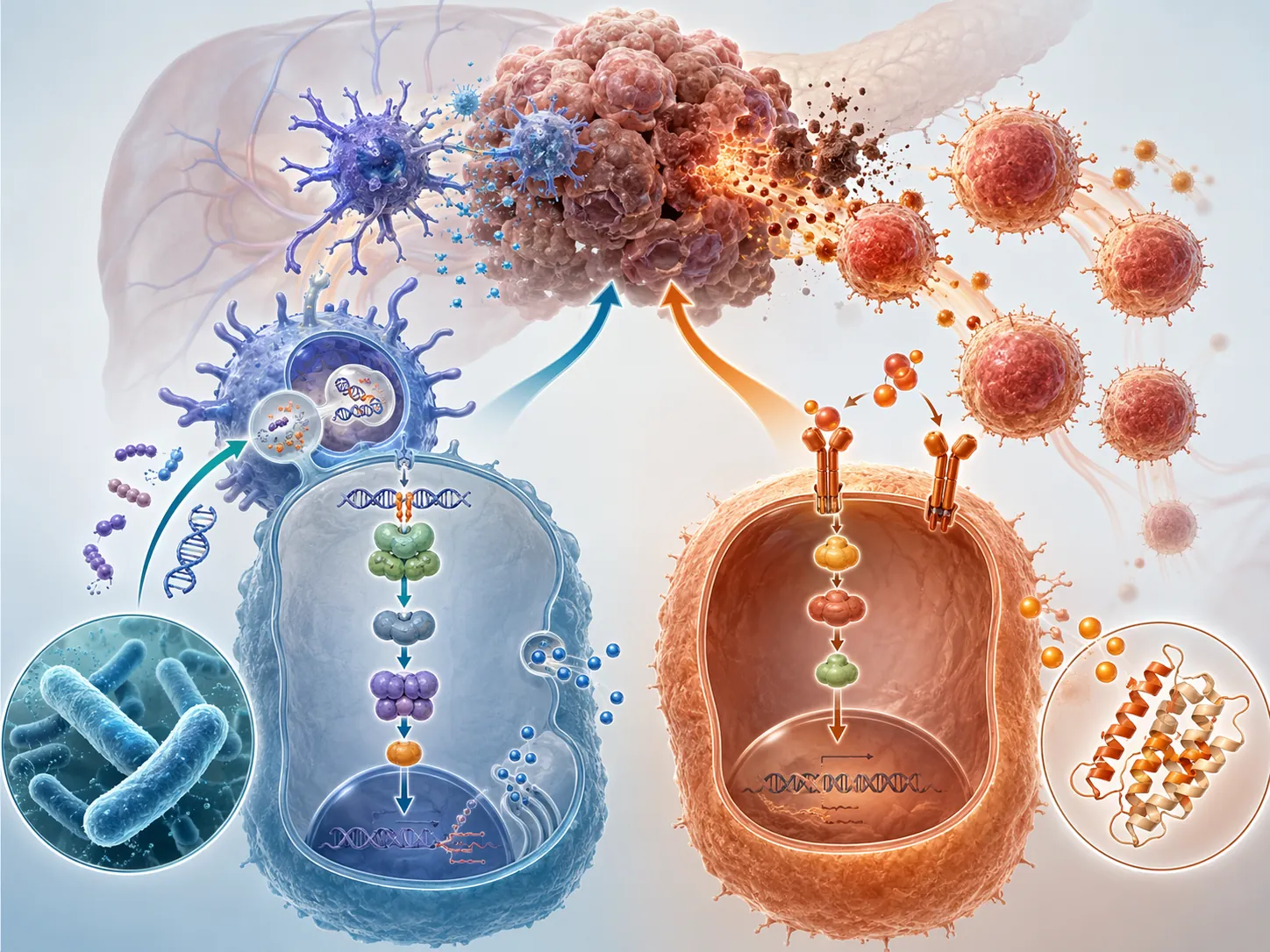
That is why “boosts immunity” is too blunt. BifidoSumIL-2 appears to require bacterial sensing through innate immunity and cytokine-guided T-cell activity through adaptive immunity. If either side is removed, the system loses the coordinated effect that made the mouse tumors respond.
Why the knockout mice matter
A good passage question would not ask whether BifidoSumIL-2 “worked.” It would ask how the researchers knew which biological systems were necessary. The two knockout results do that work.
First, STING-deficient mice test the innate pathway. If bacterial components are helping activate antitumor immunity through STING, then deleting STING should weaken or abolish the treatment effect. That is what the study reported: efficacy was lost in STING-deficient mice.[1]
Second, Rag1-deficient mice test the adaptive lymphocyte side. Rag1 is required for V(D)J recombination, the gene rearrangement process that allows B cells and T cells to generate diverse antigen receptors. Without Rag1, mice lack mature B and T cells. In the study, BifidoSumIL-2 also lost efficacy in Rag1-deficient mice.[1]
That result narrows the interpretation. The bacteria were not simply poisoning the tumor. SumIL-2 was not acting as a stand-alone chemical toxin. The therapy needed an intact adaptive immune system, consistent with the CD8+ T-cell mechanism.
| Mouse model | What is disabled | What loss of efficacy suggests |
|---|---|---|
| STING-deficient | A key innate immune sensing pathway | Innate bacterial sensing through STING is necessary for the observed antitumor effect. |
| Rag1-deficient | Mature adaptive lymphocytes, including T cells and B cells | Adaptive immunity is necessary; the effect cannot be explained by bacterial colonization alone. |
This is experimental reasoning, not trivia. When a phenotype disappears after a pathway is removed, that pathway becomes part of the causal model. It does not prove every molecular step in between, but it makes the “dual innate plus adaptive” interpretation much harder to dismiss.
Where chemotherapy, radiation, and checkpoint blockade fit
The study also tested combinations. BifidoSumIL-2 combined with gemcitabine chemotherapy, radiation, or anti-PD-L1 immunotherapy showed enhanced efficacy in the mouse models, and a triple combination of BifidoSumIL-2 plus radiation plus anti-PD-L1 showed additive tumor growth inhibition.[1] That is useful mechanistically because it suggests the living delivery platform may interact with existing cancer-treatment categories.
It is not a clinical recommendation. Gemcitabine, radiation, and checkpoint blockade each have their own indications, toxicities, schedules, and patient-selection issues. The combination data are preclinical evidence that the engineered bacterium can be studied alongside other modalities, not evidence that patients should receive this combination.
The safety signals are encouraging, but still mouse-level
The safety findings line up with the logic of local delivery. In the reported mouse experiments, treatment caused no critical body-weight loss, the bacteria cleared by day 13, hepatic injury was reduced compared with traditional IL-2 therapy, and there was no significant elevation of major inflammatory cytokines.[1] Those are important signals because IL-2 biology is powerful enough to be dangerous when immune activation is systemic.
But the limit is still obvious: these are not long-term human safety data. The paper was published in July 2026, and the available materials do not provide long-term follow-up, other-species safety testing, or clinical-trial data.[1][2] A living therapeutic has extra questions that a small molecule does not: where it goes, how long it persists, whether it transfers genetic material, how the host microbiome responds, and how clinicians would stop it if needed.
The MCAT version of the mechanism
If this appeared as a passage, the safest mental model would be a sequence, not a headline.
- A hypoxic pancreatic tumor creates a niche where an obligate anaerobe can preferentially survive.
- Engineered B. longum colonizes that tumor niche after intravenous delivery in mice.
- The bacterium secretes SumIL-2, a six-mutation IL-2 variant.
- SumIL-2 favors IL-2Rβ/CD122 signaling over IL-2Rα/CD25 signaling.
- That receptor bias favors CD8+ effector T-cell activation relative to FoxP3+ Treg expansion.
- Bacterial components also require STING-dependent innate signaling for the full antitumor effect.
- Loss of efficacy in Rag1-deficient mice shows the adaptive immune system is also required.
A hypothetical exam question might ask which feature explains tumor selectivity. The best answer would be the obligate anaerobic growth preference of B. longum in hypoxic tumor regions, not “probiotics improve immunity.” Another might ask why CD25 matters. The answer would be that CD25-high Tregs can respond strongly to wild-type IL-2, so shifting binding toward CD122 changes the T-cell subset most likely to expand.
The harder question would ask why both STING-deficient and Rag1-deficient mice lose the treatment effect. That is the whole paper in miniature: the bacteria do not merely carry a cytokine, and the cytokine does not work without immune machinery. The system depends on innate sensing and adaptive lymphocyte function at the same time.
What the breakthrough is, and what it is not
It is fair to call BifidoSumIL-2 a striking preclinical engineering result. It ties together tumor hypoxia, bacterial genetics, cytokine receptor selectivity, T-cell subset biology, and innate immune sensing in one therapeutic concept. The University of Chicago summary described the work as engineered gut bacteria showing promise against pancreatic cancer, which is a careful enough phrase if “promise” stays attached to the mouse-model evidence.[2]
It is not evidence that a commercial probiotic supplement treats pancreatic cancer. It is not evidence that engineered B. longum has cured pancreatic cancer in humans. It is not enough to infer long-term safety, dosing, manufacturing feasibility, or clinical efficacy. The clean claim is narrower: in orthotopic PDAC mouse models, engineered B. longum delivered a biased IL-2 variant to tumors and produced antitumor effects that depended on both STING-mediated innate immunity and Rag1-dependent adaptive immunity.[1]
For an MCAT student, that narrowness is not disappointing. It is what makes the case useful. BifidoSumIL-2 is a dense example of how physiology creates a targeting opportunity, how mutations alter receptor preference, how immune-cell subsets can oppose each other, and how knockout models test mechanism. The therapy remains preclinical, but the biology is already worth learning.
References
- Engineered probiotic Bifidobacterium for tumor-targeted pancreatic cancer therapy, Science Advances, July 2026.
- Bugs as drugs: Engineered gut bacteria show promise against pancreatic cancer, Pritzker School of Molecular Engineering, University of Chicago.
Related exhibits & inventory
Verified outcomes
Planners
No planner filed for this exam yet
A downloadable timeline template for this exam hasn't been published yet.
Tool verdicts
Questions about this plan
Ask a question about a specific section, timeline, or citation in this plan — or flag something that needs correcting.
Comments
Join the discussion with an anonymous comment.