
NON-EXAM Exam Hub
The Medieval Origins of Eid Milad un Nabi
Eid Milad un Nabi's history is shorter than most assume: large-scale celebration of the Prophet's birthday only emerged around the 13th century. A dated chronology — from 8th-century gatherings at the Prophet's birthplace and Fatimid court mawlids to Gökböri's 1207 Erbil festival and Ottoman officialization in 1588 — shows what is documented versus reconstructed, and why the origins remain contested.
- gre
- mcat
- asvab
- sat
- act
- digital-adaptive
- official-material
- section-strategy
- test-date-timeline
In 1207, Muzaffar al-Din Gökböri sponsored a celebration at Erbil that would be recognizable as Mawlid today. Entertainers traveled from as far away as Baghdad, a torchlight procession moved through the city, a sermon was delivered, ceremonial robes were distributed, and the occasion ended with a feast. Gökböri, the ruler of Erbil and Saladin’s brother-in-law, had turned commemoration of Muhammad’s birth into a large Sunni public festival.[1]
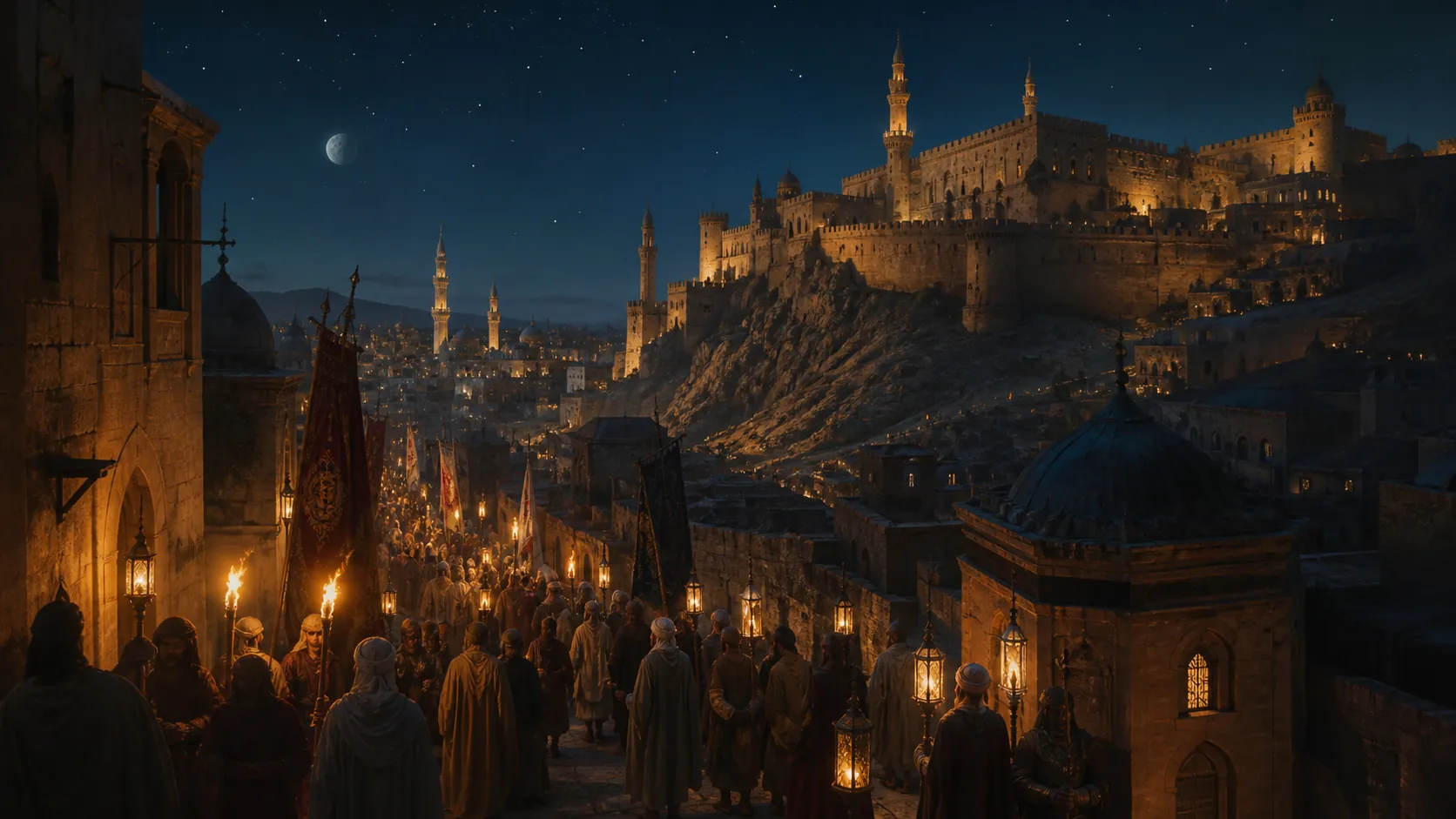
That date creates the central problem in explaining Eid Milad un Nabi history and significance. If the first widely recognized Sunni public Mawlid appeared more than five centuries after Muhammad’s lifetime, what should be made of the earlier reports—from his Monday fasting to gatherings at his birthplace and ceremonies held by the Fatimid court? The answer depends on keeping several kinds of evidence separate. A devotional precedent is not yet an annual festival; a court ceremony does not automatically show popular participation; and official recognition by a state says little about practice in the prophetic era.
The chronology at a glance
| Date or period | Evidence | Historical status |
|---|---|---|
| Muhammad’s lifetime | Muhammad reportedly fasted on Mondays and connected the day with his birth.[2] | Devotional precedent, not a birthday festival |
| Early Islamic generations | Reports describe poetry gatherings among members of the Tabi‘un generation.[2] | Early commemorative layer; not evidence of an established annual holiday |
| 8th century | Al-Khayzuran reportedly organized a gathering at Muhammad’s birthplace in Mecca.[2] | Reported observance associated with the birthplace |
| Late 11th century | The Fatimid court in Egypt observed mawlids for Muhammad, Ali, Fatimah, and the ruling caliph.[1] | Court ceremony; central to a later origin hypothesis |
| 1183 | Ibn Jubayr described weekly Monday observances connected with Muhammad’s birthplace.[2] | Travel account of recurring local devotion, not an annual mass festival |
| 1207 | Gökböri held a large public Sunni festival at Erbil with entertainment, a torchlight procession, a sermon, robes, and a feast.[1] | First widely recognized Sunni public Mawlid festival |
| 1588 | Sultan Murad III made Mawlid an official Ottoman holiday, known as Mevlid Kandil.[2] | State officialization |
| Modern period | Mawlid became a national holiday in most Muslim-majority countries, with Saudi Arabia and Qatar as notable exceptions.[1][2] | Broad institutional adoption alongside continuing opposition |
The sequence does not yield a single founding moment accepted by everyone. It shows an accumulation: precedents were remembered, particular places attracted devotional activity, courts created ceremonies, rulers sponsored public festivals, Sufi networks helped observances spread, and states eventually placed Mawlid on official calendars.
What the earliest evidence does—and does not—establish
The earliest precedent usually cited is the report that Muhammad fasted on Mondays because he had been born on that day. This gives later Muslims a prophetic association between birth, gratitude, and Monday fasting. It does not describe an annual observance on 12 Rabi al-Awwal, a public procession, a communal feast, or a holiday called Mawlid.[2]
Reports about poetry gatherings among the Tabi‘un—the generation after Muhammad’s companions—belong to a similar category. Poetry in praise of Muhammad could become part of later Mawlid celebrations, but resemblance in content is not proof that the gatherings already constituted the same festival. The evidence supports an early devotional layer more readily than it supports an unbroken annual institution.[2]
A more concrete development is associated with al-Khayzuran in the 8th century. She reportedly arranged a gathering at the house in Mecca traditionally identified as Muhammad’s birthplace. That matters because commemoration had become attached to a specific location. Yet the report still does not establish a widely observed annual public holiday across Muslim communities.[2]
Ibn Jubayr’s account from 1183 supplies another dated point. He described the birthplace being opened for visits and observances on Mondays. The weekly rhythm recalls the reported Monday fast and demonstrates devotional attention to the site. It is nevertheless different from a once-a-year birthday festival attended by a mass public.[2]
These distinctions explain why a devotional history can reach back toward the earliest Islamic centuries while the institutional history of Mawlid remains medieval. The earlier material was available to later celebrants as precedent, memory, and sacred geography. It does not by itself document the complete festival in the form that later became widespread.
The Fatimid ceremonies and the limits of an origin claim
By the end of the 11th century, the Shi‘i Fatimid rulers of Egypt were holding four court mawlids: one each for Muhammad, Ali, Fatimah, and the reigning caliph. These were relatively simple daytime ceremonies. Court officials proceeded through the palace setting, and the observance concluded with three sermons.[1]
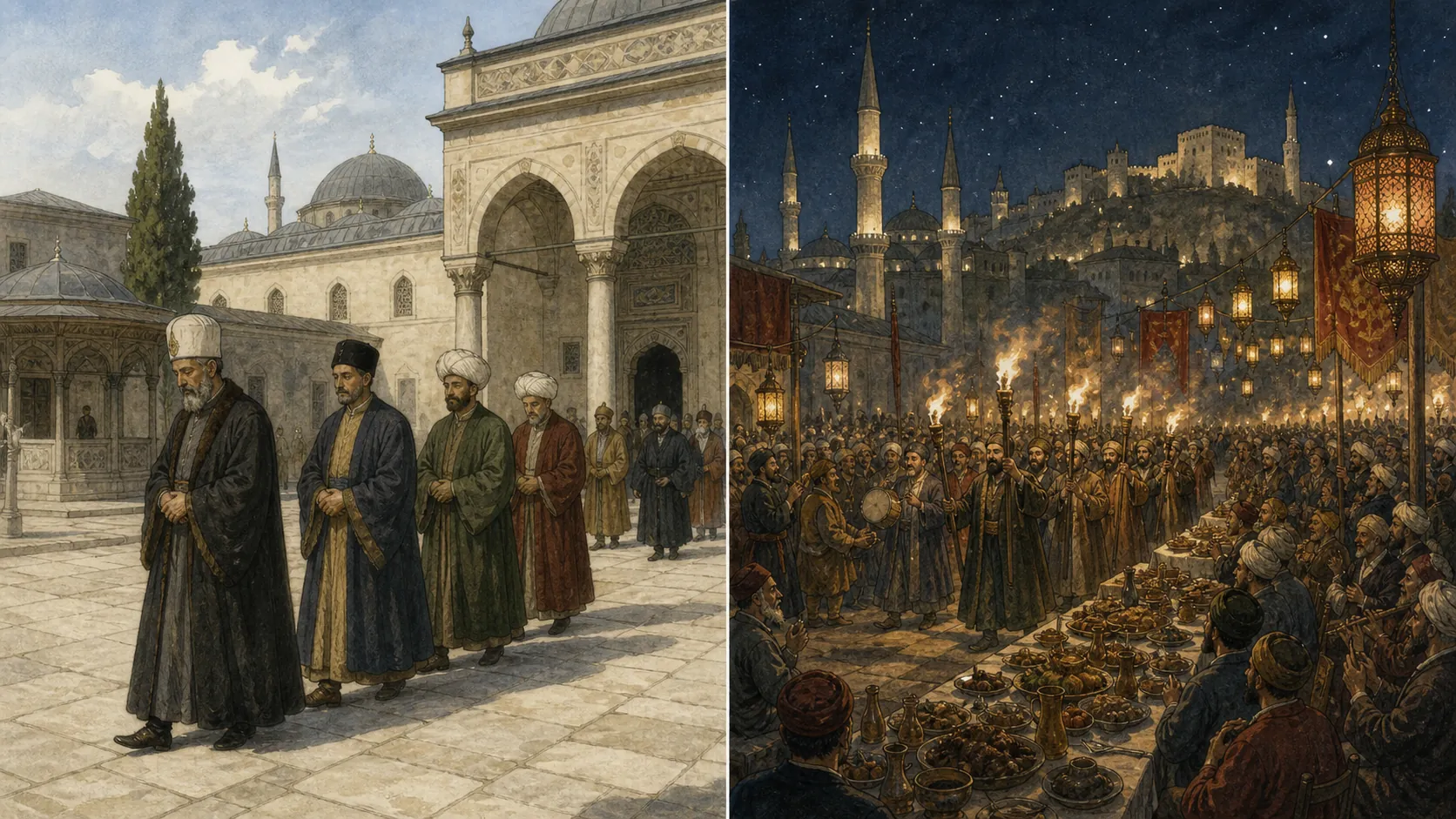
Britannica presents a Fatimid origin as a hypothesis rather than a settled account. The documented ceremonies clearly show that mawlid observances existed at court before Gökböri’s festival. What is harder to prove is a direct, continuous line by which the Fatimid ceremonies became the later Sunni public celebration.[1]
The form also matters. The Fatimid events were tied to a ruling dynasty and included a mawlid for the current caliph. Their known participants were court officials, and their structure centered on a daytime procession and sermons. Evidence of such an event establishes court observance; it does not automatically establish a popular festival outside the court.
None of this makes the Fatimid evidence incidental. It demonstrates that rulers had begun formally commemorating sacred births and using the term and ceremony within an institutional calendar. But identifying it as one layer in Mawlid’s development is more defensible than declaring it the undisputed origin of every later celebration.
Why Erbil in 1207 carries greater historical weight
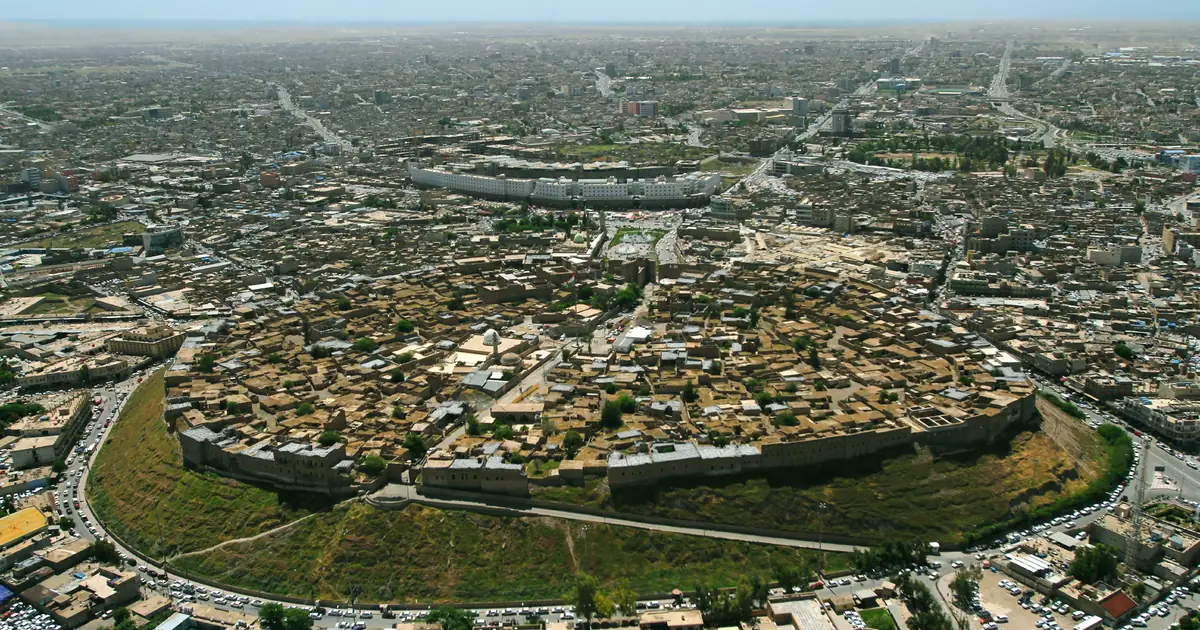
Gökböri’s event is treated as the first public Sunni Mawlid because its scale, audience, and program make it much closer to later festival practice. Visitors and performers came from outside Erbil. Torchlight, preaching, ceremonial clothing, entertainment, and communal food combined public devotion with civic spectacle.[1]
One account attributes to the banquet the slaughter of thousands of animals and a cost of 300,000 dirhams.[2] Those figures convey how later writers remembered the ruler’s expenditure, but they should remain attributed details. They cannot measure the size of the audience with precision, nor do they show how common comparable festivals were elsewhere.
The importance of 1207 rests less on an extravagant total than on the event’s recognizable structure. Here, the evidence moves beyond fasting, poetry, visits to a birthplace, or a palace ceremony. It documents a ruler-supported public festival devoted to Muhammad’s birth and presented to a broad Sunni audience.
That does not require pretending that Gökböri invented every component. Sermons, praise poetry, almsgiving, fasting, visits to sacred places, and public feasting all had histories of their own. His festival assembled commemorative elements into a conspicuous public form that could be repeated and adapted.
From public festival to official holiday
Britannica describes Mawlid as spreading quickly alongside Sufism after the Erbil festival.[1] This association helps explain why praise poetry, recitations about Muhammad’s life, communal meals, processions, and devotional gatherings could travel while taking different local forms. Spread does not mean uniformity: communities adopted selections from that repertoire rather than reproducing one fixed Erbil program.
A further institutional milestone came in 1588, when the Ottoman sultan Murad III declared Mawlid an official holiday. In Ottoman usage it became known as Mevlid Kandil.[2] The decree is evidence of state recognition more than three centuries after Gökböri’s festival; it is not evidence that the holiday had existed unchanged since Muhammad’s time.
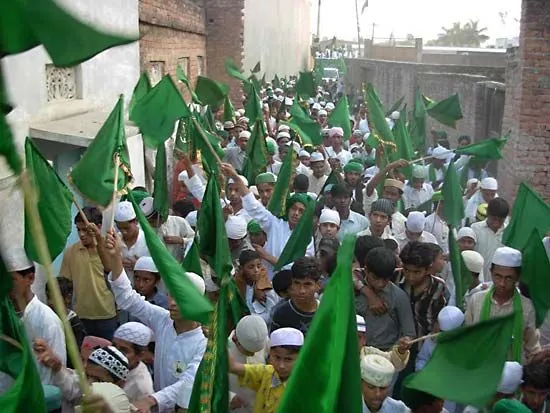
Today, Mawlid is recognized as a national holiday in most Muslim-majority countries. Saudi Arabia and Qatar are prominent exceptions; both are officially Salafi and do not recognize it as a national religious holiday.[1][2] The contrast shows how far institutional adoption has extended, while also preserving the older dispute over whether the observance should have acquired holiday status at all.
Why the disagreement survived the festival’s spread
Muslim scholars have not disagreed merely over historical dates. They have also differed over how later religious practices should be judged. Al-Suyuti defended Mawlid as a bid‘a hasana, or good innovation, when it involved approved devotional acts. Salafi critics reject the observance as an innovation without a basis in the practice of Muhammad or his companions. Ibn Taymiyya is often represented in a more mixed position rather than as offering uncomplicated approval or rejection.[2]
The chronology helps explain why those positions persist. Supporters can point to centuries of praise, charity, teaching, public devotion, scholarly defense, and state recognition. Opponents can point to the absence of an annual birthday festival in the earliest Muslim community and to the much later emergence of its public form. Historical evidence identifies when practices appeared; it does not, by itself, settle the theological question of whether later development is permissible.
For a broader introduction to the observance’s name, customary practices, and religious debate, see What is Eid el Maulud? Meaning, history, and the debate. Readers wondering why the word “Eid” appears here as well as in the names of Islam’s two principal annual festivals can also consult the Eid al-Fitr and Eid al-Adha comparison.
The traditional date and the 2026 calendar
The familiar Sunni date, 12 Rabi al-Awwal, was fixed by tradition rather than by a revealed calendar instruction. It is also traditionally identified as the date of Muhammad’s death.[1] Many Twelver Shia communities instead observe the birth on 17 Rabi al-Awwal.
Rabi al-Awwal, meaning “the first spring,” is the third month of the lunar Islamic calendar, so its dates move through the solar seasons.[3] Umm al-Qura projections place 12 Rabi I 1448 on August 25, 2026, and 17 Rabi I on August 30, 2026. These are projected dates rather than guarantees: observance can shift by a day where local moon sighting determines the start of the month.[3]
The historical conclusion is narrower than either an unbroken-origin claim or a wholesale dismissal. Muhammad’s reported Monday fast, early poetry gatherings, and devotion at his birthplace supplied precedents. Fatimid rulers had documented court mawlids by the late 11th century, although the claim that these ceremonies directly originated the later festival remains a hypothesis. The first widely recognized Sunni public celebration belongs to medieval Erbil in 1207, and Ottoman officialization followed in 1588.
Eid Milad un Nabi therefore acquired its significance through layers of court, popular, Sufi, scholarly, and state practice. Its traditional date reaches backward to Muhammad’s life, but the recognizable mass celebration did not descend from that lifetime as a single unchanged observance.
References
- Mawlid, Encyclopaedia Britannica
- Mawlid, Wikipedia
- Rabi' al-Awwal, Wikipedia
Related exhibits & inventory
Verified outcomes
No verified outcomes on file for this exam yet
See Methodology for how outcome evidence is disclosed once logged.
Planners
No planner filed for this exam yet
A downloadable timeline template for this exam hasn't been published yet.
Tool verdicts
AI-tool cautions
No AI tools tested for this exam yet
No hands-on AI-accuracy logs have been filed for this exam.
Questions about this plan
Ask a question about a specific section, timeline, or citation in this plan — or flag something that needs correcting.
Comments
Join the discussion with an anonymous comment.