
BAR EXAM Exam Hub
How to Analyze a Defamation Appeal on a Law Exam
This study guide explains how a defamation case moves through the appeals process, focusing on the constitutional standards of review — particularly the actual-malice standard — and the key cases law students need to know to analyze appellate errors on exams or the bar.
- SAT
- ACT
- GRE
- MCAT
- ASVAB
- digital-sat
- adaptive-testing
- registration-fee
- content-outline
- score-target
A defamation appeal prompt usually starts after the exciting part is over. The jury has returned a verdict. The trial judge has entered judgment. Now one side appeals, and the student who can recite falsity, publication, fault, and damages has to answer a different question: what does the appellate court get to decide for itself?
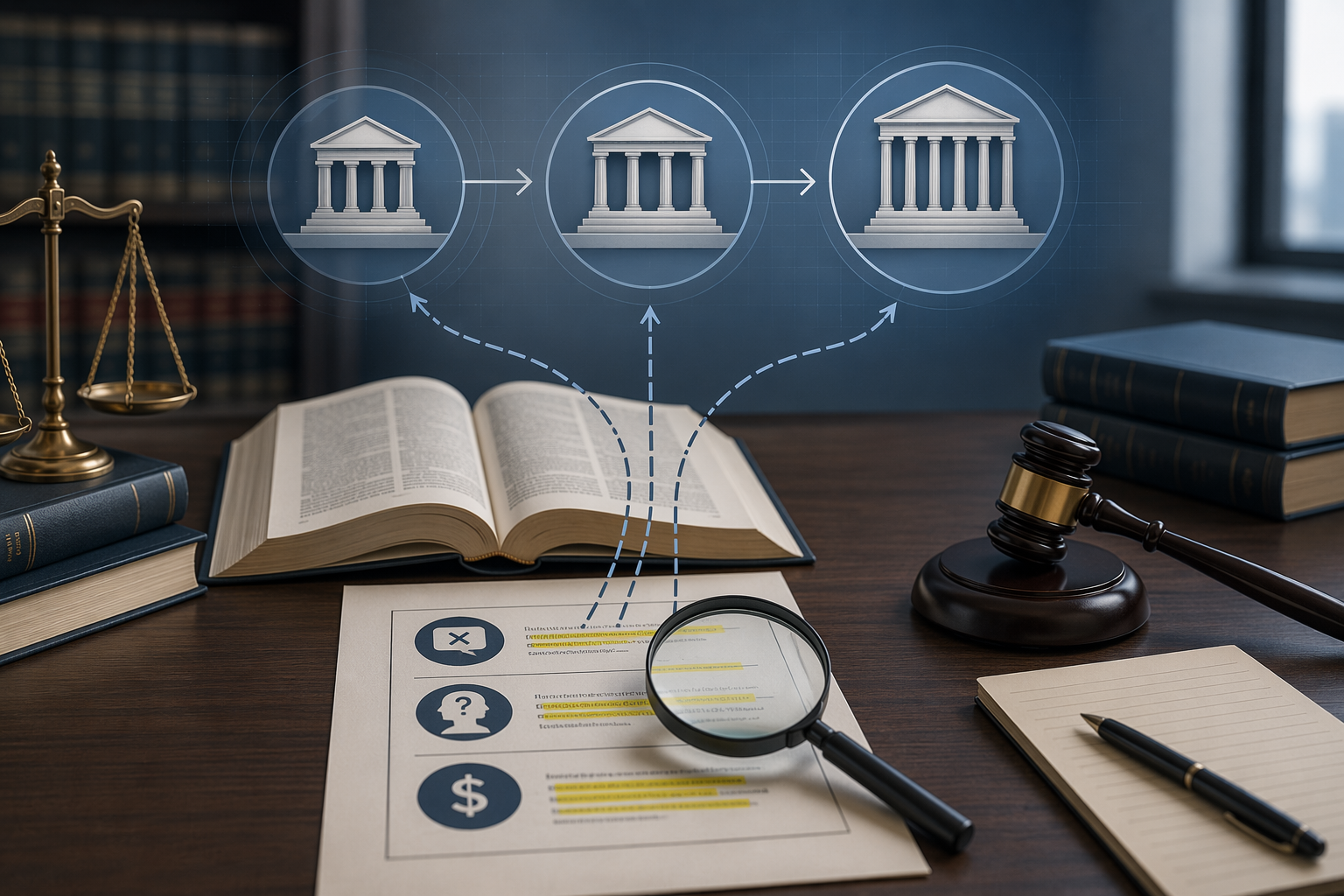
That is the first move in a useful defamation appeal process study guide. Do not rewrite a trial outline. On appeal, organize the answer by challenged issue and standard of review. Some questions are reviewed deferentially. Some are legal questions. And actual malice, when constitutional defamation doctrine applies, gets special treatment.
Start with the issue being appealed, not the tort
A trial answer asks whether the plaintiff can prove defamation. An appellate answer asks whether a particular ruling, finding, instruction, or judgment should be affirmed or reversed. Those are not the same task.
A clean exam answer usually begins by naming the challenged point. Did the defendant argue that the statement was not false? That the plaintiff was a public figure and failed to prove actual malice? That the jury received the wrong instruction? That damages were excessive? That the notice of appeal was late? Each one goes into a different appellate box.
| Appealed issue | What the student should ask |
|---|---|
| Falsity | Is the dispute about what happened, or about whether the statement is constitutionally protected opinion or otherwise nonactionable? |
| Fault | Is the plaintiff a public official, public figure, or private figure, and what fault standard follows? |
| Actual malice | Does the appellate court independently review whether the record proves knowledge of falsity or reckless disregard? |
| Damages | Is the challenge to proof, amount, presumed damages, punitive damages, or constitutional limits? |
| Evidentiary sufficiency | Could a reasonable factfinder reach the finding under the governing burden? |
| Jury instructions | Was the legal rule stated correctly, and was the error preserved? |
| Timing | Was the appeal filed within the applicable deadline? |
That map does not replace the elements. It controls how the elements are used after judgment.
Sullivan supplies the fault rule that changes the appeal
New York Times Co. v. Sullivan is not just a case name to drop in a public-official defamation paragraph. For appellate analysis, Sullivan matters because it constitutionalized part of the fault inquiry. The Court held that a public official cannot recover for defamatory falsehood relating to official conduct unless the official proves “actual malice,” meaning knowledge that the statement was false or reckless disregard of whether it was false or not.[1]
Sullivan also matters because actual malice must be proved with convincing clarity, commonly expressed in modern study materials as a clear-and-convincing evidence burden.[1] That burden is easy to underuse on an exam. It is not decorative language. It changes what the record must show before a plaintiff in the Sullivan category can keep a verdict.
Actual malice is not ordinary spite. A defendant can dislike the plaintiff and still lack Sullivan actual malice. The appellate question is whether the evidence supports knowledge of falsity or reckless disregard of truth, not whether the defendant behaved rudely, politically, or carelessly in the everyday sense.
A strong exam sentence sounds more like this: “Because the plaintiff is a public official and the appeal challenges the actual-malice finding, the court must ask whether the record establishes by clear and convincing evidence that the defendant knew the statement was false or recklessly disregarded its falsity.” That sentence has the element, the plaintiff category, the burden, and the appellate target in one place.
Bose is the appellate move students miss
The ordinary civil-appeal instinct is to say that the jury found the facts, so the appellate court defers. That instinct is often useful. It is also exactly where a defamation appeal answer can go soft.
Bose Corp. v. Consumers Union held that appellate courts have an obligation to independently review the whole record when deciding whether the evidence establishes actual malice in cases governed by the First Amendment rule.[2] Cornell’s defamation overview likewise describes actual malice as subject to independent appellate review rather than ordinary deference to the factfinder.[3]
That does not mean every disputed fact in the case becomes a free-floating do-over. The independent review is tied to the constitutional fact: whether the record satisfies the actual-malice standard. The appellate court is not simply replacing the jury’s overall story with its own preferred story. It is checking for itself whether the constitutional threshold has been met.
This is why Sullivan and Bose belong together in an exam answer. Sullivan tells you what actual malice means and how demanding the burden is. Bose tells you that the appellate court independently reviews the actual-malice determination. If the prompt says the defendant appeals after a public-official plaintiff wins, the answer should not stop at “the jury found actual malice.” The appellate court has work to do.
What independent review looks like in an exam paragraph
Suppose a hypothetical exam gives you evidence that a reporter relied on one questionable source, failed to call the plaintiff before publication, and published quickly. Do not immediately announce actual malice. The issue is whether those facts show knowledge of falsity or reckless disregard, under the clear-and-convincing burden, and whether the appellate court’s independent review of the record supports the verdict.
Carelessness may support negligence. It may also supply background evidence. But Sullivan actual malice is a higher constitutional fault standard. The answer should separate bad reporting facts from the legal conclusion they are being asked to prove.
Use Gertz to sort the plaintiff before choosing the fault standard
Before Bose can matter, the answer has to know whether actual malice is the required fault standard. Gertz v. Robert Welch Inc. is the sorting case. It distinguishes public officials and public figures from private figures, and it allows states more room to define the fault standard for private-figure plaintiffs, at least where liability is not imposed without fault.[3]
On an exam, this usually produces a short but important fork:
- Public official: Sullivan actual malice is required for statements about official conduct.
- Public figure: actual malice generally applies, with attention to whether the plaintiff is an all-purpose public figure or a limited-purpose public figure.
- Private figure: the required fault standard may be lower, commonly negligence, subject to constitutional limits and state law.
The appellate review problem depends on that classification. If the plaintiff is a private figure proceeding under a negligence theory, do not automatically import Bose’s independent actual-malice review into every fault finding. If the plaintiff seeks presumed or punitive damages, or if the jurisdiction requires actual malice for the particular recovery, the actual-malice issue may return. The classification step keeps the answer from treating all defamation plaintiffs as if they were Sullivan plaintiffs.
Falsity, opinion, and meaning may not fit one neat review label
Falsity looks simple in a trial outline: the plaintiff must show a false statement of fact. On appeal, the better question is what kind of falsity issue is being challenged.
If the dispute is historical — who said what, what document existed, what transaction occurred — the appellate court is usually dealing with factfinding and evidentiary sufficiency. If the dispute is whether the words are capable of defamatory meaning, whether they assert provable fact, or whether they are protected opinion, the issue looks more legal and may invite less deference.
Do not overstate the rule. Defamation appeals mix ordinary review categories with constitutional review; they do not use one universal standard for every falsity question. The safe exam move is to identify the nature of the challenged determination before naming the standard.
Damages questions are appellate questions too
Damages can be where a defamation appeal quietly changes shape. The defendant may argue that the plaintiff failed to prove actual injury, that presumed or punitive damages were unavailable, that the award was excessive, or that the wrong constitutional fault standard was used to support the damages category.
Gertz is again useful here because private-figure cases may involve different constitutional limits depending on the type of damages and the showing of fault.[3] A student does not need to write a treatise on remedies. The point is to avoid treating “damages” as a single fact box after liability. On appeal, damages may raise sufficiency, legal availability, constitutional fault, or trial-management questions.
Evidentiary sufficiency and jury instructions need separate treatment
A common mushy answer says, “The appellate court will review the jury’s decision.” That is too broad to earn much. Was the appellant challenging the sufficiency of the evidence? The admission of evidence? The wording of the instruction? The refusal to give an instruction? The answer changes with the procedural target.
For sufficiency, the student should connect the record to the burden. In an actual-malice case, that means asking whether the record can satisfy clear and convincing evidence under independent appellate review. In an ordinary factual dispute outside that constitutional fact review, the student should be more cautious about appellate fact reweighing.
For jury instructions, the core question is legal accuracy. If the trial court defined actual malice as ill will, for example, that is not merely an unfortunate wording choice. It gives the jury the wrong constitutional fault concept. The appellate answer should then discuss preservation and harmlessness if the facts supply them, rather than assuming every instructional error automatically reverses the judgment.
The appeal process still has deadlines
Procedure matters, but it should not take over the doctrine. In federal civil cases, the ordinary notice-of-appeal deadline is commonly described as 30 days under Federal Rule of Appellate Procedure 4.[4] State deadlines vary, and the research materials identify a range of roughly 14 to 60 days depending on jurisdiction. That is a jurisdictional caution, not a replacement for the defamation analysis.
Commercial legal guides also describe the practical pace of litigation and appeals: a defamation case may take months or longer before appeal, and one appellate-practice source gives a general appeal-duration estimate of about 10 to 15 months.[4][5] Use those figures only for procedural context. They are not black-letter elements and should not become the center of a law-exam answer unless the prompt is specifically about timing.
If you already use charting to keep limitations periods, filing windows, and review standards apart, the same discipline applies here. A broader charting method is useful for subjects where procedural timing sits next to doctrine, such as this cross-subject exam charting approach.
Use secondary sources according to what they can prove
No single source cited here functions as a complete defamation appeal process study guide. The useful answer is a synthesis: Sullivan for actual malice, Bose for independent review, Gertz for plaintiff-status sorting, and appellate-practice materials for filing and timing context.
Treat sources with different weights. Oyez and Cornell are good anchors for core doctrine. The Fordham discussion of Bose is useful for the scope of de novo appellate review. Protect Democracy’s explanation of actual malice is well-developed, but it is published by a policy advocacy organization arguing in favor of preserving the standard, so it should not be presented as neutral exam authority.[6] Bar-prep materials can help with issue-spotting, but they are not substitutes for the cases.[7]
Comparative and state-law points should stay in their lanes. The UK serious-harm threshold under modern English and Welsh defamation law is useful comparative context, but it is not the rule for a U.S. bar or 1L torts answer. State appellate deadlines and state constitutional doctrines may vary, so a real case requires jurisdiction-specific research. On an exam, say the narrower thing you can support.
A compact exam workflow
When the prompt says the defamation case is on appeal, work in this order:
- Identify the appellant and the ruling being challenged.
- Classify the plaintiff as public official, public figure, or private figure.
- Choose the governing fault standard: actual malice, negligence, or another state-law standard subject to constitutional limits.
- If actual malice is at issue, state the Sullivan definition and clear-and-convincing burden.
- Apply Bose: independently review the record on the actual-malice determination.
- For other issues, assign the right review category: legal error, sufficiency, discretion, preservation, harmlessness, or deadline.
The final answer should not read, “Plaintiff proved defamation, and defendant appeals.” It should read like a standards-of-review map attached to the disputed elements. Sullivan gives the actual-malice rule. Bose tells the appellate court not to defer blindly on that constitutional fact. Gertz tells you whether actual malice is required in the first place.
For bar candidates building a torts review cluster, defamation appeals pair naturally with other state-specific torts topics, including this related New York torts bar guide. Keep the subjects separate, but use the same habit: identify the legal issue, attach the governing standard, and only then apply the facts.
References
- New York Times Co. v. Sullivan, Oyez, https://www.oyez.org/cases/1963/39
- Amplifying Bose Corp. v. Consumers Union: The Proper Scope of De Novo Appellate Review, Boston University School of Law Faculty Scholarship, https://scholarship.law.bu.edu/faculty_scholarship/4141/
- Defamation, Cornell Legal Information Institute Wex, https://www.law.cornell.edu/wex/defamation
- How Long Does a Defamation Case Take?, Nolo, https://www.nolo.com/legal-encyclopedia/timeline-defamation-claim.html
- Appeal Process Explained, Brownstone Law, https://www.brownstonelaw.com/blog/how-does-the-appeal-procedure-work/
- The Actual Malice Standard Explained, Protect Democracy, https://protectdemocracy.org/work/the-actual-malice-standard-explained/
- BarMax Bar Clips: Defamation, TestMaxPrep, https://testmaxprep.com/blog/bar-exam/barmax-bar-clips-defamation
Related exhibits & inventory
Verified outcomes
No verified outcomes on file for this exam yet
See Methodology for how outcome evidence is disclosed once logged.
Planners
No planner filed for this exam yet
A downloadable timeline template for this exam hasn't been published yet.
Tool verdicts
AI-tool cautions
No AI tools tested for this exam yet
No hands-on AI-accuracy logs have been filed for this exam.
Questions about this plan
Ask a question about a specific section, timeline, or citation in this plan — or flag something that needs correcting.
Comments
Join the discussion with an anonymous comment.