
BEAR-SAFETY-TIPS-HIKING-DOGS Exam Hub
Essential Bear Safety Tips for Hiking With Dogs
This article provides a complete three-phase system for hiking with your dog in bear country: pre-trip planning, essential gear, and encounter protocols. It explains that leashing your dog on a short, non-retractable leash is the single most effective risk-reduction measure.
- SAT
- ACT
- GRE
- MCAT
- ASVAB
- digital-sat
- adaptive-testing
- registration-fee
- content-outline
- score-target
The first useful rule for hiking with dogs in bear country is blunt: keep the dog on a short, non-retractable leash before anything interesting happens. Love for the dog does not help a startled bear read the situation. A friendly dog can still chase, bark, flush wildlife, or run back to its owner with a bear following.
The best available 2026 data makes the leash point hard to treat as optional. In Smith et al.'s analysis of 326 human-bear conflicts involving dogs, dogs initiated 54% of the conflicts, off-leash incidents outnumbered leashed incidents by nearly 6:1, and only 9.2% of dogs warned owners before contact. In the subset where dogs flushed bears and retreated to the owner, owner injury occurred in 70% of cases; that pattern represented 8.3% of the analyzed cases. The same reporting notes that 35.3% of conflicts occurred in front-country settings such as suburban yards and campgrounds, not only deep wilderness. The accessible figures here come through KMXT's reporting on the paywalled Journal of Wildlife Management paper, so they are strong enough to shape behavior while still worth verifying against the journal abstract or supplementary material when available. [1]
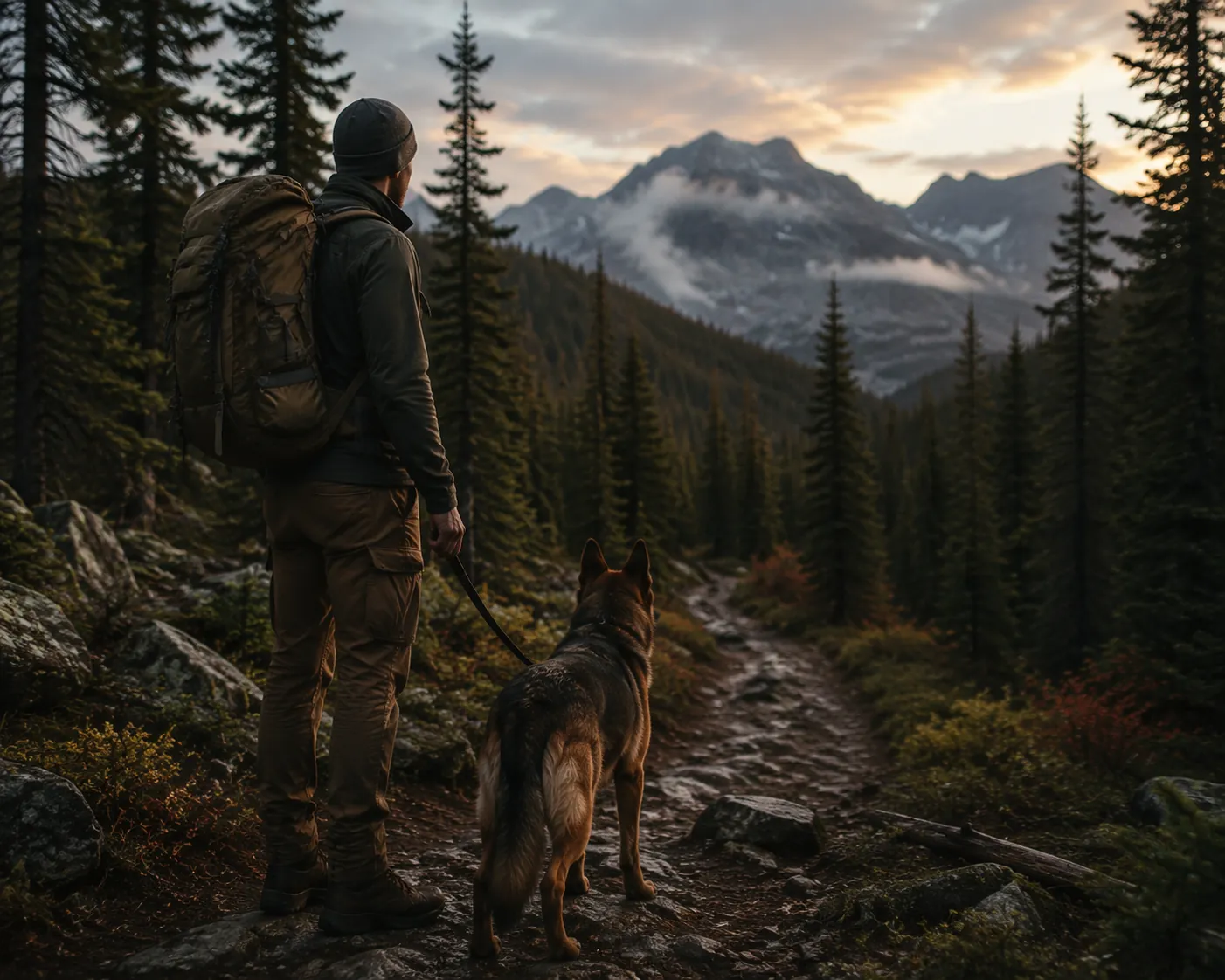
That does not mean every dog should be left home from every bear-country hike. It means the trip has to be run as a system: verify that dogs are allowed, choose a route that gives you room to manage an encounter, carry gear you can reach without digging, and know what changes when the bear is a black bear versus a grizzly.
Start Before the Trailhead
The first decision is not which leash to buy. It is whether this trail is an appropriate place to bring this dog on this date.
| Pre-trip check | What it changes |
|---|---|
| Current dog rules for the exact park, trail, campsite, and season | Whether the dog can legally go, and where leash rules apply |
| Recent bear activity, closures, food-storage orders, and trail advisories | Whether the route should be changed before you leave home |
| Dog's recall, leash manners, silence cue, and ability to stay close around wildlife scent | Whether the dog is ready for bear country or needs a lower-stakes hike |
| Route width, sightlines, crowding, water crossings, and escape space | How much room you have to stop, turn around, or manage another hiker and dog |
Park rules deserve more respect than they usually get in dog-hiking advice. The National Park Service tells visitors to check the rules for the specific park they plan to visit, and some major bear-country parks prohibit pets on trails. Yellowstone, Glacier, and Grand Teton are examples where dogs are not allowed on hiking trails, while other destinations allow dogs in more places under leash and access restrictions. Those rules are not decoration; they are part wildlife management, part visitor safety, and part protection for the dog. [2]
If dogs are allowed, the next filter is conflict likelihood. A narrow berry-lined trail with poor sightlines during peak feeding season asks more of the dog and the owner than a wider, busier route with open views. A campground loop at dusk can be more complicated than it looks, especially since a meaningful share of dog-bear conflicts in the Smith et al. data occurred in front-country places rather than remote backcountry. [1]
Training should be tested before the trip, not discovered beside fresh scat. A dog that cannot walk on a loose six-foot leash past squirrels, barking dogs, and strong smells is not likely to become more reliable when a bear appears. BearWise is plain about the dog-specific risk: dogs may chase or harass bears, then run back toward people when the bear responds. [3]
- Use a short leash in normal trail conditions, not only after a warning sign or fresh track.
- Practice a quiet heel or close-walk cue around distractions before the trip.
- Confirm the dog can stop, turn with you, and leave scent or movement without lunging.
- Skip bear-country trails if the dog is reactive, in poor physical condition, or too young to handle a controlled hike.
Breed and temperament matter only insofar as they change management. The AKC notes that some breeds have strong prey drive or guarding tendencies that can make wildlife encounters harder to control. That is not a moral failing in the dog. It is information the owner has to act on before choosing a route. [4]
The Gear Is Simple, but It Has to Be Reachable
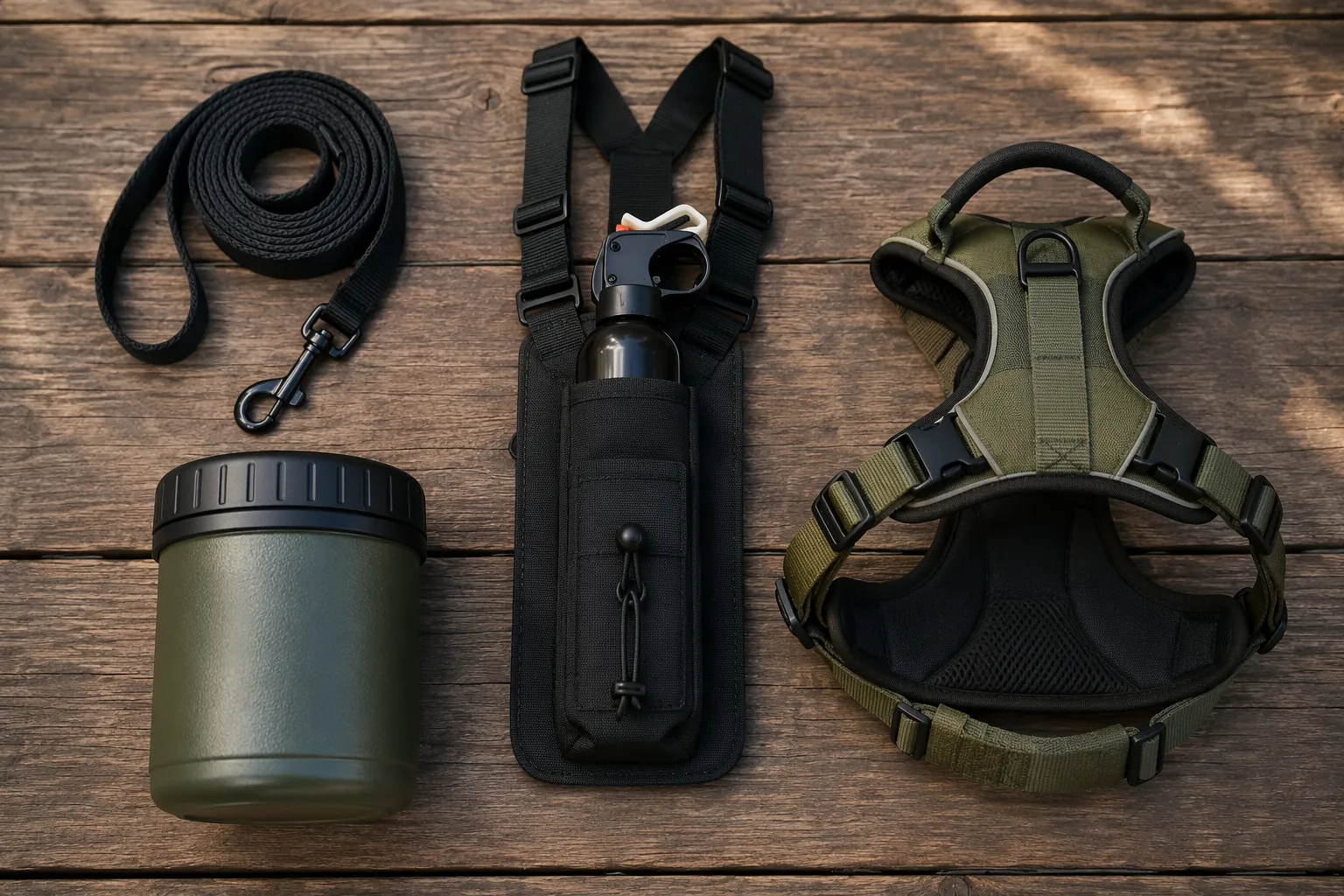
The kit does not need to become an excuse for a shopping spree. Four items do most of the work: a non-retractable six-foot leash, bear spray in a quick-draw holster, a bear-resistant canister for dog food when required or appropriate, and a harness with a top grab handle.
A non-retractable six-foot leash
A short, fixed leash keeps the dog close enough that the owner can turn, stop, step off the trail, or prevent a chase. A retractable leash does the opposite at the exact moment control matters: it creates distance, tension, and delay. NPS guidance tells visitors to keep pets leashed where pets are allowed, and BearWise specifically advises keeping dogs leashed and under control in bear country. [2][3]
Bear spray in a quick-draw holster
Bear spray belongs where the owner can reach it with one hand while controlling the dog with the other. A canister buried in a pack is cargo, not emergency equipment. The effectiveness numbers should be handled honestly: Smith et al. reported bear spray effectiveness around 70% in the dog-conflict cases covered by the 2026 analysis, while REI's bear-country guidance states that bear spray stopped undesirable bear behavior 98% of the time in cited research on human injury prevention. Those are different sources, contexts, and claims; they should not be flattened into one magic percentage. [1][6]
Food storage for dog food
Dog food is bear attractant. So are treats, chews, and scented waste bags. REI recommends using bear-resistant storage where required and treating scented items as attractants in bear country. Parks Canada also emphasizes managing food and odors so bears do not receive a food reward from people. [6][7]
A harness with a grab handle
A harness with a top handle is not a substitute for leash control, but it gives the owner a second point of control when passing other hikers, stepping aside, crossing obstacles, or shortening the dog quickly without wrapping a leash around a hand. The AKC includes leashes, harnesses, and visibility/control gear among practical equipment for reducing dog risk around bears. [4]
When a Bear Appears
The encounter starts before the bear charges, and usually before the dog has finished deciding what to do. Shorten the leash without jerking. Bring the dog beside or behind you. Speak calmly so the bear can identify you as human. Do not run. Do not let the dog bark forward, lunge, or investigate. NPS guidance tells visitors to stay calm, identify themselves, back away slowly when possible, and avoid surprising bears. [2]
If the bear has not approached, the cleanest outcome is distance. Back away slowly while keeping the dog close. If the trail is narrow, give the bear the route and wait. If other hikers are nearby, alert them without yelling in panic. The dog does not need to meet the bear, watch the bear, or prove training at the edge of a bad decision.
Bear spray comes out before the last possible second. Remove the safety clip when the bear is approaching or the situation is deteriorating, keep the dog controlled, and be ready to deploy according to the canister instructions. Parks Canada recommends carrying bear spray, knowing how to use it, and keeping it accessible rather than packed away. [7]
If It Is a Black Bear
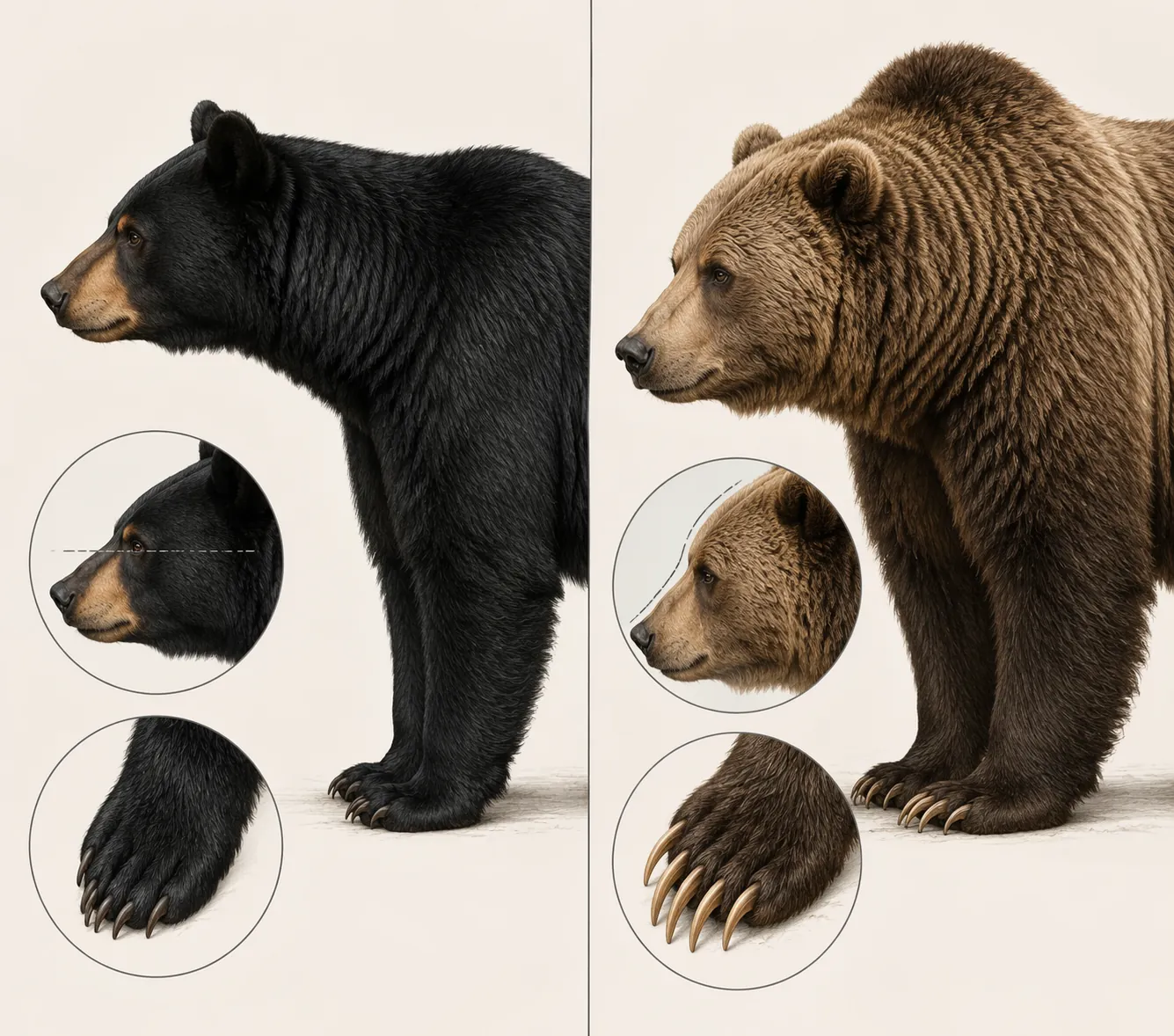
For a black bear encounter, NPS and Orvis guidance both point away from passive collapse. If a black bear attacks, do not play dead; try to escape to a secure place if possible, and if escape is not possible, fight back while focusing on the bear's face and muzzle. With a dog present, that means the owner still has to keep the dog from reengaging the bear or creating a chase loop back toward people. [2][5]
If It Is a Grizzly
For a grizzly or brown bear defensive attack, NPS and Orvis guidance both advise playing dead: lie flat on your stomach, clasp hands behind the neck, spread legs to make it harder to be turned over, and remain still until the bear leaves. If the attack continues or becomes predatory, fight back. This is one reason species awareness matters; generic bear advice can become dangerous when it ignores the difference between black bear and grizzly response. [2][5]
The Dog's Job Is Smaller Than People Want It to Be
A dog is not a reliable early-warning system. The Smith et al. figure that only 9.2% of dogs warned owners before contact should end that fantasy for any owner tempted to rely on canine instinct. The more realistic job is quieter: stay close, stay leashed, respond to the handler, and avoid turning a bear sighting into pursuit. [1]
This is also where the phrase "he's friendly" stops being relevant. Friendly to people is not the same as steady around wildlife. Friendly does not help another hiker who suddenly has a dog and bear moving toward them. Friendly does not help a ranger explain why a trail is closed after repeated conflicts. Friendly does not help the dog understand that the animal ahead can injure or kill it.
Use This Readiness Standard
Before committing to the hike, the owner should be able to answer yes to each of these without bargaining:
- Dogs are allowed on the specific trail, campsite, and approach route under current rules.
- The dog will remain on a short, non-retractable leash for the hike.
- Bear spray is current, accessible, and familiar enough that the owner can deploy it under stress.
- Dog food, treats, and scented items will be stored as bear attractants.
- The owner knows the local bear species and the appropriate response if an encounter becomes an attack.
- The dog has already shown reliable leash control around strong distractions.
If those conditions are met, hiking with a dog in bear country is meaningfully safer. If they are not met, the safer choice is not improvisation. It is leaving the dog home, choosing a different route, or postponing the trip until the owner and dog can meet the standard.
References
- Study finds that dogs increase chance of human-bear conflict, KMXT, 2026-07-09.
- Staying Safe Around Bears, National Park Service.
- Dogs and Bears = Trouble, BearWise.
- Keep Your Dog Safe From Bears, American Kennel Club.
- What to Do in a Bear Encounter With Your Dog, Orvis.
- Backpacking in Bear Country, REI.
- Bears and People, Parks Canada.
Related exhibits & inventory
Verified outcomes
No verified outcomes on file for this exam yet
See Methodology for how outcome evidence is disclosed once logged.
Planners
No planner filed for this exam yet
A downloadable timeline template for this exam hasn't been published yet.
Tool verdicts
AI-tool cautions
No AI tools tested for this exam yet
No hands-on AI-accuracy logs have been filed for this exam.
Questions about this plan
Ask a question about a specific section, timeline, or citation in this plan — or flag something that needs correcting.
Comments
Join the discussion with an anonymous comment.