
SAT Exam Hub
Did Archaeologists Find the Ark of the Covenant at Shiloh?
Sensational headlines claimed the Ark of the Covenant was found at Tel Shiloh. This article examines what the 2025-2026 excavations actually uncovered—a monumental structure, ritual bones, and priestly artifacts—and why the Ark itself remains missing.
- SAT
- ACT
- GRE
- MCAT
- ASVAB
- digital-sat
- adaptive-testing
- registration-fee
- content-outline
- score-target
No: archaeologists did not find the Ark of the Covenant at Shiloh. The current discovery claim has a cleaner answer than the headlines suggest: excavators reported evidence that may strengthen the case for Shiloh as the site of the biblical Tabernacle, but no object identifiable as the Ark has been recovered.
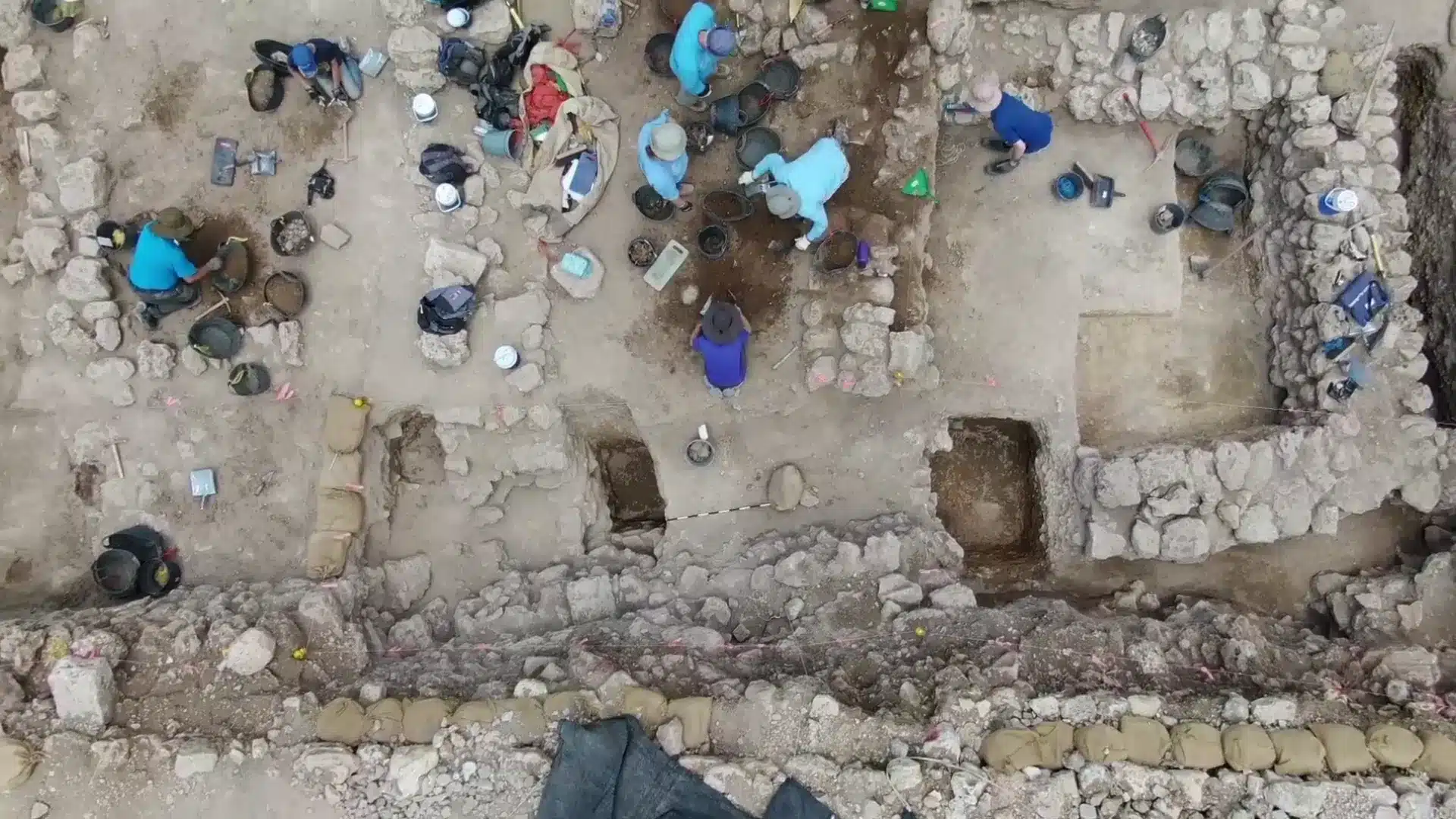
The confusion is understandable. A late-June headline in the New York Post told readers that “Ark of the Covenant ruins may have been found,” a phrasing that makes the story sound perilously close to a golden chest emerging from the ground.[1] The actual excavation update, published days earlier by Bible Archaeology Report, was more specific: Season 8 at Tel Shiloh exposed the southern wall of a monumental structure, allowing researchers to reconstruct its footprint as an east-west building with an internal 2:1 length-to-width ratio.[2]
What Season 8 Actually Added
The southern wall matters because it changes the argument from a partial alignment into a measurable footprint. Before that wall was exposed, the monumental structure’s full dimensions could not be reconstructed in the same way. With it, the excavators could describe an east-west oriented building whose internal proportions are 2:1.[2]
That ratio is why the Tabernacle comparison entered the news cycle. The biblical instructions for the Tabernacle in Exodus describe a rectangular sacred space, and the Shiloh structure’s proportions are suggestive enough to deserve attention. But a ratio is not an inscription. It does not name the building, identify its priests, or tell us whether the Ark ever stood inside it.
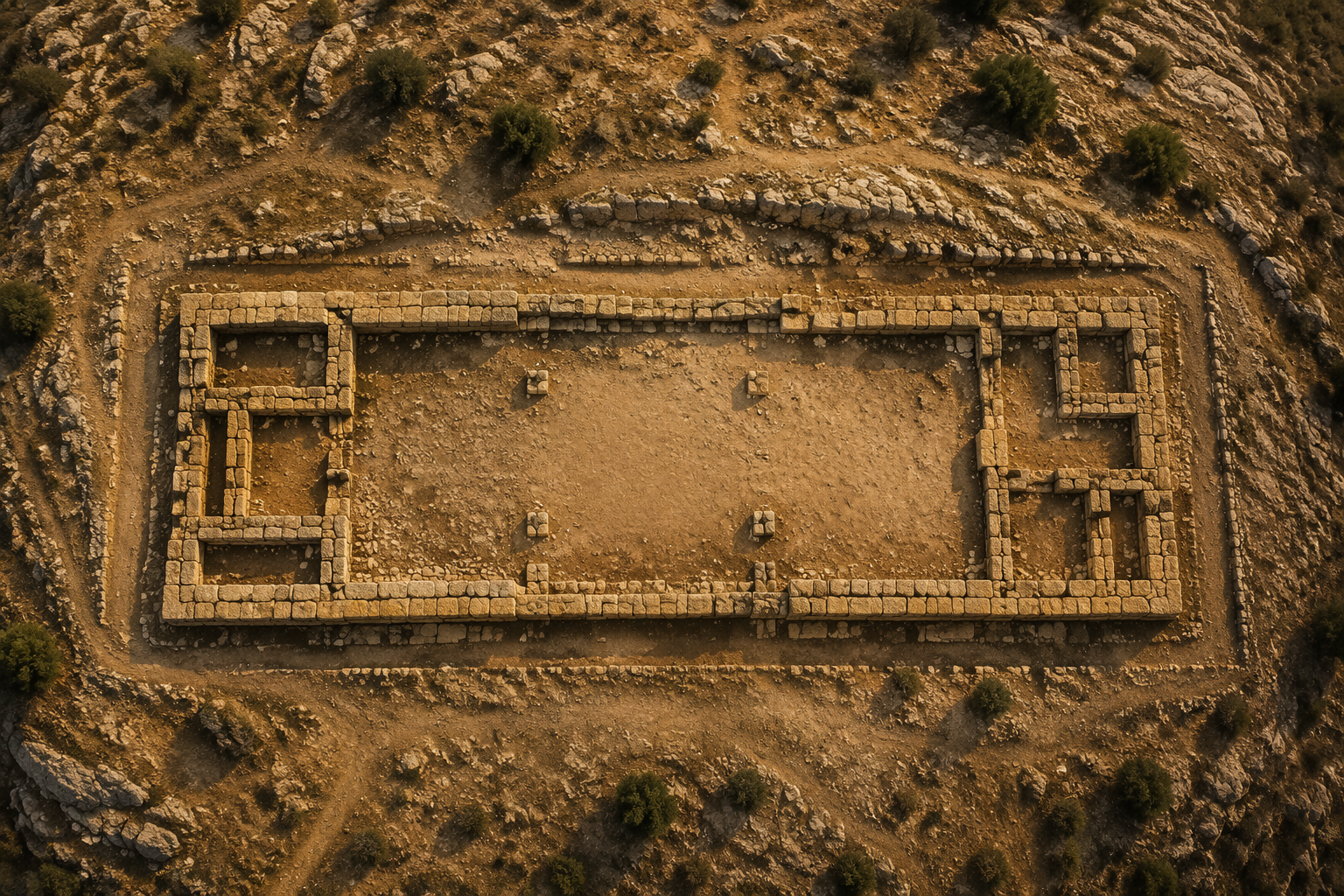
The strongest way to put the architectural claim is this: the Season 8 wall gave excavators enough of the structure to compare its proportions and orientation with the Tabernacle tradition. That is a real archaeological development. It is not, by itself, a discovery of the Ark.
| Claim | What the evidence supports | What it does not support |
|---|---|---|
| The Ark was found | No reported artifact is identifiable as the Ark | No present evidence resolves where the Ark went |
| A Tabernacle-related structure may have been found | A monumental east-west structure with a 2:1 internal ratio was reconstructed after the southern wall was exposed | The ratio alone does not prove the building was the Tabernacle |
| Ritual activity took place at Shiloh | A large animal bone assemblage and priestly-associated objects support a ritual interpretation | These finds do not directly identify the Ark |
The Animal Bones Deserve More Attention Than the Headline
If one part of the Shiloh case deserves to slow the reader down, it is not the Ark language. It is the animal bones.
The excavation reports describe more than 100,000 animal bones, with a notable pattern: right-side portions of sheep, goats, and oxen predominate in the material connected with the site’s ritual interpretation.[2] That is not the kind of detail a sensational headline can use easily, but it is exactly the kind of detail that can be tested, counted, challenged, and compared with texts.
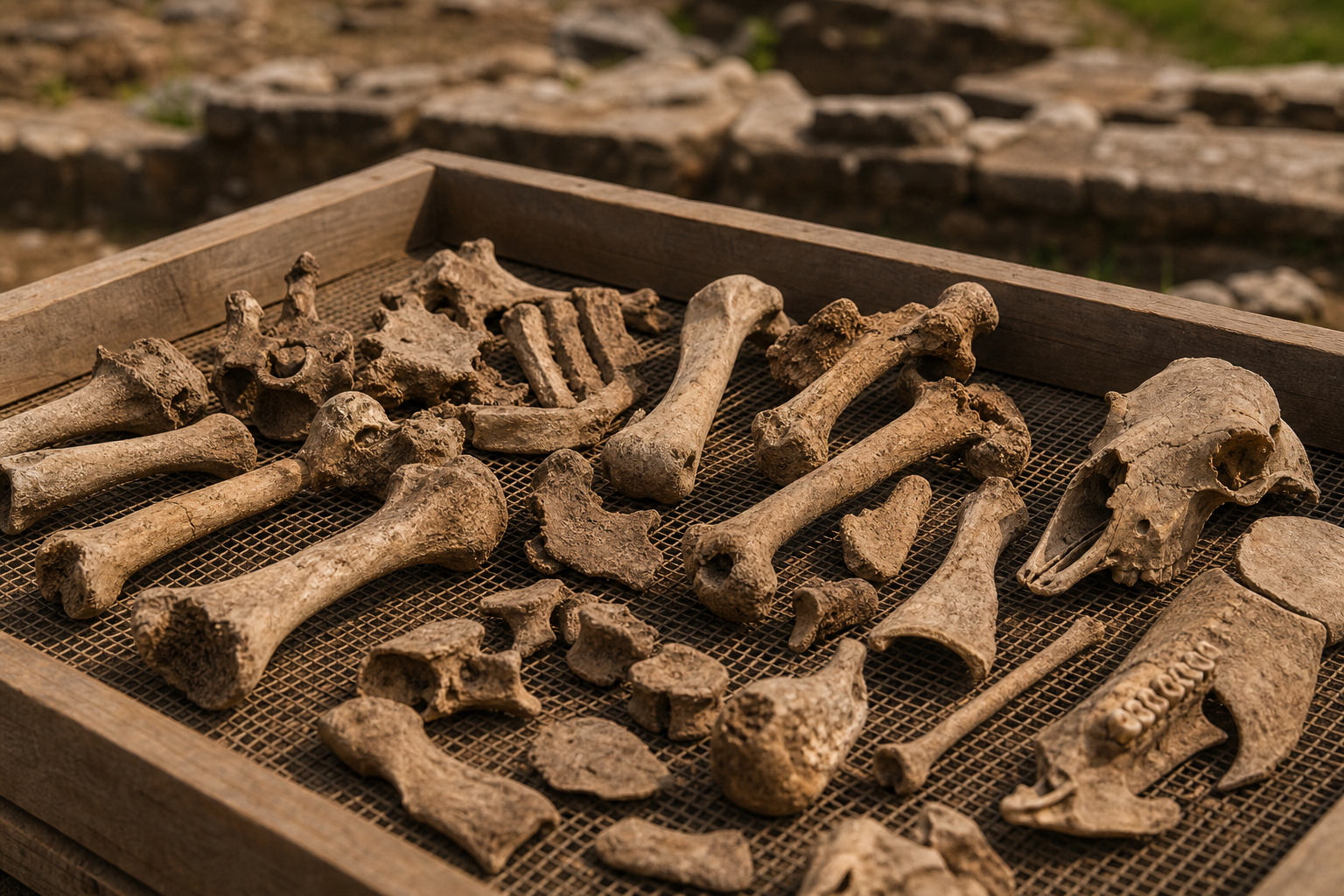
The textual comparison comes from Leviticus 7:32–33, where the right thigh of a fellowship offering is assigned to the priest. A concentration of right-side portions from sacrificially appropriate animals does not prove that the biblical law was being followed in a formal, written sense. It does, however, create a much tighter correlation than a vague claim that “animal bones were found near an ancient religious site.”
The difference matters. A stray sheep bone says very little. A large assemblage, sorted by species and body side, can begin to reveal repeated behavior. If the pattern holds under full publication and specialist review, it would support the idea that people at Shiloh were not merely eating animals there; they were handling animal portions in a way that overlaps with priestly ritual memory.
This is also why the bones are stronger evidence for ritual practice than for Ark discovery. They point toward what people did at the site. They do not point toward a portable sacred object. They can help explain why Shiloh became associated with sanctuary traditions without letting us skip over the missing object at the center of the modern headline.
Priestly Objects Add Texture, Not Proof
Other finds from Tel Shiloh are easier to picture: altar horns, ceramic pomegranates, and murex shells. Bible Archaeology Report connects these to priestly and sanctuary imagery, including pomegranates associated with priestly vestments in Exodus 28:33–34 and murex as a source for blue dye connected with priestly textiles.[2]
These objects are valuable because they thicken the ritual setting. Altar horns belong naturally in a sacrificial world. Pomegranates are not random in a biblical sanctuary conversation. Murex shells matter because color, cloth, and priestly status were part of ancient ritual display. None of them, however, carries the same weight as an inscription would. They support an atmosphere of cultic activity; they do not name the Tabernacle.
That distinction may feel cautious, but it preserves the value of the finds. The choice is not between “this proves everything” and “this means nothing.” Archaeology often works in accumulated patterns: architecture, animal remains, small objects, site location, and textual memory converging more or less strongly. At Shiloh, the convergence is serious. It is still circumstantial.
Where the Gate and Eli Fit
The gate complex is another place where the excavation brushes against biblical narrative without settling it. Reports describe a bent-axis gate complex with multiple rooms, which has been compared with the Shiloh gate scene in 1 Samuel 4:18, where Eli dies after hearing that the Ark has been captured.[2]
That is a plausible convergence, not a demonstrated identification. A gate at Shiloh is not surprising in itself, and a biblical story mentioning a gate does not automatically identify the excavated one. Still, this is the kind of overlap that biblical studies readers are right to notice: not because it proves the scene happened as narrated in every detail, but because it gives the text a topographical setting that can be examined.
What Does Not Belong in the Ark Argument
Season 8 also reported three Middle Bronze Age storage jars containing charred olives and wheat, with radiocarbon dating expected to clarify chronology.[2] Those jars matter for understanding the site’s longer occupation history. They do not belong at the center of an Ark argument.
The same restraint should apply to larger Ark lore. Theories about later hiding places, removals, destructions, or lost routes may be fascinating, but they are not advanced by the present Shiloh finds. The excavation data concern a possible sanctuary setting, not the Ark’s final location.
The Excavators’ Framework Matters, but It Does Not Erase the Finds
The Shiloh excavations discussed in this news cycle are associated with Dr. Scott Stripling and the Associates for Biblical Research. ABR works within a biblical-inerrancy and apologetics framework, and that framework helps explain why its public interpretation can sound more confident than some readers or scholars will find warranted.
That context should be named without turning it into an easy dismissal. The field data still have to be considered: walls, bones, ceramic objects, shells, jars, and spatial patterns do not become irrelevant because the excavators have theological commitments. At the same time, interpretation is not the same thing as excavation. A wall can be measured more directly than a sanctuary can be identified.
Other archaeologists may interpret an Iron Age I monumental building at Shiloh differently, especially before fuller publication and broader review. That is not a scandal; it is the normal pressure placed on a claim that asks architecture and artifact patterns to carry a biblical identification.
The Boundary Line
Here is the most defensible reading of the present evidence: Tel Shiloh has produced a serious circumstantial case for ritual activity compatible with the Tabernacle tradition. The 2:1 east-west structure makes the architectural comparison legible. The right-side animal bone pattern, especially because it involves more than 100,000 bones from sheep, goats, and oxen, gives the ritual argument unusual specificity.[2]
The case becomes weaker when it is asked to do more than that. It cannot show that the Ark has been found. It cannot prove that the excavated structure is the Tabernacle in a direct, final sense. It cannot tell us where the Ark went after the biblical traditions that place it at Shiloh.
So the real discovery is not the Ark. It is a sharper evidentiary picture of Shiloh: a site where architecture, animal remains, and priestly-associated objects make the biblical memory of a sanctuary more historically interesting, while still leaving the Ark itself outside the excavated record.
References
- Ark of the Covenant ruins may have been found, study says, NY Post, June 30, 2026
- Three Discoveries from Season Eight at Biblical Shiloh, Bible Archaeology Report, June 24, 2026
Related exhibits & inventory
Verified outcomes
No verified outcomes on file for this exam yet
See Methodology for how outcome evidence is disclosed once logged.
Planners
No planner filed for this exam yet
A downloadable timeline template for this exam hasn't been published yet.
Tool verdicts
AI-tool cautions
No AI tools tested for this exam yet
No hands-on AI-accuracy logs have been filed for this exam.
Questions about this plan
Ask a question about a specific section, timeline, or citation in this plan — or flag something that needs correcting.
Comments
Join the discussion with an anonymous comment.