
SAT Exam Hub
What the Evidence Says About Aging Homeless Prevention Funding
This article synthesizes the highest-quality evidence on preventing homelessness among older adults, showing that modest cash assistance and shallow rental subsidies are highly cost-effective, with benefit-cost ratios between $2.47 and $5.00 saved per dollar spent across multiple jurisdictions.
- SAT
- ACT
- GRE
- MCAT
- ASVAB
- digital-sat
- adaptive-testing
- registration-fee
- content-outline
- score-target
If an older adult is still housed but short a few hundred dollars a month, the funding question is blunt: does paying that gap prevent homelessness cheaply enough to justify public or philanthropic dollars? The best available answer is yes, with an important qualification. Older-adult-specific evidence shows that small rent gaps are often exactly where the crisis begins; the strongest causal evidence that emergency cash prevents homelessness comes from broader at-risk populations rather than older-adult-only samples.
That distinction matters. It is the difference between a usable evidence synthesis and a loose pile of supportive anecdotes. The evidence is strongest when read as a chain: older-adult survey data explain why modest help should matter, randomized and quasi-experimental studies show that emergency financial assistance can causally reduce homelessness, and cost studies show that prevention can be cheaper than shelter, healthcare, and later crisis response.
Editorial note: This article is an evidence-synthesis piece outside StudyMethod’s usual exam-prep scope. No natural internal-link pathway exists within the current site content.

The rent gap is small enough to fund and large enough to be decisive
The UCSF California Statewide Study of People Experiencing Homelessness, in its older-adult report, gives the clearest older-adult-specific reason to take shallow subsidies seriously. Among older adults experiencing homelessness, 66% said that $300 to $500 per month would have prevented their homelessness. Their median monthly income before homelessness was $920. In California, 48% of single adults experiencing homelessness are age 50 or older, and the population age 65 or older experiencing homelessness is projected to triple by 2030.[1]
Those numbers are not proof that every person who says a subsidy would have prevented homelessness would, in fact, have remained housed if paid. CASPEH is observational and retrospective. But the income-to-gap relationship is hard to dismiss. A household living on $920 per month does not need an abstract lecture on structural housing scarcity before the arithmetic fails. A $300 to $500 monthly gap is not a supplemental comfort; it can be the difference between paying rent and entering a system where the public cost of help usually rises.
This is why older-adult prevention should not be evaluated only through broad homelessness trends. National context is useful: one analysis reported 138,000 people age 55 and older experiencing homelessness on a given night in 2023, alongside 2.35 million older households with worst-case housing needs.[2] But for funding design, the more actionable fact is narrower: many older adults appear to become homeless after a relatively small, predictable shortage opens between fixed income and housing cost.
What the causal studies actually show
The most rigorous causal evidence comes from Phillips and Sullivan’s randomized controlled trial of emergency financial assistance, published in The Review of Economics and Statistics. The intervention averaged about $2,000 in assistance. It reduced homelessness by 81% at six months and 73% at twelve months. The study also estimated a marginal value of public funds of $2.47, meaning the public benefits exceeded public costs by that amount in the study context.[3]
That is the kind of result prevention advocates often claim and rarely have in experimental form. It is also not an older-adult-only trial. Treating it as if it were would weaken, not strengthen, the case. Its value for aging homelessness policy is that it isolates the effect of cash assistance on homelessness risk in a way that retrospective survey data cannot.
The finding is not sitting alone. Evans, Sullivan, and Wallskog studied a Chicago homelessness prevention program using a quasi-experimental design. Their study found an 88% reduction in homelessness at three months and a 76% reduction at six months.[4] Different method, different jurisdiction, same broad direction: when people at imminent risk receive financial assistance, entries into homelessness fall sharply.
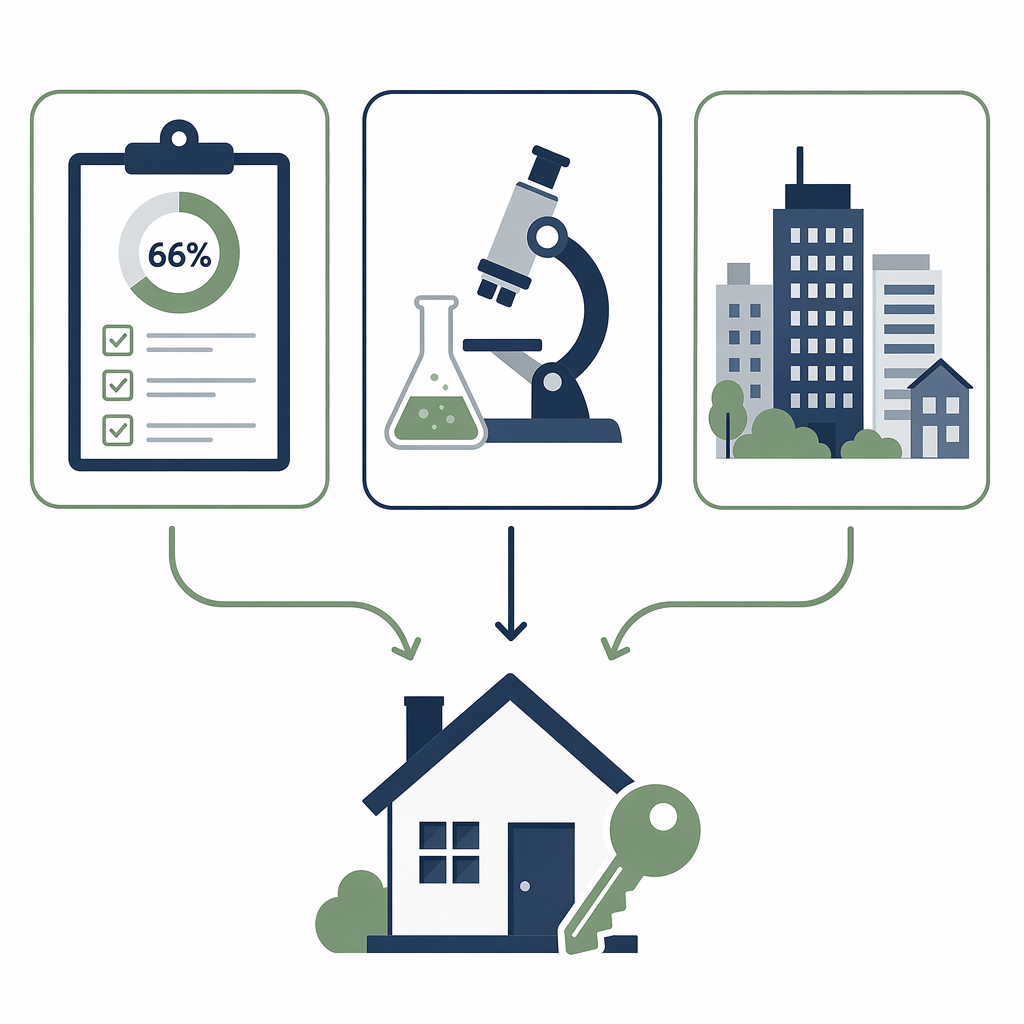
Read together, the studies do not say that every shallow subsidy program will work, or that any cash payment at any point in a housing crisis produces the same effect. They say something more practical: when the problem is an immediate and fundable housing-cost gap, emergency financial assistance can prevent homelessness, and the effect has appeared in more than one research design.
| Evidence source | Population and method | What it contributes |
|---|---|---|
| UCSF CASPEH older-adult report | Representative survey of older adults experiencing homelessness in California | Shows older adults often identify a $300–$500 monthly gap as the preventable point of failure |
| Phillips & Sullivan RCT | General at-risk population receiving emergency financial assistance | Provides the strongest causal estimate that financial assistance reduces homelessness |
| Evans, Sullivan & Wallskog Chicago study | General at-risk population in a quasi-experimental field study | Replicates the direction and magnitude of prevention effects in another setting |
Why older adults make the prevention case more urgent
Older adults are not simply younger adults with a later birth year. Many are dealing with fixed incomes, health limitations, mobility issues, and thinner recovery margins after eviction or displacement. Once housing is lost, the path back is not only expensive for public systems; it may be physically destabilizing in ways a standard shelter-cost calculation does not fully capture.
CASPEH is especially important here because it connects prevention to older adults’ actual pre-homelessness income. A $300 to $500 monthly subsidy looks modest from a program budget line. Against a $920 median monthly pre-homelessness income, it looks structurally significant.[1] The point is not that survey respondents can retrospectively prove causation. The point is that their reported preventable gap matches the kind of intervention that the strongest causal studies found effective in broader populations.
For budget offices and grant reviewers, that alignment is more useful than a generic appeal to compassion. The older-adult data identify the likely mechanism: a small shortfall relative to fixed income. The experimental and quasi-experimental studies test the intervention class: cash assistance for people at risk. Neither alone answers the full older-adult policy question. Together, they support funding shallow rental subsidies and emergency cash assistance as a serious prevention strategy.
The fiscal case: prevention is often cheaper than the system people enter afterward
The fiscal argument should not be reduced to one headline ratio. The $2.47 marginal value of public funds from Phillips and Sullivan is tied to a specific intervention and study context.[3] Canadian rent bank and bridge-funding estimates come from different programs, different housing markets, and different public systems. California older-adult survey findings describe a different evidence category again. They can speak to one another, but they should not be collapsed into the same datapoint.
Still, the direction is consistent. A Homeless Hub and Canadian Observatory on Homelessness synthesis reported that the BC Rent Bank saved $5 for every $1 invested, with $27.5 million in total savings in 2023–2024. The same synthesis cited Ottawa bridge funding at $20 per day per household compared with more than $60 per day for shelter, and noted a Canadian healthcare study finding that people experiencing homelessness cost six times more than housed people with similar health profiles.[5]
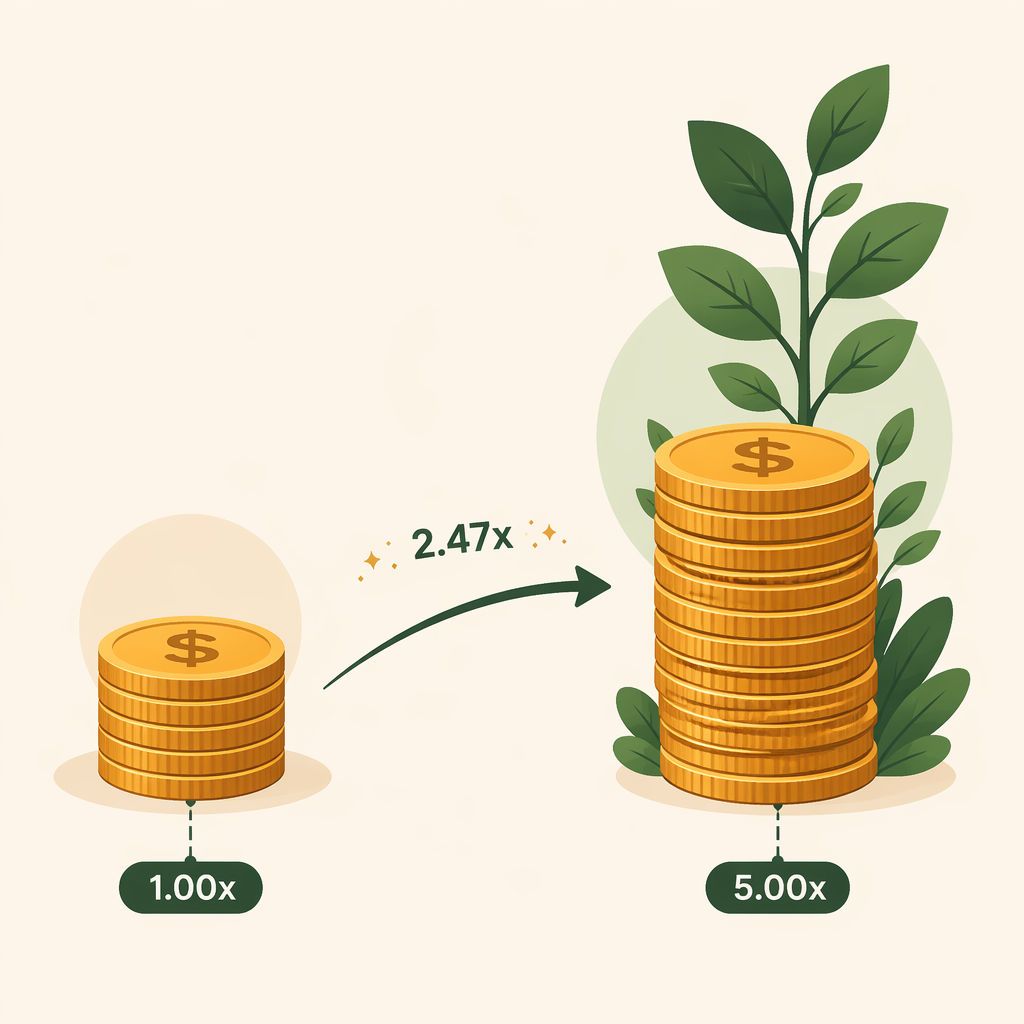
Those comparisons matter because homelessness prevention competes against crisis systems that are already funded. A rent bank line item may look discretionary until the same person enters shelter, emergency healthcare, outreach, and case management. Ottawa’s $20-per-day bridge-funding comparison is not a universal U.S. cost estimate, but it captures the budget logic cleanly: keeping someone housed can require less daily public spending than serving them after displacement.[5]
Culhane and colleagues made a related argument in their work on the emerging crisis of aged homelessness, concluding that housing solutions could be substantially funded through avoidance of excess costs.[6] That claim should be read as a financing argument, not a magic budget offset. Savings may accrue to healthcare systems while housing departments pay the subsidy; county shelters may see costs that state Medicaid agencies avoid; philanthropy may fund prevention while public agencies book the downstream savings. The fiscal case is strongest when the payer and beneficiary are identified rather than implied.
What to fund if the goal is older-adult prevention
The evidence points most directly toward modest cash assistance and shallow rental subsidies targeted to people with an identifiable housing-cost gap. That means programs should move money before eviction, displacement, or shelter entry has converted a solvable arrears or rent gap into a more expensive rehousing problem.
- Fund shallow monthly subsidies when the rent gap is ongoing and predictable, especially for older adults on fixed incomes.
- Fund one-time emergency assistance when arrears, a temporary income disruption, or a discrete housing expense is the immediate threat.
- Keep eligibility screening proportional to the size and urgency of the gap; a prevention program that takes too long to approve help may preserve administrative purity while losing the housing.
- Track outcomes at least at six and twelve months, since the strongest causal studies report effects in those windows.
- Separate program costs from avoided costs by agency, so savings are not claimed in places where no budget holder can actually see them.
Federal guidance from the U.S. Interagency Council on Homelessness also frames older-adult homelessness prevention around early identification, housing stability supports, and coordinated assistance rather than waiting for shelter entry.[7] That guidance is useful because implementation failure is a real risk. Cash assistance can be evidence-aligned and still underperform if it arrives after a lockout, excludes the people most likely to lose housing, or is paired with documentation demands that older adults cannot satisfy quickly.
Where the evidence should make readers cautious
The strongest version of the case does not require pretending that the evidence base is complete. A 2025 systematic review by Van Berkum and colleagues noted that few research evidence-based policy solutions exist specifically for preventing older-adult homelessness.[8] That is a meaningful boundary. It means the available convergence is important, not that all remaining questions are settled.
There are three practical cautions. First, the older-adult-specific CASPEH evidence is observational and retrospective, while the RCT and Chicago quasi-experimental evidence are not older-adult-only. Second, many cost-benefit figures come from Canadian jurisdictions or California-specific conditions; states with different rent burdens, healthcare financing, shelter systems, or eviction processes may see different returns. Third, most cash-assistance studies do not provide true long-term follow-up well beyond twelve to eighteen months, so durability after the first year remains uncertain.
Those cautions should shape program evaluation, not paralyze funding. A reasonable grant or public budget proposal can say: older adults often report that a $300 to $500 monthly gap would have prevented homelessness; emergency financial assistance has reduced homelessness in rigorous general-population studies; and multiple cost analyses find prevention cheaper than crisis response. It should not say that an older-adult-only RCT has already proven every shallow subsidy model in every housing market.
The usable conclusion for funding decisions
For older-adult homelessness prevention, the most defensible funding priority is modest cash assistance and shallow rental subsidies aimed at the point where housing is still intact and the gap is still fundable. The evidence is not interchangeable across studies, but it is mutually reinforcing: CASPEH shows why small sums plausibly matter so much for older adults, Phillips and Sullivan provide the strongest causal evidence that emergency financial assistance prevents homelessness, Evans and colleagues show similar effects in another jurisdiction, and cost studies show prevention can return roughly $2.47 to $5.00 in value or savings per dollar spent in documented program contexts.[1][3][4][5]
The policy mistake would be waiting for older adults to become homeless, then paying more for shelter, healthcare, rehousing, and case management than it would have cost to close the gap earlier. The evidence does not justify every prevention program design. It does justify treating shallow subsidies and emergency cash assistance as among the strongest currently supported tools for preventing homelessness among older adults, as long as older-adult observational evidence and general-population causal evidence are read together rather than falsely merged.
References
- Toward Dignity: Understanding Older Adult Homelessness, UCSF, https://homelessness.ucsf.edu/resources/reports/toward-dignity-understanding-older-adult-homelessness
- Paint by Numbers: Older Americans and Homelessness, National Alliance to End Homelessness, May 2024, https://endhomelessness.org/blog/paint-by-numbers-older-americans-and-homelessness/
- Do Homelessness Prevention Programs Prevent Homelessness?, The Review of Economics and Statistics, 2023, https://direct.mit.edu/rest/article-abstract/doi/10.1162/rest_a_01344/116185/Do-Homelessness-Prevention-Programs-Prevent
- Preventing homelessness with personalized interventions, Science, 2016, https://pubmed.ncbi.nlm.nih.gov/27516600/
- Yes, It’s Cheaper: The Financial Case for Homelessness Prevention, Homeless Hub / Canadian Observatory on Homelessness, Aug 2025, https://homelesshub.ca/blog/2025/yes-its-cheaper-the-financial-case-for-homelessness-prevention/
- The Emerging Crisis of Aged Homelessness, 2019, https://aisp.upenn.edu/wp-content/uploads/2019/01/Emerging-Crisis-of-AgedHomelessness-1.pdf
- Homelessness Prevention Series: Spotlight on Older Adults, USICH, https://www.usich.gov/guidance-reports-data/federal-guidance-resources/homelessness-prevention-series-spotlight-older
- A Systematic Review of Policy Solutions to Prevent and Address Homelessness Among Older Adults, 2025, https://pmc.ncbi.nlm.nih.gov/articles/PMC12065400/
Related exhibits & inventory
Verified outcomes
No verified outcomes on file for this exam yet
See Methodology for how outcome evidence is disclosed once logged.
Planners
No planner filed for this exam yet
A downloadable timeline template for this exam hasn't been published yet.
Tool verdicts
AI-tool cautions
No AI tools tested for this exam yet
No hands-on AI-accuracy logs have been filed for this exam.
Questions about this plan
Ask a question about a specific section, timeline, or citation in this plan — or flag something that needs correcting.
Comments
Join the discussion with an anonymous comment.