
Comparison
8 Philanthropy Lessons from Warren Buffett
Warren Buffett's philanthropy is not random generosity but a deliberate system of eight principles. This article breaks down those lessons — from the inner scorecard to the 10-year clock — with documented sources for students studying business ethics, philanthropy, or exam preparation.
Verdict panel
- Compared
- not specified
- Target exam
- not specified
- Best for
- not specified
- Pricing last reviewed
- pricing currency unconfirmed
Warren Buffett is useful to study because his philanthropy looks almost plain from a distance: donate Berkshire Hathaway stock, let foundations distribute it, avoid ceremonial language. The machinery is less simple. By mid-2026, reports put his lifetime giving above $60 billion, even while his remaining wealth was still estimated around $145 billion; the original 2006 stock pledge grew inside a rising market before and during its charitable transfer.[1] That combination is exactly why Buffett’s philanthropy lessons should be studied as a system, not as a string of admiring quotations.
The eight lessons below are not eight equal compliments. Some are strong operating principles. Some depend on Buffett’s personal authority, Berkshire’s stock performance, and family trust that few donors can reproduce. A student can still use them well if each lesson is tied to a documented action, a mechanism, and a limitation.
| Lesson | Study label | What to watch |
|---|---|---|
| 1 | The inner scorecard | Values are measured against internal standards, not applause. |
| 2 | Delegate like you mean it | Money moves through independent foundations rather than one central Buffett office. |
| 3 | Judge by slugging percentage | Good philanthropy can include failed grants if the portfolio still reaches important outcomes. |
| 4 | Compounding generosity | A stock-based pledge can grow while it is being given away. |
| 5 | The 10-year clock | Estate giving is time-limited instead of becoming a permanent family monument. |
| 6 | Enough to do anything, not enough to do nothing | Inheritance is treated as responsibility, not insulation. |
| 7 | Trust but verify | Autonomy is paired with reporting discipline, grant clauses, and a demand for bad news. |
| 8 | Philanthropy before wealth | Giving was planned before Buffett became vastly wealthy, but scale changed what the plan could do. |
1. The Inner Scorecard
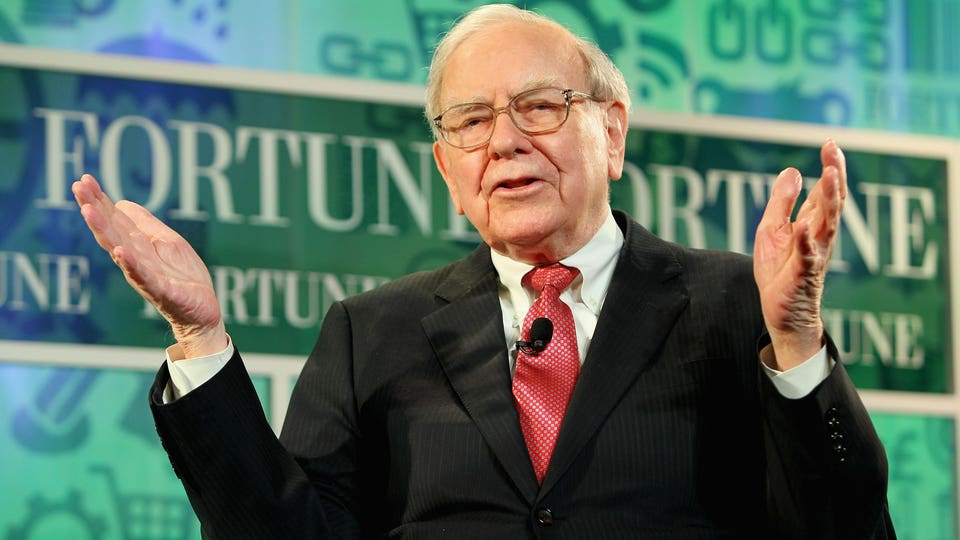
Buffett’s “inner scorecard” is often treated as a personality trait, but it matters more as a governance principle. The phrase points to a habit of measuring success by internally chosen standards rather than by public praise, status competition, or reputational theater. The Chronicle of Philanthropy used that frame to explain why his enormous charitable gifts reflect a consistent private standard rather than a late-career image campaign.[2]
For study purposes, the ethical lesson is not “ignore everyone.” A donor controlling billions cannot pretend public consequences are private hobbies. The useful point is narrower: Buffett’s giving rules appear designed before the applause arrives. That reduces one common failure in philanthropy essays, where reputation is mistaken for moral reasoning. An inner scorecard asks a harder question: what rule would still guide the money if no one published the donor’s name?
2. Delegate Like You Mean It
Buffett’s giving is not run as a single command center. A central feature of the model is delegation through five foundations, each with its own leadership and judgment. In an online course on giving, he told students: “Figure out your strengths and then delegate everything else.”[3] That sentence is easy to remember, which is helpful. It is also easy to misuse.
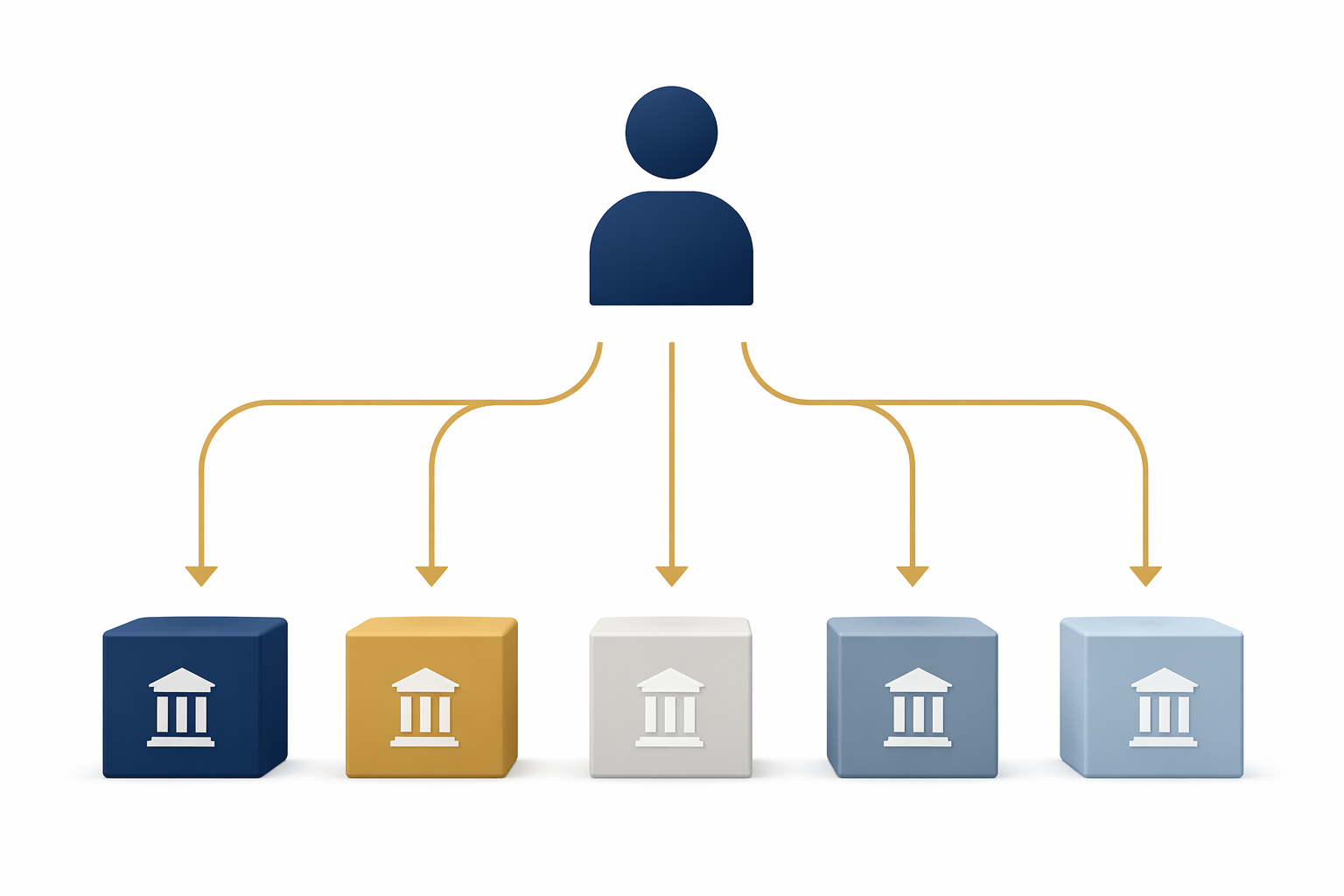
Real delegation changes who has moral work to do. If Buffett gives through independent foundations, then foundation boards and staff must choose fields, evaluate proposals, reject applicants, monitor grants, and explain trade-offs. The donor does not disappear; he chooses the architecture. But the day-to-day moral burden shifts to people closer to implementation.
That is why this lesson is stronger than generic “trust your team” advice. Buffett’s model separates capital allocation from program expertise. A student writing about business ethics can describe the mechanism this way: the donor supplies assets and broad confidence; delegated institutions supply selection, execution, and accountability. The limitation is just as important. Delegation can hide responsibility if the donor receives admiration for gifts while operators absorb blame for hard choices.
3. Judge by Slugging Percentage
Buffett has applied a baseball metaphor to philanthropy: do not judge only by whether every swing is a hit; judge by slugging percentage. Forbes reported his view that grantees would be a failure if they did not have some failures.[4] That is a compact way to say something many institutions avoid saying plainly: if every funded project is safe enough to succeed, the donor may be buying predictability instead of impact.
This is one of the most examinable Buffett philanthropy lessons because it links ethics to portfolio thinking. A foundation that tolerates no mistakes will screen out unusual ideas, early-stage organizations, and work whose results are hard to measure quickly. A foundation that tolerates every mistake without learning becomes careless. “Slugging percentage” sits between those errors. It asks whether the total pattern of grants justifies the risk taken.
In a classroom example, imagine a foundation funding several experimental education programs. The ethical question is not whether each program can promise success in advance; that would make the experiment unnecessary. The question is whether the foundation defines what it is trying to learn, protects participants from foreseeable harm, and stops funding work that keeps failing for reasons that were already visible. This example is hypothetical, but it shows why failure tolerance is not the same as indifference.
4. Compounding Generosity
Buffett’s 2006 pledge is often summarized as a decision to give away Berkshire stock. The more precise lesson is that the pledged asset continued to compound. Fox Business reported in 2026 that Buffett donated $6 billion in Berkshire stock to five foundations and that his lifetime giving had topped $60 billion, while his remaining wealth was still reported around $145 billion.[1]
That fact can produce two different student errors. The first is to treat the total donated as pure sacrifice without noticing that the underlying asset grew dramatically. The second is to treat the remaining fortune as proof that the giving was unserious. Both are too simple. A stock pledge can move huge value into philanthropy and still leave the donor wealthier than most people can imagine, especially when the stock performs well.
The ethics lesson is therefore partly about timing and partly about luck. Giving appreciated shares can magnify charitable capacity, but market performance is not moral virtue. Buffett’s case is powerful because compounding made the charitable numbers enormous. It is also limited because another donor using the same structure with a weaker asset would not produce the same public result.
5. The 10-Year Clock
The cleanest design choice in Buffett’s later philanthropy may be the time limit. Reports in Fortune and TIME describe a requirement that estate funds be distributed within 10 years after the estate closes.[5][6] That rule matters because it prevents the default drift toward a permanent dynastic endowment.

A time-limited estate rule changes incentives. Foundation leaders cannot preserve capital forever while using payout minimums as a shield. Heirs cannot turn the donor’s fortune into an indefinite family institution. Grantees may face faster decision cycles, and staff must build capacity for large distributions within a defined window. The clock disciplines everyone.
The 10-year rule also clarifies a moral preference. Buffett appears less interested in making his name last institutionally than in forcing the money to move. That does not automatically guarantee better outcomes. Spending faster can create pressure, overwhelm recipient organizations, or favor large established grantees that can absorb money quickly. But as a study principle, the rule is unusually concrete: if the goal is social use rather than family perpetuity, write the deadline into the system.
6. Leave Enough to Do Anything, Not Enough to Do Nothing
Buffett’s inheritance philosophy is commonly summarized as leaving children enough to do anything, but not enough to do nothing. CNBC’s 2026 interview with the Buffett heirs placed that idea inside the family’s responsibility for giving away an immense fortune.[7] The phrase is memorable because it treats inherited wealth as a test of agency rather than a reward for birth.
For philanthropy, the lesson is not that every wealthy parent should copy a slogan. The mechanism is succession design. Buffett’s children are not merely receiving private consumption power; they are expected to help move philanthropic capital. That creates responsibility, but it also raises a governance question students should not skip: why should family members, rather than public institutions or broader democratic processes, control such large social resources?
The strongest answer available from the Buffett model is practical rather than perfect. He knows and trusts his children. He has watched their foundation work. He can impose a distribution clock. That may be reasonable inside one family system, but it is not a universal justification for inherited philanthropic power.
7. Trust but Verify
Trust is one of the most attractive words in philanthropy because it sounds humane. Buffett’s system is more interesting when trust is paired with verification. CNBC reported several operating details from the Buffett family’s philanthropic work: the Howard G. Buffett Foundation operates at 1.3% overhead, grant letters can include termination clauses, and Buffett wants bad news rather than only success stories.[7]
Those details are small compared with the headline dollar amounts, but they are better evidence of decision architecture. Low overhead is not automatically proof of effectiveness; a foundation can underspend on staff and weaken its own judgment. Termination clauses are not automatically harsh; they can protect charitable funds when conditions change or performance collapses. Demanding bad news is not a personality quirk; it is an information rule.
This lesson transfers well to business ethics. A board, donor, or manager who says “I trust my people” still has to design channels for inconvenient facts. Otherwise trust becomes a decorative word for weak oversight. Buffett’s version, at least as reported, makes room for autonomy while keeping documents, costs, and negative information visible.
8. Philanthropy Before Wealth
Fortune reported in 2026 that Buffett had planned to give away all his money even before he had significant wealth, including when he was in his 20s.[5] That point keeps the case from becoming only a story about late-life surplus. The intention preceded the fortune, even though the fortune later made the intention historically unusual.
The familiar details about modest living belong here only if they illuminate that continuity. The Conversation, republished by Giving Compass, noted that Buffett still lived in the Omaha house he bought in 1958 for $31,500.[8] That fact should not be inflated into sainthood. Many people live modestly without transferring billions to charity, and many effective donors do not live like Buffett. Its value is narrower: it supports the claim that consumption restraint and planned giving were part of a long-running pattern rather than a marketing pose.
Where the Model Gets Less Clean
The Buffett case becomes weaker when students treat public commitment as the same thing as enforceable obligation. The Giving Pledge is morally serious, but it is not the same kind of instrument as a binding legal contract. A pledge can shape reputation, family expectations, and peer pressure; it does not by itself guarantee that wealth will fall by a particular date or move to particular beneficiaries.

This distinction matters because Buffett’s own numbers are shaped by Berkshire Hathaway’s performance as well as by his giving rules. A donor can give away extraordinary sums and still remain extraordinarily wealthy if the asset base keeps rising. That does not cancel the generosity, but it does prevent a clean equation between pledged percentage and actual wealth reduction.
The system has also evolved. By 2026, reporting described Buffett as shifting away from the Gates Foundation partnership and redirecting about $48 billion toward family foundations.[5] That is not best read as a dramatic reversal. It is evidence that even a plainspoken philanthropic system changes when succession, trust, institutional relationships, and timing change.
For exam preparation, the balanced answer is this: Buffett’s philanthropy offers a disciplined model of values, delegation, risk tolerance, compounding assets, time limits, family responsibility, verification, and early intention. Its real-world effect still depends partly on market performance and on moral commitments that are easier to admire than to enforce.
References
- Buffett donates $6B in Berkshire stock, lifetime giving tops $60B, Fox Business.
- How Warren Buffett's Enormous Charitable Gifts Reflect His Inner Scorecard, Chronicle of Philanthropy.
- In online course, Buffett, others teach students to give money away, NBC News.
- 4 Lessons From Warren Buffett On Business And Philanthropy, Forbes.
- Even before he was wealthy, Warren Buffett planned to give away all his money, Fortune, July 17, 2026.
- TIME100 Philanthropy: Warren Buffett, TIME.
- Buffett family fortune: How to give away $150 billion, CNBC, January 15, 2026.
- What Donors Can Learn From the Ways Warren Buffett Gives and Lives, Giving Compass / The Conversation.
Back to the exam this applies to
Target exam not specified — see all exam hubs.
Comments
Join the discussion with an anonymous comment.