
Comparison
How PS22 Chorus Music Education Boosts Academic Performance
Discover how the PS22 Chorus model of choral music education boosts academic performance, cognitive function, and student confidence — backed by research and real-world results from an NYC public school that performed at the World Cup.
Verdict panel
- Compared
- not specified
- Target exam
- not specified
- Best for
- not specified
- Pricing last reviewed
- pricing currency unconfirmed
The easiest thing to notice about the PS22 Chorus is the size of the stage. On July 19, 2026, elementary school students from Staten Island sang during the FIFA World Cup Final halftime show with Shakira, the kind of appearance most adult performers never come close to. The harder and more important thing to notice is where they came from: a regular New York City public elementary school, not a selective arts conservatory, not a magnet pipeline, and not a place designed only for children already marked as exceptional.[1][2]
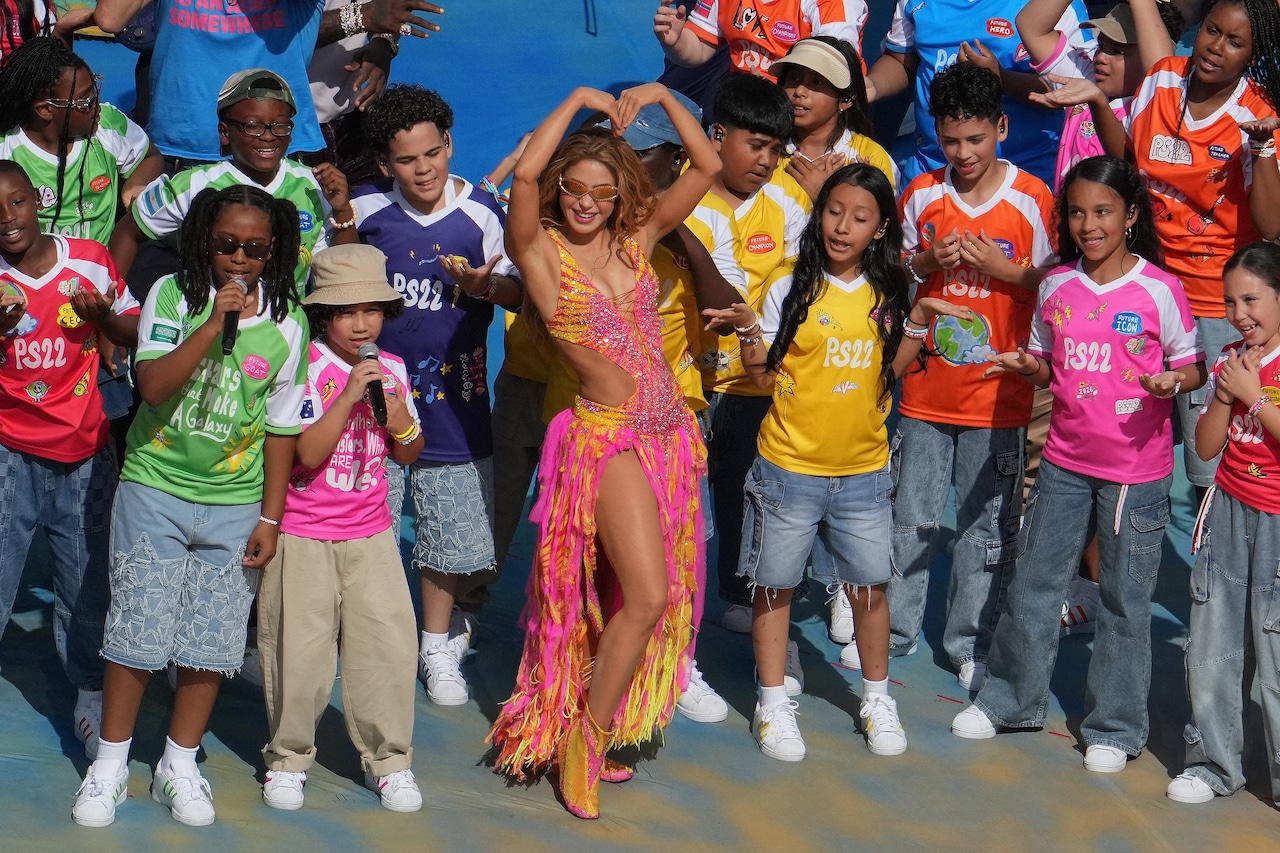
That distinction matters because the educational case for PS22 chorus music education does not rest on celebrity proximity. The chorus has also appeared at the Academy Awards and the White House, but those milestones are signals, not the substance of the story.[2] The real question is smaller and more demanding: what has to happen inside an ordinary school music room for choir to become powerful enough to affect confidence, attention, memory, attendance, and academic performance?
The honest answer is not that singing magically raises test scores. Academic performance rarely improves because one adult adds one neat activity to a child’s schedule. But the evidence around choir, music education, and PS22 points in a consistent direction: well-run choral programs create conditions that many struggling students need before achievement can move. They give children repeated practice in focus, recall, self-regulation, peer listening, persistence, and public competence. Those are not decorative skills.
What PS22 Shows Before the Data Starts
PS22’s unusual strength is that it makes the classroom visible. The viral clips and major performances can make the chorus look like a phenomenon that happened to schoolchildren. In practice, its reputation grew from children rehearsing in a plain school setting, learning songs, listening hard, watching their teacher, and gradually carrying themselves like people who had something worth contributing.

Gregg Breinberg, the longtime music teacher behind the chorus, has described the work in terms that are strikingly academic without sounding like a test-prep strategy. “It’s all about self-confidence,” he said. “That is what the arts has to offer, especially to kids that aren’t necessarily succeeding academically.”[3] That sentence names the student too many school improvement conversations talk around: the child who has learned to expect correction, comparison, or invisibility before competence.
In choir, that child may have to stand still longer than usual, enter on time, remember a lyric, shape a vowel, follow a conductor’s hand, listen to classmates, recover from mistakes, and try again tomorrow. Breinberg has said that “focus, concentration, and stamina are undeniably strengthened” through this kind of work.[4] Those are learning behaviors before they are musical virtues.
His sequence is also important. He has emphasized fostering love of music first, with technique coming later.[5] That can sound soft until you imagine the alternative: asking children who may already feel unsuccessful at school to begin with correction, precision, and compliance. PS22’s approach appears to start with attachment. The student likes the song, trusts the room, wants to be part of the sound, and then accepts the discipline required to make the sound better.
Confidence Is Not a Side Effect
Confidence is often treated as a pleasant outcome that follows achievement. For many students, especially those who do not already experience school as a place where they are good at things, confidence is part of the route into achievement. A child who believes public failure is survivable can attempt harder work. A child who has been seen succeeding by peers may enter the next classroom with a different posture.
That is why Amber’s explanation in NPR’s 2026 reporting matters more than another line in PS22’s performance resume. At age 11, she said, “I used to be scared of being around a lot of people — basically stage fright. I thought the inauguration could help me build more confidence.”[1] She is not describing fame. She is describing a child-sized theory of exposure, courage, and growth.
Choir gives that theory a structure. The student does not simply decide to be confident. She rehearses in a group, shares risk with other children, receives correction that is not only about her, and eventually performs something that required preparation. The public moment matters because it confirms the private work. But the private work is where the academic transfer becomes plausible.
The Research Points to Engagement, Memory, and Belonging
The most directly relevant K-12 figures come from the 2009 Chorus Impact Study, and they should be read carefully because they are both strong and older. In that study, 80% of educators reported that choir students showed improved academic achievement and social development, while 90% said choir helped keep students engaged with school.[6] Those numbers do not prove that choir alone caused every academic gain. They do show that educators watching students across school settings saw a pattern they considered meaningful.
| Reported outcome | What the figure measures | Source |
|---|---|---|
| 80% of educators reported improved academic achievement and social development | Educator observation of choir students, not a lab-controlled causal estimate | Chorus Impact Study, 2009 |
| 90% of educators said choir keeps students engaged with school | School attachment and engagement as perceived by educators | Chorus Impact Study, 2009 |
| 71% of parents said choir-participating children became more self-confident and self-disciplined | Parent-reported change in confidence and discipline | Chorus Impact Study, 2009 |
| 69% of parents reported improved memory skills | Parent-reported memory improvement associated with choir participation | Chorus Impact Study, 2009 |
| 63% of parents said choir made children more accepting of people different from themselves | Parent-reported social acceptance | Chorus Impact Study, 2009 |
The parent findings from the same 2009 study fill in the mechanism. Seventy-one percent of parents said children who participated in choir became more self-confident and self-disciplined; 69% reported improved memory skills; and 63% said choir made children more accepting of people different from themselves.[6] These are not separate decorations around academics. Memory, discipline, and social acceptance affect whether a student can stay with a task, function in a classroom, and return after difficulty.
The 2019 follow-up from Chorus America widened the view beyond children. Sixty percent of choral singers said choir made them more open, flexible, and adaptable, and 75% said it made them better team players in other areas of life.[6] Because those figures focus more on choral singers broadly, they should not be treated as a direct update to the child-specific 2009 numbers. They do, however, support the same picture of choir as training in social flexibility and shared attention.
Why Music Practice Can Reach Academic Skills
The bridge from choir to academic performance becomes stronger when the discussion moves from “music makes students smarter” to the specific cognitive work music asks students to do. A 2021 San Francisco Conservatory of Music report concluded that music education enhances auditory skills, memory, coordination, social skills, and executive function, with benefits most pronounced for at-risk students.[7] That last clause matters for PS22 because the educational stakes are highest for students who may not have abundant outside access to private lessons, enrichment programs, or adults trained to recognize their strengths.
Executive function is not an abstract benefit when a child is learning a song. The student has to inhibit the impulse to come in early, hold a line in working memory, adjust volume based on the group, track tempo, and recover if the phrase goes wrong. In a classroom, those same capacities show up as waiting, remembering instructions, monitoring one’s work, and persisting through multi-step tasks. Choir does not replace reading instruction or math practice. It strengthens some of the human machinery students use to survive both.
The SFCM report also makes a practical point about school systems: if even one student remains in school because of a music program, the taxpayer savings can more than offset a music teacher’s salary.[7] That is not a claim that every music class single-handedly prevents dropout. It is a reminder that engagement has economic value because disengagement has consequences. When a student’s reason to show up is choir, the school should be cautious about calling choir nonessential.
The Academic Numbers Are Stronger When Read as School-Level Patterns
Some of the most quoted music education statistics are school-level comparisons. Music Will, citing music education research, reports that schools with music programs have a 90.2% graduation rate, compared with 72.9% for schools without music programs. It also reports that students in quality music programs score 22 points higher in English and 20 points higher in math.[8]
Those numbers are substantial, but they need the right verb. They show association, not a clean experiment in which identical students were randomly assigned to music or no music. Schools that maintain strong music programs may also differ in staffing, funding, leadership, course offerings, and family resources. A careful reader should not pretend those factors disappear.
Still, dismissing the pattern would be just as careless. The graduation and score differences line up with educator reports, parent reports, cognitive research, and the PS22 classroom model. The point is not that choir is a shortcut around academic instruction. The point is that music programs often sit inside the same web of school attachment, adult mentorship, disciplined practice, and peer belonging that helps academic instruction take hold.
Music Will also reports that 85% of its students form strong social bonds through music programs.[8] That figure belongs in the academic conversation because belonging changes behavior. Students who feel known by peers and adults are more likely to return, participate, risk embarrassment, and accept feedback. For a student already thriving, that may be an added benefit. For a student on the edge of detachment, it can be the thing that keeps school from becoming only a place of failure.
Voluntary Joy Does Real Work
There is a reason Breinberg’s “love of music first” philosophy should not be reduced to charm. A 2025 study of 274 youth choir singers ages 15 to 24 found that extracurricular choir singers reported significantly higher social connectedness, passion in life, and overall well-being. The study also found that choir supports mood regulation, stress reduction, and joy, and that voluntary participation produces stronger well-being benefits than mandatory participation.[9]
That finding helps explain why technique-first music education can miss the mark with students who most need the program. If participation feels like one more compliance system, the student may learn the notes and still not attach to the room. When the music itself is desirable, practice becomes easier to repeat. Repetition is where memory improves. Repetition is where stamina grows. Repetition is where a student who once hid in the back row starts to understand that effort can change what happens next.
This does not mean choir has to be casual. PS22’s performances make clear that joy and rigor can coexist. Children can love the repertoire and still be asked to rehearse carefully. They can feel emotionally safe and still be expected to listen, blend, memorize, and improve. In fact, the safety may be what allows the rigor to work.
What the PS22 Model Actually Offers Schools
PS22 is not a template for making every school chorus famous. The viral outcome is unusual, and treating it as replicable would insult the ordinary labor that makes most good school arts programs valuable. The more useful model is quieter:
- Choose music students can care about before asking them to perfect it.
- Build confidence as a serious learning condition, not as a reward after achievement.
- Use rehearsal to practice attention, memory, inhibition, listening, and recovery from mistakes.
- Make the group strong enough that students feel accountable to peers, not only to the teacher.
- Treat performance as evidence of preparation, not as the whole purpose of the program.
That model is especially relevant in schools serving children who are too often introduced through deficits: low income, learning needs, language needs, low scores, low confidence. PS22’s reported student population has included more than 75% free-lunch eligibility, along with many ESL and special education students.[2] The chorus does not erase those realities. It gives a school a way to see students through ability before the deficit label gets the last word.
A well-run choir also creates a rare kind of public competence. In many academic settings, the struggling student’s work is private and graded after the fact. In choir, improvement is audible and collective. Classmates can hear when the group gets better. The student can feel the room change when an entrance lands correctly or a difficult passage finally holds together. That kind of feedback is immediate, embodied, and social.
The Causal Caveat Matters, but It Does Not Empty the Evidence
The strongest responsible claim is not that PS22 proves choir causes higher grades for every child in every setting. Students who choose choir may already differ from students who do not. Schools with music programs may have advantages that schools without them lack. Performance opportunities vary widely. Teacher skill matters enormously. A weak, joyless, under-supported choir is unlikely to produce the same benefits as a program built around trust, repertoire, discipline, and belonging.
But education rarely offers perfect laboratory causality. What it can offer is convergence. In this case, the convergence is unusually strong: educators report academic and social gains; parents report confidence, discipline, memory, and acceptance; youth choir research shows higher connectedness and well-being; music education research points to executive function and stronger benefits for at-risk students; school-level data associates music programs with higher graduation rates and test scores; and PS22 provides a living example of ordinary public school children developing unusual poise through sustained choral work.[6][7][8][9]
The World Cup stage makes PS22 easy to celebrate. The school music room makes it worth studying. PS22 chorus music education is not proof that every choir becomes internationally visible, and it should not be used to flatten complex academic outcomes into a slogan. It is strong evidence that when choral education is taught with musical love, disciplined rehearsal, and real belief in children who may not yet believe in themselves, it can build the attention, belonging, self-confidence, memory practice, and school engagement that academic performance depends on.
References
- Meet the kids behind the viral PS22 Chorus — NPR, June 20, 2026.
- PS22 Chorus — Wikipedia.
- Inspiration from the PS22 Chorus and Their Teacher Gregg Breinberg — Dreamfleur, May 2011.
- 5 Questions with… Gregg Breinberg — Four O'Clock Faculty, March 2015.
- PS22 Chorus: What's the secret to their success? — Christian Science Monitor, February 27, 2011.
- Chorus Impact Study – Yes, singing is good for you! — World Singing Day.
- Research unveils comprehensive benefits of music education — San Francisco Conservatory of Music, 2021.
- Why Music Education Matters Now More Than Ever — Music Will.
- Differences in Experiencing Well-Being in Youth Choir Singers — PMC, 2025.
Back to the exam this applies to
Target exam not specified — see all exam hubs.
Comments
Join the discussion with an anonymous comment.