
Comparison
Howard's McDonald's Partnership Benefits Students Beyond the Field
The Howard University-McDonald's athletics partnership is more than a logo-on-jersey deal — it creates a mentorship pipeline through 50 local owner-operators that helps student-athletes build careers after graduation.
Verdict panel
- Compared
- Logo sponsorship, NIL compensation, Local-operator mentorship partnership
- Target exam
- not specified
- Best for
- Prospective Howard student-athletes
- Pricing last reviewed
If you are trying to understand how the Howard University-McDonald's athletics partnership benefits students, start with the part that does not fit neatly into a hype video: the deal runs through McDonald's Capital Business Unit, a network of 50 local owner-operators across 468 restaurants in D.C., Baltimore, and the Eastern Shore.[1] For a Howard athlete comparing schools, that detail matters more than the size of the arches on a backdrop.
A local owner-operator is not just a brand representative. That person is running a business: hiring people, managing costs, handling customer problems, working with vendors, making community decisions, and living with the results. If Howard and McDonald's build the mentorship piece well, student-athletes are not simply being introduced to a sponsor. They are being placed near adults who can explain how a regional business actually works.
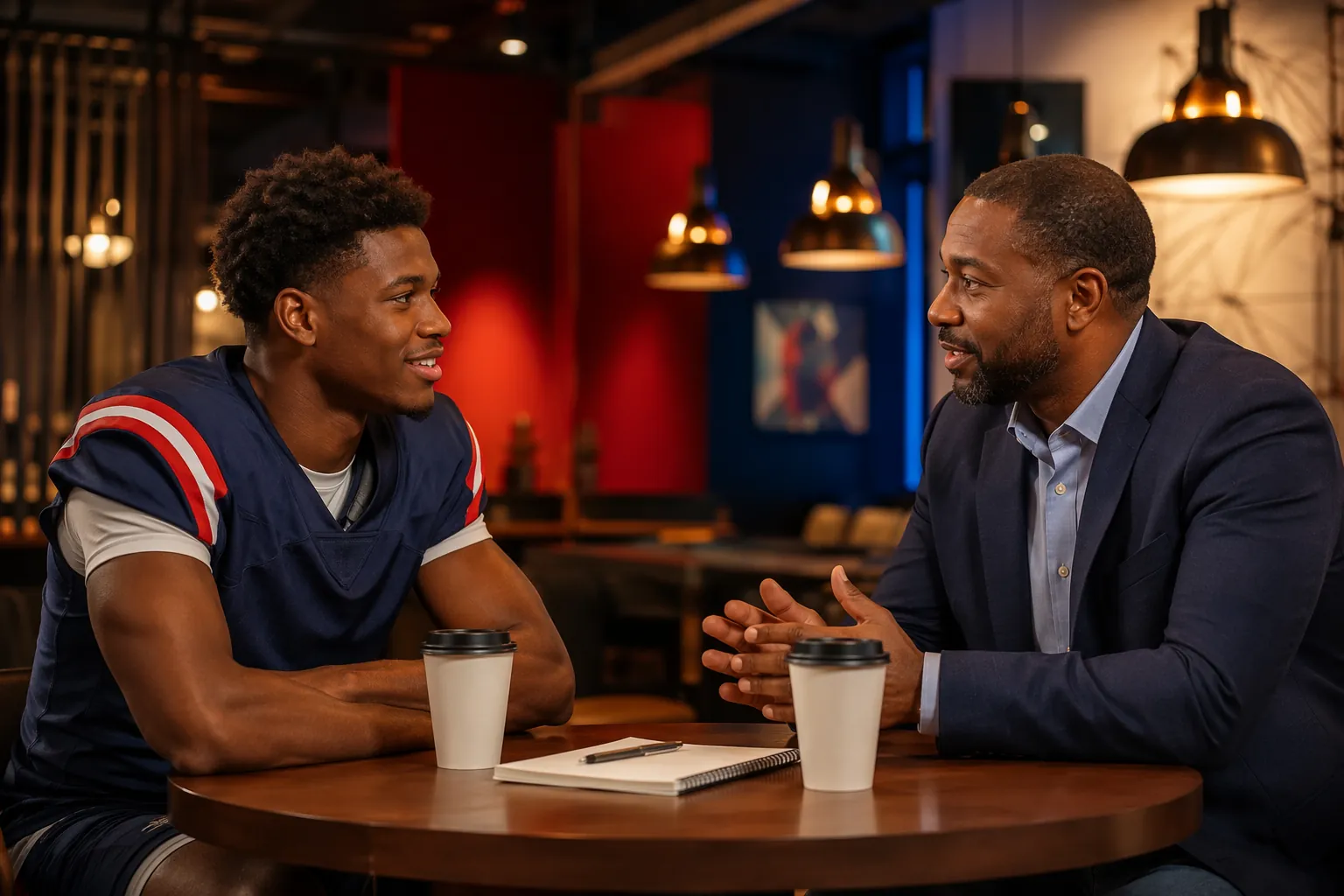
That is the career-development argument for the partnership. It is not that every athlete will work for McDonald's, own a franchise, or leave campus with a job offer. None of the available sources gives participant counts, matching rules, curriculum, or placement commitments. The confirmed benefit is narrower and still meaningful: the partnership is designed to include student-athlete mentorship, and its structure gives Howard access to a dense network of nearby business owners rather than a distant corporate logo.[1]
The useful part is the operator network
Families often ask the same practical question in different ways: who will still pick up the phone after the season ends? In a standard sponsorship, the answer can be hard to find. There may be signage, social posts, product placement, maybe a sponsored game. Those things can help an athletics department, but they do not automatically give a student a person to call about internships, entrepreneurship, interviewing, finance, or workplace expectations.
The Howard-McDonald's model has a different starting point because the local operators already sit inside the same region where many Howard students study, compete, volunteer, and look for early professional contacts. A student-athlete who meets a local operator is not meeting an abstract national sponsor. The conversation can move toward real business questions: how a manager is trained, what customer-service failures cost, why margins matter, how community reputation is built, and what leadership looks like when employees are depending on a schedule.
That is not glamorous, which is partly why it is valuable. Student-athletes already know how to perform when people are watching. The harder transition is often learning how to translate that discipline into language a non-sports employer understands. A good mentor can help make that translation before senior year panic begins.
This is not the same as a logo deal or an NIL campaign
The cleanest way to judge the partnership is to separate three things that often get lumped together when college athletics announcements use the word "opportunity."
| Model | What the student usually receives | What a family should ask |
|---|---|---|
| Logo or visibility sponsorship | Brand presence around the team, department support, possible event access | Does any student get direct contact with decision-makers, or is the value mostly institutional? |
| Individual NIL compensation | Payment or benefits tied to a student's name, image, and likeness | Who gets selected, how long does it last, and does it build skills beyond the campaign? |
| Local-operator mentorship partnership | Possible access to business owners, professional conversations, and career-facing relationships | How are mentors matched, how often do meetings happen, and what outcomes are tracked? |
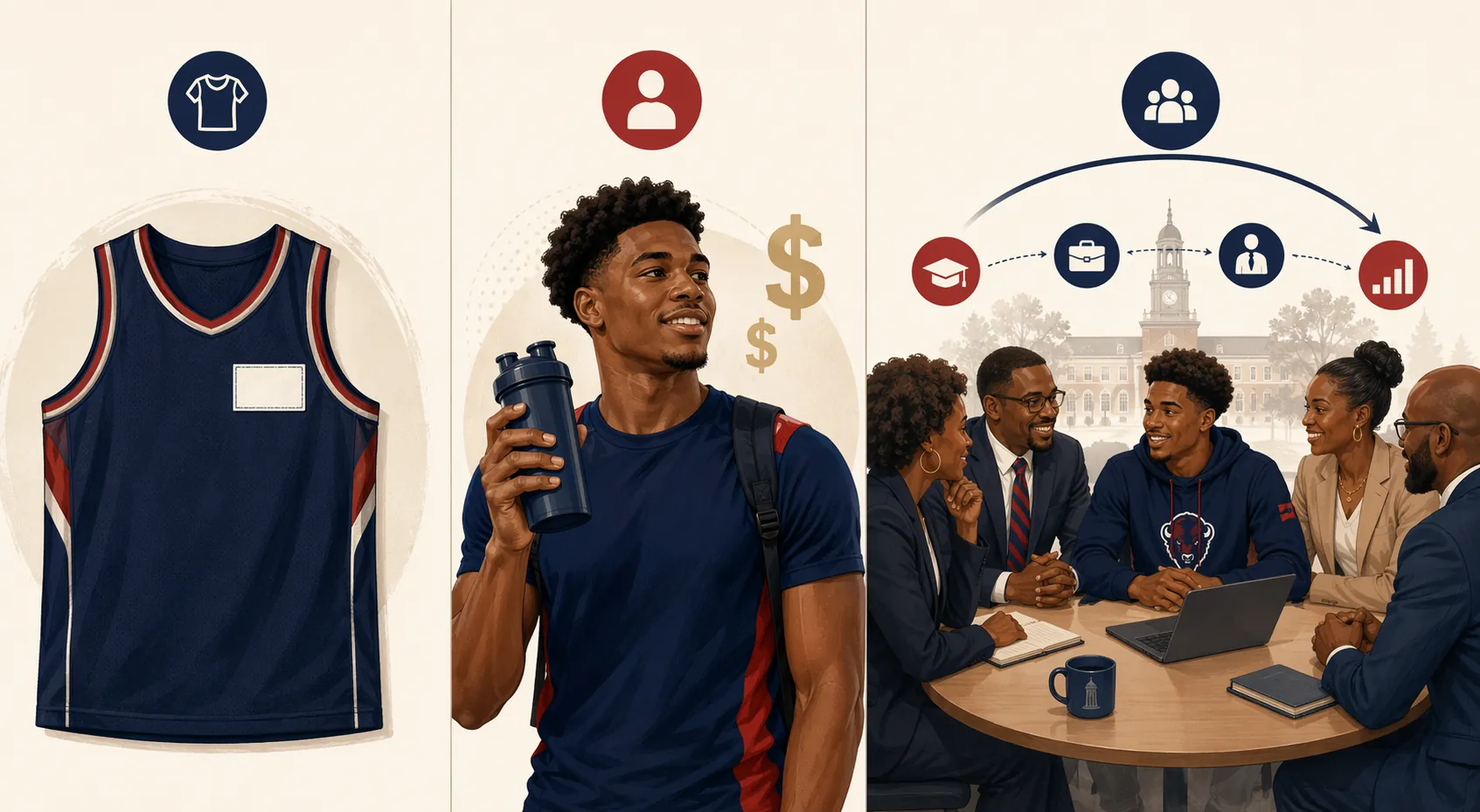
A logo sponsorship can be good for an athletics department and still be thin for the individual athlete. It may help fund operations, raise visibility, or make events feel more polished. But unless the agreement includes real access points, a student can graduate having worn the sponsor's mark without ever meeting anyone who can explain a career path.
NIL deals are different. They can put money directly in an athlete's pocket, and that should not be dismissed. McDonald's has already participated in NIL through a national MyMcDonald's Rewards campaign involving more than 45 athletes across ACC and HBCU schools, arranged through Postgame.[4][5] That kind of campaign can teach students about promotion, personal branding, contract expectations, and sponsor deliverables. It is also usually selective and campaign-based.
The Howard athletics partnership should be judged on a separate track. Its strongest student-facing promise is not individual NIL cash, at least based on what has been disclosed. Its strongest promise is access: a regional network of operators who can become mentors if the program is managed with enough structure.[1]
That distinction matters when a recruit is choosing between offers. A larger athletics program may have more media exposure, bigger crowds, or more NIL oxygen around a few high-profile athletes. A smaller ecosystem can still offer something useful if its partnerships are relational and local enough that regular student-athletes can reach the adults behind them.
Why Howard is a credible place for this kind of mentorship
The McDonald's deal would be less persuasive if it were attached to an athletics department with weak student outcomes. Howard's current context is part of the value proposition. At the Bison Blue Carpet Awards in April 2026, athletics director Kery Davis cited an 82% athletics graduation rate for the 2025-26 year, a figure reported by RallyFuel.[2] The more official institutional context is also strong: Howard won the MEAC Graduation Success Rate Award in 2025-26.[3]
That does not prove the McDonald's partnership will improve graduation rates. The timing does not allow that claim, and the sources do not provide an outcomes study. What it does show is that the mentorship layer is being added to a department already emphasizing completion, not to one asking a sponsor to cover up poor academic results.
Howard's competitive momentum is also relevant, but only in the right direction. During the 2025-26 season, Howard athletics won 10 conference championships across 6 sports, and the men's basketball program earned its first NCAA Tournament win.[3] Those wins help explain why partners may want to be close to the department now. They should not be used to imply that McDonald's caused the success.
For students, the useful connection is simpler: a department that is winning, graduating athletes, and attracting partners may be building a broader support environment. That belongs in the college-decision spreadsheet next to scholarship terms, major fit, travel load, academic support, and the coaching staff's track record with your position group.
The HBCU comparison should be practical, not sentimental
HBCU athletics departments generally operate with far smaller budgets than Power 4 or former Power 5 peers. The Williams-Franklin Foundation describes many HBCU athletics budgets as around $4.5 million per year, while Power 5 programs can spend tens of millions.[6] That budget gap affects facilities, staffing, travel comfort, recruiting resources, and the total number of people available to solve problems for athletes.
So the argument for Howard should not be that a McDonald's partnership makes the resource gap disappear. It does not. The better argument is that some supports are not measured only by total spending. A local network of business owners can be more useful to a student than a bigger sponsor name if the bigger deal never becomes a conversation, a reference, a workshop, or a career lead.
That is especially important for athletes who are not likely to earn major NIL money. Most student-athletes need the same things other students need: a degree that gets completed, adults who can explain professional norms, practice managing time under pressure, and enough exposure to careers that they do not have to invent a post-sports identity from scratch.
McDonald's broader HBCU work is useful context, not proof of this program's outcomes
McDonald's does have a wider HBCU footprint. Its Black & Positively Golden Scholarship Program has awarded more than $1 million annually through the Thurgood Marshall College Fund since 2020, and McDonald's says the program expanded to $1 million for more than 60 scholars in 2026.[7][8] The company also points HBCU students toward mental-health resources through partners including Shine and Alkeme.[7]
Howard students may be eligible for some of those broader resources independent of athletics, depending on each program's rules. But those scholarship and wellness initiatives should not be treated as automatic benefits of the Howard athletics partnership. They show that McDonald's has existing HBCU-facing infrastructure. They do not tell us how many Howard athletes will receive mentorship, what the sessions will cover, or whether the program will produce internships, jobs, or business ownership pathways.
Howard already has a wider corporate ecosystem
The McDonald's partnership is not sitting by itself. Howard and Jordan Brand announced a 20-year partnership in 2022, with Howard becoming the only HBCU directly outfitted by Jordan Brand across all 21 sports.[9] Robinhood partnered with Howard in 2024 on Money Drills, a financial-literacy workshop series for student-athletes.[10] Howard's recent corporate landscape has also included College HUNKS Hauling Junk, Wells Fargo, and WHOOP, among others.[2][3]
Do not read that as a list of interchangeable perks. Apparel, financial literacy, wellness technology, sponsorship, NIL, and mentorship solve different problems. For a student, the right question is not "How many brands are around the department?" It is "Which of these partnerships gives me access to something I can actually use?"
That is where McDonald's local-operator structure stands out. A student can enjoy gear and still need career contacts. A student can attend a financial-literacy session and still need someone to explain how hiring works. A student can see a sponsor's logo and still have no adult relationship attached to it. The operator network is the piece that can turn a sponsorship from visibility into human access.
How students should evaluate the partnership when comparing schools
A recruit should not choose a school because a brand partnership sounds impressive. The partnership belongs in the decision process only after the basic questions are handled: admission fit, scholarship details, academic major, coaching stability, injury support, playing opportunity, graduation record, and eligibility planning. If you are still working through the compliance side, start with the basics of NCAA eligibility requirements for student-athletes before treating any sponsorship as a deciding factor.
Once those fundamentals are clear, the Howard-McDonald's partnership gives families a better set of questions to ask on visits and follow-up calls:
- Who coordinates the McDonald's mentorship programming inside Howard athletics?
- Are all student-athletes eligible, or only selected teams, classes, or leadership groups?
- How often do athletes meet owner-operators or McDonald's business leaders?
- Are meetings casual panels, structured mentorship sessions, job-shadowing opportunities, or something else?
- Does the department track outcomes such as internships, references, interviews, graduate-school preparation, or full-time jobs?
- What happens for athletes after eligibility ends?
Those questions are not hostile. They are the questions a serious program should be ready to answer, especially for students who are choosing between schools with different kinds of resources. The same habit applies beyond this one partnership: ask what each school does with your academic record, your time, your network, and your career preparation. Grades and test preparation can help you earn options; institutional support determines what happens after you arrive. That is why academic strength still matters in recruiting, as much as athletic fit does. Students weighing offers should also think through how an academic edge changes recruiting options.
Current Howard athletes should evaluate the partnership just as practically. If a mentorship opportunity opens, prepare for it like a competition and a class meeting at the same time. Know what you want to learn. Ask one concrete question about operations, leadership, finance, marketing, or hiring. Follow up afterward. Keep a record of names and advice. A relationship does not become a network unless the student does some of the maintenance.
The time-management burden is real. Athletes already carry practice, travel, recovery, classes, and eligibility pressure. Any mentorship program that ignores that calendar will become another good idea students cannot use. That is why study systems and academic routines are not separate from career access; they are what make it possible to show up prepared. If that is the immediate struggle, practical study strategies for student-athletes belong in the same planning conversation.
What would make the partnership truly strong
The partnership's structure is promising. Its results will depend on execution. A vague mentorship promise can dissolve quickly if no one owns the calendar, if meetings are one-off photo opportunities, or if only the most visible athletes get access. A strong version would make the adult network easy to find, repeatable across teams, and useful for athletes who are not already stars.
The most valuable outcomes would probably be ordinary on paper: a sophomore learns how a franchise budget works; a senior gets feedback on how to describe team leadership in an interview; a graduate receives a warm introduction to someone hiring in operations, marketing, finance, real estate, or community relations. None of that requires a national commercial. It requires consistent access to adults who know the work.
That is why the Howard-McDonald's partnership is worth taking seriously without overstating it. The local-operator model gives student-athletes something more concrete than brand visibility and structurally different from a short-term NIL campaign. Its true strength will be measured by whether Howard and McDonald's turn those 50 owner-operators into a dependable mentorship and career network that students can actually reach before and after the last game.
References
- Howard Athletics and McDonald's Announce Multi-Year Partnership, DataDrivenHBCU, July 22, 2026
- Howard University NIL Deals: The Mecca Society and HBCU NIL Reality, RallyFuel
- Historic Heights: Howard Athletics Delivers Unprecedented Success During 2025-2026 Season, The Dig at Howard University
- HBCU Athletes Receive MyMcDonald's NIL Deals, SI.com/HBCU Legends
- Why McDonald's struck NIL deals with 45+ student-athletes from ACC, HBCU schools, On3 NIL
- The Role of Athletics in HBCU Development, Williams-Franklin Foundation
- McDonald's USA Expands Resources to HBCU Students, McDonald's
- Black & Positively Golden Education, McDonald's
- Howard and Jordan Brand Sign 20-Year Partnership, Howard Magazine
- Robinhood Markets Partners with Howard University to Empower Student-Athletes, The Dig at Howard University
Back to the exam this applies to
Target exam not specified — see all exam hubs.
Comments
Join the discussion with an anonymous comment.