
Comparison
Flood Watch vs. Flash Flood Warning: Which Requires Immediate Action?
Flood Watch means conditions are favorable — get ready. Flash Flood Warning means flooding is happening or about to happen — act now. This guide explains every NWS flood alert level, from Advisory to Emergency, including Flash Flood Warning's three impact tiers and the rare Flash Flood Emergency, so you know exactly what each alert means and what to do.
Verdict panel
- Compared
- Flood Watch, Flash Flood Warning
- Target exam
- not specified
- Best for
- General public in flood-prone areas
- Pricing last reviewed
If your phone says Flood Watch, the safe move is to get ready. If it says Flash Flood Warning, flooding is happening or about to happen, so the decision is no longer about planning; it is about immediate action. That is the distinction that matters most [1].
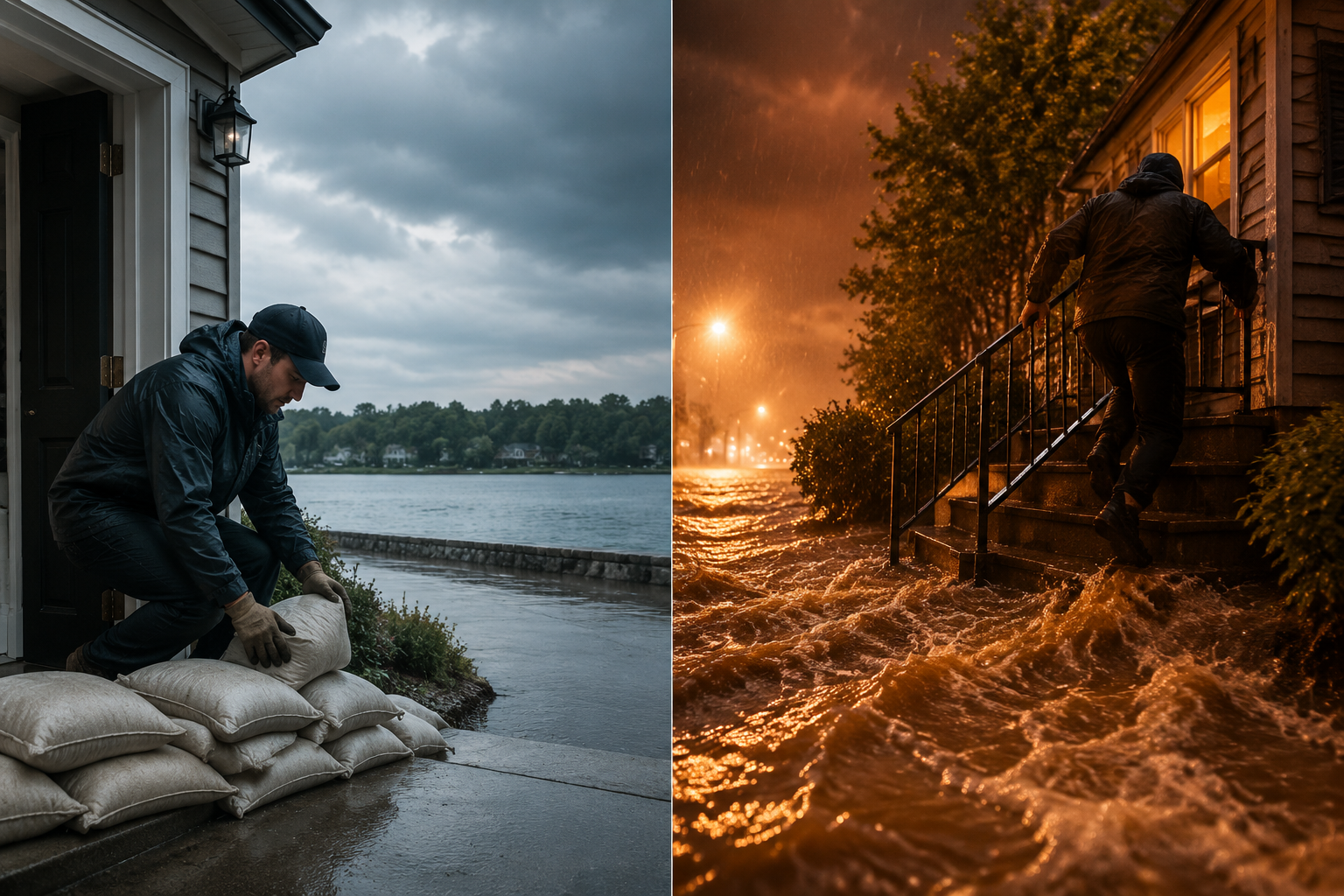
The full NWS flood alert ladder
The National Weather Service treats flood alerts as a ladder, not a single binary. At the broadest level, the system runs from Flood Advisory to Flood Watch to Flood Warning to Flash Flood Emergency, and the NWS definitions page also names the three impact tiers inside Flash Flood Warning: Base, Considerable, and Catastrophic [2].
| Product | What it means | What you do |
|---|---|---|
| Flood Advisory | The lowest-level flood product in the NWS ladder [2] | Pay attention and keep checking conditions. |
| Flood Watch | Conditions are favorable for flooding [1][2] | Get ready. |
| Flood Warning | Flooding is occurring or imminent [2] | Take protective action. |
| Flash Flood Warning | Rapid flooding is happening or about to happen; the NWS breaks it into Base, Considerable, and Catastrophic impact tiers [1][2] | Act now. |
| Flash Flood Emergency | The rare, highest-end flash flood message [2][5] | Treat it as a life-safety emergency. |
The part most people need to memorize is simple: a watch means conditions are lining up, so you prepare; a flash flood warning means the event is underway or close enough that waiting is the wrong move [1][2]. Regular Flood Warning carries the same basic idea: flooding is already happening or expected soon — but flash flooding adds speed, because these events can develop within six hours of heavy rain and sometimes within minutes [2][3].
Why water depth changes the decision
Moving water changes the math fast. NOAA Jetstream says six inches of moving water can knock an adult off their feet, twelve inches can carry a car away, and twenty-four inches can move an SUV or truck [3]. That is why flood guidance is not just about whether the road looks passable; it is about whether the current has already crossed the point where a driver can still gamble safely.
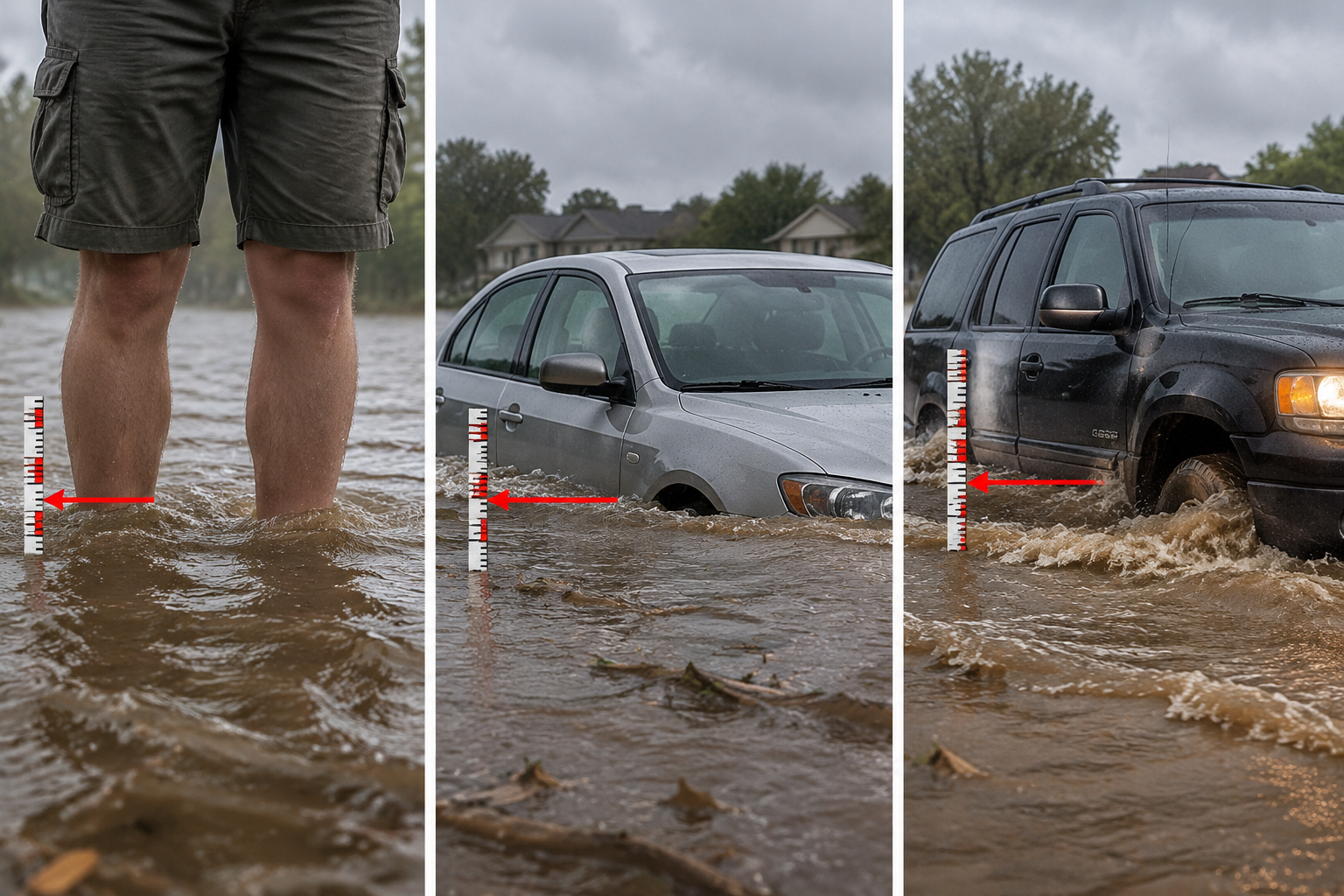
That is the logic behind Turn Around Don't Drown. The NWS says nearly half of flood deaths are vehicle-related, which is why the person trying to get home is often the person in the most danger [4]. Once water is moving across a road, the right move is to stop, turn around, and find another route rather than testing how deep it looks.
Inside Flash Flood Warning: the three impact tiers
Flash Flood Warning is not a flat category. The NWS definitions page separates it into Base, Considerable, and Catastrophic impact tiers, which means the warning itself can carry different levels of severity even though the action requirement stays urgent at every level [2].
- Base: the standard flash flood warning tier; it still calls for immediate protective action [2].
- Considerable: the warning is signaling stronger impacts and less room to ignore the message.
- Catastrophic: the top end of the warning scale, where the situation is expected to be extreme and life-threatening [2].
The point of the tiers is to show whether the danger is serious, very serious, or at the most severe end of the scale.
Why Flash Flood Emergency is separate
Flash Flood Emergency sits above ordinary warning language because it is reserved for rare and extreme situations. Recent examples include the July 2025 Central Texas floods, which were reported with 139+ deaths, and Hurricane Helene in 2024, which Wikipedia summarizes as a record 92 Flash Flood Emergencies [5].
For everyday decisions, though, you do not need to wait for the word emergency before you act. A Flash Flood Warning already means the conditions are dangerous enough that travel through flooded roads, low crossings, and drainage areas is a bad bet.
What to remember when the alert lands on your phone
If the alert says Flood Watch, use the time to prepare. If it says Flash Flood Warning, move now. If you are in a vehicle, do not try to judge the water by eye alone; moving water can be deeper and stronger than it looks, and vehicle-related deaths make up nearly half of flood fatalities [3][4].
For the practical next step after you learn the alert language, see Flash Flood Preparation Tips Every College Student Needs.
References
- Flood Watch vs. Warning — National Weather Service — https://weather.gov/safety/flood-watch-warning
- Warnings, Watches, and Advisories Defined — National Weather Service — https://weather.gov/lwx/warningsdefined
- Thunderstorm Hazards / Flash Floods — NOAA Jetstream — https://www.noaa.gov/jetstream/thunderstorms/flood
- Turn Around Don't Drown — National Weather Service — https://weather.gov/safety/flood-turn-around-dont-drown
- Flash flood warning — Wikipedia — https://en.wikipedia.org/wiki/Flash_flood_warning
Back to the exam this applies to
Target exam not specified — see all exam hubs.
Comments
Join the discussion with an anonymous comment.