
Comparison
The Real History of Evita and 'Don't Cry for Me Argentina'
Students studying the musical Evita need a reliable overview that separates the real Eva Perón from the musical's dramatized version and explains the surprising origin of 'Don't Cry for Me Argentina'.
Verdict panel
- Compared
- not specified
- Target exam
- not specified
- Best for
- not specified
- Pricing last reviewed
- pricing currency unconfirmed
Start With the Song, Because the Song Is Already a Clue
For many students, the phrase “Evita history” really begins with one image: Eva Perón on a balcony, singing “Don’t Cry for Me Argentina” to a crowd that seems to be waiting for her confession, her apology, and her blessing all at once. It feels like a recovered historical speech. It is not.
“Don’t Cry for Me Argentina” was written first for a 1976 concept album, two years before Evita opened as a stage musical in London in 1978. The title did not come from a known balcony address by Eva Perón. It was inspired by an epitaph placed at her grave in La Recoleta Cemetery by the city’s taxi drivers’ union: “Don’t cry for me Argentina, I remain quite near to you.” Tim Rice and Andrew Lloyd Webber considered other titles, including “It’s Only Your Lover Returning,” before choosing the line that now sounds almost inevitable.[1][2]
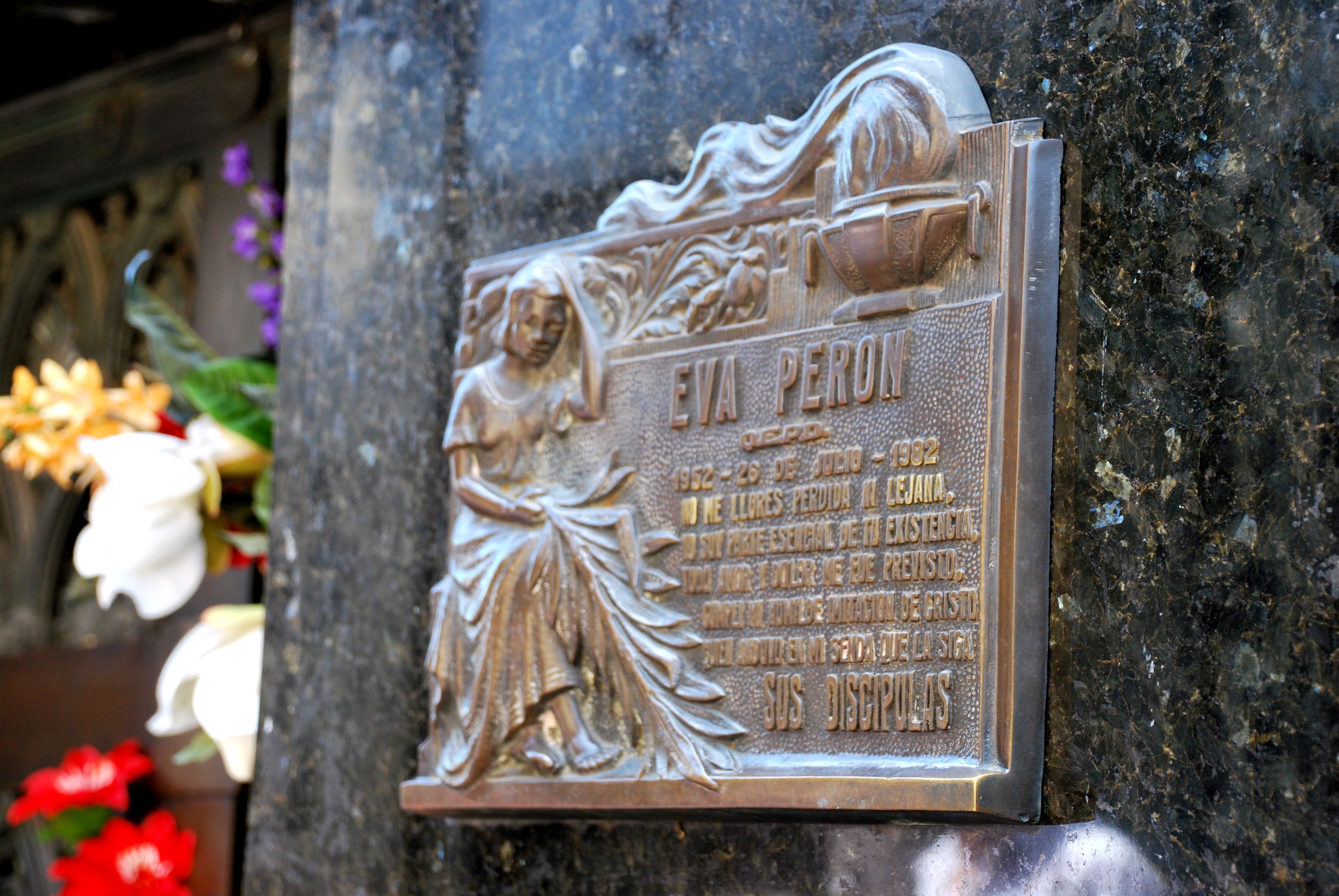
That origin matters because it changes how the scene should be read. The song is not a transcript. It is a theatrical construction that borrows the authority of mourning, public memory, and Eva’s grave. It asks the audience to feel that Argentina itself is being addressed, but the address was built in a recording studio long after Eva’s death.
Julie Covington recorded the song at Olympic Studios with the London Philharmonic Orchestra. Released as the first single from the concept album on November 12, 1976, it reached number one on the UK Singles Chart in February 1977, sold more than 1 million copies in the United Kingdom alone, and won the 1977 Ivor Novello Award for Best Song Musically and Lyrically.[1] The song’s success helped make a musical about Argentine politics viable for a British stage audience before many of those listeners had much context for Eva Perón herself.
So the first useful correction is not “the musical lied.” That is too small. The better correction is this: Evita begins by turning political history into musical memory. Once students see that, the rest of the assignment becomes more interesting.
The Real Eva Perón Was Not Just the Balcony
Eva Perón was born María Eva Duarte in Los Toldos, Argentina, in 1919, though some sources give 1922. That uncertainty is a useful warning: even before the musical begins shaping her life, parts of Eva’s early biography are debated. She moved to Buenos Aires as a teenager to pursue acting, and the exact circumstances of that move have been contested by historians and biographers.[3][4]
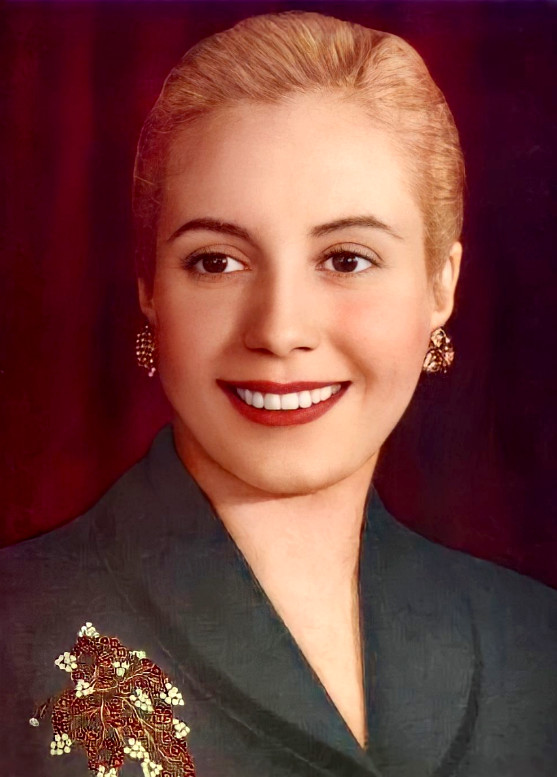
She did become an actress before she became a political figure. She met Juan Perón in 1944 and married him in 1945.[3][4] Those dates are solid enough to anchor the story, but they do not explain her later power by themselves. A classroom discussion that treats Eva only as an ambitious performer who married upward misses why she became such an intense figure of devotion and hatred.
As First Lady, Eva Perón occupied a public role that was not merely decorative. She helped champion women’s suffrage, which Argentina granted in 1947.[3][4] She also ran the Eva Perón Foundation, an institution remembered for both its enormous social reach and its controversial place inside Peronist politics. The foundation had about 14,000 employees and, according to available summaries, distributed 400,000 pairs of shoes and 500,000 sewing machines annually.[3]
Those numbers do not settle the moral argument over Peronism, and they should not be used as if charity work erased political coercion or propaganda. The foundation’s funding sources, including allegations that businesses were pressured to donate, remain part of the historical debate. But the scale helps explain why Eva could not easily be reduced to a decorative wife, a social climber, or a sentimental poster image.
Her public symbolism intensified as her health failed. Congress officially named her “Spiritual Leader of the Nation.” She died of cervical cancer in 1952 at age 33, weighing about 36 kilograms, or 79 pounds. Nearly 3 million mourners attended her state funeral.[3] Whatever one thinks of Eva politically, those details belong in the room when students discuss why a musical could plausibly present her as both woman and myth.
What Evita Changes Most
Evita does not simply shorten Eva Perón’s life for the stage. All historical drama compresses. The larger issue is that several of the musical’s most memorable choices give students a version of causation, character, and political conflict that is easier to follow than the record itself.

Che is a theatrical device, not a historical witness
The narrator Che is one of the musical’s sharpest inventions. He gives the audience a skeptical guide who can puncture glamour, accuse Eva of performance, and keep the show from becoming pure adoration. But Che Guevara never met Eva Perón. The musical’s Che should not be treated as a real observer reporting from inside the events. Harold Prince instructed actors to use Guevara as a role model for the character, but the figure onstage is a dramatic construction.[5][6]
That does not make Che useless. In an essay, he can be discussed as the musical’s built-in critic: a voice of suspicion, class anger, and political commentary. The mistake is quoting him as if his accusations carry the authority of a firsthand historical source.
The Magaldi story is vivid, and that is part of the problem
The musical presents the tango singer Agustín Magaldi as Eva’s route to Buenos Aires, implying that she arrived as his mistress. That is exactly the kind of clean origin story theater loves: one man, one trip, one moral judgment, one first step toward ambition. Historians widely dispute it. Available objections include the lack of a record that Magaldi performed in Junín in 1934 and the point that his wife usually accompanied him on tours.[5][6]
For student writing, the safest wording is not “Magaldi brought Eva to Buenos Aires.” A stronger sentence would be: “The musical uses the disputed Magaldi story to dramatize Eva’s escape from provincial life and to frame her rise through sexual and social transaction.” That sentence separates what the show does from what historians can confidently say.
October 1945 did not belong to Eva alone
One of the musical’s most consequential changes is its treatment of the October 17, 1945 rally that helped free Juan Perón from prison. Evita portrays Eva as the force orchestrating the mass mobilization. Historians agree that this is false; labor unions organized the rally.[5][6]
This change matters more than a small timeline error. It shifts political agency away from organized labor and toward Eva as a singular star. That makes the story more legible onstage, because audiences can follow one heroine’s will more easily than a network of union power, working-class mobilization, and Peronist political opportunity. But it also turns a collective political event into a personal triumph scene.
| Claim or scene | Better classroom label | Why the label matters |
|---|---|---|
| Eva met Juan Perón in 1944 and married him in 1945. | Solid historical fact | These dates anchor the transition from acting career to national politics. |
| Eva helped champion women’s suffrage, granted in Argentina in 1947. | Solid historical fact | This gives her public role substance beyond celebrity and marriage. |
| Magaldi brought Eva to Buenos Aires as his mistress. | Disputed or uncertain | The musical turns a contested story into a memorable origin scene. |
| Eva personally organized the October 17, 1945 rally. | Dramatic invention | The musical transfers agency from labor unions to Eva. |
| Che narrates as a historical witness. | Dramatic invention | The character functions as commentary, not documentation. |
| “Don’t Cry for Me Argentina” records a real farewell speech. | Dramatic invention | The song was created for the concept album and draws on memorial language. |
The Musical Inherited a Hostile Biography
Another reason Evita feels so cutting is that its source tradition was not neutral. The musical drew heavily on Mary Main’s 1952 critical biography The Woman with the Whip. Historians Nicholas Fraser and Marysa Navarro have argued that Main’s book contains numerous false assertions.[5][7]
This does not mean every harsh note in the musical should be thrown out. Eva Perón was politically polarizing, and the show is not obligated to flatter her. But when a musical inherits material from a hostile biography, students should notice how suspicion becomes structure. The show repeatedly frames Eva’s charm as strategy, her vulnerability as performance, and her public love as something that might also be political appetite.
That is useful for analysis because it moves the discussion beyond “accurate” and “inaccurate.” A more precise essay might argue that Evita uses a skeptical source tradition to create dramatic tension: Eva is made emotionally irresistible while the narration keeps asking the audience to distrust the emotions it is feeling.
Why “Don’t Cry for Me Argentina” Works So Well
The power of “Don’t Cry for Me Argentina” comes partly from its placement. By the time Eva sings, the audience has watched her climb. The balcony allows the show to pause ambition and ask for intimacy. She tells the nation that she never left it, that glamour has not separated her from the people, that the love between leader and crowd is mutual.
As theater, that is beautifully efficient. As history, it is dangerous if treated too literally. The song gathers pieces of Eva’s public image—poverty, fame, sacrifice, bodily suffering, national devotion—and turns them into one emotionally coherent statement. Real political lives rarely arrive in such polished form.
Its first life as a recording also shaped its later fame. BBC Radio 1 initially refused to playlist the single, then relented because of audience demand. Covington refused to promote the single and did not reprise the role onstage, which helped lead producers to cast Elaine Paige in the 1978 West End production.[1][2] Before Evita became a standard theater title, the song had already proved that listeners could respond to Eva as voice and image without knowing much Argentine history.
The afterlife of the song confirms how detachable it became from its original context. During the 1982 Falklands War, British troops sang a parody, “You don’t frighten me Argentina,” and the BBC briefly banned the original.[1] Madonna’s 1996 film version, including the “Miami Mix” with bandoneon and Spanish lyrics, reached number 8 on the Billboard Hot 100; her performance in the film also contributed to a Golden Globe win.[1][8] In the 2025 West End revival, Rachel Zegler performed the song from the London Palladium balcony, renewing the image of Eva as a public figure suspended between politics and spectacle.[8]
A Good Essay Does Not Have to Choose Between Fan and Fact-Checker
Students often feel trapped when writing about a musical based on history. If they love the song, they worry that pointing out inventions will sound like scolding. If they focus on errors, they risk writing an essay that reads like a complaint list. Evita needs a better approach because its distortions are not random. They reveal how musical theater turns political memory into character, melody, and recurring image.
One useful method is to sort claims before interpreting them. Solid facts can be used to establish context: Eva’s marriage to Juan Perón, her public role as First Lady, women’s suffrage in 1947, the foundation’s large-scale distribution work, her illness, death, and state funeral. Disputed material should be named carefully: especially the details of her early life and the Magaldi claim. Inventions should be analyzed as inventions: Che, the balcony song as a constructed farewell, and Eva’s supposed orchestration of the October 1945 rally.
That sorting does not drain the musical of feeling. It gives the feeling something to attach to. When Eva sings that she has kept her promise to Argentina, the audience is hearing a theatrical version of a real public bond—one strengthened by social programs, suffrage politics, spectacle, propaganda, grief, and class identification. The song simplifies all of that, but simplification is not the same as emptiness.
The Real Ending Was Already Theatrical
Late in the musical, the reference to Eva’s body disappearing for 17 years can sound almost gothic, as if the show has finally pushed history into melodrama. In this case, the real history is strange enough on its own.
After the 1955 military coup that overthrew Perón, Eva’s embalmed body was hidden, then secretly shipped to Italy and buried in Milan under the false name “Maria Maggi de Magistris.” It remained missing for 17 years before being exhumed, returned to Spain, and finally interred in the Duarte family crypt at La Recoleta Cemetery in 1976.[3]
That episode is a final reminder that Eva Perón’s historical life did not need theatrical exaggeration to become symbolic. Her body became a political object after death, just as her image had been a political object in life. The musical’s closing reference works because the record itself had already crossed into the territory of myth, possession, and national argument.
What to Say About Evita in Class
A strong discussion of Evita and “Don’t Cry for Me Argentina” should not treat the musical as a documentary, but it also should not treat theatrical invention as a simple failure. Evita is powerful because it reshapes history into myth: it gives Eva a skeptical narrator who never knew her, a disputed origin story that makes ambition instantly legible, a false version of October 1945 that turns labor action into personal destiny, and a song that feels like a historical farewell even though it began as a crafted album centerpiece.
The real Eva Perón was an actress, First Lady, suffrage advocate, foundation leader, political symbol, cancer patient, object of mass mourning, and contested national memory. The musical’s Eva is made from that history, but also from hostile biography, stage compression, British concept-album craft, and the emotional demands of song. The best reading keeps both figures visible: the woman in the record, and the myth singing under the spotlight.
References
- Don’t Cry for Me Argentina. Wikipedia.
- The Origins of Evita. AndrewLloydWebber.com.
- Eva Perón. Wikipedia.
- Eva Perón. Britannica.
- Evita (musical). Wikipedia.
- Based on a True Story: Evita. Playbill.
- The Truth Behind… Evita. Breaking Character.
- The Story Behind Don’t Cry for Me Argentina. Culture Trip.
Back to the exam this applies to
Target exam not specified — see all exam hubs.
Comments
Join the discussion with an anonymous comment.