
Comparison
Why Coffee Boosts Studying Only When You Time It Right
Coffee can sharpen focus and improve memory consolidation, but only when you drink it at the right time and in the right amount. This article explains the science-backed timing and dosage rules for using caffeine effectively without sabotaging your sleep.
Verdict panel
- Compared
- not specified
- Target exam
- not specified
- Best for
- not specified
- Pricing last reviewed
- pricing currency unconfirmed
The familiar mistake is not drinking coffee before studying. It is drinking coffee as if the only question is, “Can I stay awake longer?” A student gets through one more chapter, feels sharper for a while, then sleeps badly and wakes up with less of the material available than the night before. That is where the real answer to coffee’s studying benefits starts: coffee can help studying, but only when its timing and dose protect the sleep that makes studying stick.
A useful rule of thumb is modest, not dramatic: think in the neighborhood of about 200mg of caffeine, match it to the study task, and keep it far enough from bedtime that it does not compete with sleep. More caffeine is not automatically more memory. Later caffeine is not automatically more discipline. Sometimes it is just borrowing alertness from tomorrow.
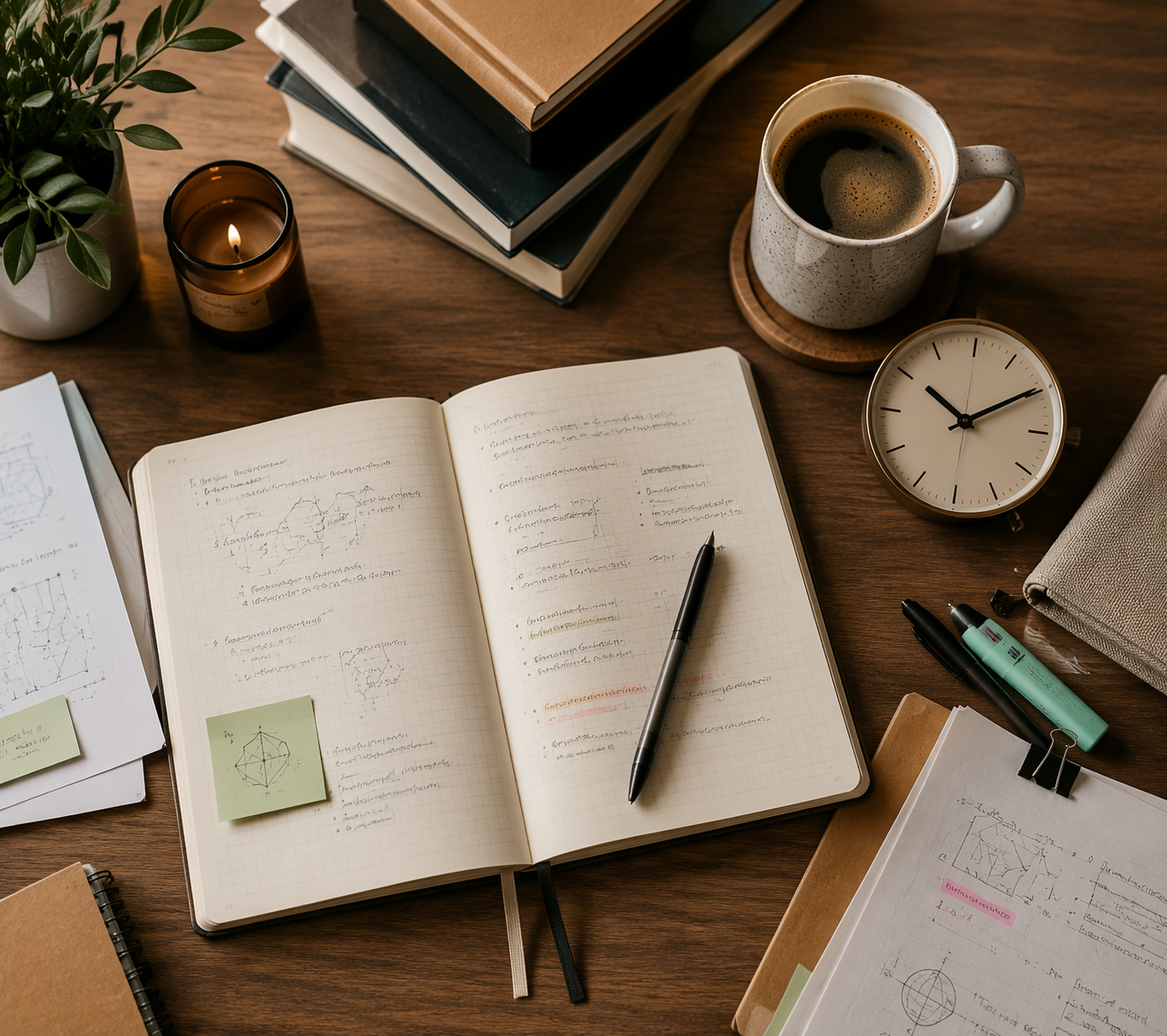
Coffee Helps Most When the Timing Fits the Task
One of the more student-relevant findings comes from a University of Arizona study of young adults. In early-morning study sessions, caffeinated coffee containing about 180mg of caffeine improved explicit memory performance by 30%. The same advantage did not hold in the afternoon sessions.[1]
That afternoon disappearance matters as much as the 30% improvement. It means coffee was not acting like a universal “better studying” switch. It helped under one condition: when students were working at a time of day when alertness was likely lower. In the afternoon, when baseline alertness may already be higher, the same kind of caffeine support did not produce the same memory advantage.
The study also has limits worth keeping in view. It used instant coffee in a lab setting and tested memory with word-stem recall, which is not the same as writing a history essay, solving physics problems, or preparing for a cumulative biology exam.[1] Still, the practical lesson is strong enough to use: caffeine is more likely to help when it solves a specific problem, such as early-session grogginess, than when it is poured over every study block by default.
| Study situation | Better coffee decision | Why it matters |
|---|---|---|
| Early morning and genuinely foggy | Use a moderate caffeinated coffee before or near the start | This is the kind of timing where alertness support may translate into better explicit memory. |
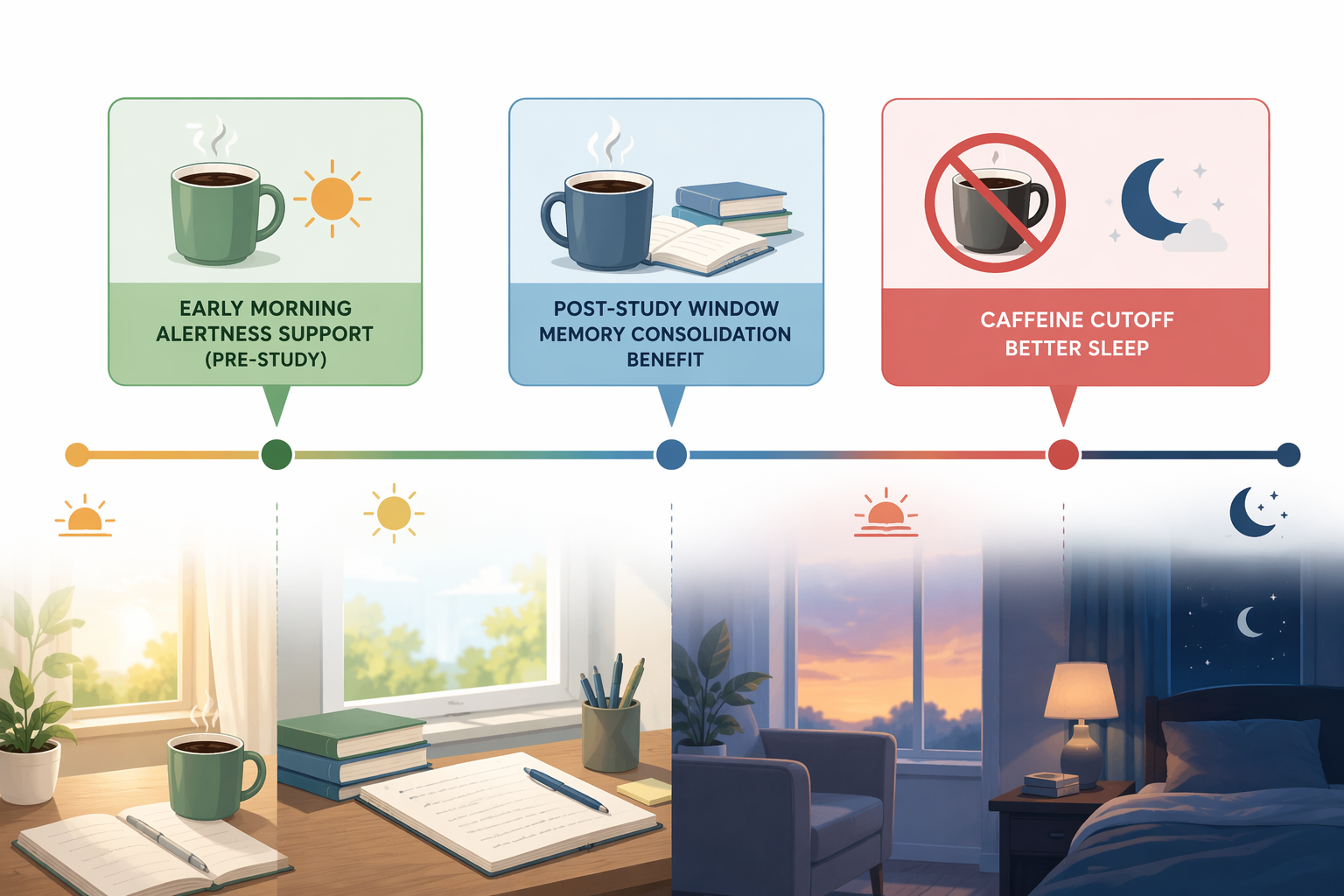
| Focused study session already completed | Consider caffeine shortly after, not just before | Post-study caffeine may support memory consolidation rather than only wakefulness. |
| Late afternoon or evening | Be cautious, switch to decaf, or skip caffeine | Sleep loss can undercut the memory you are trying to build. |
The Most Useful Trick May Be After Studying
Students usually think of coffee as something to drink before opening the laptop. The Johns Hopkins memory study points in a more interesting direction: 200mg of caffeine taken after a learning session enhanced memory pattern separation up to 24 hours later.[2]
Pattern separation is the kind of memory skill that helps you distinguish similar things instead of blurring them together. For studying, that is not a small detail. It is the difference between recognizing that two vocabulary terms look related but mean different things, or that two chemistry mechanisms share a step but diverge later.
The dose result is the part students should not skip. In that study, 200mg helped, while 300mg weakened the benefit rather than improving it.[2] That cuts against the common instinct to escalate: if one cup helped, a larger drink must help more. For memory, at least in this research setting, the curve did not keep rising.
A practical sequence looks like this: study first with as little friction as possible, then use a moderate caffeine dose after the session if the timing still leaves room before sleep. That approach treats coffee less like a desk-side fuel line and more like a timed support for consolidation.
What 200mg Means in Real Life
The clean number from the study is 200mg, but real coffee is messier. A small brewed coffee, a large chain coffee, espresso drinks, cold brew, energy drinks, and caffeine pills can land in very different places. The study result is a starting point, not permission to treat every large cup as equivalent.
It also does not mean every student should aim for exactly the same amount. Caffeine response varies with tolerance, body mass, CYP1A2-related metabolism, and medication interactions. Two students can drink the same coffee and have very different evenings.
Plan for the Peak, Not the First Sip
Coffee does not become strongest the instant it touches the desk. Open Universities Australia notes that caffeine concentration peaks around 45 minutes after consumption.[3] If a student drinks coffee at the exact moment they expect instant focus, the strongest effect may arrive closer to the middle of the session.
That changes how to use it. For a morning study block, drinking coffee shortly before starting can make sense if the harder work begins after the first warm-up tasks. For a post-study memory approach, the question is different: whether the dose after learning still leaves enough distance from bedtime.
The Sleep Bill Comes Due Later
The reason late caffeine is such a bad trade is not moral purity. It is memory. Studying is not finished when the notes are closed; sleep helps stabilize and consolidate what was learned. If caffeine lets a student sit at the desk longer but damages the sleep that follows, the session can look productive while quietly losing value.
The Sleep Foundation reports that 88% of people who consume caffeine in the afternoon report at least one sleep problem, and it recommends avoiding caffeine at least 8 hours before bedtime.[4] For a student who wants to sleep at 11 p.m., that points to a caffeine cutoff around 3 p.m.; for a 10 p.m. bedtime, closer to 2 p.m.
The FDA’s commonly cited ceiling of up to 400mg of caffeine per day for healthy adults is a guardrail, not a study target.[5] A student can stay under that number and still drink caffeine too late. Another student may feel jittery or sleep poorly well below it. The useful question is not “How close can I get to the limit?” but “Will this dose still let me sleep well enough to remember tomorrow?”
A Sensible Coffee-and-Study Workflow
The strategy is not complicated. Use caffeine only when it has a job.
- For an early session: use a moderate amount if you are genuinely sleepy, and plan for the strongest effect to arrive around the middle of the session.
- For a memory-heavy session: consider the post-study window rather than assuming all caffeine must come before studying.
- For the afternoon: check your bedtime first, then count back at least 8 hours.
- For long study days: do not stack cup after cup just because attention is fading; that may be a sign to change tasks or stop.
- For exam weeks: judge the plan by next-day recall, not by how wired or hardworking you felt the night before.
A hypothetical example makes the timing issue clearer. If a student studies from 8:00 to 9:30 a.m., a moderate coffee near the start may help with alertness without threatening sleep. If the same student finishes a focused memory session at 1:00 p.m., a moderate post-study caffeine dose may still fit, depending on bedtime. If the session ends at 7:30 p.m., the caffeine choice is no longer mainly about focus; it is about whether tomorrow’s brain gets a fair chance.
When You Want the Ritual Without the Caffeine
There is a useful late-day compromise for students who like the ritual of coffee: decaf. A 2026 University College Cork gut-brain study reported learning and memory benefits associated with coffee, including decaffeinated coffee.[6] That does not turn decaf into a magic study drink, and the study’s definition of coffee drinker was 3–5 cups per day, which is more than many students drink.[6]
Still, the nuance is helpful. If it is past the sensible caffeine cutoff and the mug itself helps mark the start of a study block, decaf can preserve the ritual without pushing as hard against sleep.
Coffee is most useful when treated as a timed study aid, not a fuel source for endless studying. Keep the dose moderate, place it where it actually serves the session, protect the bedtime cutoff, and measure success by what you can recall tomorrow.
References
- Caffeine Enhances Memory Performance in Young Adults During Their Non-optimal Time of Day, University of Arizona, 2016.
- Post-study caffeine administration enhances memory consolidation in humans, Nature Neuroscience, 2014.
- How to use coffee to boost your study sessions, Open Universities Australia.
- Caffeine and Sleep, Sleep Foundation.
- Spilling the Beans: How Much Caffeine is Too Much?, U.S. Food and Drug Administration.
- Coffee consumption, the gut microbiome, and brain health, Nature Communications, 2026.
Back to the exam this applies to
Target exam not specified — see all exam hubs.
Comments
Join the discussion with an anonymous comment.