
Comparison
Best Phone Battery Life for Marathon Study Sessions
Compare the longest-lasting 2026 phones for test-takers who study 6–12 hours a day. See which models survive a full study session on a single charge, from budget picks to premium flagships.
Verdict panel
- Compared
- Moto G (2026), Moto G Play (2026), OnePlus 15, OnePlus 15R, iPhone 17 Pro Max, Samsung Galaxy A17 5G
- Target exam
- SAT, GRE, MCAT
- Best for
- US test-takers studying 6–12 hours daily on a budget or needing maximum endurance
- Pricing last reviewed
Last reviewed: July 22, 2026. Prices are July 2026 MSRPs; carrier promos, student discounts, Prime Day, and Black Friday deals can move them fast.
| Practical verdict | Phone | July 2026 MSRP | Independent battery result | Why it matters for studying |
|---|---|---|---|---|
| Best battery-per-dollar for US students | Moto G (2026) | $199 | 19:10 on Tom’s Guide test | Cheap enough for a tight exam budget and strong enough for a long screen-on study day. [1] |
| Longest absolute endurance | OnePlus 15 | $899 | 25:13 on Tom’s Guide test | The endurance winner here, with a 7,300mAh silicon-carbon battery. [1] |
| Premium iOS pick | iPhone 17 Pro Max | $1,199 | 17:54 on Tom’s Guide test; 32:11 on PCMag video playback | The safest choice if your study setup, family plan, or notes system already lives in iOS. [1][2] |
A study phone does not need to win a spec-sheet contest. It needs to start at 9 a.m. with flashcards, a PDF, a lecture video, a timer, and group chat open, then still have enough charge left when the afternoon practice set starts. By that standard, the Moto G (2026) is the most sensible first answer for most budget-conscious US students, while the OnePlus 15 is the clear pick when maximum battery life matters more than price.

The Battery And Price Comparison That Actually Helps A Student
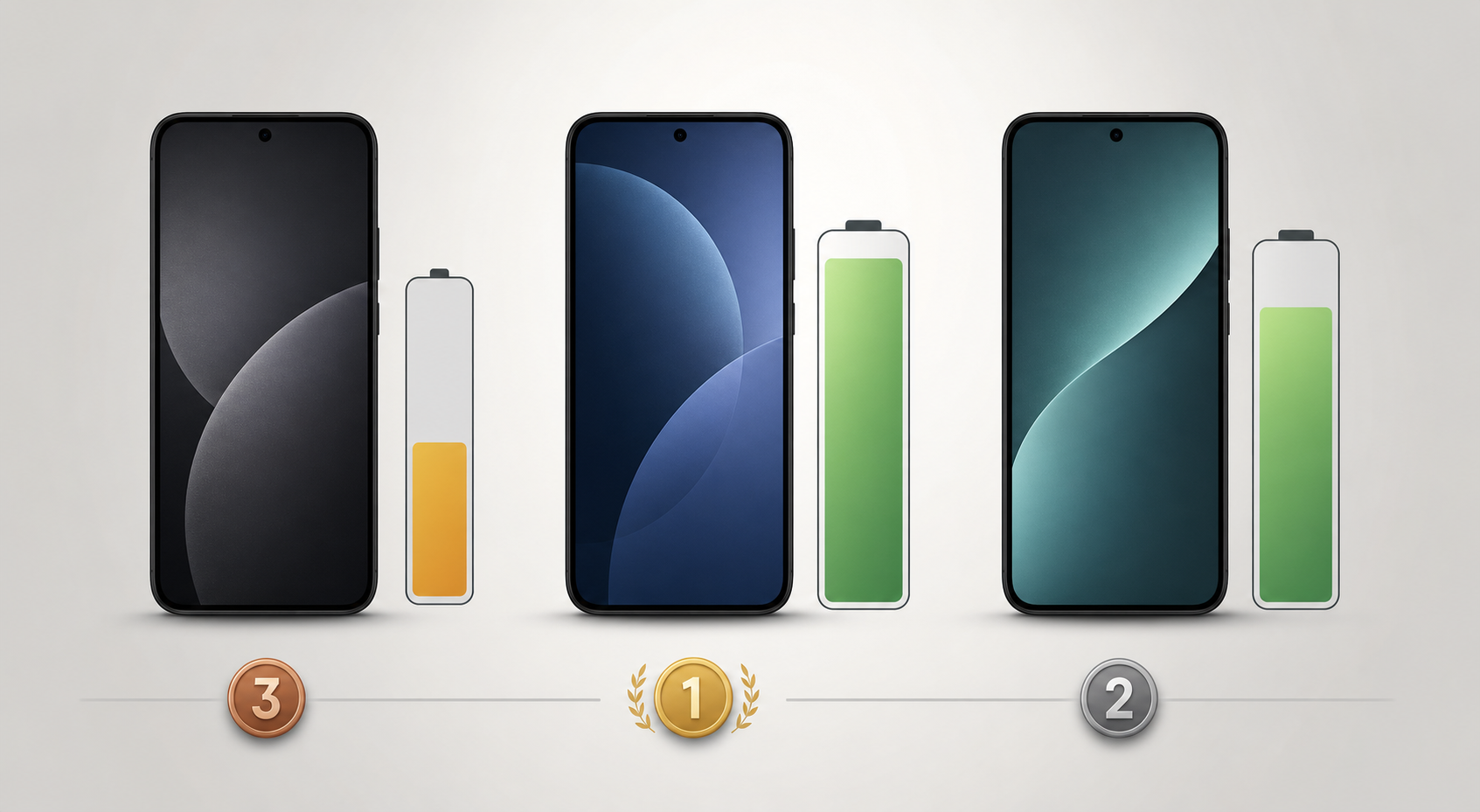
Tom’s Guide is the load-bearing comparison here because its 2026 battery list puts the key phones through the same ranked test: continuous web surfing at 150 nits. That is not the same as a real study day, but it gives a clean baseline before price and availability start doing their usual damage to phone advice.
| Phone | Battery type / capacity | July 2026 MSRP | Battery test result | Student-use read |
|---|---|---|---|---|
| OnePlus 15 | 7,300mAh silicon-carbon | $899 | 25:13 on Tom’s Guide; 23:07 on GSMArena; 26:26 on PCMark | Best endurance overall. Realistically the strongest pick for back-to-back study days if Android and price both work for you. [1][3] |
| OnePlus 15R | 7,400mAh silicon-carbon | $699 | 21:54 on Tom’s Guide | Best battery-per-dollar among the US-available flagship-class options in this set. [1] |
| Moto G (2026) | 5,200mAh lithium-ion | $199 | 19:10 on Tom’s Guide | Best buy for students who care more about surviving the day than owning a premium phone. [1] |
| Moto G Play (2026) | Lithium-ion | $179 | 18:50 on Tom’s Guide | Cheapest proven all-day study battery here, with a small savings over the regular Moto G. [1] |
| iPhone 17 Pro Max | About 5,088mAh lithium-ion | $1,199 | 17:54 on Tom’s Guide; 32:11 on PCMag video playback | The iPhone answer: expensive, efficient, and the longest-lasting iPhone in these cited tests. [1][2] |
| Samsung Galaxy A17 5G | Lithium-ion | $199 | 15:45 on PCMag | Less battery headroom than the Moto G, but its six years of security updates may matter if you keep phones for a long time. [2] |
The uncomfortable part for a student budget is that the $199 Moto G (2026) posts a 19:10 result, which is longer than many people need for a single study day and longer than phones that cost far more. That does not make it the better phone in every category. It means battery anxiety, specifically, does not require flagship money.
If you are building a whole study setup around your phone, the battery number is only one piece. Your app stack matters too: a GRE student rotating between vocabulary drills and PDF explanations is putting a different load on a phone than an MCAT student streaming lecture blocks, switching into diagrams, and checking a practice-question app. For planning the rest of that setup, see the GRE prep hub, SAT exam prep guide, and MCAT study tools comparison.
Why A 25-Hour Phone May Not Give You 25 Study Hours
Battery tests are useful because they remove some chaos. They are also easy to misuse. Tom’s Guide runs continuous web surfing at 150 nits. GSMArena reports an Active Use Score that weighs calls, web, video, and gaming. PCMag uses video playback. CNET frames its battery work around video and stress testing, and in a 35-phone comparison found that 2025 models averaged only 0.78% longer battery life than 2024 models, while silicon-carbon phones represented a more meaningful jump. [1][3][4]
A student’s day lands somewhere between those tests. Anki-style flashcards and a PDF reader are usually gentler than constant video because the screen can sit still, the processor is not working hard, and audio is not always running. A YouTube lecture, a recorded class, or a video explanation app pulls more power. High brightness pulls more again. Weak signal in a basement classroom or a crowded library can quietly drain the phone while nothing dramatic appears to be happening.
That is why the OnePlus 15’s 25:13 result should be read as a huge cushion, not a promise that every student gets more than 25 hours of study. If you are watching lectures at high brightness while messaging a study group and keeping mobile data active, you are asking for a harder day than the web-surfing test. If you are mostly doing flashcards, reading PDFs, and checking timers at moderate brightness on Wi-Fi, you may come closer to the lab ranking than a video-heavy student would.
The same caution helps the Moto G (2026). Its 19:10 result is excellent for $199, but a student who starts a six-hour session at full brightness, streams lecture videos, and leaves hotspot or weak 5G running should not expect the phone to feel untouched by lunch. The better takeaway is that it has enough tested headroom to make a normal six-to-twelve-hour study day realistic without treating an outlet as part of the plan.
The Phones Worth Shortlisting
Moto G (2026): the cheapest answer I would trust first
For a US student trying to preserve money for registration fees, prep books, transit, or a possible retake, the Moto G (2026) is the cleanest recommendation. At $199 and 19:10 in Tom’s Guide testing, it sits in the rare zone where the battery number is strong and the price does not require pretending every student has flagship money. [1]
This is the phone for the student who wants to leave home with one charger, not three backup plans. It is not the phone to buy if camera quality, premium materials, or high-end gaming performance are the priority. But for flashcards on the bus, PDF review between classes, practice questions in a library, and a video lecture or two, the battery-per-dollar case is hard to beat.
Moto G Play (2026): the sub-$200 floor
The Moto G Play (2026) is the cheapest phone in the main set at $179, and its 18:50 Tom’s Guide result is still more than enough for many study days. [1] The question is whether saving $20 over the Moto G (2026) is worth whatever tradeoffs come with stepping down in the lineup. If the budget ceiling is strict, the Play belongs on the list. If $20 is flexible, the regular Moto G is the easier default.
OnePlus 15: the endurance winner
The OnePlus 15 is the phone to buy when the main instruction is simple: last as long as possible. Tom’s Guide measured it at 25:13, GSMArena reported 23:07, and PCMark testing reached 26:26. Those are different tests, not duplicate proof of the same exact runtime, but they point in the same direction: this is the strongest endurance phone in the group. [1][3]
At $899, it is not the practical answer for every student. It makes more sense for someone who also wants a premium Android phone, spends long days away from outlets, or studies during commutes and work breaks where charging is unreliable. For a student who already has a working laptop and mainly needs a dependable phone for apps, the Moto G (2026) leaves a lot more money in the exam fund.
OnePlus 15R: the cheaper silicon-carbon compromise
The OnePlus 15R costs $699 and posts 21:54 on Tom’s Guide, with a 7,400mAh silicon-carbon battery. [1] That makes it less dramatic than the OnePlus 15 but still comfortably ahead of conventional all-day expectations. It is the more reasonable OnePlus choice if you want the battery technology and long tested runtime but cannot make the $899 flagship feel responsible.
iPhone 17 Pro Max: the premium iOS answer
The iPhone 17 Pro Max is not the battery-per-dollar pick. At $1,199, it is a premium phone first. Its case is that it delivers the strongest iPhone endurance in the cited tests: 17:54 on Tom’s Guide and 32:11 in PCMag’s video playback testing. [1][2]
For a student already using iCloud notes, iMessage study groups, AirDrop, Apple Watch timers, or iOS-only app habits, switching platforms to chase a bigger number may create friction that costs more attention than it saves. If you care about how future iPhones handle study-app multitasking, our iPhone study-app performance comparison is the more specific place to look.
Samsung Galaxy A17 5G: weaker battery case, stronger ownership case
The Samsung Galaxy A17 5G is not the top battery pick here. PCMag measured it at 15:45, which trails the Moto G phones in this comparison. [2] Its reason to stay in the conversation is software support: six years of security updates at a $199 MSRP. [2] A student who keeps a phone for years may reasonably value that more than a few extra hours in a lab result.
What Silicon-Carbon Changes, And What It Does Not Prove Yet
The OnePlus 15 and OnePlus 15R stand out because they use silicon-carbon batteries rather than ordinary lithium-ion packs. The useful version of the explanation is short: silicon-carbon cells can fit more capacity into a phone-sized space, which is why a mainstream-looking handset can show up with a 7,300mAh or 7,400mAh battery instead of the smaller capacities students are used to seeing. [1]
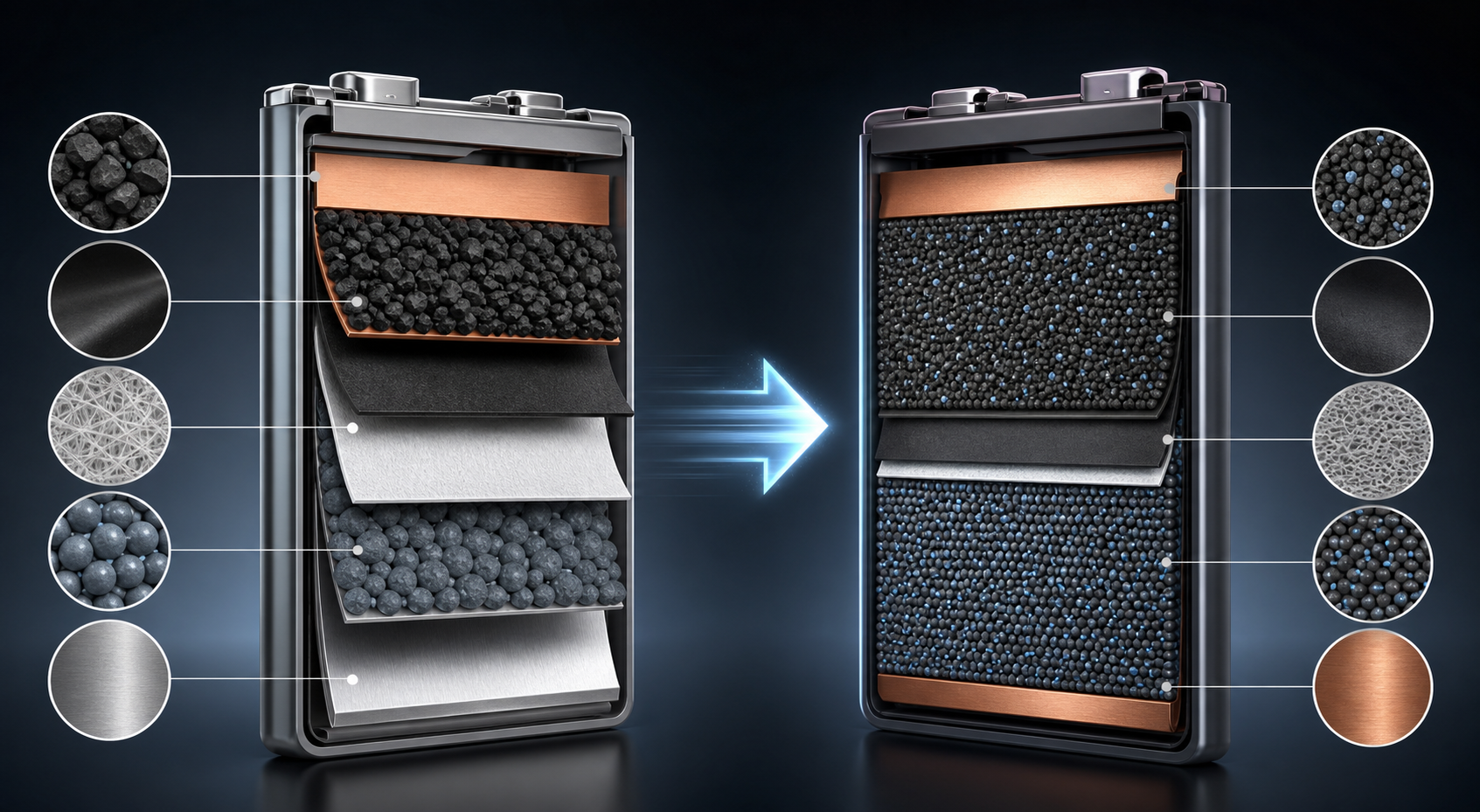
This is not just a OnePlus marketing trick. CNET’s 35-phone testing found that nearly half of its top battery-life picks used silicon-carbon batteries, and Counterpoint Research reported that six of the top ten phones with batteries of at least 6,000mAh shipped in January 2026 used silicon-carbon cells, with Chinese OEMs dominating that group. [4][5]
The limit is longevity. Available evidence supports silicon-carbon as an adoption and capacity shift, not as proof that these batteries age better over several years. The technology went mainstream only recently, so a student planning to keep a phone through high school, college, or a multi-year test-prep path should not treat silicon-carbon as automatically proven healthier over the long run.
Do Not Let A Non-US Battery Monster Distract You
There are exciting battery phones outside the official US market, including models such as the Realme P4 Power, Oppo Find X9 Pro, and Poco X8 Pro Max. For a US test-taker, they are a caveat, not the center of the buying decision. Region-locked availability, import pricing, warranty uncertainty, network-band questions, and software support can turn a great spec into a bad study tool.
A phone that is hard to buy, hard to repair, or unreliable on your carrier is not a good exam-prep purchase just because the battery graph looks impressive. The useful shortlist is the one you can actually buy and use before your next practice test.
Which Phone Should You Buy For Studying?
- If money is tight: buy the Moto G (2026). Its $199 MSRP and 19:10 Tom’s Guide result make it the best battery-per-dollar choice for US students. [1]
- If you need the cheapest proven study battery: consider the Moto G Play (2026). At $179 and 18:50, it is the lowest-cost all-day option in this set. [1]
- If maximum endurance matters more than price: buy the OnePlus 15. Its 25:13 Tom’s Guide result and corroborating long-run results make it the endurance winner. [1][3]
- If you want a less expensive long-lasting premium Android: consider the OnePlus 15R. It gives you a 21:54 Tom’s Guide result at $699. [1]
- If you are staying with iOS: buy the iPhone 17 Pro Max if the price fits. It is expensive, but it is the premium iPhone battery pick in this comparison. [1][2]
- If long software support matters more than peak battery life: look at the Samsung Galaxy A17 5G. Its 15:45 PCMag result is lower, but six years of security updates are meaningful at $199. [2]
Once you pick the phone, make the battery number easier to trust: use sane brightness, download lectures when possible, and avoid keeping five heavy tasks fighting at once. If your phone overheats during long sessions, fix that separately rather than assuming a bigger battery will solve every drain problem; start with phone overheating while studying and then tune the apps you keep open.
The final call is straightforward: if money is tight, buy the Moto G (2026); if maximum endurance matters, the OnePlus 15 wins; if staying in iOS matters, the iPhone 17 Pro Max is the safe premium pick. After that, brightness and app mix decide whether the tested endurance turns into a real marathon study session.
References
- Best phone battery life in 2026: The longest lasting smartphones — Tom’s Guide
- Samsung Galaxy A17 5G and iPhone 17 Pro Max battery testing — PCMag
- OnePlus 15 battery testing — GSMArena
- We Tested 35 Phones and Found the Surprising Winner of Best Battery Life — CNET
- Silicon-carbon battery adoption research — Counterpoint Research, March 2026
Comments
Join the discussion with an anonymous comment.