
AI Study Tool
How Students Can Contribute to AI Marine Biology Research Now
Tool: FathomVerse
Students interested in both AI and marine biology don't have to wait for graduate school to get involved. This article outlines four concrete pathways—from free mobile apps to paid internships—that let you build skills and contribute to real marine research right now.
Warning panel
- Verified against official source
- No
- Last reviewed
If you are not already in a marine biology lab, the most useful first move is not emailing ten professors with a vague “I’m passionate about the ocean.” It is doing one small piece of real data work, saving evidence of what you did, and using that as the start of a research story.
For students looking for AI applications in marine biology research, the entry points are more concrete than they may look from the outside. Some require no code. Some require Python and comfort with machine learning datasets. Some are paid and competitive, with application windows that close months before summer begins. As last reviewed on July 22, 2026, the practical ladder looks like this:
| Pathway | Best for | What you can do now | Application value |
|---|---|---|---|
| FathomVerse | Students with no lab sponsor and no coding background | Label real underwater images in a mobile app | Shows early participation in AI training data and marine image annotation |
| FathomNet | Students who can code or want a portfolio project | Use an open marine image database, API access, and pretrained models | Produces technical evidence: notebooks, model experiments, dataset work |
| Skill-building projects | Students not yet ready for open-ended research | Build Python, computer vision, and acoustic-analysis skills around marine tasks | Turns interest into readiness for a lab, internship, or graduate application |
| Paid internships | Students ready for competitive, mentored research | Plan for the next application cycle; 2026 MBARI applications are already closed | Gives formal research experience, mentorship, and stronger recommendation potential |
Start With Data Work You Can Do Tonight
FathomVerse is the lowest-friction starting point because it removes the usual first barriers: no faculty sponsor, no wet-lab placement, no command line, no formal machine learning background. The app asks players to label real underwater images so those labels can support AI model training. MBARI reports more than 30,000 players across more than 170 countries, more than 15 million annotations, and community consensus on more than 80,000 previously unlabeled images; players label more than 70 marine animal groups.[1]
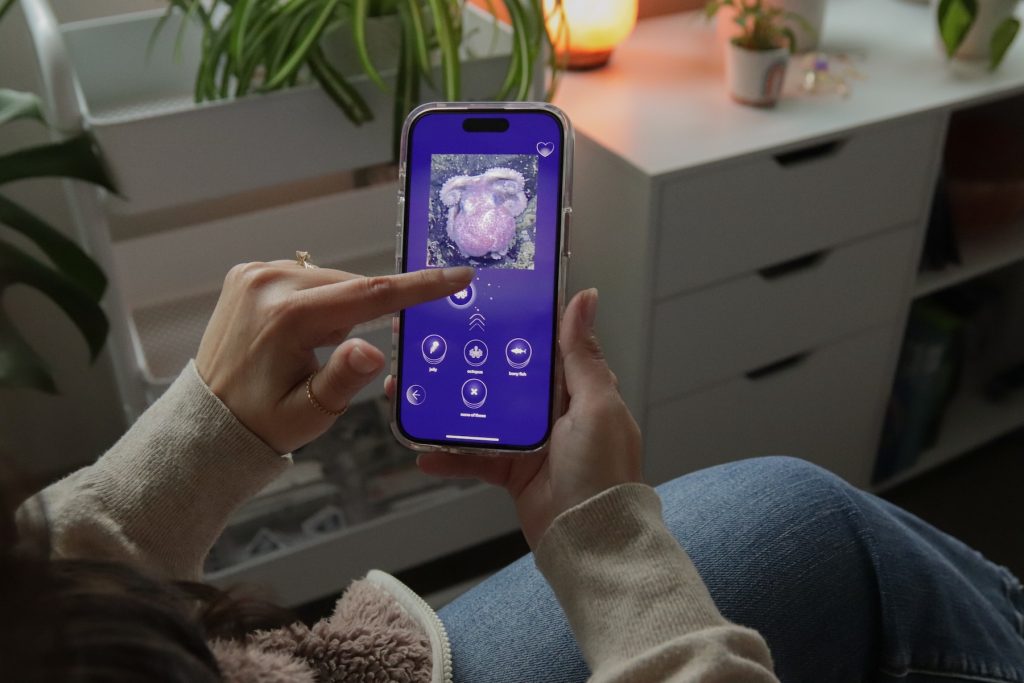
Those numbers matter because they make the work less imaginary. You are not “exploring AI and marine biology” in the abstract. You are helping turn underwater imagery into labeled training material. The contribution is small, but it is legible: image annotation, taxonomic grouping, consensus labeling, and the messy human step that comes before many machine learning systems can learn anything useful.
A student using FathomVerse this week should treat it like a research-readiness exercise, not just a game. Keep a short activity log: dates used, number of sessions, what kinds of organisms or image problems were difficult, and what you learned about annotation uncertainty. If you later write to a lab, apply for an internship, or discuss research experience in a graduate-school essay, that log gives you something more credible than “I’m interested in AI for conservation.”
For pre-med students, this kind of work can also become useful application material if handled honestly. It is not clinical experience, and it is not a substitute for patient-facing work. But it can support a scientific inquiry narrative: how raw observations become data, how labels can be uncertain, and how human judgment still sits inside AI workflows. That is much stronger than trying to force a generic “I love technology” paragraph into an MCAT-era application story.
Move From Participation to Technical Ownership With FathomNet
Once you can code, FathomNet is the more serious step. It is not just a place to admire ocean images. It is an open resource for building and testing marine computer-vision skills. FathomNet reports more than 90,086 images from 81 collections representing more than 2,243 marine concepts, with API access and pretrained models available through Hugging Face. Its solutions page also points students toward a 2025 FathomNet Kaggle competition as a practice-oriented entry point.[2]
This is where a student can stop asking whether they are “allowed” to do research and start making a small technical artifact. A reasonable first project does not need to discover a new species or beat a state-of-the-art benchmark. It can be a clean notebook that pulls a subset of images, documents the labels, trains or fine-tunes a model, evaluates where it fails, and explains why those failures matter in underwater imagery.
- Beginner coding project: use the FathomNet API to retrieve images for a small set of marine concepts and create a reproducible dataset summary.
- Computer-vision project: fine-tune a pretrained model on a narrow image-labeling task, then compare performance across clear, blurry, partially occluded, and low-light images.
- Data-quality project: inspect examples where labels are confusing or visually similar, then write a short note about annotation ambiguity.
- Portfolio project: publish a notebook, a short methods page, and a limitations section that explains what the model can and cannot support.
That limitations section is not decoration. It is where many student projects become more believable. Marine imagery is full of problems that classroom image datasets often hide: uneven lighting, sediment, partial bodies, unfamiliar life stages, and organisms that even humans may hesitate over. A model demo with no failure analysis looks like a tutorial. A modest model with careful error notes starts to look like research training.
For GRE-bound students, this is the kind of work that can strengthen a graduate-school research profile. A score can show academic preparation, but a documented FathomNet project can show that you know how to form a question, handle data, write reproducible code, and describe uncertainty. Those habits matter in marine biology, computational biology, ecology, robotics, and data-science programs.
A Small FathomNet Project That Is Actually Worth Doing
A good first project is deliberately narrow. For example, choose a small group of visually distinct marine concepts from FathomNet, retrieve images through the API, split the data, fine-tune a pretrained image classifier, and report where the model is least reliable. This hypothetical project should not be described as a discovery or a conservation result. It is a methods exercise: dataset access, preprocessing, modeling, evaluation, and scientific caution.
If you publish it in a GitHub repository, include a short README with the research question, source dataset, model choice, evaluation method, and known limitations. If you are using it in an application, the point is not “my model solves marine biology.” The point is “I can enter an unfamiliar dataset, build a reproducible workflow, and explain what my results do and do not mean.”
Build the Skills That Make the Projects Less Fragile
The useful skills are not mysterious, but they do need practice. Start with Python, then add NumPy, pandas, data visualization, and basic machine learning workflows. For image work, learn convolutional neural networks and object-detection ideas behind architectures such as YOLO. For model-building, PyTorch or TensorFlow is enough; you do not need to learn every framework at once.
Marine AI is not only image classification. Acoustic analysis matters too, especially for animal calls and long-term monitoring. Goodwin et al. describe study-specific examples that show why these skills are useful: fish classification reported at 94% accuracy in one context, and humpback whale song detection reported at 0.97 accuracy across 187,000 hours of acoustic data from 13 monitoring sites over 14 years.[3] Those figures should not be treated as universal benchmarks. They are examples of what well-scoped AI systems can do under defined data conditions.
The same caution applies to workflow-efficiency claims. MBARI’s 2022 annual report describes a FathomNet-related pilot in which AI reduced human annotation effort by 81%.[4] That is promising, but it is still a pilot result, not a guarantee that every lab or dataset will see the same reduction. For a student, the lesson is practical: AI can reduce repetitive annotation work when the dataset, model, and review process are well matched, but human review does not disappear.
A sensible skill plan is therefore less glamorous than “learn marine AI” and more useful:
- Learn enough Python to load data, call an API, clean labels, and save reproducible outputs.
- Build one computer-vision notebook using marine imagery rather than a generic classroom dataset.
- Practice evaluation: confusion matrices, false positives, false negatives, and examples of model failure.
- Add acoustic-analysis basics if you are interested in whales, fish sounds, autonomous monitoring, or long-duration sensor data.
- Write short methods notes as you go, because applications reward evidence more than private effort.
This is also where exam pressure can be turned into a planning constraint instead of a reason to delay. If you are studying for the GRE, choose a project small enough to finish without damaging your test schedule. If you are preparing for the MCAT, choose a project that helps you practice data interpretation, experimental reasoning, and uncertainty rather than one that becomes another uncontrolled obligation.
Treat Paid Internships as Calendar Targets, Not Open Doors
Paid internships are valuable, but as of July 22, 2026, MBARI’s 2026 Summer Internship Program is not an open opportunity. The program ran for 10 weeks in 2026, from June 8 through August 14, and applications closed March 9, 2026. MBARI listed the 2025 pay rate as $22 per hour and has offered AI-relevant projects such as automated classification of deep-sea imagery and VARS-ML vector database development.[5]
That closure is not bad news if you treat it correctly. It means the internship path is a 2027 or next-cycle planning target, not something to scramble for this week. For programs with winter or early spring deadlines, students should start checking pages in January, prepare materials before March, and assume that the strongest application will already have evidence: a small dataset project, a code repository, annotation experience, a methods note, or a faculty conversation.
MBARI is not the only place to watch. Students interested in marine technology should also monitor organizations such as WHOI and NOAA, especially if they are drawn to autonomous instruments, ocean robotics, ecological monitoring, or large environmental datasets. Do not assume a program is open because a past project sounds exciting. Check the current cycle, deadline, eligibility rules, funding status, and whether undergraduates are actually accepted.
A paid internship application should not read like a first encounter with the field. By the time you apply, you want to be able to say: I have labeled marine imagery, used an open dataset, built or modified a model, inspected errors, and learned enough biology to understand why the labels matter. That is still an early-stage profile, but it is a real one.
How to Choose Your Next Move
Choose by current skill level, not by prestige. If you need a no-code start, use FathomVerse and document what you learn about marine image labeling. If you can code, move into FathomNet and build a small reproducible project. If your notebooks collapse every time the data gets messy, spend a few weeks on Python, computer vision, evaluation, or acoustic-analysis fundamentals. If you want paid research experience, build your evidence now and set a dated calendar for 2027 or the next posted cycle.
The application payoff is straightforward. For graduate-school applicants, these projects can support a stronger GRE-era research profile because they show readiness beyond coursework. For pre-med students, they can help you describe scientific inquiry and data interpretation with specific evidence rather than vague enthusiasm. The first credible contribution does not have to be large. It has to be real enough that someone else can understand what you did.
References
- FathomVerse, MBARI.
- Solutions, FathomNet.
- Artificial intelligence and machine learning in marine science: A review, ICES Journal of Marine Science, 2022.
- Unlocking the power of AI for ocean exploration, MBARI Annual Report, 2022.
- Internships, MBARI.
Comments
Join the discussion with an anonymous comment.